Amazing Grass Green Superfood Original Review: Pros & Cons
Amazing Grass Original is a greens powder for adults seeking a convenient addition to their diet. Its clearest nutritional contribution is vitamin C, alongside modest amounts of fiber and protein. It can fit into a daily routine, but it should not replace vegetables, balanced meals, or treatment for digestive problems.
Shopping for Amazing Grass Green Superfood Original can be confusing because the product has appeared under different names. Older descriptions may also mention ingredients that are absent from the current manufacturer label. That creates a real risk of buying it for a feature the tub no longer lists.
Checking the serving size, nutrient amounts, and actual ingredient panel gives you a firmer basis for deciding what the powder adds to breakfast—and what your meals still need to supply.
The U.S. Food and Drug Administration sets the Daily Value for fiber at 28 grams. This powder provides 2 grams per serving, or 7% of that reference amount. That is useful context for anyone hoping a green drink will close a large fiber gap.
What stood out to me during the research was the importance of matching evidence to the current formula. A named probiotic strain offers something specific to investigate, but research on that strain does not automatically prove every claim about the finished powder.
The review below covers the current ingredients, realistic benefits, taste expectations, mixing instructions, price per serving, and safety checks so you can judge its place in your routine.
Amazing Grass Green Superfood Original: My Verdict
My assessment is based on the current manufacturer label and published research. I would consider this product for convenience and its declared nutrients, with modest expectations about changes you can feel.
Its strongest selling point is straightforward: you can add a measured portion of plant powders to a drink without preparing those ingredients separately. That may appeal to someone who already makes smoothies or wants a portable pantry option.
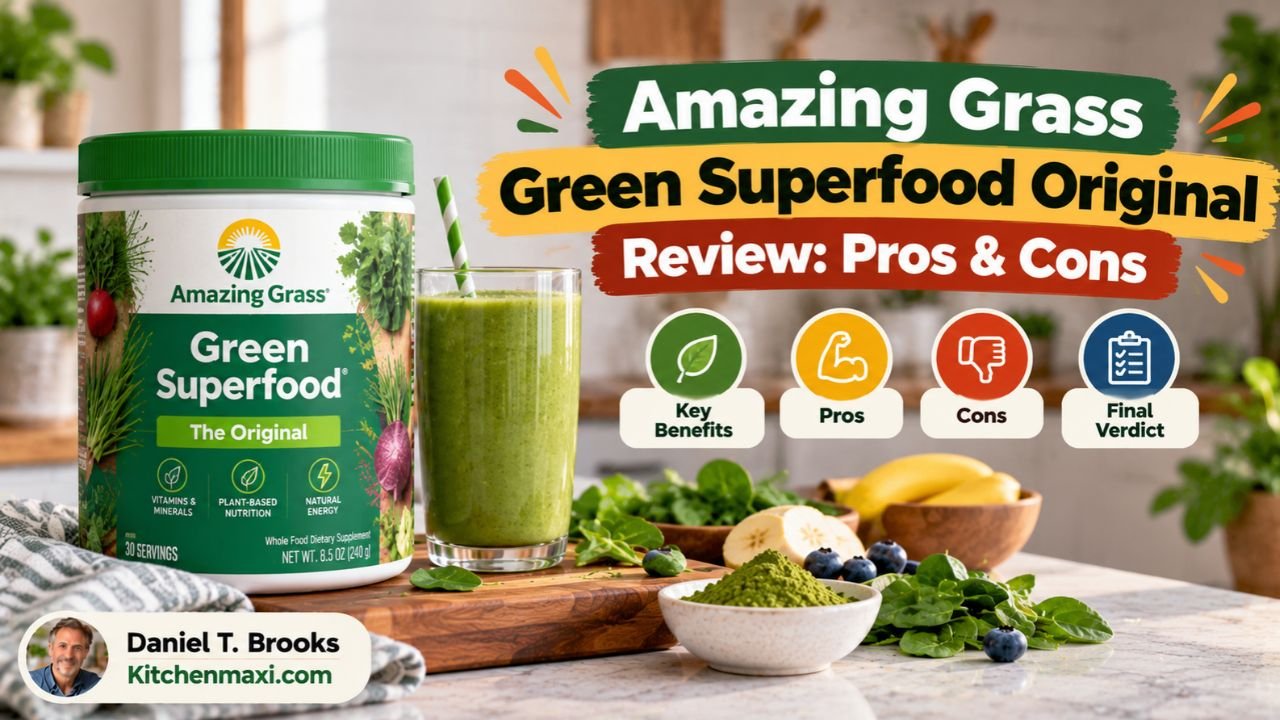
The current manufacturer name is Super Greens The Original. The brand identifies it as the successor name to Greens Blend Superfood, while Green Superfood remains common in searches and older listings. The verified 30-serving container holds 8.5 ounces, or 240 grams.
Match the words The Original and the Supplement Facts panel before buying. Energy formulas, flavored versions, protein products, and capsules should each be assessed from their own labels.
For a first purchase, I prefer the smaller tub over a large supply. Your willingness to drink it regularly matters more than saving a few cents on a serving you end up skipping.
Nutrition Facts: What One Scoop Actually Provides
The current label defines a serving as 8 grams, about one scoop. These are the declared amounts for the powder alone; milk, juice, fruit, yogurt, and other additions change the finished drink.
| Nutrient | Per serving | Daily Value |
| Calories | 30 | — |
| Total carbohydrate | 5 g | 2% |
| Dietary fiber | 2 g | 7% |
| Total sugars | Less than 1 g | — |
| Added sugars | 0 g | 0% |
| Protein | 2 g | — |
| Vitamin A | 60 mcg | 7% |
| Vitamin C | 90 mg | 100% |
| Vitamin K | 69 mcg | 57% |
| Calcium | 30 mg | 3% |
| Iron | 1.7 mg | 9% |
| Sodium | 20 mg | 1% |
| Potassium | 130 mg | 3% |
These figures come from the manufacturer’s current Supplement Facts image. Check your container if its packaging differs.
The distribution matters more than the length of the ingredient list. Vitamin C accounts for a much larger share of its Daily Value than calcium or potassium. A scoop therefore does not provide equal coverage across nutrients.
The protein and calorie totals also explain why this is a drink addition rather than a meal. If breakfast is only powder and water, you still need food that supplies enough energy and protein for that meal.
Daily Values are general labeling references. They are not a personalized prescription, and reaching 100% for one vitamin does not mean the powder meets all your nutritional needs.
Ingredients Explained: Greens, Fiber, and Probiotics
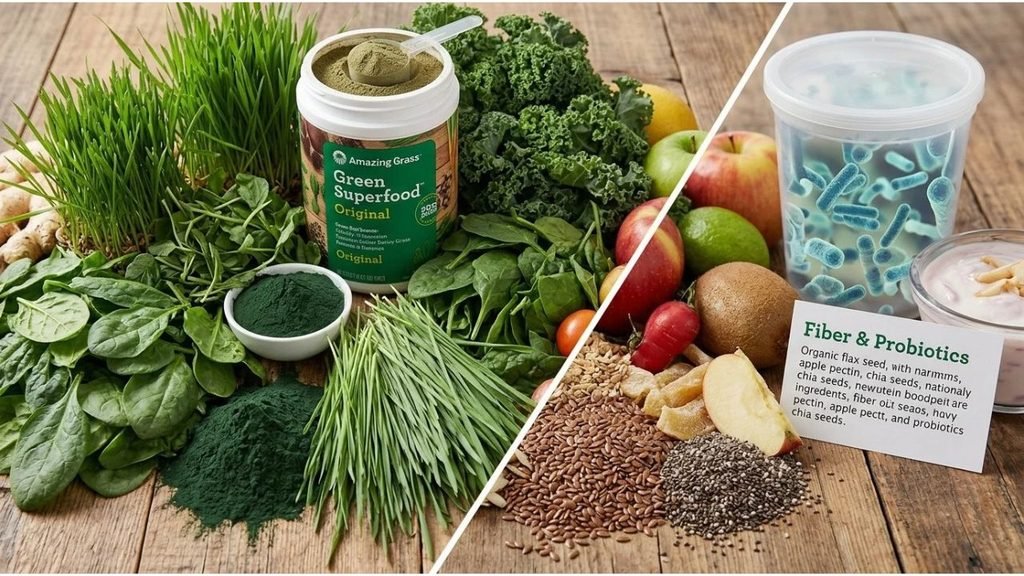
The label groups most plant ingredients into blends. Those group totals reveal how much of each blend is present, but they do not disclose the dose of every plant inside it.
The Green Food and Antioxidant Blends
The 5.4-gram Green Food Blend includes wheatgrass, barley grass, alfalfa, spinach, spirulina, peppermint, chlorella, and broccoli. The 1.4-gram Antioxidant Blend includes acerola, rose hips, pineapple, carrot, goji, green tea extract, açaí, beet, raspberry, and maca. Many are listed as organic.
That variety is convenient, but ingredient presence is only a starting point. A study using a measured dose of a single extract cannot establish what a small, undisclosed amount inside this blend will do.
I would judge these ingredients by the nutrition the finished serving declares. Buying mainly for a specific dose of spirulina, maca, or green tea extract would require information this panel does not provide.
The Fiber Blend and Other Ingredients
The 620-milligram Fiber Blend contains flaxseed and apple pectin. The other-ingredients list includes fructose, inulin from chicory root, natural flavor, and silica. The blend’s weight is separate from the serving’s total dietary fiber figure; do not add those two numbers together.
Inulin is a prebiotic carbohydrate, meaning gut microorganisms can use it as fuel. A prebiotic is different from a probiotic: one provides a food source, while the other refers to live microorganisms used for a health benefit.
The fructose listing deserves attention if you avoid that ingredient. Although the nutrition panel declares zero added sugars, U.S. labeling rules permit amounts below 0.5 gram per serving to round to zero. The declaration does not establish the exact unrounded amount or mean no sugar ingredient was used.
The Named Probiotic and Missing Enzyme Blend
The current panel lists Bacillus subtilis DE111, providing 1 billion CFU. CFU stands for colony-forming units, a measure used to describe viable microorganisms. No digestive enzyme blend appears on this panel.
This distinction matters if you have seen older descriptions mentioning enzymes or a different bacterial species. Evaluate the label on the product you will receive instead of combining details from different versions.
The named strain is useful for checking research. The number alone is less informative: NIH guidance explains that a higher CFU count does not automatically produce a greater benefit.
Key Takeaway: Read blend weights, individual nutrient amounts, and the probiotic strain as separate pieces of information.
Benefits: What the Evidence Can Support
The most defensible benefits are the nutrients on the label and the convenience of the format. Claims about noticeable changes in digestion, immunity, or energy need a separate examination.
Vitamin C and Immune Function
Vitamin C supports normal immune function. That makes its presence nutritionally relevant, but it does not turn the powder into a cold-prevention product.
The National Institutes of Health reports that vitamin C supplements do not reduce the chance of catching a cold for most people. Nutritional support and a promise of fewer illnesses are different claims.
If you already meet your vitamin C needs, the number on this label is not proof that adding the powder will produce a noticeable change. Consider it alongside the rest of your food and supplement intake.
Digestion and the DE111 Research
DE111 has been studied in people. In a 2021 randomized pilot trial, 44 participants completed four weeks of supplementation or placebo. Researchers observed changes in some immune-cell measures, while perceived gastrointestinal health and several other measures were largely unchanged.
That research used the strain in capsules, not this Amazing Grass powder. Its findings offer context for the ingredient, but they do not establish that the finished blend relieves bloating or constipation. Larger studies were recommended.
I would not buy this product as a treatment for persistent digestive symptoms. A named strain and some human research are reasonable points in its favor, but a specific symptom needs evidence that matches the intended use.
Energy, Detox, and Weight-Loss Expectations
The Original should not be chosen with the expectation of a stimulant effect. The manufacturer lists its caffeine content as 0 milligrams, despite green tea extract appearing among the ingredients.
A low-calorie green drink also does not establish fat-burning or detox benefits. The National Center for Complementary and Integrative Health describes the research supporting detox programs as limited and weak. That broad evidence does not support treating a scoop of greens as a toxin-removal routine.
I did not find a published clinical trial establishing those outcomes for the current finished Original blend. Buy it for a practical nutritional role you can identify, without relying on promises of weight loss or a sudden energy lift.
Key Takeaway: Expect a nutritional addition; digestive relief, fewer illnesses, and weight loss are not established outcomes of this powder.
Taste, Texture, and How to Mix It
Taste can determine the value of a greens powder more than its label. An affordable tub that stays unused is still a poor purchase.
What to Expect From the Original Flavor
An earthy, grassy taste is a reasonable expectation from the listed grasses and algae. Peppermint may contribute an herbal note, but the ingredient list cannot predict how strong each flavor will seem to you. These are ingredient-based expectations, rather than a personal tasting report.
For a first try, I would mix it into a smoothie containing a fruit you already enjoy. That gives the powder a familiar base without requiring you to enjoy a plain green drink immediately.
If the mixture tastes too concentrated, add more liquid. If the texture bothers you, try blending instead of stirring. Re-stir a drink that settles; do not assume a plant powder will behave like a clear, fully dissolved beverage.
Preparation and Serving Size
The package directs you to mix 8 grams, about one scoop, with 8–12 fluid ounces or more of water, juice, or a smoothie.
- Choose the liquid. Water gives the clearest impression of the Original flavor. Juice or a smoothie changes both taste and nutrition.
- Measure the powder. Use the supplied scoop as directed. A kitchen scale can check the gram amount if your portions vary.
- Mix thoroughly. Shake in a closed bottle, whisk in a glass, or blend into a smoothie. Add more liquid if needed.
- Check the finished drink. Account for the calories and nutrients in every addition, especially if you are tracking intake.
There is no need to pack the scoop tightly or heap it. Larger portions use up the tub faster and increase every ingredient at once, without establishing a greater benefit.
Tip: Decide how you will drink the powder before buying. A routine built around an existing breakfast is easier to assess than a completely new meal plan.
Key Takeaway: Follow the serving by weight and adjust the liquid or mixing method to suit the flavor and texture.
Side Effects and Who Should Check First
The current package is intended for healthy adults. It advises consulting a healthcare professional before use, especially during pregnancy, nursing, or medical supervision.
Gas, Bloating, and Digestive Tolerance
Some people experience gas when taking probiotics or changing their fiber intake. NIDDK notes that certain carbohydrates and excess fiber can increase gas symptoms in susceptible people. That makes tolerance worth monitoring with a powder containing fiber, inulin, and a probiotic.
A reaction is possible, not guaranteed. The label does not disclose the inulin amount, so it cannot predict your response.
Avoid starting several new supplements together. If symptoms appear, stop the new powder and review the timing with a clinician if symptoms persist. Repeated discomfort is not evidence that a detox process is working.
Vitamin K and Warfarin
The vitamin K in this product needs attention if you take warfarin. NIH guidance stresses keeping vitamin K intake reasonably consistent because sudden changes can alter the medicine’s effect.
Speak with your prescriber or pharmacist before adding or stopping the powder. This advice concerns a specific interaction; it should not be generalized to every medication described as a blood thinner.
Bring a photo of the complete label. The probiotic and plant ingredients also belong in that medication review, rather than mentioning only that you take a green drink.
Pregnancy, Immune Suppression, and Allergies
Pregnancy and breastfeeding are reasons to review this exact formula with your healthcare professional. Do not assume a product suits those stages because its ingredients come from plants.
People who are seriously ill or have weakened immune systems should also seek advice before using probiotics. NIH identifies these groups as needing more caution than generally healthy users.
Read every ingredient if you have food allergies. Gluten-free labeling does not resolve every possible allergy concern, and an ingredient you avoid still matters when it appears within a blend.
Key Takeaway: Review the label before use if you take warfarin, have immune suppression, are pregnant or nursing, or need to avoid specific ingredients.
Gluten, Organic Claims, and Product Quality
The current packaging identifies the product as certified organic by CCOF, gluten free, non-GMO, vegan, and kosher. Use those specific declarations without expanding them into a claim that the powder has been clinically proven.
Wheatgrass and barley grass often raise questions. The manufacturer explains that its grasses are harvested before the grain stage and reports third-party gluten testing. For the product you buy, the actual gluten-free label remains the practical reference.
In the United States, FDA’s gluten-free standard includes a limit of less than 20 parts per million for unavoidable gluten, along with ingredient requirements. It does not mean an assurance of absolutely zero detectable gluten. Contact the manufacturer if you need clarification about a specific package.
Testing scope also matters. A statement about gluten testing does not establish results for every contaminant or nutrient. If detailed testing is part of your buying criteria, request a recent report that identifies the product, lot, substances tested, and laboratory.
Avoid reading “FDA approved” into the presence of a Supplement Facts panel. FDA does not approve dietary supplements before they reach the market.
Price, Serving Value, and Buying Checks
For the 30-serving Original tub, the two purchase pages showed the following prices when checked on October 20, 2026:
| Purchase page | Displayed price | Calculated price per serving |
| Walmart | $22.47 | About $0.75 |
| Amazing Grass | $28.49 | About $0.95 |
The calculation is the displayed price divided by 30. Taxes, shipping, seller changes, location, and promotions can change the final cost. These are price snapshots, not guaranteed checkout totals.
The manufacturer also lists larger tubs and individual packets. A larger package may suit an established routine; packets may suit travel. Compare the final cost per labeled serving instead of assuming either format is cheaper.
Before ordering, check the flavor, serving count, seller, expiration information, and subscription setting. A subscription discount is only useful if the delivery schedule matches how quickly you finish the product.
I would also separate customer satisfaction from health evidence. Reviews can describe packaging, convenience, and taste preferences, but they cannot establish that the powder caused a medical improvement. Confirm the reviewed flavor and formula before relying on a comment.
If your main goal is one nutrient, compare ways to supply that nutrient directly. Paying for a greens blend makes more sense when you actually want the blend and its drink format.
Storage and Daily Routine
The current package instructs you to keep the powder in a cool, dry place after opening. Close it securely, use a dry scoop, and follow the date and storage directions on your own container.
At one labeled serving a day, a 30-serving tub lasts 30 days. Plan purchases around that arithmetic rather than the height of the powder inside the container.
Keep the routine simple while assessing it. Use the same portion and a familiar drink, then consider taste, tolerance, convenience, and cost. A scoop that fits comfortably into meals may earn its place; one you dislike or repeatedly react to does not need to become a permanent habit.
Conclusion
Amazing Grass Green Superfood Original is a reasonable option for someone seeking a convenient greens powder with clearly listed nutrients and a named probiotic strain. Its role is a small addition to an eating routine, with benefits judged against what the current serving actually supplies.
The most useful checks are the exact formula, blend transparency, serving size, medication considerations, and final price. Mixing method and personal tolerance matter too, because they determine if the product is practical to use.
My recommendation is to start with realistic expectations and a manageable purchase. Keep vegetables, other fiber-rich foods, and adequate protein in your meals, then decide if this optional powder adds enough convenience to justify its cost.
FAQs About Amazing Grass Original Greens Powder
Does Amazing Grass Original contain caffeine?
The manufacturer lists Original as containing 0 milligrams of caffeine. Green tea extract on the ingredient list does not, by itself, establish a stimulant dose. Check the product name carefully because the brand’s Energy formulas have different caffeine information. Use the label and guidance for the exact version you purchase.
Can I take it on an empty stomach?
The current mixing instructions do not require an empty stomach. There is no need to create a fasting routine around it. If you find it uncomfortable without food, taking it alongside a meal is a practical adjustment. Stop using it if discomfort continues, and seek advice for persistent symptoms rather than assuming you need to keep taking it.
Will this powder break a calorie-free fast?
Yes. A serving contains calories, so it does not fit a calorie-free fast even when mixed only with water. Juice, milk, or smoothie ingredients contribute more. If you are fasting for a medical test or procedure, follow the clinic’s instructions about all food, drinks, and supplements instead of applying general fasting advice.
Can children take the Original formula?
The reviewed package is intended for healthy adults. Ask a pediatrician before giving it to a child; a smaller scoop is not an established child serving. A child’s diet, allergies, medication use, and reason for supplementation should guide that decision. Do not use this powder to replace regular meals or a supplement specifically recommended for that child.
Why does a new tub look partly empty?
The packaging states that contents are sold by weight and settling can occur. Empty space above the powder does not establish that servings are missing. Check the net weight and use the labeled serving amount. If the seal is damaged or the contents seem short, contact the seller or manufacturer with the package details.