


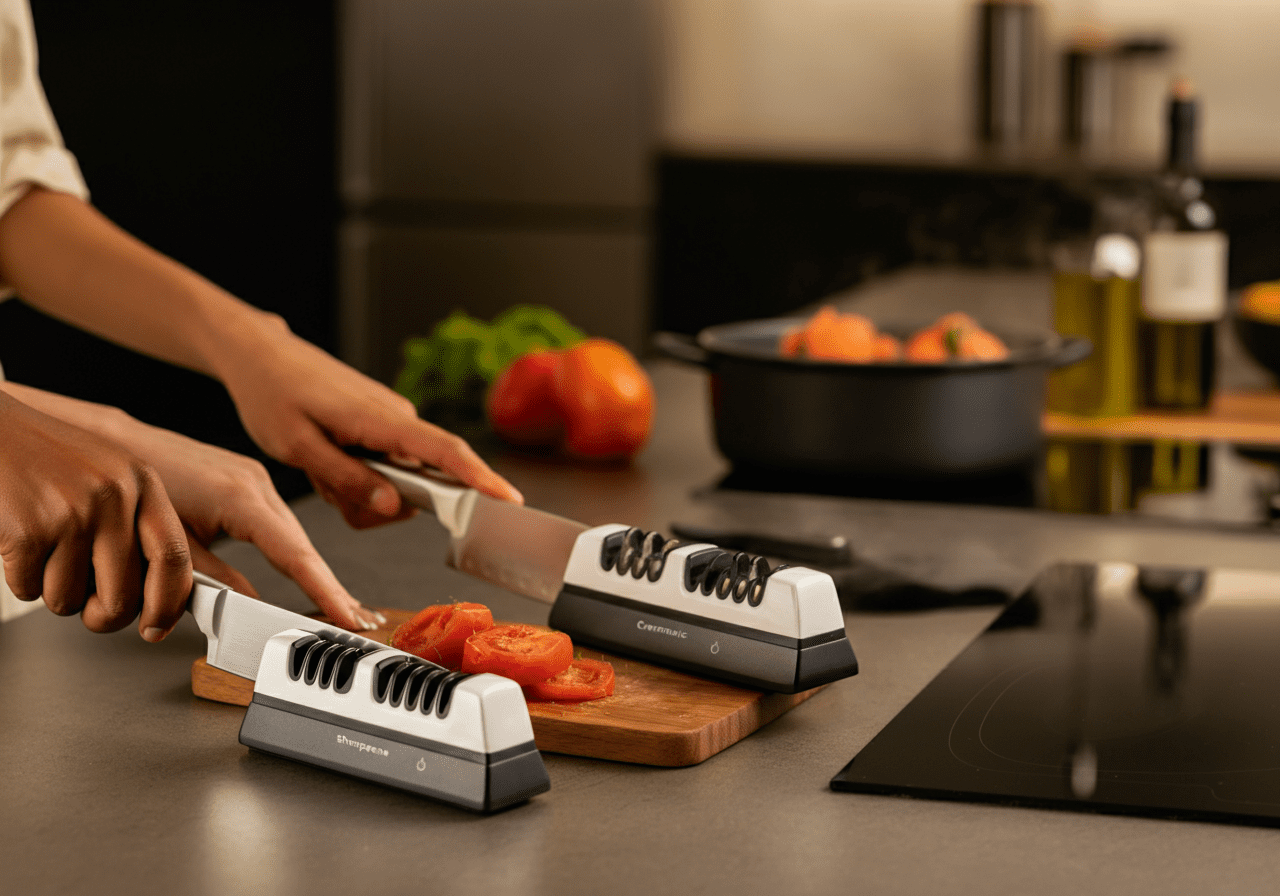

A dull knife is the most annoying thing in the kitchen, to be honest. I remember trying to wrestle with a really tough butternut squash while my old chef’s knife slipped dangerously with every push. It was not just annoying; it was also dangerous. That is when I realized that a sharp knife is not a luxury; it is something that everyone who cooks needs. A sharp knife makes prep work faster, safer, and, to be honest, a lot more fun.
But what do you do when your favorite knives will not come back to life even after you sharpen them? Or what if you have one of those beautiful, light ceramic knives and do not know how to take care of it? You may have heard of different tools for sharpening, such as whetstones and electric devices. The ceramic knife sharpener is one of the best options for keeping your kitchen tools in good shape.
This guide will answer all of your questions. We will tell you what a ceramic knife sharpener is, how it works, and why it might be just what you need in your kitchen drawer. We will give you clear, useful information on how to choose and use the right tool with confidence, whether you want to bring an old steel knife back to life or keep a fragile ceramic one in good shape.
Table of Contents
What Are Ceramic Knife Sharpeners?
A ceramic knife sharpener is a tool that uses a ceramic abrasive to sharpen and hone knife blades. Steel honing rods mostly straighten out the edge of a blade, but ceramic sharpeners actually take off a bit of metal to make a new, sharp edge. They are harder than steel, which is why they work well for sharpening most kitchen knives.
You’ll find them in a few common forms:
- Ceramic Rod Knife Sharpener: This is the most common type. It looks like a regular honing steel, but it is made of hard, rough ceramic. It can be used for both light sharpening and regular maintenance (honing).
- Pull-Through Sharpeners: A lot of the time, these handheld devices have more than one slot, and one or more of them have ceramic wheels or plates in them. To sharpen the knife, just pull it through the slots. Some sharpeners, like the ALLWIN-HOUSEWARE sharpener on Amazon, have stages made of tungsten, diamond, and ceramic that work together to sharpen the knife.
- Sharpening Systems: More advanced systems, like those from Edge Pro, might come with a guided sharpening kit that includes ceramic stones or tapes. These are accurate, but most people who use them are more advanced.
The most important thing to remember is that ceramic is an abrasive that works well but is not too harsh. It strikes a good balance between the rough material removal of a diamond sharpener and the simple honing of a steel rod. This makes it a great tool for home cooks.
Can You Use a Ceramic Sharpener on Steel Knives?
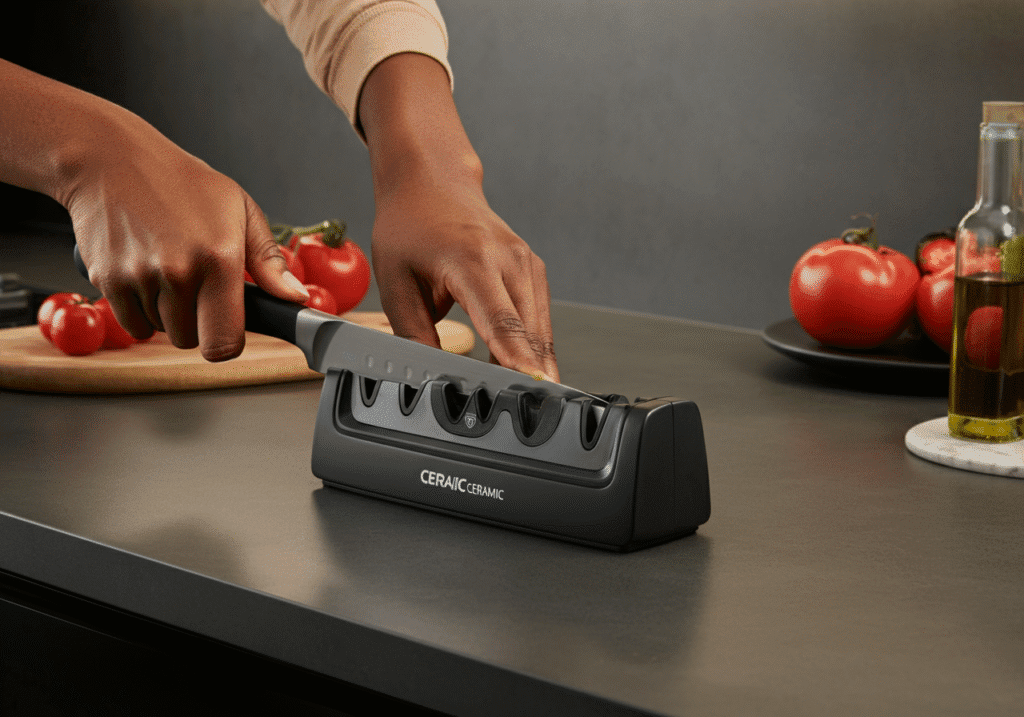
Yes, of course! This is one of the best things about a ceramic knife sharpener. Ceramic is harder than steel, so it can easily sharpen knives made of stainless steel and carbon steel. A lot of cooks like using a ceramic rod knife sharpener instead of a steel one for daily honing because the fine abrasive surface makes the edge of the blade look more polished and refined.
I started using a ceramic rod on my German steel knives a few years ago, and I could tell the difference right away. My old steel rod only straightened the edge, but the ceramic rod gave it a “bite” that felt sharper and lasted longer. It cuts through tomatoes without tearing the skin, which is always my test for how sharp it is.
A ceramic rod is perfect for:
- Honing: Running your steel knife along a ceramic rod regularly keeps the edge straight and sharp between sharpening sessions.
- Light Sharpening: If a knife is only a little dull, you can get it sharp again by running it over a ceramic rod a few times instead of using a whetstone to sharpen it.
- Polishing: A fine-grit ceramic sharpener can polish the edge to a razor-sharp finish after using a coarser sharpener, like a diamond stone.
A ceramic knife sharpener is still a great and very useful tool to have, even if you mostly have steel knives.
How to Sharpen a Ceramic Knife
Here’s where things get a bit tricky. Ceramic knives are incredibly hard—much harder than steel. This is why they stay sharp for so long. However, it also means they are brittle and can chip easily. You can’t just use any old sharpener on them.
Sharpening a ceramic knife requires an abrasive material that is harder than ceramic. That material is diamond.
You have two main options for sharpening ceramic knives at home:
- Diamond Sharpeners: These are the only tools you can use at home to sharpen a ceramic blade well. There are many types of diamond sharpeners, such as electric sharpeners, handheld pull-through models, and rods or stones with diamond coatings. Kyocera and Work Sharp are two brands that make electric and manual sharpeners with diamond wheels that are made just for ceramic knives. Kyocera says that their diamond wheel sharpeners can even fix small chips (less than 0.5 mm) on a ceramic blade.
- Professional Sharpening Services: Sending your ceramic knife to a professional is a good idea if it is badly chipped or you do not feel comfortable sharpening it yourself. Eversharp and other companies are authorized service providers for brands like Kyocera. They have the right tools to fix the blade the right way. It might cost a little bit, but it keeps you from hurting your knife even more.
Important: Do not use a regular steel or ceramic knife sharpener on a ceramic knife. You will not be able to sharpen the knife with the sharpener because it is not harder than the blade. It might even break the knife. A steel rod will not do anything, and a ceramic rod will just wear down without hurting the blade.
Picking the Right Ceramic Knife Sharpener
Are you ready to add a ceramic knife sharpener to your tools? Here’s a simple list of things to look for based on what you need.
For Everyday Honing and Steel Knife Maintenance
A ceramic rod knife sharpener is the best tool for keeping your steel knives in great shape. Find one that is at least 10 to 12 inches long. This will give you enough space to safely sharpen most kitchen knives.
- What to look for: A handle that is safe and comfortable to hold, as well as a guard to keep your hand safe.
- Example: The Global Cutlery Ceramic Sharpening Rod is a classic choice that people know is good. It keeps Global knives’ edges razor-sharp, but it also works great on all steel blades.
I keep a ceramic rod in my knife block and quickly swipe my chef’s knife with it before I use it most of the time. It only takes 30 seconds and makes a big difference in keeping the blade ready to use. It is a small habit that pays off in a big way.
For Easy, No-Fuss Sharpening
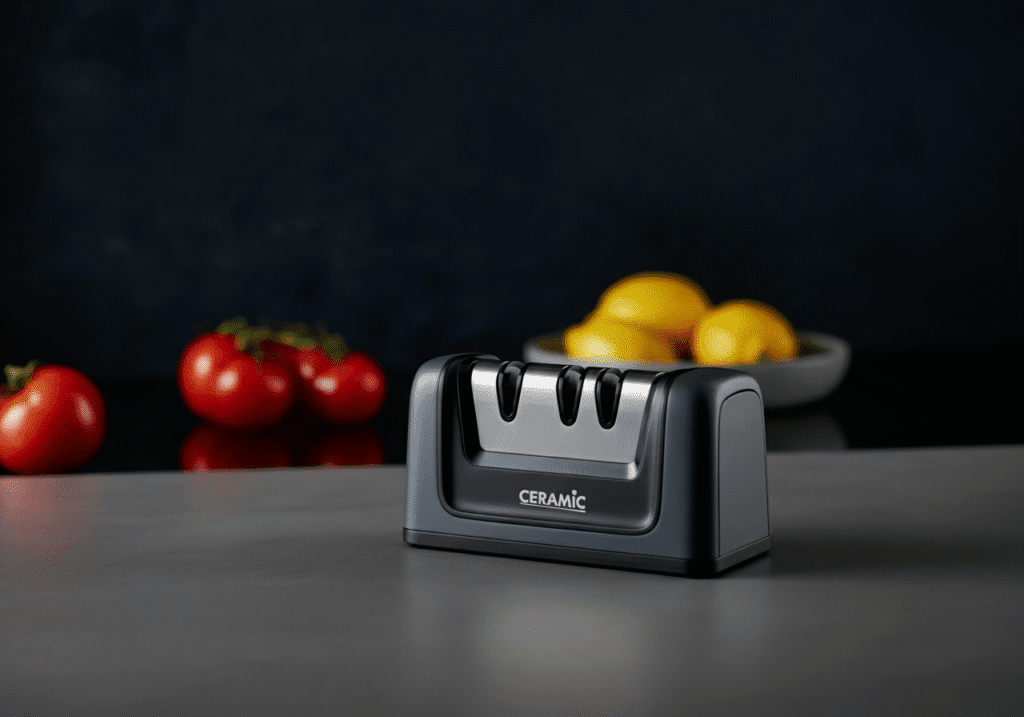
A pull-through sharpener is a great, easy-to-use alternative to a sharpening rod if you do not want to use one. These are meant to be almost foolproof, with angles that are already set, so you do not have to guess how to sharpen them.
- What to look for: A model with at least two stages: a coarse slot (usually diamond or tungsten) to fix a dull edge and a fine slot (ceramic) to sharpen and shine it. For safety, the base must also not slip.
- Example: Amazon’s ALLWIN-HOUSEWARE sharpener is a popular and cheap choice with three stages: diamond, tungsten, and ceramic. It can do everything from fixing broken blades to sharpening the edge.
For Sharpening Ceramic Knives
As we covered, if you need to sharpen actual ceramic knives, you must use a diamond abrasive.
- What to look for: A sharpener that says it is for ceramic knives. This almost always means it has diamond wheels or plates.
- Example: The Kyocera Electric Diamond Knife Sharpener is a tool that runs on batteries and is made just for this job. People who love their ceramic knives will find that this product is easy to use and can fix small problems.
Restoring Your Kitchen’s Cutting Edge:
Choosing the right sharpener is about understanding your knives and your comfort level. One of the most useful and flexible tools you can have is a ceramic knife sharpener, especially a ceramic rod knife sharpener. It’s perfect for maintaining your workhorse steel knives and keeping them in prime condition.
If you have ceramic knives, remember that diamond is your best friend. The only safe way to sharpen their edges at home is with a diamond sharpener.
Cooking should be fun, not hard. Getting a sharp knife is the first step in making boring prep work go smoothly and be enjoyable. If you spend a little time learning how to take care of your knives, your kitchen will be safer, more useful, and happier.