


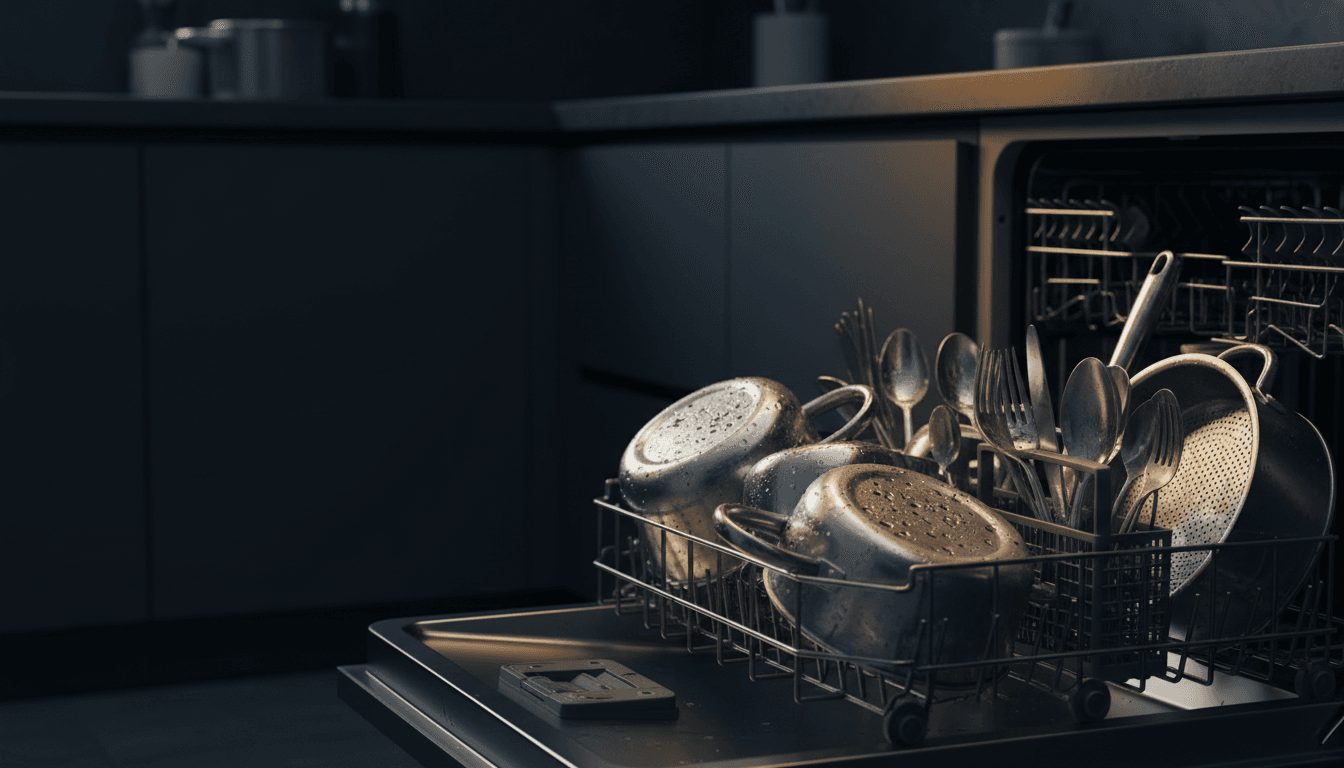

I used just to throw everything in the dishwasher and hope for the best. A knife for a chef that costs a lot? Top shelf. That travel mug with two walls? The bottom rack is next to the plates. When my favorite “stainless” mixing bowl came out looking like it had a mild case of the measles, with rust spots all over it, I learned my lesson the hard way.
“Stainless” doesn’t mean “unbreakable,” it turns out. I’ve learned that the dishwasher is a lifesaver, but it’s also a tough place to be after years of testing different kitchen tools and ruining a few things. I wrote this guide to help you avoid ruining your best pans, because no one wants to scrub them by hand, but no one wants to buy new cookware every year either.
Table of Contents
Introduction
We have all stood at the sink with a heavy pot of pasta in our hands and wondered whether we could skip the scrubbing brush. Is stainless steel dishwasher safe, or are we slowly ruining our cookware with every cycle? This is an old argument in the kitchen. The short answer is usually yes, but there is a big asterisk next to it.
Stainless steel is very strong, which is why it is used in both professional and home kitchens. But if you treat all steel items the same way, the finishes will be dull, and the surfaces will rust. Not all steel is the same, and the detergent you use in your dishwasher might be stronger than you think.
In this guide, we’ll explain in detail what happens when metal and a machine come into contact. We’ll talk about why some pots shine, and others don’t, which things you should never put in the dishwasher, and how to keep your kitchenware looking brand new without having to spend all day at the sink.
Understanding Stainless Steel: It’s Not Just One Metal
Before we start putting things on the racks, it helps to know what we’re washing. Stainless steel is not a single natural metal like copper or iron; it is a mix of metals. It is iron with chromium and usually nickel in it.
The chromium makes it “stainless.” When chromium comes into contact with air, it forms a very thin layer that keeps the iron underneath from rusting. Rust can get in if you hurt that layer, like with rough scratching or strong chemicals.
The Numbers Game: 18/10 vs. 18/0
You have probably seen numbers stamped on the bottom of your pans or cutlery, like 18/10 or 18/8.
- 18/10 and 18/8 (304 Grade): These have 18% chromium and 8–10% nickel in them. Nickel makes the steel shine more and makes it less likely to rust. These are the high-quality things that usually do well in the dishwasher.
- 18/0 (430 Grade): These have 18% chromium and no nickel at all. You can test these with a fridge magnet to see if they are magnetic. They are more likely to rust and get spots in the dishwasher because they don’t have nickel. This steel is often used to make cheap mixing bowls and cutlery.
Dishwashers: The Harsh Reality
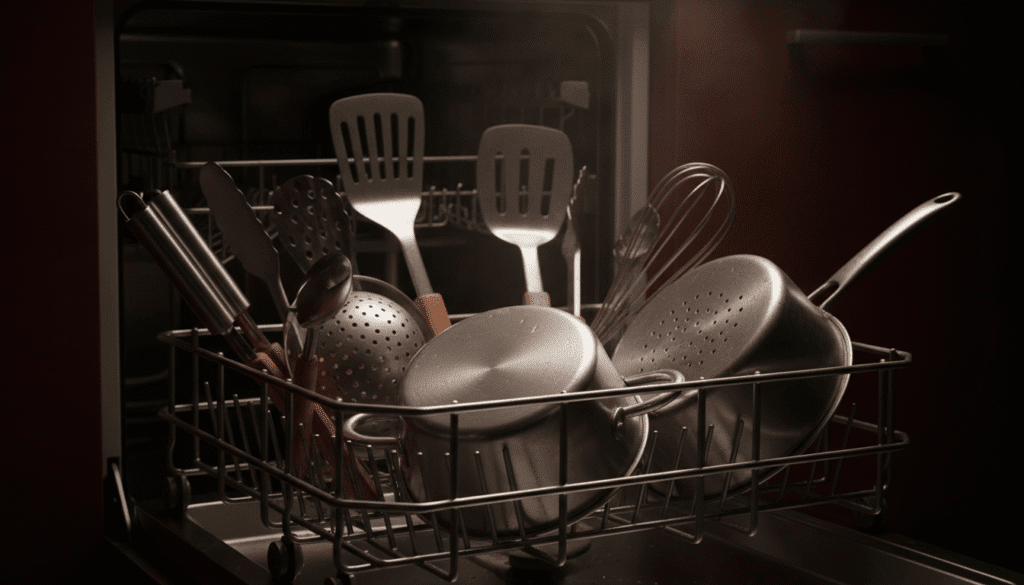
We love our dishwashers because they save us time, but they are really just aggressive cleaning chambers. The machine uses three things that stainless steel usually doesn’t like to clean your dishes:
- High Heat: The water gets very hot, which makes the metal expand, especially during the drying cycle.
- Too Much Moisture: The number one cause of rust is leaving metal wet in a humid place.
- Chemistry: Dishwasher detergents are very alkaline and often have chlorine bleach or rough particles in them to scrub food off of plates.
When you ask, “Is stainless steel dishwasher safe?” you want to know if the chromium layer that protects it can handle this. It can, but only for high-quality cookware. It’s a risk for lower grades.
Is Stainless Steel Dishwasher Safe? The Verdict
Is it safe to put stainless steel in the dishwasher? Yes. Most modern stainless steel pots and pans, and knives can handle normal dishwasher cycles. But just because something is “safe” doesn’t mean it’s “recommended.”
Putting your All-Clad pan or expensive cutlery in the dishwasher probably won’t break it overnight. But over time, the harsh environment will dull the mirror polish, fade the branding stamps, and maybe even loosen the handles if they are riveted. Hand washing is the only way to keep your cookware looking brand new for twenty years. The dishwasher is fine if you don’t mind a little “lived-in” look in exchange for saving 15 minutes of scrubbing.
The Exception: Insulated Items
This is a strong “no.” If the maker doesn’t say it’s okay, don’t put stainless steel vacuum-insulated flasks or travel mugs (like Thermos or Yeti) in the dishwasher. The heat can break the vacuum seal, which will ruin the insulation. In the end, you’ll have a clean bottle that keeps your coffee hot for about ten minutes.
The Villains: What Actually Damages the Steel?
You have been a victim of chemical reactions if you have ever taken a knife out of the cutlery basket and found brown pits or rust spots. This is what causes the damage.
Chlorides and Bleach
Chloride is what salt is. There is chloride in bleach. Chloride is what makes stainless steel weak. When you blast a pan with a detergent that has bleach in it, the chemical reaction attacks the steel if there is salty food residue on it, like soy sauce or pasta water. This makes “pitting,” which are holes in the metal that can’t be fixed.
Galvanic Corrosion
This sounds complicated, but it’s not. When two different metals touch each other in a wet, electrically conductive place, like salty dishwasher water, they react. When you lean a stainless steel baking sheet against a silver spoon or an aluminum tray, ions move from one to the other. This usually leaves dark spots or permanent stains where they touched.
Lemon Detergents
We all love the smell of fresh lemons, but detergents with citrus in them have acids in them. Over time, acid eats away at metal surfaces. If you wash stainless steel every day, don’t use the lemon-scented tabs. Instead, use a neutral detergent.
Best Practices for Machine Washing
If you plan to use the machine (and let’s be honest, we all do), follow these rules to keep your steel safe.
Rinse the Salty Stuff
You don’t have to wash everything ahead of time, but you do have to rinse off acids and salts. You should wash off tomato sauce, salad dressing (vinegar), and salty brines right away. Don’t leave a dirty stainless steel pan with salty food on it in the dishwasher overnight.
Don’t Bunch the Cutlery
When you put the cutlery in the basket, don’t put all the forks and spoons together. When stainless steel spoons “spoon” each other, they don’t let water or soap get between them. This holds food and chemicals against the steel, which causes rust spots. To keep the edges and your fingers safe, put knives blade-down or on the top rack.
Skip the Heat Dry
The “Sanitize” or “Heated Dry” cycle gets really hot. This heat can bake on detergent residue that didn’t rinse off completely, leaving behind stains that look like rainbows. It’s better for the metal (and saves electricity) to open the door at the end of the cycle and let them air dry.
Separate Your Metals
Don’t mix your stainless steel with silver or aluminum. If you have a cast-iron pan, don’t put it anywhere near the dishwasher. When you wash cast iron, the rust can float around and settle on your stainless steel, making “transfer rust.”
When to Hand Wash (The Non-Negotiables)
Even if you are not particular about your kitchen tools, there are specific times when the dishwasher is a bad idea.
- Chef’s Knives: You should only wash high-carbon stainless steel knives by hand. The dishwasher dulls the sharp edge by banging it against other things, and the heat can break the handles.
- Gold-Plated Flatware: If your stainless steel cutlery has gold accents, the dishwasher will scrub that gold plating right off.
- Loose Handles: If the handle of a pot feels a little loose, the heat from the dishwasher will make it worse.
- Non-Stick Coatings: If your stainless steel pan has a non-stick interior, read the instructions from the maker. Dishwasher detergent can eat through the non-stick coating much faster than washing by hand.
Dealing with Issues: Rust and Discoloration
You didn’t listen to the advice, and now you have spots. Don’t worry; the pan is still good.
Fixing Rainbow Stains
If your pan looks like an oil slick with rainbow colors, it’s probably because of heat tint or detergent residue.
The Fix: Baking soda and water together to make a paste. Use a soft cloth or a sponge that won’t scratch to gently rub it on the spot. Bar Keepers Friend is a miracle worker for stainless steel in tough spots.
Removing Rust Spots
If you see little rust spots, it’s probably just surface rust and not deep corrosion.
The Fix: Make a paste of baking soda and water. Rub it gently onto the spot with a soft cloth or a non-scratch sponge. For tougher spots, a product like Bar Keepers Friend is a miracle worker for stainless steel.
Water Spots
Hard water minerals drying on the surface cause these.
The Fix: Use a rinse aid in your dishwasher. It helps the water slide off the metal instead of forming beads and drying in place.
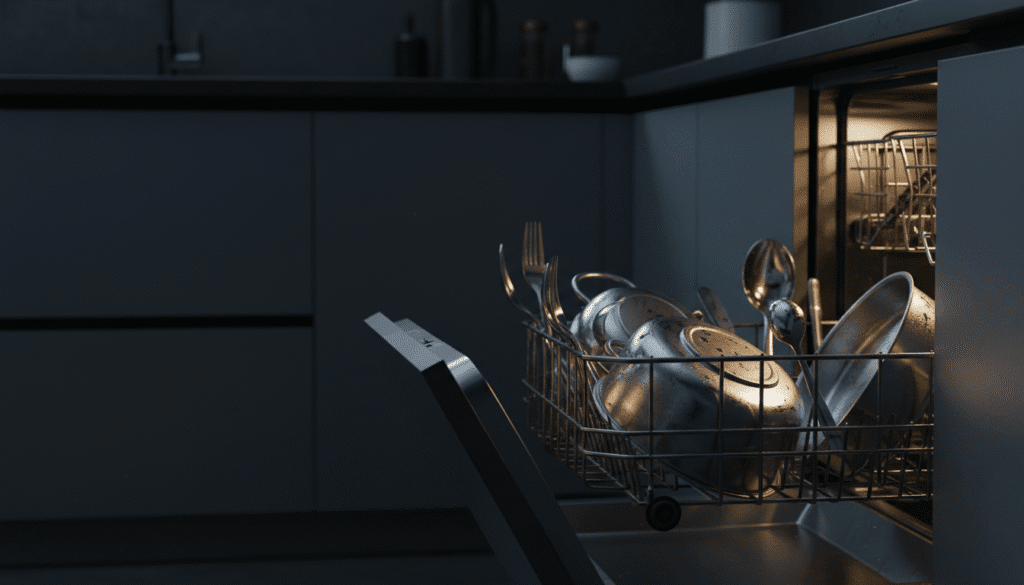
Pros & Cons of Dishwashing Stainless Steel
| Feature | Dishwashing | Hand Washing |
|---|---|---|
| Convenience | Excellent. Set it and forget it. | Low. Requires time and effort. |
| Sanitisation | High. Hot water kills bacteria effectively. | Moderate. Depends on how hot your hands can handle. |
| Shine Retention | Low. Surfaces dull over time. | High. Keeps the mirror finish longer. |
| Rust Risk | Moderate. prolonged wetness causes issues. | Low. You dry it immediately. |
| Longevity | Good, but handles/rivets may wear. | Excellent. Items can last a lifetime. |
Our Rating: 4/5 (Safe with Care)
We rate stainless steel as 4 out of 5 for dishwasher safety.
It is one of the strongest materials in the kitchen. The dishwasher is great for 90% of the cooking you do every day, like boiling pasta, roasting vegetables, and eating dinner. The missing point is only for the expensive things, like sharp knives and insulated bottles, that need a little extra care. If you take care of it, stainless steel will last longer than almost anything else in your kitchen.
Conclusion:
So, can you put stainless steel in the dishwasher? Yes, for almost all of your pots, pans, and silverware. It is made to be used, and one of the reasons it is useful is that it is easy to clean.
But if you have high-end cookware or a favorite chef’s knife, a little hand washing can make a big difference. You can use the machine without losing the shine on your steel by rinsing off salty foods, not using lemon detergents, and keeping your metals separate. Don’t worry about the occasional spot; nothing in the kitchen stays perfect forever, but stainless steel comes pretty close. Cook freely and load wisely.
Frequently Asked Questions:
u003cstrongu003eWhat metals cannot go in the dishwasher?u003c/strongu003e
You shouldn’t put aluminum, cast iron, copper, or tin in the dishwasher. Aluminum will get dark and corroded, cast iron will rust and lose its seasoning, copper will tarnish and lose its shine, and tin (which is often found on old things) has a low melting point and can bend.
u003cstrongu003eWhich stainless steel grades are dishwasher safe?u003c/strongu003e
You shouldn’t put aluminum, cast iron, copper, or tin in the dishwasher. Aluminum will get dark and corroded, cast iron will rust and lose its seasoning, copper will tarnish and lose its shine, and tin (which is often found on old things) has a low melting point and can bend.
u003cstrongu003eWhy are stainless steel bottles not dishwasher safe?u003c/strongu003e
The steel itself can handle the wash, but insulated bottles need a vacuum seal between two walls of metal to work. The heat from a dishwasher cycle can break or weaken this seal, making it impossible for the bottle to keep drinks hot or cold. Also, water can get stuck between the layers, which can cause mold to grow.
u003cstrongu003eHow do dishwashers affect stainless steel?u003c/strongu003e
Dishwashers use a mix of high heat, long-lasting moisture, and harsh chemicals to damage stainless steel. Over time, this can break down the u0022passiveu0022 protective layer of chromium, which can make the metal dull, pit, or rust on the surface, especially if there are salty food residues on it before washing.