


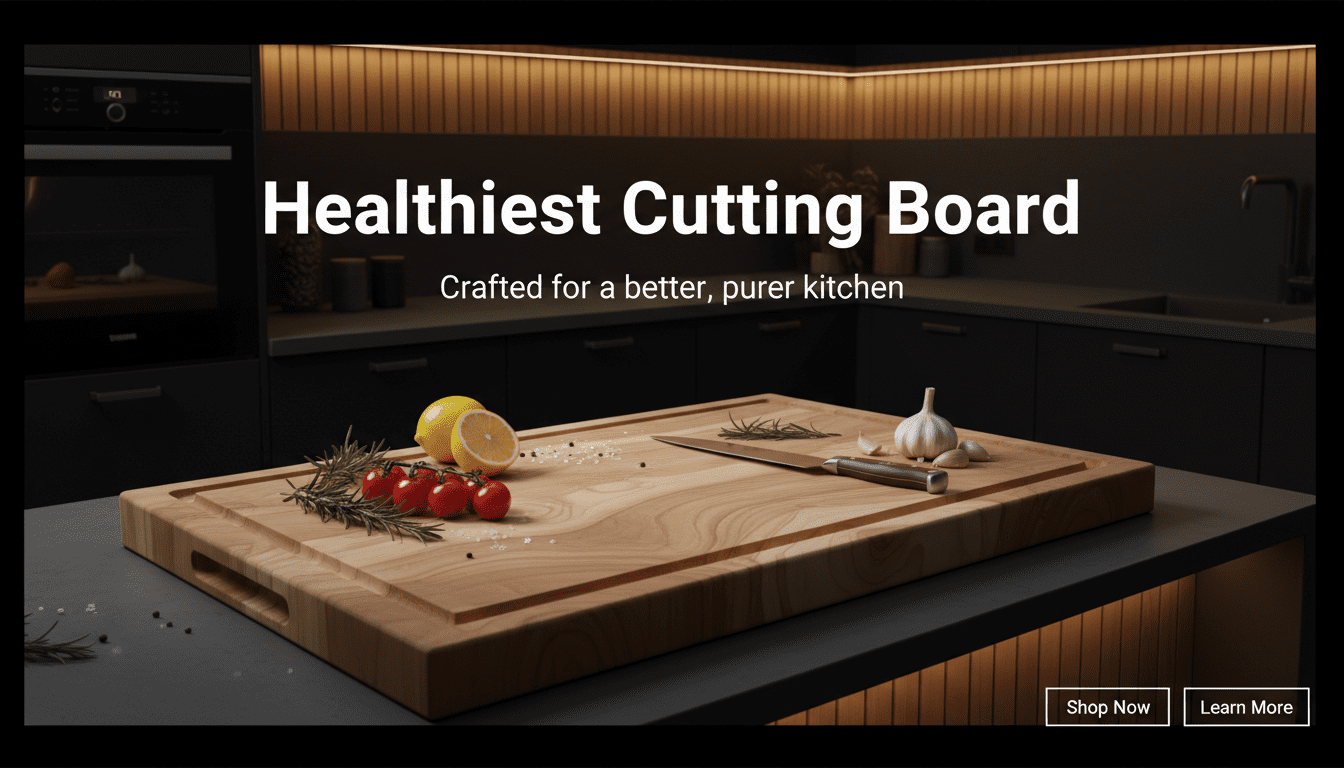

Did you know about the Healthiest Cutting Board? No worries, we’ve all been there: looking at a white plastic board with deep grooves and stains and wondering, “Is this thing really clean?” It’s a real concern. The best cutting board for your health isn’t just one that looks good on your counter; it’s one that keeps bacteria from making your dinner prep dangerous to your health.
I thought plastic was safer for years because I could put it in the dishwasher. Then I learned about how bacteria can live in deep knife grooves and microplastics. I switched to wood because I was worried about “sanitizing” it, and I almost ruined a beautiful maple board by soaking it overnight (spoiler: don’t do that). After cutting up everything from raw chicken to juicy tomatoes on a lot of different surfaces in my own kitchen, I’ve learned that hygiene depends on two things: the material you choose and how you treat it.
This guide tells you everything you need to know to keep your food safe if you want to improve your prep area for peace of mind.
Table of Contents
The Big Debate: Which Material is Actually Safest?
When we talk about the Healthiest Cutting Board choice, we usually have to weigh two risks: the growth of bacteria and the presence of physical contaminants like plastic shavings. This is how the main competitors compare in a real kitchen.
Wood: The Surprisingly Sanitary Choice
People used to think that wood was dirty because it was porous. “Will the chicken juice soak in?” we asked. It turns out that being porous is a superpower.
Researchers have found that hardwoods like maple, walnut, and cherry trap bacteria in the grain, where they eventually die. They don’t grow on the surface like they can on plastic that has been scratched.
- Pros: It naturally fights germs, lasts a long time, heals itself (knife marks don’t stay deep), and looks great.
- Cons: It needs to be washed and oiled by hand, is heavier to move, and is usually more expensive.
- Best for: Cutting up vegetables, bread, and cooked meats every day.
- My Experience: I use a big end-grain board for 90% of my cooking. It feels better when you cut it, and it never smells bad after a quick wash and dry.
Plastic: The Dishwasher Friend (With a Catch)
On paper, plastic is not porous, which sounds great. And yes, being able to blast it with high heat in the dishwasher is a big plus for cleaning.
Once a plastic board gets scratched, though—and it will get scratched—those grooves become impossible to clean by hand. Bacteria can hide in the scars, and even a dishwasher might not be able to get deep enough into narrow cuts. And then there’s the problem of microplastics. That missing plastic went somewhere every time you see a jagged edge on your board (probably into your food).
- Pros: Cheap, lightweight, dishwasher safe.
- Cons: Develops deep bacterial-harboring grooves, risk of microplastics, and needs frequent replacement.
- Best for: Raw meat (if you sanitize properly) or messy tasks you want to contain easily.
- My Experience: I have two thin plastic boards that I only use for raw chicken. I use them, clean them with bleach or in the dishwasher, and then throw them away as soon as they start to look bad.
Bamboo: The Eco-Friendly Middle Ground
Bamboo is a type of grass, not wood. It is very hard and not very porous, so it doesn’t soak up much water.
- Pros: Very affordable, sustainable, and resists water absorption.
- Cons: Knives can get dull faster if they have a lot of silica in them; many are made with glues that contain formaldehyde (look for “formaldehyde-free” labels). Bamboo is not wood; it is a type of grass. It is very hard and not very porous, so it doesn’t soak up much water.
- Best for: Veggie prep and general tasks if you are on a budget.
Composite (Wood Fiber): The Best of Both Worlds?
Epicurean and other brands make boards out of wood fiber that has been pressed with resin. These are my favorite boards for a “busy weeknight.”
- Pros: Dishwasher safe (usually), thin, durable, heat resistant.
- Cons: Harder surface can be loud and tough on knife edges compared to soft maple.
- Best for: Quick tasks, carving juicy meats, and easy cleanup.
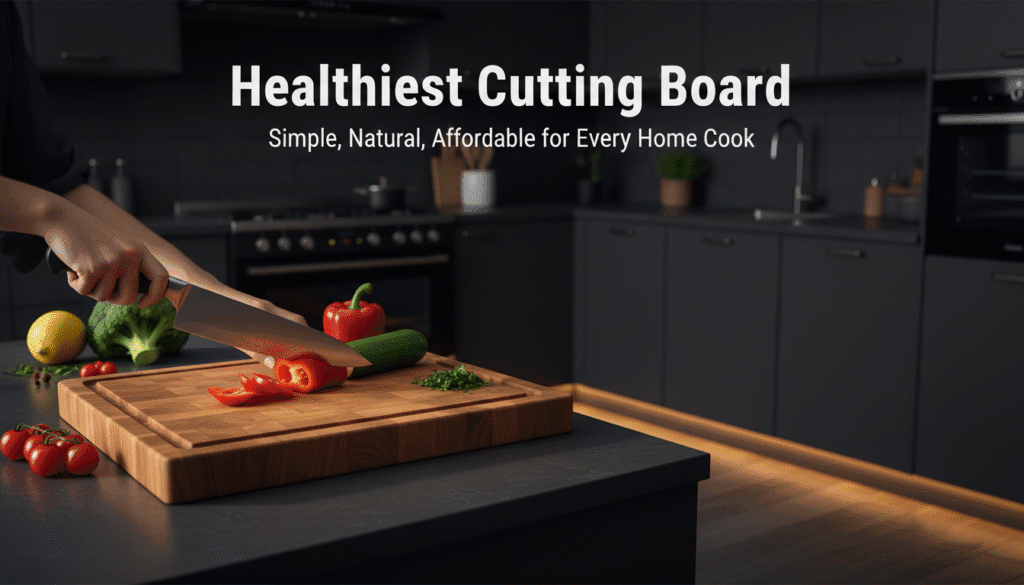
How It Actually Performs in a Home Kitchen
I tested these materials by seeing how well they could handle the “Tuesday Night Taco Panic,” which is when you are chopping onions, slicing chicken, and grating cheese all at the same time.
The Wooden Board Experience
My heavy wooden block doesn’t move. It doesn’t slide around the counter, which is a massive safety plus. When I cut onions, the knife digs into the wood a little, which gives me control. But you have to be careful when you clean. You can’t just throw it in the sink and forget about it. You need to wash it, wipe it down, and then stand it up to dry right away. It will warp if you leave it in a puddle.
The Plastic/Composite Experience
These are the options you can grab and go with. They are light and easy to move around. But smooth plastic can be slippery. The surface was too slick for bell peppers to stay on a plastic board. Composite boards have a little more texture and grip, but they can be loud. The best part is how quickly you can clean up: just put it on the dishwasher rack.
Cleaning and Maintenance Reality
This is where the “healthy” part relies on you.
For Wood and Bamboo:
You have to wash them by hand with hot, soapy water. Don’t ever soak them. Every month, or when the board looks dry or gray, rub in some mineral oil or beeswax that is safe for food. It only takes two minutes, but if you don’t do this, the wood will crack, which will let germs hide.
For Plastic:
The dishwasher is great, but be careful about how the surface looks. If your sponge gets stuck on the board when you wipe it, it’s too damaged. Get rid of it. You can’t sand plastic as you can wood.
Who This Is Best For
- Wood: The cook who cares about knife sharpness and doesn’t mind 2 minutes of maintenance for a safer, long-lasting surface.
- Composite: The busy parent who wants a safer material than standard plastic but needs dishwasher convenience.
- Plastic: Strictly for raw meat handling, provided you replace them every 6-12 months.
Pros & Cons:
| Feature | Wood (Maple/Walnut) | Plastic (HDPE) | Composite |
|---|---|---|---|
| ✔ Hygiene Potential | High (naturally antimicrobial) | Medium (depends on scratches) | High (non-porous) |
| ✔ Knife Friendliness | Excellent | Fair | Good |
| ✔ Dishwasher Safe | No | Yes | Yes (mostly) |
| ✔ Durability | Years (with care) | Months | Years |
| ✔ Maintenance | High (Oiling required) | Low | Low |
Product Recommendations: What I Actually Use
I won’t just list specs; here are the boards I reach for after years of cooking.
1. John Boos Block R02 Maple Wood Edge Grain Board
This is the tank of my kitchen. It’s heavy, sturdy, and the maple is gentle on my knives.
- Why I like it: It feels substantial. I can chop a mountain of veg without running out of space.
- The learning curve: It is thirsty. You need to oil it frequently when you first get it, or it will feel rough.
- Best for: The healthiest cutting board material experience for daily main meals.
2. Epicurean Kitchen Series Cutting Board
This is my “I need to chop an apple quickly” board. It’s made of a paper composite.
- Why I like it: It’s thin and slides right into the dishwasher. It doesn’t harbour smells like my old cheap plastic ones did.
- The catch: It’s hard. You can hear the thwack-thwack of the knife, and I have to sharpen my chef’s knife a bit more often.
- Best for: Speed, hygiene, and raw meat prep (since it can be sanitized in the dishwasher).
3. OXO Good Grips Carving and Cutting Board
If you must use plastic (and sometimes you just need to), this is the one.
- Why I like it: It has rubber feet, so it doesn’t slide. It also has a juice groove that actually holds liquid.
- The reality check: I replace this every year. Once the centre gets fuzzy with cut marks, I downgrade it to a gardening kneepad and buy a new one.
- Best for: messy raw meats and messy fruits like watermelon.
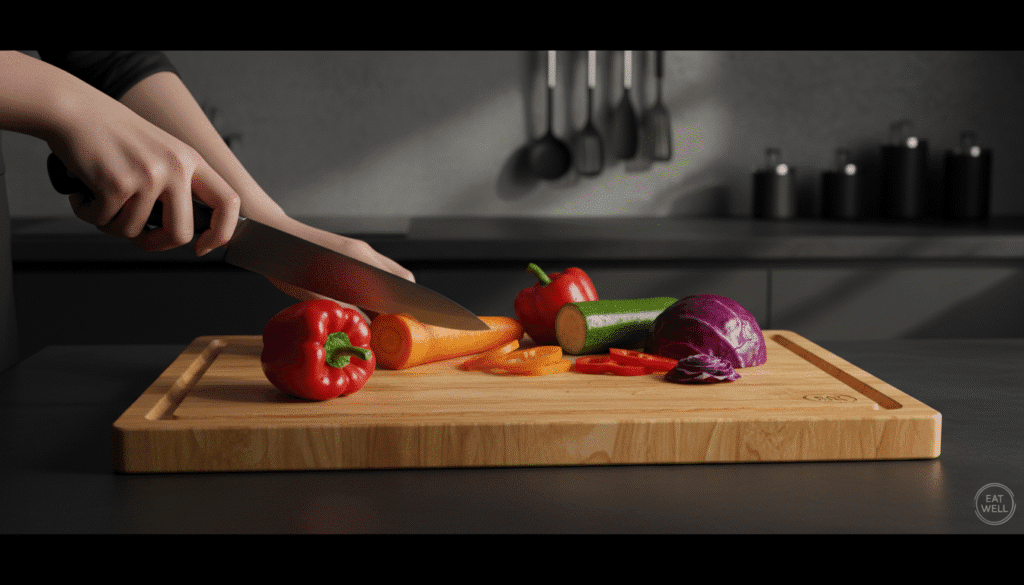
Overall Rating: 4.8/5 (For Wood)
If I have to choose the single healthiest cutting board option, I rate high-quality wood (like the Boos block) a 4.8 out of 5.
Why?
Because it doesn’t shed microplastics into your food and has natural antibacterial properties, it is better for hygiene. The only thing that keeps it from being a perfect 5 is that it needs to be taken care of. It gets less safe if you don’t take care of it. But if you take care of it, it’s the safest place to cook.
Conclusion:
It’s not about spending a lot of money to find the healthiest cutting board; it’s about matching the material to how you use it. A good maple board is a long-lasting investment in your health if you’re willing to wash it by hand. If you need the dishwasher, don’t buy the cheap white plastic. Instead, get a wood-fiber composite.
No matter what you choose, keep in mind that the surface of a board is what makes it healthy. The safest thing to do is to get a new one if it’s cracking, warping, or has deep scars. The John Boos Maple Edge Grain board is widely thought to be the best for home cooks because it lasts a long time and is easy to clean. The Epicurean composite boards are the best choice for a dishwasher-safe option because they are easy to clean and safe to use.
FAQ:
u003cstrongu003eWhich chopping boards are best for health?u003c/strongu003e
Most people think that hardwoods like maple, walnut, or cherry are the best for your health. Instead of letting bacteria sit on the surface, they trap them inside the grain, where they die. Also, unlike softer plastic boards, they don’t let microplastics get into your food.
u003cstrongu003eWhat is the safest option for a cutting board?u003c/strongu003e
A system is probably safer than just one board. Use a high-quality wooden board for bread, vegetables, and cooked foods. For raw meat, use a separate composite or plastic board that you can wash in the dishwasher. This stops cross-contamination.
u003cstrongu003eWhat do professional chefs use for cutting boards?u003c/strongu003e
Most professional chefs like to use heavy wooden blocks or rubber boards (like Hi-Soft) for their main prep because they keep knife edges sharp. But in commercial kitchens with strict health codes, color-coded plastic boards are often used for certain food groups to keep them from getting mixed up, even though they need to be replaced often.
u003cstrongu003eWhat is the most recommended cutting board?u003c/strongu003e
The John Boos u003ca href=u0022https://kitchenmaxi.com/are-marble-cutting-board-worth-it/u0022 target=u0022_blanku0022 rel=u0022noreferrer noopeneru0022u003eMaple Edge Grain boardu003c/au003e is widely thought to be the best choice for home cooks because it is strong and easy to clean. The Epicurean composite boards are the best choice for a dishwasher-safe option because they are easy to clean and safe to use.