


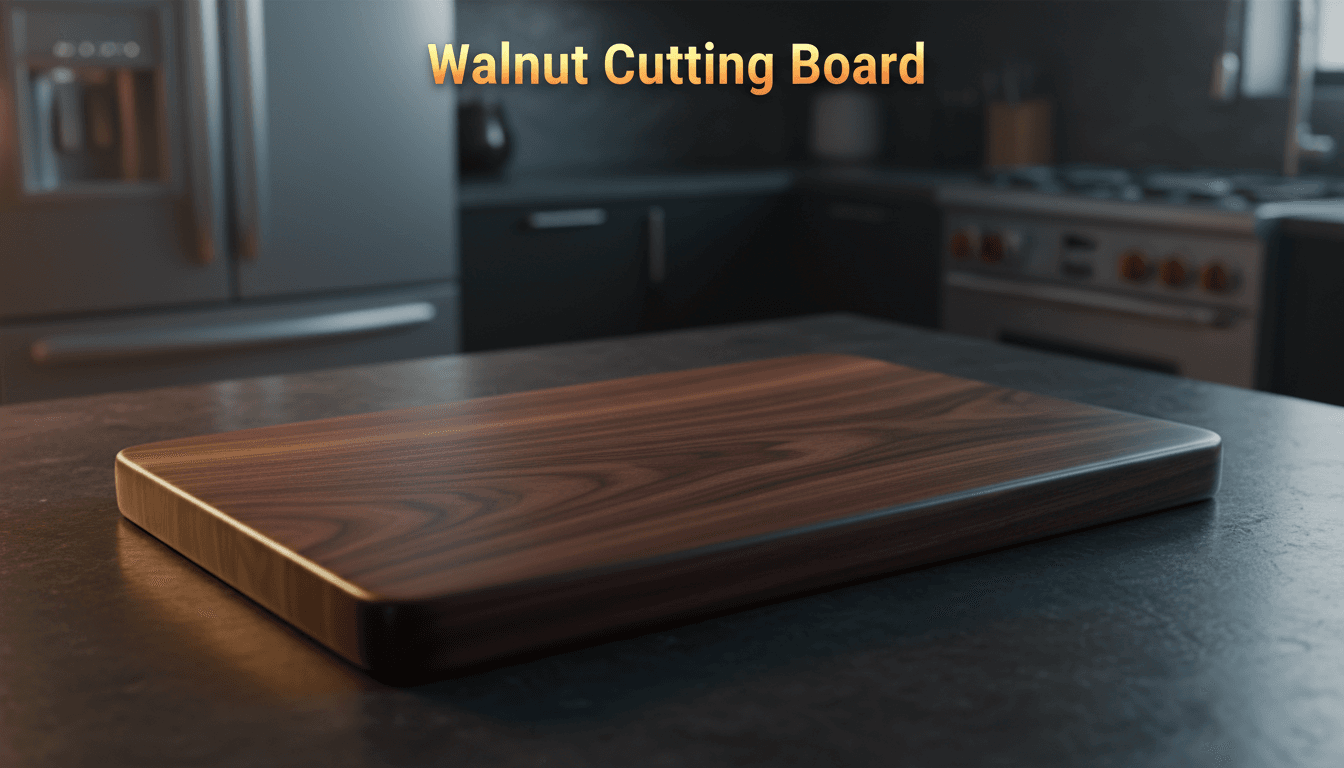

At some point in every home cook’s life, they look at their stained and scarred plastic chopping mats and think, “There must be a better way.” That moment happened to me about three years ago. I had just bought my first good chef’s knife. It wasn’t a top-of-the-line Japanese blade, but it was a good German steel one. I realized that every time I slammed it against hard plastic, it got duller. That’s when I bought a Walnut Cutting Board.
To be honest, I was scared I would ruin it. For the first month, I was afraid of stains and only used it to chop onions. But after I got over my first doubts, I realized that walnut isn’t just for looks. It’s a workhorse. It makes a satisfying “thud” sound when a knife hits it instead of a sharp “clack,” and it looks better as it gets older, not worse. If you don’t want to keep buying cheap boards every year, let me show you why the Walnut Cutting Board might be the best choice for your kitchen.
Table of Contents
What Actually Is a Walnut Cutting Board?
A walnut cutting board is just what it sounds like: a piece of wood from a walnut tree, usually Black Walnut (Juglans nigra) if you live in North America. It’s not just a piece of wood, though.
Walnut Cutting Board is a hardwood, but it is in the middle of the Janka hardness scale, which measures how resistant wood is to wear and denting. It weighs about 1,010 lbf. Hard maple, which is often thought of as the industry standard, is about 1,450 lbf harder.
Why is this important to us in the kitchen? Because “harder” isn’t always better. AA very hard board, like bamboo or glass, which is very bad for the edges of your knife. Walnut is softer than maple, so it can take more abuse. It “gives” a little under the blade, which keeps your sharp edge longer. But it’s still dense enough that it doesn’t leave deep scars like pine or other soft woods would.
Benefits of Using a Walnut Cutting Board
It’s Gentle on Your Knives
This is the main reason why professionals like them. Your knife edge stays sharper for longer because walnut is a little softer than maple or bamboo. During a heavy prep session, you won’t feel that jarring impact in your wrist.
The “Self-Healing” Factor
Even though no wood is magic, walnut (especially end-grain, which we’ll talk about in a minute) is very good at hiding cuts. After being cut by a knife edge, the fibers tend to come back together a little bit, so you don’t get those deep, jagged valleys where bacteria like to hide on plastic boards.
Hygiene and Bacterial Resistance
People have long believed that plastic is safer than wood. Plastic is not porous, but once it gets scratched, it is almost impossible to clean completely. Wood is naturally resistant to germs. Capillary action in the wood pulls moisture (and bacteria) down into the grain. As the wood dries out, the bacteria die.
That Rich, Dark Aesthetic
Let’s be a little vain for a second. Walnut is beautiful. The deep chocolate brown, which can have lighter sapwood or purple streaks, looks amazing on a counter. It can also be used as a cheese or charcuterie serving platter without any trouble.
Different Types of Walnut Cutting Boards
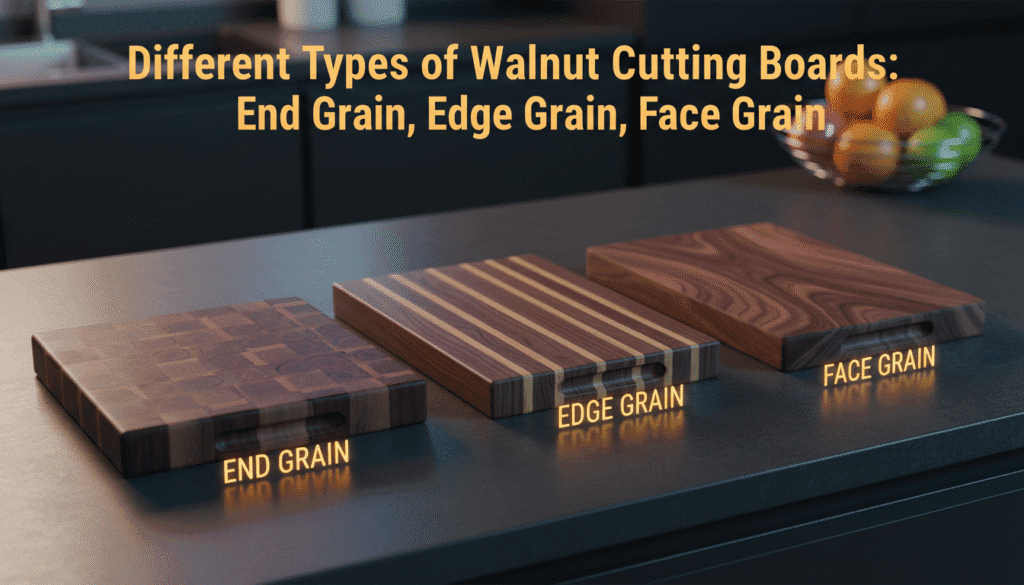
Not all boards are made the same way. The price and performance are very different depending on how the wood is cut and glued.
End Grain
End grain looks like a bunch of straws standing up. You are cutting into the ends of the wood fibers.
- The Experience: This is the best choice. The knife goes between the fibers instead of cutting across them. This is the kind that “heals itself.”
- The Reality: They are heavy, cost a lot, and need a lot of water. Because the open fibers soak up moisture, they need to be oiled more often.
Edge Grain
This is where the wood is cut into strips and glued together with the edge of the board facing up.
- The Experience: This is the most common kind of high-quality walnut cutting board. It lasts a long time and shows off the grain patterns very well.
- The Reality: It’s harder than end grain, so it will dull knives a little faster, and knife marks will show up more over time.
Face Grain
This is essentially a plank of wood with the wide face up.
- The Experience: These show off the most beautiful wood figure (cathedral arches and swirls).
- The Reality: They are likely to warp and show knife cuts badly. These are not for cutting up a chicken; they are for serving cheese.
Factors to Consider When Buying
Size and Thickness
Don’t think you don’t need a lot of room. For a main board, I suggest something at least 12×18 inches. The thickness is also important; a thin Walnut Cutting Board (less than 1 inch) is more likely to warp. Edge grain should be at least 1.5 inches thick, and end grain should be at least 2 inches thick.
Grain Orientation
A black walnut cutting board with edge grain is a great choice if you don’t want to spend a lot of money. If you want the best of the best and you have expensive Japanese knives, save up for end grain.
The Finish
Most of them come with mineral oil or beeswax already on them. Stay away from anything that has a chemical or varnish stain. You only want raw wood that has been treated with food-safe oil.
Price Range
You can get good edge-grain boards for between £40 and £80. A large walnuend-grainin cutting board can cost anywhere from £120 to more than £200. It’s an investment that will last for many years.
Top Walnut Cutting Board Recommendations
Based on my testing and daily use, here are a few options depending on what you need.
| Product | Type | Best For |
|---|---|---|
| John Boos Walnut R-Board | Edge Grain | The serious daily chopper who wants reliability. |
| Ironwood Gourmet Large End Grain | End Grain | Those wanting the premium feel without the £200 price tag. |
| Virginia Boys Kitchens Large Walnut | Edge Grain | Eco-conscious cooks (they plant a tree for every board sold). |
1. John Boos Block Walnut “R” Board
There’s a reason why Boos is so well-known. This edge-grain board is thick (1.5 inches) and can be used on both sides. It stays very still on the counter. The only thing I don’t like is that it comes from the factory a little dry, so get some oil right away.
2. Ironwood Gourmet Large End Grain
This has a beautiful checkered pattern. It is a little thinner than some high-end blocks, which makes it lighter and easier to move to the sink to clean. A great way to get into end grain.
3. Virginia Boys Kitchens Large Walnut
This one has a rustic look that I really like. It usually comes “raw,” which means you have to oil it yourself before you can use it for the first time. It’s a little bit of work, but you can control the finish completely.
How to Maintain Your Walnut Cutting Board
This is where people get scared, but it’s actually very simple.
Cleaning:
- The Rule: Never, ever put it in the dishwasher. It will crack and warp instantly.
- The Method: Wash with warm water and mild soap. Scrub off stuck-on food. Rinse and dry immediately with a towel. Stand it upright to air dry completely.
Oiling:
- When the board looks dry or light (usually once a month), cover it in food-grade mineral oil.
- If you can, let it soak in overnight.
- In the morning, buff off the extra.
- To seal the surface and give it extra protection, use board cream (oil mixed with beeswax).
Sanitizing:
- Don’t worry if you’ve already prepared raw meat.
- Use hot, soapy water to wash it well.
- To get it really clean, wipe it down with white vinegar or rub it with half a lemon and coarse salt.
- According to USDA rules, a weak bleach solution (1 tablespoon per gallon of water) is safe for cleaning wood as long as you rinse and dry it well afterward.
Pros & Cons of Walnut Cutting Board
| Pros: | Cons: |
|---|---|
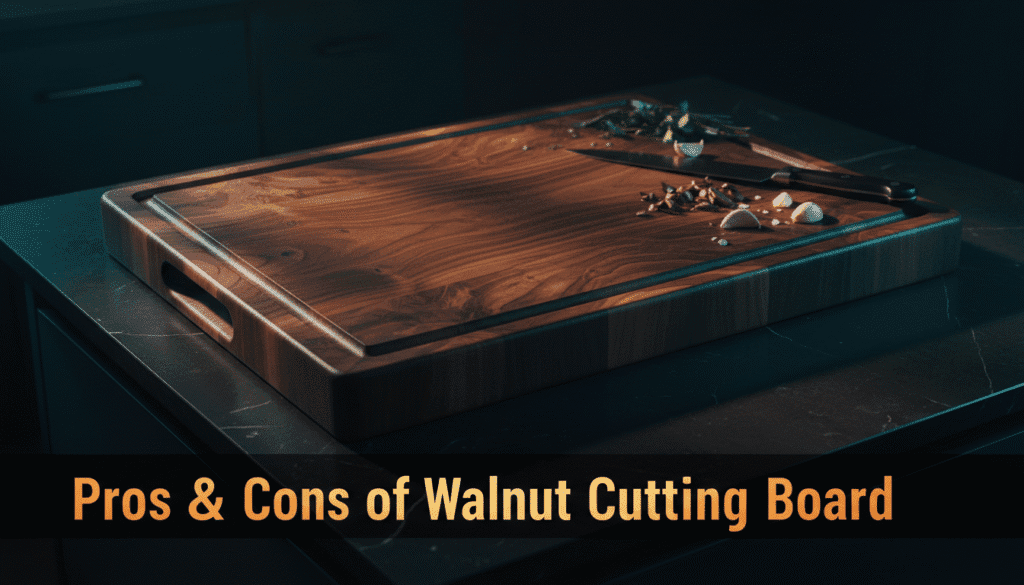
| ✅ Knife Friendly: Soft enough to protect edges, hard enough to resist deep gouges. | ❌ Maintenance: Requires regular oiling to prevent cracking. |
| ✅ Stunning Looks: Dark colour hides stains better than maple and looks elegant. | ❌ Price: Significantly more expensive than plastic, bamboo, or maple. |
| ✅ Hygiene: Natural antibacterial properties superior to scarred plastic. | ❌ Weight: Thick walnut boards are heavy to lift and wash. |
| ✅ Longevity: Can last 10+ years (or a lifetime) if cared for. | ❌ Sensitive: Cannot handle dishwasher heat or prolonged soaking. |
Rating: 4.5/5 ⭐
I give walnut cutting boards a 4.5 out of 5.
They lose half a point just because of the price and upkeep. They aren’t cheap, and you can’t just put them in the dishwasher. But how do they feel, work, and taste when you cook with them? They get a 5 out of 5. You won’t go back after you hear the knife hit the floor and see how nice your kitchen looks.
Conclusion:
A walnut cutting board is one of the best things you can buy to improve your kitchen. It makes a boring task, like chopping vegetables, feel solid and professional.
Is it a little extra work to oil it once a month? Yes. But the trade-off is a board that keeps your expensive knives safe, keeps bacteria away, and makes your kitchen look great. If you cook every day, give yourself a treat. Your knives and countertops will thank you.
Frequently Asked Questions:
u003cstrongu003eIs walnut good for cutting boards?u003c/strongu003e
Yes, for sure. Black walnut is one of the best woods for making cutting boards. It has a medium hardness of about 1,010 Janka, which makes it strong enough to handle daily chopping without dulling your knife blades too quickly. Also, its dark color hides stains from foods like berries and tomatoes.
u003cstrongu003eHow long will a walnut cutting board last?u003c/strongu003e
A high-quality walnut board can last for decades if you take care of it. I know people who use boards that they got from their parents. The most important thing is to keep it oiled so it doesn’t crack, and never let it sit in water. You can sand it down and re-oil it to make it look brand new again if it gets scratched up after 5 or 10 years.
u003cstrongu003eWhat does Gordon Ramsay use for cutting boards?u003c/strongu003e
In his masterclasses and at home, Gordon Ramsay usually uses big, thick wooden boards, like Boos Blocks. He hasn’t said that one type of wood is the u0022onlyu0022 choice, but professional chefs like him usually prefer dense hardwoods like maple or walnut because they are stable and easy on knives, or heavy-duty synthetic rubber boards for commercial hygiene.
u003cstrongu003eWhat is better, a u003c/strongu003emaple or a u003cstrongu003ewalnut cutting board?u003c/strongu003e
u0022Betteru0022 depends on your priorities.u003cbru003eu003cstrongu003eMapleu003c/strongu003e is harder and more durable. It resists scratches better but is slightly tougher on knife edges. It is lighter in colour, so it shows stains more easily.u003cbru003eu003cstrongu003eWalnutu003c/strongu003e is softer and better for keeping knives sharp. It is darker, so it hides stains well and looks more luxurious, but it is easier to dent if you are heavy-handed.u003cbru003eu003cstrongu003ePrice:u003c/strongu003e Maple is usually cheaper; walnut is a premium upgrade.