


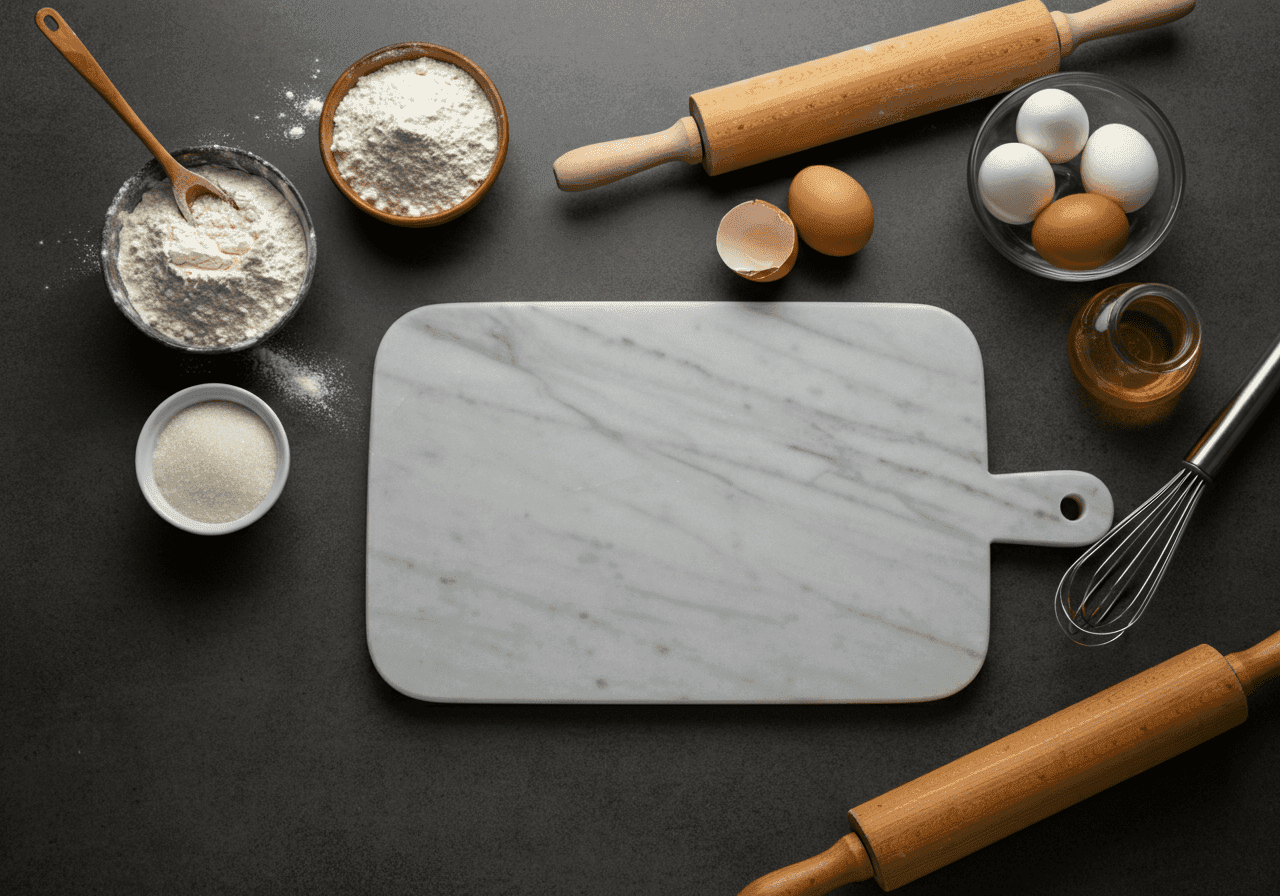

Let me tell you about the day I fell in love with marble cutting boards made. When I went to my friend Sarah’s kitchen, I saw her beautiful white marble board with those beautiful grey veins running through it like nature’s own art. “It’s not just pretty,” she said as she rolled out pastry dough on its cool surface. “It’s really great for baking!” That moment made me wonder if these pretty kitchen tools are more than just lovely to look at.
You’re not the only one who has been thinking about those Instagram-worthy marble cutting boards and whether or not they would be helpful for everyday cooking. These beautiful pieces are becoming more and more popular, and you can see them on kitchen counters and social media feeds. But do they really live up to the hype, or are they just pricey decorations?
The truth is that marble cutting boards have special benefits that make them very useful in the kitchen, even though they aren’t always the best choice. These boards have more to them than meets the eye. For example, their naturally cool surface is great for pastry work, and they look great too. But you should consider several things before you buy them, just like you would with any other kitchen item.
Let’s look at everything you need to know about marble cutting boards, including their pros and cons, so you can decide if they belong in your kitchen.
The Compelling Case for Marble Cutting Boards
Natural Elegance That Actually Functions
Working on a Marble Cutting board makes your time in the kitchen feel magical. These boards are not only pretty; they also work in ways that may surprise you. The natural stone makes a beautiful focal point that also serves as a functional workspace, making every meal prep feel a little more special.
Marble is different because it has a unique shape and function. Wooden cutting boards can look rustic, and plastic ones can look very “utilitarian.” But marble cutting boards fit in with any kitchen style, from modern minimalist to traditional farmhouse.
The Cool Factor (Literally!)
This is where marble really shines: its naturally cool surface temperature. Because marble stays cooler than room temperature, it’s great for specific cooking tasks. This cool surface keeps butter, chocolate, and pastry dough from getting too warm and losing their perfect texture.
I learnt this the hard way when I tried to make croissants. The heat from the kitchen kept my wooden cutting board warm, which made the butter melt into the dough instead of staying in separate layers. The Marble Cutting Board kept everything at the right temperature, which made those flaky layers that everyone wants!
This temperature advantage also applies to making cheese. The cool marble surface of a charcuterie board keeps soft cheeses from getting too melty, which keeps their perfect texture for longer.
Non-Porous Properties and Hygiene Benefits
One of the best things about marble is that it doesn’t absorb liquids. Marble’s smooth, sealed surface doesn’t absorb fluids and smells like wood does. This is because wood can hold bacteria in grooves and scratches. This makes it especially clean for cooking.
Because it doesn’t have any holes, you can use your marble board for different kinds of food without worrying about mixing up the flavours. The garlic you chopped yesterday won’t stay around to mess up your fruit prep today!
Cleaning also gets a lot easier. Most food stains come off entirely with a quick wipe with warm, soapy water and a soft cloth. This leaves you with a clean surface ready for your next cooking adventure..
Understanding the Challenges
Weight and Practicality Considerations
Let’s be honest: the biggest problem with marble is that these boards are heavy. A standard-sized Marble Cutting Board can weigh several kilograms, which makes it hard to store and use every day. You won’t be able just to grab this board and chop things quickly or move it around your kitchen easily.
But this weight does have one good thing about it: it stays stable. The board doesn’t move around when you use it because it has a lot of weight. This makes food preparation safer. This might affect your choice, though, if you don’t have a lot of upper-body strength or storage space.
Knife Compatibility and Durability Concerns
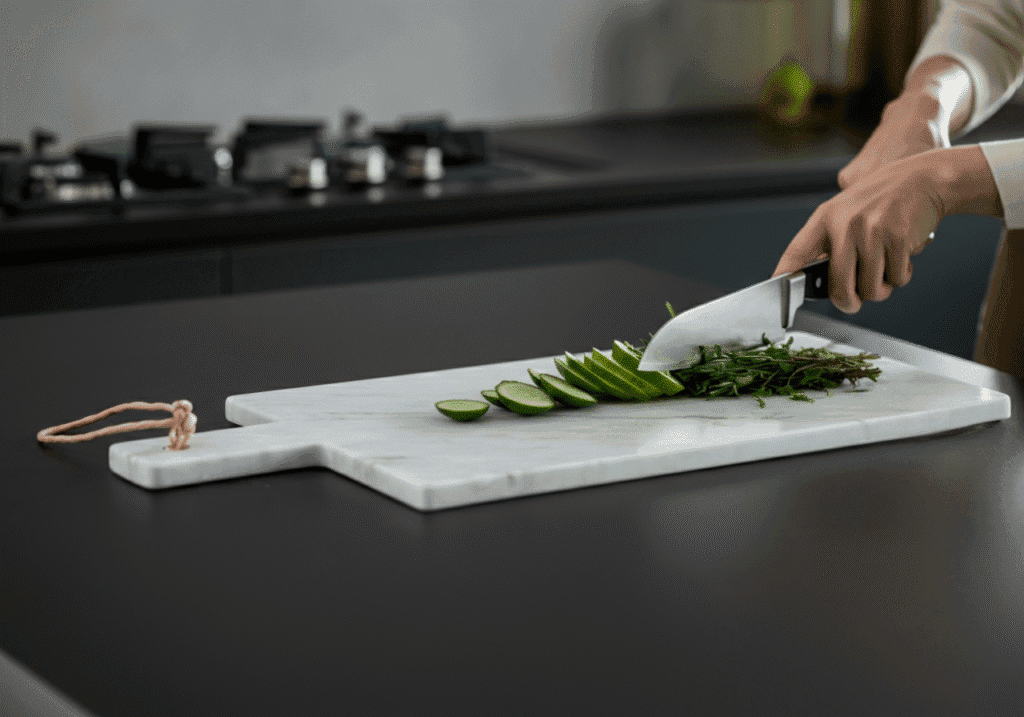
When I first started using marble boards a lot, I was surprised to learn that they aren’t the best for all cutting tasks. Hard surfaces can dull your knives faster than softer ones, like wood or plastic. This is especially true for delicate, sharp blades that you’ve spent time keeping up.
Professional chefs usually only use their marble boards for specific tasks, like making pastries, preparing cheese, or serving food. When they need to chop vegetables or prepare meat every day, they will use softer surfaces.
If you drop or hit the marble hard enough, it can chip, but if you take care of it, good boards made from dense marble are powerful.
Maintenance Requirements and Staining Potential
Even though marble doesn’t absorb water, it still needs to be cared for carefully. If you leave acidic foods like tomatoes, citrus fruits, or wine on the surface, they could stain or etch it. Cleaning up spills right away is the most important thing to do to avoid most problems.
Sealing some marble boards from time to time can help keep them looking nice and protect them from stains. This isn’t hard, but it’s an extra step that plastic or glass boards don’t need to take.
Choosing the Perfect Marble Cutting Board
Size and Shape Considerations
Think about your needs and the size of your kitchen when choosing a marble cutting board. Small square boards (about 8×8 inches) are great for serving cheese or doing small pastry tasks. Larger rectangular boards (16×12 inches) give you plenty of room to work on bigger projects.
Round boards look great and are great for serving food because they can easily go from prep to presentation. Oval shapes are a good balance between how much space they take up and how they look.
Think about how you’ll store these boards, too. Because they’re heavy and could chip if they fall, they need to be stored safely and securely.
Quality Indicators to Look For
Not all cutting boards made of marble are the same! Choose boards made of high-quality, dense natural marble. The surface should be smooth and even, with no obvious pits or rough spots where bacteria could grow.
Look for feet that don’t slip or edges made of silicone that keep the item from sliding around while you use it. Because marble is naturally smooth, these safety features are essential.
The veining pattern isn’t just for looks; consistent, attractive veining is often a sign of good-quality marble that was chosen and finished correctly.
Thickness and Stability Factors
In general, thicker boards are more stable and less likely to crack or chip. Look for boards that are at least 1.5 cm thick if you want them to last a long time and be stable. More than 2 cm is even better.
The edges should be smooth and a little rounded, not sharp or rough. Not only does this look more professional, but it also keeps the board from chipping and makes it safer to handle.
Optimal Uses for Marble Cutting Boards
Pastry and Baking Applications
This is where marble cutting boards really shine! The cool surface is great for rolling out pastry dough, working with chocolate, or any other job where you need to keep the temperature just right. Pie crusts are softer, and cookie dough stays soft longer.
Marble cutting board has been very helpful for making croissants, puff pastry, and delicate shortbread, where it’s essential to keep the butter at the right consistency. The marble’s natural coolness is excellent for keeping those temperature-sensitive preparations in good shape.
Serving and Presentation Excellence
Cutting boards made of marble are beautiful serving pieces and helpful in preparing food. They make great cheese and charcuterie boards because they add a touch of class that makes even simple arrangements look fancy.
The boards can also be used as trivets for hot pots and pans, which will protect your dining table and look nice at the same time. A lot of people leave their marble boards out as decorations that also serve a purpose.
Strategic Kitchen Applications
Instead of using marble cutting boards for everything, use them for specific tasks. They work great for certain things, like crushing garlic with the flat side of a knife, rolling out pasta dough, or making delicate garnishes where the smooth, cool surface helps.
Proper Care and Maintenance
Daily Cleaning Routine
It doesn’t have to be hard to take care of your marble cutting board. After each use, wash it with warm, soapy water and a soft cloth or sponge. Don’t use rough cleaners or scrubbers that could scratch the surface.
To stop water spots from forming, rinse well and dry right away with a clean towel. This easy routine will keep your board looking great for years.
Deep Cleaning and Maintenance
You can make a paste out of baking soda and water to get rid of stains more thoroughly. Don’t use vinegar or lemon juice to clean marble because they can damage the surface.
If your board gets any etching or dullness over time, you can have it professionally restored. However, it’s always better to take care of it so that it doesn’t happen in the first place.
Long-term Preservation
If you use your marble boards a lot, they may need to be sealed every so often. Food-safe sealers made for natural stone can help keep the board looking good and make it even more resistant to stains.
Keep your marble board safe so it doesn’t get chipped when it hits something. Instead of stacking them with other cutting boards, many owners keep them out on countertops or in specially made storage racks..
Cost Considerations and Value Assessment
Investment vs. Budget Options
A good quality marble cutting board is a real investment, costing between £50 and £200 or more, depending on its size and quality. This may seem like a lot of money compared to wooden or plastic options, but think about how long it will last. A well-maintained marble board can last for decades.
There are budget options, but the quality can vary a lot. Buying a well-made board from the start is often cheaper than buying a new one later.
Comparing Long-term Value
When you think about how much these boards cost, think about all the different things they can do. You get a cutting surface, a serving piece, a trivet, and a decorative element all in one. This multi-functionality makes the higher initial cost worth it.
High-quality marble boards also tend to appear better over time than many other types, lasting as well as they were when they were new.
The Pros and Cons of Marble Cutting Boards
Pros:
- Marble boards are strong and last a long time, so you can count on them to work well in the kitchen.
- They can be used for many things, like cutting boards, serving trays, trivets, or decorations.
- Looks Good: Their natural patterns and smooth finish give any kitchen or table setting a touch of class.
- Cool surface by nature: great for things like rolling out dough or working with chocolate.
Cons:
- Higher Initial Cost: Quality marble boards often cost more than boards made of other materials.
- Heavy Weight: Marble boards are heavier, which can make them harder to move and store.
- Stains and Scratches: Marble is strong, but it can stain or scratch if you don’t take care of it or use it carefully.
- Needs Careful Maintenance: To keep the surface safe, it may need to be cleaned and sealed on a regular basis
Making the Right Choice for Your Kitchen
So, are marble cutting boards worth the cost? It depends on how you want to cook, what you like to see, and what you need. A marble cutting board could be a great addition to your kitchen if you bake a lot, like to entertain, or just like having beautiful kitchen tools that can be used for more than one thing.
Not every cook or kitchen task needs them. Wood or high-quality plastic might be better for you if you want a single cutting board that you can use for all of your daily vegetable prep and cooking. Marble, on the other hand, has some unique benefits if you’re putting together a set of specialised kitchen tools or want something that looks great from prep to serving.
Before you buy a whole set, try starting with a medium-sized board to see how well it works with your cooking style. You might find, like I did, that having the right tools can make some cooking tasks more fun and easier to do. That equipment is sometimes a magnificent piece of marble that makes cooking feel even more unique.
FAQ:
Is marble good for cutting boards?
Marble cutting boards are great for some tasks, especially those that need a smooth, cool surface, like rolling dough or making pastry. But they aren’t as good for chopping because the hard surface can dull knives over time.
What is the healthiest cutting board material?
People often think that wood and bamboo are the best materials for cutting boards. They are safe and long-lasting because they are gentle on knives and have natural antibacterial properties when they are properly cared for.
What are the disadvantages of marble cutting boards?
Cutting boards made of marble are pretty, but they can be heavy and break or chip easily if you drop them. Also, their hard surface isn’t good for using knives on a regular basis and could dull or damage blades.
Are marble cutting boards hygienic?
Marble cutting boards don’t have any holes in them, so they don’t stain or absorb bacteria. This makes them fairly clean for preparing food. But they need to be cleaned and cared for properly to avoid cross-contamination while they are being used.