


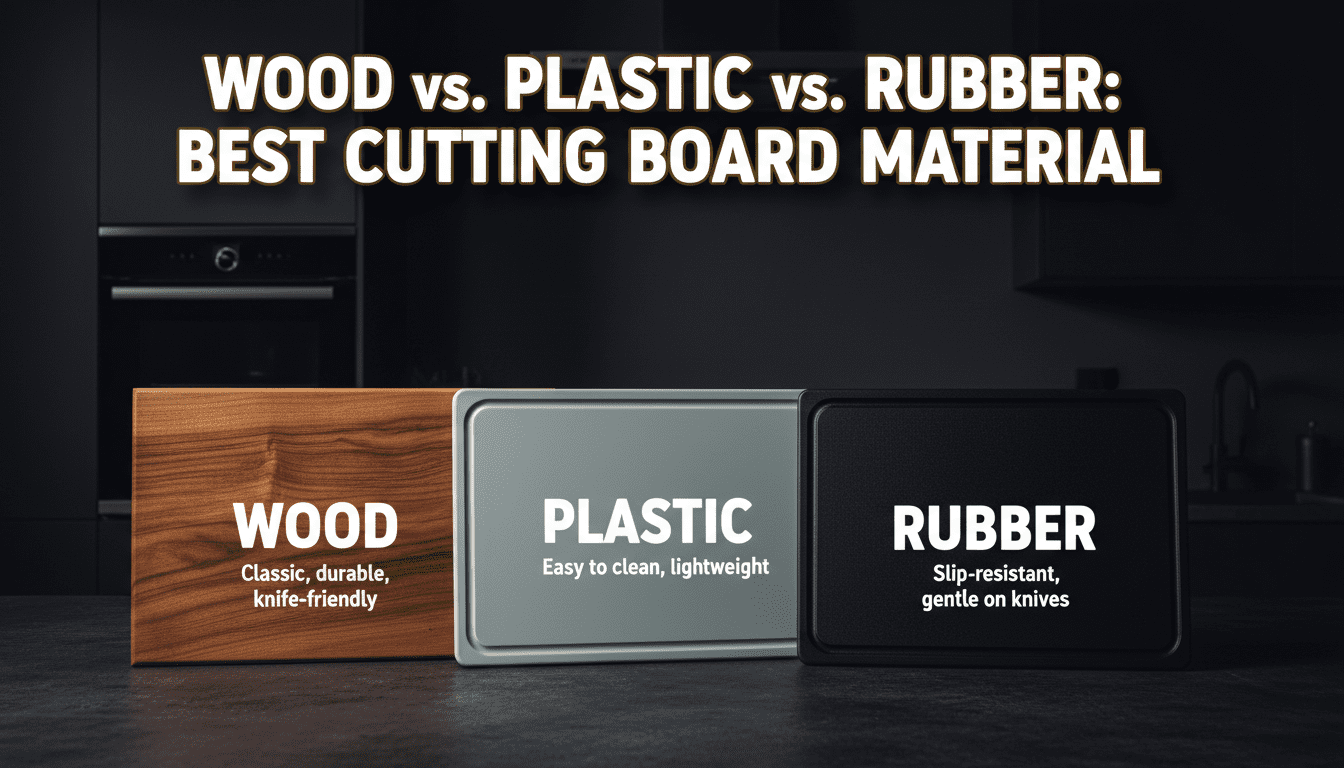

I used to think that a cutting board was just a piece of wood that you put on the counter to keep it safe. It didn’t matter to me if it was glass, plastic, or wood. Then I broke a brand-new $80 chef’s knife on a glass board my aunt gave me, and I knew I had a lot to learn.
I have chopped onions on warped plastic sheets, sliced brisket on heavy maple blocks, and diced garlic on those thin bamboo boards that slide all over the place. I’ve learned that the knife and the Best Cutting Board Material are both important. It changes how you get ready, how you clean, and how long your tools last. I’m going to show you what works and what doesn’t when it comes to cutting boards in your kitchen.
Table of Contents
Introduction
It’s easy to get caught up in the knives and pans when you’re setting up a kitchen and forget about the cutting board. But think about it: your board is the base of almost every meal. You cut, chop, and smash food on it every day. If you don’t clean it right, picking the wrong one can make your knives dull, cause dangerous slips, or even put your food at risk.
There are so many options that it’s hard to choose. You can choose from traditional wood, modern composites, cheap plastic, heavy rubber, and eco-friendly bamboo. They all say they are the “best,” but they all act differently in a real kitchen. Some need to be oiled once a month, while others can go in the dishwasher. Some heal their own cuts, while others keep bacteria inside.
This guide isn’t meant to get you to buy the most expensive block on the market. It’s about helping you choose the safest, longest-lasting option that works with your cooking style and budget. There is a Best Cutting Board Material for you, whether you love making Sunday roasts or chopping up veggies quickly on weeknights.
The Big Debate: Wood vs. Plastic
Wood and plastic are the two heaviest things in the kitchen. A professional chef will probably tell you to use wood or rubber. A busy parent might swear by plastic because it can go in the dishwasher. Let’s look at how they really work when you’re cooking.
Wood: The Gold Standard for a Reason
The classic choice is wooden boards, especially hardwoods like maple, walnut, or cherry. They feel strong. They don’t move around. But the best thing about them is how they treat your knife.
The blade can go through wood because it is soft enough. When you cut down, the fibers in the wood move apart a little to let the knife’s edge in instead of pushing it away. This helps your knife stay sharper for longer.
People also think that wood is less clean than plastic because it has holes in it. Research, on the other hand, suggests otherwise. Wood naturally fights germs. When bacteria get into the wood fibers, they die over time. On plastic, though, they can stay in the grooves and grow.
The catch is that you can’t put wood in the dishwasher. Never. It will bend or break because of the heat and water. You should also use mineral oil on it from time to time to keep it from drying out. Wood might make you mad if you’re the kind of cook who wants to throw everything in the machine after dinner.
Plastic: The Convenient Workhorse
Plastic boards, which are usually made of polyethylene, are cheap, light, and safe to put in the dishwasher. That last point is very important. It’s hard to beat the peace of mind that comes from blasting the board with high heat in the dishwasher when you’re getting ready to cook raw chicken.
But plastic is harder on the edges of your knife than wood. And over time, your knife will leave marks on the surface. Unlike wood, plastic doesn’t “heal.” Those deep cuts are great places for bacteria to hide, even in a dishwasher. You have to throw away a plastic board once it gets a lot of scratches. They are tools that can be thrown away, not heirlooms.
The Contenders: A Deep Dive into Cutting Board Material
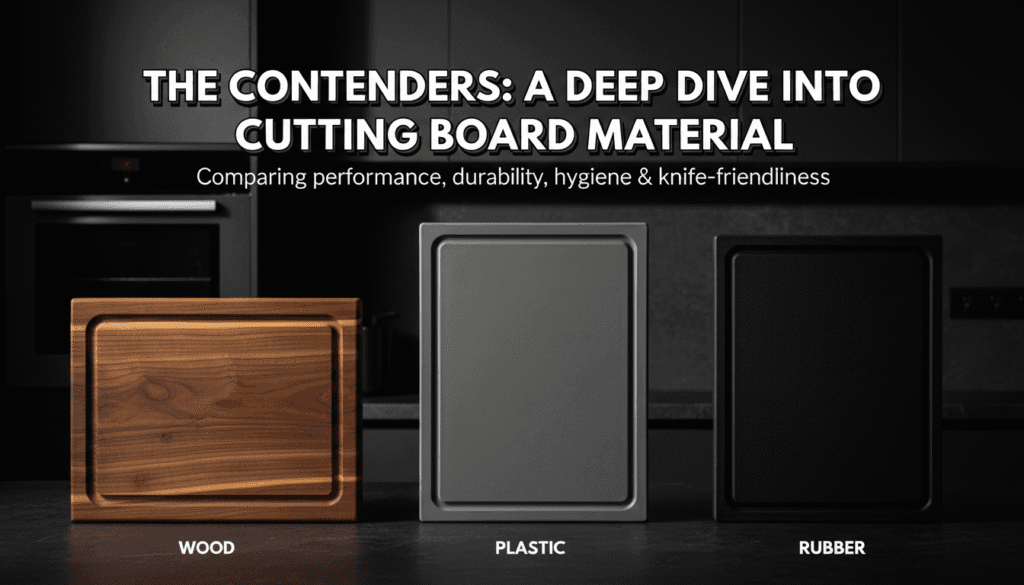
1. Hardwood (Maple, Walnut, Cherry)
I have a big block of maple that stays on my counter all the time. Because it’s heavy, I don’t have to run after it while I chop carrots. Maple is the standard in the business because it is tough enough to last but not so tough that it damages your blade. Cherry is a good middle ground because it is softer and prettier.
- Best for: General chopping, slicing, and serving.
- Maintenance: Hand wash only; oil monthly.
2. Bamboo
Bamboo is not a type of wood; it is a type of grass. It’s really hard—harder than maple. This makes it very strong and hard to get wet. It’s also better for the environment and usually costs less than hardwood.
- Real-world check: It can be hard on knives because it’s so hard. You might have to sharpen your knife more often. Bamboo boards are also made of a lot of strips that are glued together. The glue can fail, and the board can break if you buy a cheap one.
3. Rubber (Sani-Tuff)
This is what professional kitchens use to get things done. Heavy, non-slip, high-density rubber boards are very good for knives. When you cut on them, they feel almost “grippy.” If they get scratched, you can sand them down to make them look new again.
- Real-world check: The boards aren’t very pretty. They look like they belong in a factory. This is probably the best cutting board material out there if all you care about is how well it works.
4. Glass and Stone (Marble/Granite)
Please, I beg you, don’t use these to cut. They are places to serve cheese or roll out dough for pastries. Stone and glass are tougher than steel. When you use your knife, the edge rolls over or chips every time. It is the quickest way to ruin a good knife. Also, the sound of steel on glass is like nails on a chalkboard.
5. Composite (Epicurean)
These are made by pressing wood fiber together with resin. They are thin, light, and, most importantly, safe to wash in the dishwasher. They feel harder than wood but not as hard as glass.
- Real-world check: I use these for quick jobs, like cutting a lemon or making a sandwich. They make a “clacking” sound, which is louder than wood, but they are a great secondary board because they are easy to use.
How It Actually Performs in a Home Kitchen
When testing these materials, I looked at three things: stability, knife feel, and cleanup.
Stability:
Nothing is more dangerous than a board that slips while you’re holding a sharp knife.
- Winner: Heavy wooden blocks and Rubber boards. Their weight keeps them planted.
- Loser: Lightweight plastic sheets. You must put a damp paper towel underneath them to stop the slide.
Knife Feel:
This is subjective, but important.
- Winner: Wood (specifically end-grain) and Rubber. There is a satisfying “thud” when chopping. It feels secure.
- Loser: Glass (slippery and harsh) and Bamboo (feels a bit too hard and clunky).
Cleanup:
Let’s be honest, nobody likes doing dishes.
- Winner: Plastic and Composite. Into the dishwasher, done.
- Loser: Wood. You have to scrub it, dry it immediately (don’t let it sit wet!), and oil it. It’s a labour of love.
Who This Product Is Best For
The Wood Board is for you if:
You want to keep your good knife sharp. You don’t mind taking an extra 30 seconds to wash your tools by hand. You want a board that looks great on your counter.
The Plastic Board is for you if:
You don’t have time to wash your hands or have kids. You need a separate cutting board for raw meat that you can clean in the dishwasher. You have a very limited budget.
The Rubber Board is for you if:
You don’t care about how things look; you just want them to work well. You do a lot of chopping and getting things ready.
The Composite Board is for you if:
You want something stronger than plastic, but that can still go in the dishwasher.
Common Buyer Mistakes to Avoid
- Buying Glass: Just don’t do it. Your knives will thank you.
- Getting a Board That’s Too Small: A 8×10-inch board is frustrating. You have no room to work, and onions fall off the side. Get the biggest board your counter fits.
- Ignoring Maintenance: If you buy wood and never oil it, it will crack and absorb food juices. If you buy plastic and let it get deeply scarred, it becomes a bacteria trap.
- Putting Wood in the Dishwasher: I did this once with a beautiful teak board. It split right down the middle. Lesson learned.
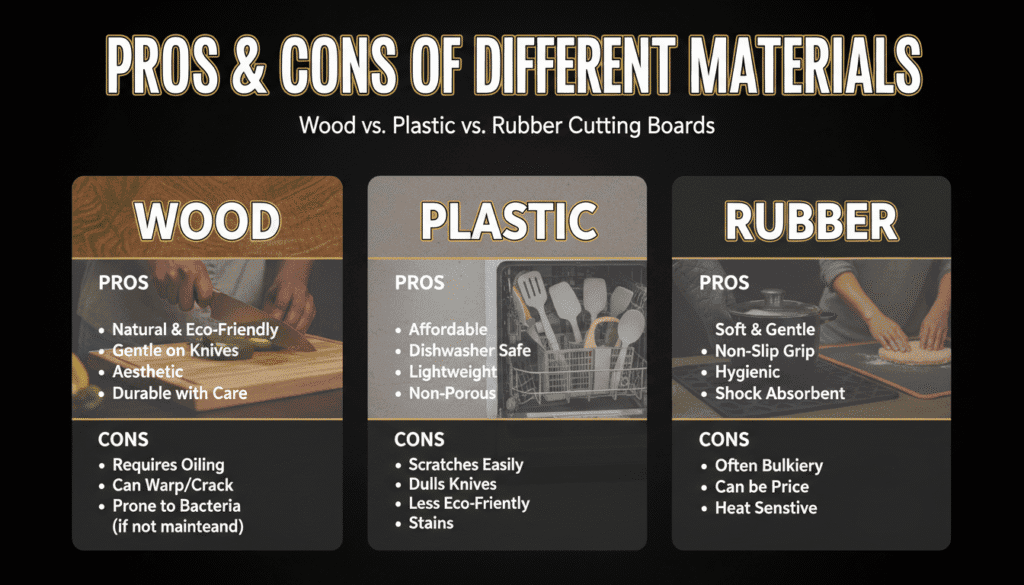
Pros & Cons of Different Materials
| Material | Pros | Cons |
|---|---|---|
| Hardwood | Best for knife edges, naturally antimicrobial, durable, stable, beautiful. | Requires hand washing & oiling, heavy, more expensive. |
| Plastic | Scars easily, harbours bacteria in deep cuts, and dulls knives faster than wood. | Excellent knife feel, non-slip, incredibly durable, and easy to resurface. |
| Rubber | Expensive, industrial look, heavy, usually hand-wash only. | Eco-friendly, affordable, resists water absorption, and durable. |
| Bamboo | Eco-friendly, affordable, resists water absorption, durable. | Hard on knife edges (dulling), glues can fail, prone to splitting. |
| Composite | Dishwasher safe, durable, thin (easy storage), maintenance-free. | Loud “clacking” sound, harder than wood, doesn’t “heal” scratches. |
Rating the Materials
Hardwood (Maple/Walnut): 4.8/5
The classic for a reason. If you treat it right, it lasts a lifetime.
High-Density Rubber: 4.7/5
The professional’s choice. Incredible performance, just lacks the beauty of wood.
Composite: 4.0/5
The best “easy care” option. Great for quick tasks.
Plastic (HDPE): 3.5/5
Necessary for raw meat hygiene and budget, but disposable.
Glass/Stone: 1.0/5
Good for serving cheese. Terrible for cutting.
Conclusion
It’s not just about how your cutting board looks on your counter; it’s also about how you cook. A good maple or walnut board will make you happy to use and keep your knives sharp. Yes, it takes some work, but the stability and feel are worth it.
If your life is hectic and you need to move quickly, get a good composite board or a set of strong plastic ones. Just remember to replace them when they get damaged. And if you want to chop like a pro, try using a rubber. No matter what, keep those glass boards for the cheese platter and keep your knives happy.
FAQ:
u003cstrongu003eWhat is the Best Cutting Board Material?u003c/strongu003e
In general, hardwoods like maple and walnut are thought to be the best. They are the right mix of strong and gentle on your knife blades. They are soft enough to keep your knife’s edge sharp, but tough enough to handle years of daily chopping without breaking. But high-density rubber is a close second when it comes to performance.
u003cstrongu003eWhat is the most hygienic cutting board material?u003c/strongu003e
Most people are surprised by this, but wood is often safer than plastic in the long run. Research has shown that wood has natural properties that stop bacteria from growing below the surface. When they are new, it’s easy to clean plastic boards in the dishwasher, but once they get deep knife scars, bacteria can hide in those grooves where the spray can’t reach.
u003cstrongu003eWhat do professional chefs use for cutting boards?u003c/strongu003e
You will most likely see u003ca href=u00224qTTU4ju0022 target=u0022_blanku0022 rel=u0022noreferrer noopeneru0022u003ecolor-coded plastic boardsu003c/au003e in commercial kitchens because they are cheap and can be cleaned in a factory setting. But many chefs prefer heavy rubber boards (like Sani-Tuff) or end-grain wood blocks for their own prep stations or at home because they provide a stable surface and keep their expensive knives sharp.