


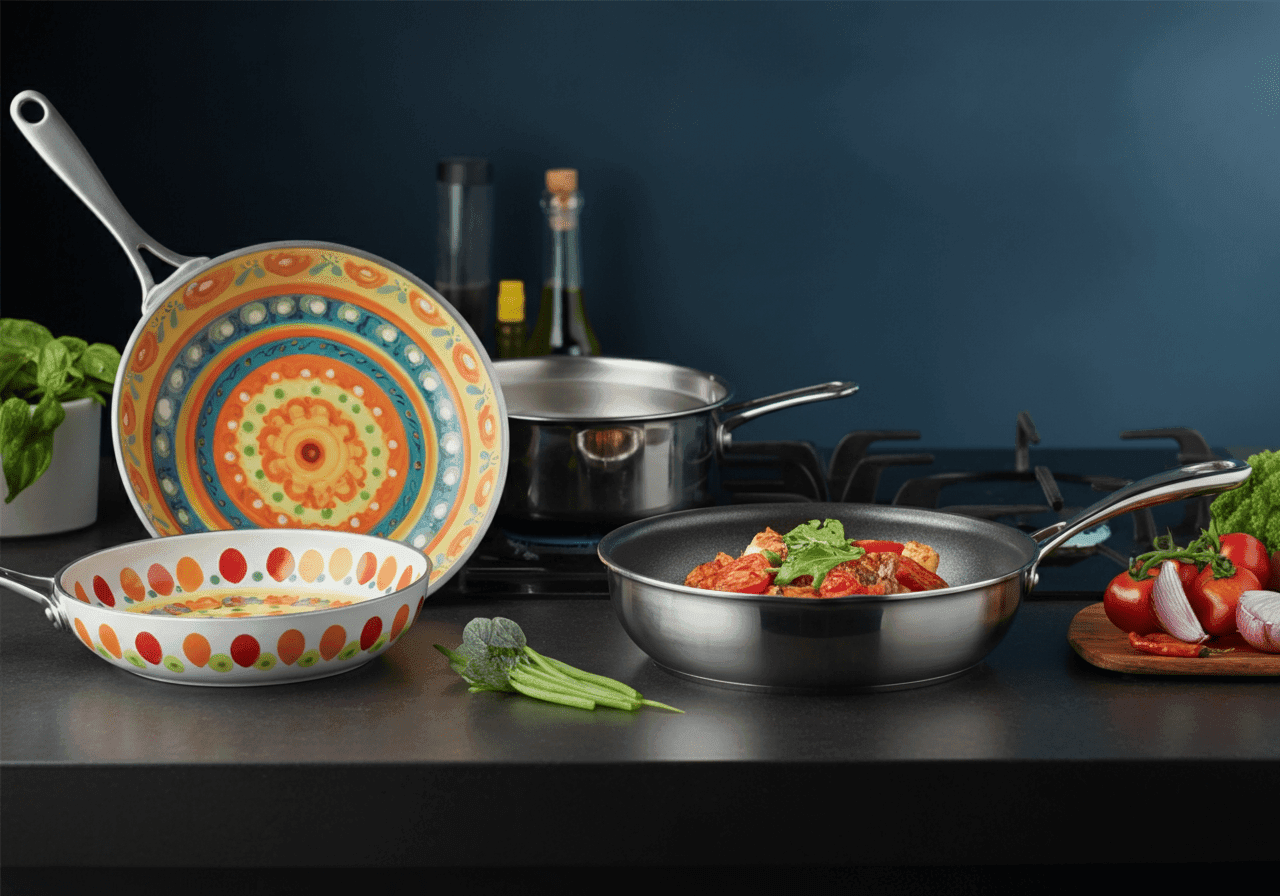

Ceramic vs Stainless Steel: Which Pan Wins?
Let us be honest: picking the right pan can be as tricky as deciding what to watch on Netflix on a Friday. Walk into a kitchenware store, and you are greeted by a riot of colors, the shine of metal, and price tags that run the gamut from “reasonable” to “will it do the cooking?” We have all been there. Ceramic vs Stainless Steel Pans are the two perennial contenders that always seem to cause me grief in my own kitchen. But which one truly deserves a spot on your stovetop—and in your culinary affections?
I have navigated the world of cooking with both stainless steel and ceramic, employing methods ranging from sautéing to the occasional char. Now, let us pit these two against each other in a friendly showdown. I will lay out the practical pros and cons, sprinkle in some personal experiences, and help you figure out which pan is the best match for your wallet, your cooking style, and perhaps even your most unusual cravings.
What Are Ceramic Pans?
Let us clear something up right away. You might picture your grandmother’s flowerpot or some ancient pottery when you hear “ceramic pan.” Thankfully, these pans are not actually made of solid ceramic; otherwise, they would be impossibly heavy. Most are constructed from aluminum or another metal, with a smooth ceramic coating derived from sand. The key feature is the non-stick coating, which I like to call the “slick trick.”
Pros of Ceramic Pans
- Excellent Non-Stick Surface: Ever flipped a pancake with one hand, watching it release from the pan with effortless grace? That is the magic of ceramic. Even if you are just making breakfast on a lazy Sunday, you will feel like a culinary wizard. Eggs, pancakes, and delicate fish fillets all glide free with barely a drop of oil.
- Healthier by Design: Ceramic cookware is a good choice for anyone worried about questionable chemicals. It is reassuring to know that most of them are free from PTFE and PFOA – a mouthful of a name, especially before breakfast.
- Beautiful Designs: Want your kitchen to look like it belongs on Instagram? These pans come in every color imaginable, from classic cream to eye-popping turquoise. I am not one to judge, but a friend of mine bought one just to coordinate with her kitchen towels. Okay, maybe a little.
Cons of Ceramic Pans
- Fragile Finish: The bad news is that the beautiful non-stick coating can quickly chip, peel, or fade, especially if you, like me, use your metal spatula in a daze.
- Hate High Heat: Is the temperature too high? Ceramic will not have it. Its longevity will undoubtedly be shortened in this way. It does not end well, like a sunburn on a pale winter face.
- Short Lifespan: Most ceramic pans do not hold up for long. Some have lost their luster in under a year, especially during the Great Omelet Streak of 2021, when I used them daily.
What Are Stainless Steel Pans?
Stainless steel: the classic, the dependable, and the undisputed heavyweight of my kitchen arsenal. If you have ever received a pan from your folks or seen chefs expertly flipping food on television, chances are it was stainless steel. These pans are typically constructed in layers, with a robust steel exterior and a core of heat-conducting metals such as aluminum or copper. It is a winning combination for any cook.
Pros of Stainless Steel Pans
- Rugged as They Come: These pans are like kitchen superheroes: they don’t scratch, dent, or rust, and some might even outlast you (if you cook with love and a little soap).
- Made for High Heat: Searing steaks, stir-frying, caramelizing onions—stainless steel loves the heat. If you crave that golden-brown crust, don’t even think twice.
- No Flavors Left Behind: Stainless is non-reactive, so you can cook tomato sauce or whip up a tangy lemon glaze without any weird aftertaste. Your pan won’t hold grudges against spicy dishes.
Cons of Stainless Steel Pans
- The Stickiest Situation: Here’s a confession: I spent a week glued to online forums just learning to keep scrambled eggs from turning into pan cement. There’s a trick to it—heat, oil, patience—but once you get it, you’ll feel victorious.
- A Bit on the Heavy Side: Clad stainless steel pans can be heavy, for sure. If you’ve ever tried flipping stir-fry one-handed, your wrist might remember.
- Dirty Work: Cleanup is sometimes rough—sticky bits and burned sauces can require a little elbow grease. The upside? You can attack them with steel wool, and they’ll shrug it off.
Head-to-Head Comparison:
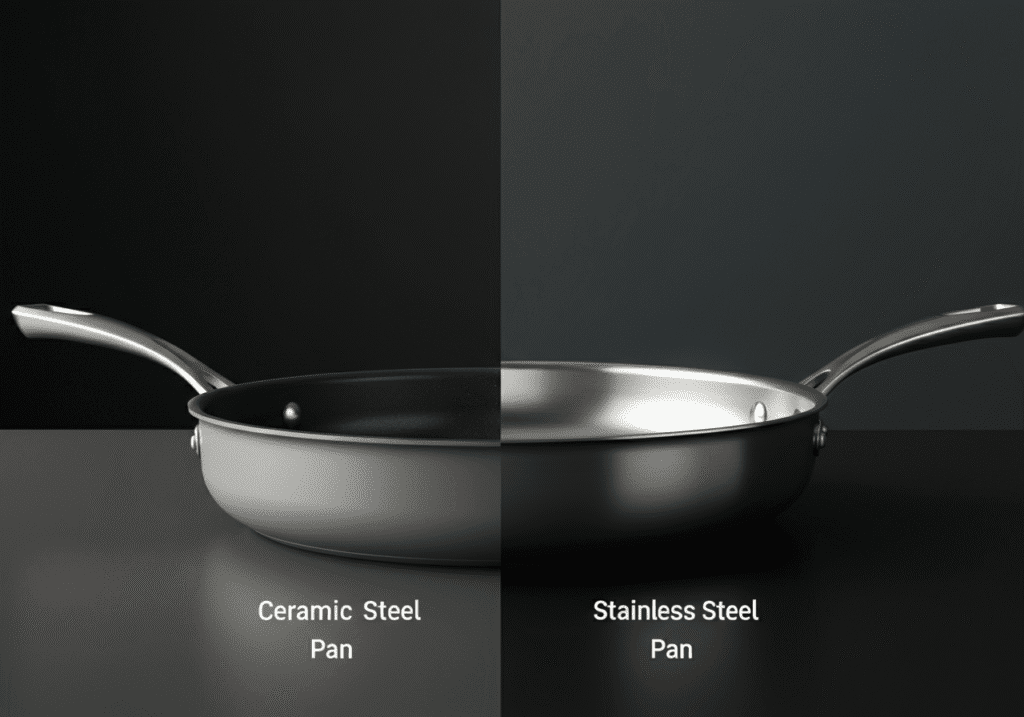
Ceramic vs Stainless Steel Pans
Who doesn’t love a good showdown? Here’s how they stack up, side-by-side (with a dash of opinion):
| Feature | Ceramic Pan | Stainless Steel Pan |
|---|---|---|
| Heat Distribution | May have hot spots; sometimes uneven cooking. | Superb, especially with a quality core—great for browning. |
| Non-Stick Performance | Flawless at first, but fades with time. | Not non-stick by nature—technique required! |
| Durability & Lifespan | 1–5 years if you’re gentle; be careful with utensils! | Decades of loyal service. Heirloom status, anyone? |
| Ease of Cleaning | Easy (until the coating goes)—then less so. | Sometimes a battle; bring your best scrub brush. |
| Health & Safety | PTFE/PFOA-free. | No coating to worry about; safe and sound. |
| Price | Easier on your wallet (at least up front). | Pricier, but it’s a long-term relationship. |
Which Pan Should You Choose?
This isn’t a trick question, promise! It all comes down to what (and how) you love to cook.
Grab a Ceramic Pan if:
- Eggs, pancakes, and recipes that require a gentle touch are the stars of your mornings.
- You are after non-stick results, but you do not want to spend hours or add a ton of extra fat.
- Aesthetics in the kitchen are important to you, and you are okay with swapping out a pan every few years.
Opt for Stainless Steel if:
- You want one pan for nearly everything—from chili to seared salmon.
- You’re eager to master proper pre-heating and oiling (it’s worth it, honest).
- You’re cool with investing a bit more for something that could last a lifetime—or at least outlast your favorite spatula.
Your Perfect Kitchen Partner
Here’s the thing: the most contented cooks use a combination of both. I adore my smooth ceramic pans for quick eggs and fragile crêpes, but I switch to stainless steel when I am feeling more ambitious. Consider your own kitchen habits—whether you are a “quick breakfast” person or someone who aims for “gourmet dinner every night”—and you will discover what works best for you.
And if you ever completely char something? Do not sweat it. We have all been there. It is practically a culinary initiation—and a perfect reason to give it another go (or just get takeout).
Ready to give your cookware an overhaul? Browse our selection and tell us: ceramic or stainless steel? We love hearing your experiences, good or bad, so share your stories and photos!
Frequently Asked Questions
Are stainless steel or ceramic pans better for you?
Both types have their health perks. Ceramic pans are chemical-free dreamboats, while stainless steel keeps things pure and flavorless (in the best way). Go with your gut—literally!
Which is better, stainless steel or ceramic coating?
Ceramic coatings work magic for non-stick lovers, with easy cleanup and less oil. Stainless brings the heat for long-lasting, all-around use. All-around steakhouse sears or loves a challenge; stainless steel is king.
Do professional chefs use ceramic cookware?
Most chefs are die-hard fans of stainless steel, thanks to durability and heat control. But hey, even the pros appreciate a non-stick pan for eggs and pancakes (nobody enjoys a breakfast disaster).
What are the disadvantages of ceramic cookware?
The main bummer: the coating wears out. Use the wrong tools or blast the heat, and you might be shopping for a new pan sooner than you’d like.