


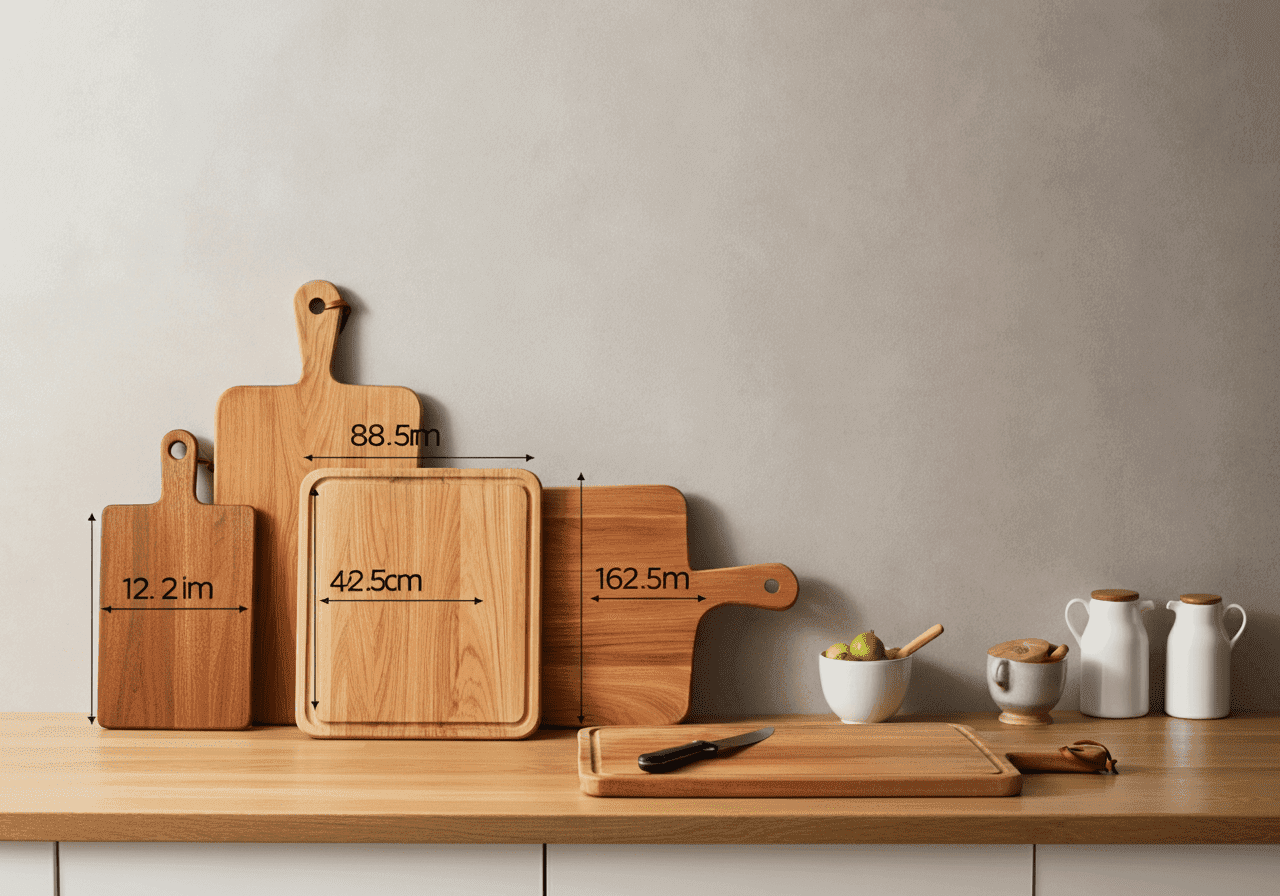

Standing in the kitchen aisle, staring at cutting boards that range from postage-stamp to dining-table enormous, I’ve been there. You’re probably wondering if that massive wooden board is worth the counter space, or if you can get away with something smaller. Trust me, I’ve made both mistakes, squeezing a whole chicken onto a board meant for garnishes, and buying a board so large it lived permanently in the cupboard.
Choosing the right cutting board size isn’t just about fitting it in your kitchen. It’s about making your cooking experience smoother, safer, and frankly, more enjoyable. The wrong size can turn meal prep into a frustrating juggling act, whilst the perfect board becomes your most trusted kitchen companion.
Let’s dive into everything you need to know about cutting board sizes, from the science behind the measurements to real-world advice that’ll save you time, money, and probably a few choice words when you’re trying to dice onions on a board that’s too small.

Why Cutting Board Size Actually Matters?
You might think any flat surface will do the job, but the size of the cutting board affects everything from food safety to your cooking efficiency. When I first started cooking seriously, I grabbed whatever board was handy—usually a one that barely fit an apple, let alone the vegetables for a proper stir-fry.
Here’s what I learned the hard way: small boards create chaos. Food tumbles onto your worktop, cross-contamination becomes inevitable when you’re constantly shuffling ingredients around, and your knife work suffers because you can’t establish a proper rhythm.
On the flip side, boards that are too large for your space become storage nightmares. I once bought a beautiful 60cm board that was absolutely gorgeous—and completely impractical for my small kitchen. It lived behind the fridge for months before I finally gave it to a friend with a proper chef’s kitchen.
There is a sweet spot, and finding it depends on knowing the normal sizes that are available and how they fit with the way you prepare.
Standard Cutting Board Dimensions Explained
Most cutting boards fit into one of a few conventional groups, each suited for a certain sort of food processing and kitchen size.
Small Boards (20cm x 30cm to 25cm x 35cm)
For quick jobs like slicing fruit, chopping herbs, or making small garnishes, these small boards are great. They are great for people who cook for one or two people most of the time or who don’t have a lot of counter space..
I keep a small board specifically for cutting citrus fruits and preparing quick snacks. It’s also ideal for tasks where you don’t want to dirty a larger board—like slicing cheese for a sandwich or chopping a single onion for scrambled eggs.
Medium Boards (30cm x 45cm to 35cm x 50cm)
This is where most home cooks find their perfect match. Medium boards offer enough space for chopping vegetables for a family meal, whilst still being manageable in terms of storage and cleaning. They’re versatile enough for most cutting tasks without overwhelming smaller kitchens.
If you’re only buying one cutting board, this size range typically offers the best balance. You can comfortably prep ingredients for a roast dinner, slice bread, or even break down more minor cuts of meat.
Large Boards (40cm x 60cm and above)
These are the tools that serious home cooks and professionals use all the time. With big boards, you can break down whole birds, roll out pastry, or get ingredients ready for batch cooking without having to move food around all the time.
But they take up a lot of room and can be hard to clean, especially if your sink is small. I would only suggest going this big if you often prepare for groups or really need the extra space to work.
Choosing the Right Board Size for Your Cooking Style
The size of your cutting board should be based on how you really cook, not how you believe you should cook. Let’s be honest about how you cook.
The Quick-Meal Cook
If your typical dinner prep involves chopping one onion, slicing some mushrooms, and maybe dicing a tomato, a medium board (around 30cm x 40cm) will serve you perfectly. You’ll have enough space to work efficiently without the board dominating your limited prep time.
The Batch Cooking Enthusiast
People who like to cook meals ahead of time on the weekends or in large batches need room to work with more than one ingredient at a time. When you need to chop vegetables for five different meals or get ready for a week’s worth of lunches, a big board is a must. The extra space stops the annoying game of musical vegetables that happens on smaller boards.
The Entertaining Host
If you often have family gatherings or dinner parties, think about the biggest board your kitchen can fit. There’s nothing worse than trying to cut up a piece of beef on a board that’s not much bigger than the meat itself. Your guests won’t see the mess you made while getting ready, but you’ll feel it.
The Space-Conscious Cook
Having a small kitchen doesn’t mean you have small goals, but it does mean you should be smart about how you use your tools. You might want to get a medium board that can do both cutting and serving. If you need more prep space, look for boards that can fit over your sink.
The Great Material Debate: How It Affects Size Choice
The type of cutting board you use affects how size affects your cooking. At different scales, different materials act differently..
Wood Boards
Wooden boards look great and are easy to use with knives, but they get a lot heavier as they get bigger. The lovely 50cm oak board may look great, but it’s not useful if you can’t easily lift it when it’s full of food. As wood gets bigger, it needs more care. For example, it’s harder to wash larger boards by hand, and they won’t fit in most dishwashers.
Plastic and Composite Boards
Even when they are bigger, these materials stay pretty light, which makes them useful for cooks who want the most surface area without the extra weight. As the board gets bigger and cleaning gets harder, it’s also easier to thoroughly clean them.
Bamboo Boards
Bamboo is a good choice because it is lighter than solid wood but still looks good enough to serve. But when you buy bigger bamboo boards that are cheaper, they are more likely to get splinters or rough patches, so quality becomes very important as you get bigger..
Space Planning: Fitting Your Board Into Your Kitchen
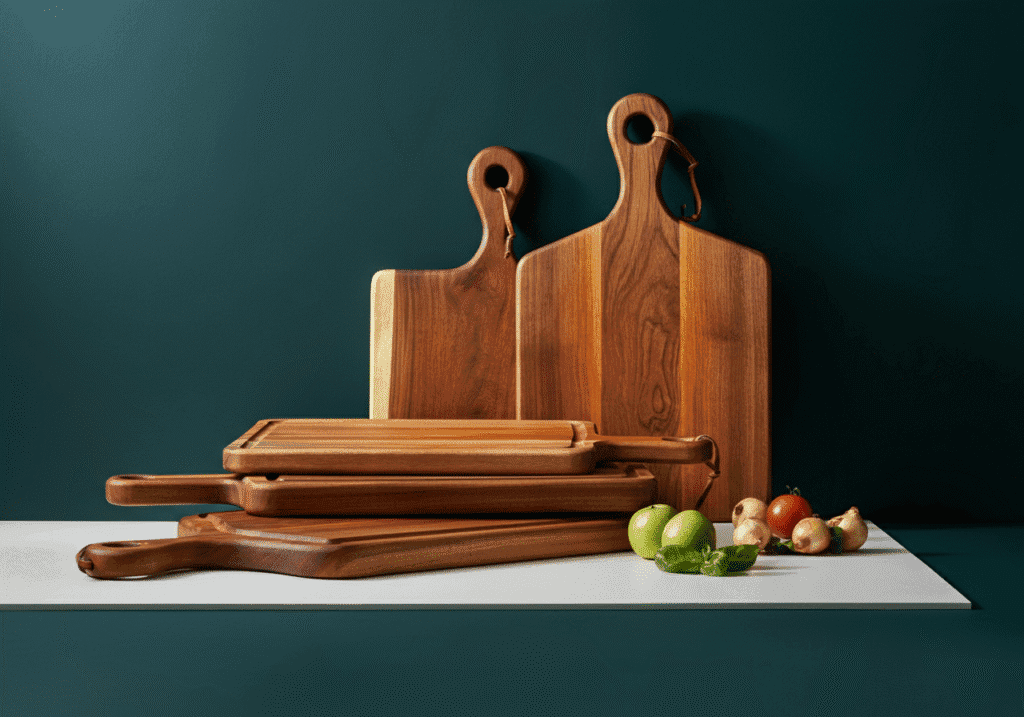
Take a good look at how your kitchen is set up before you fall in love with a specific size. I’ve seen too many people buy boards that fit their space but cause problems every day.
Counter Space Reality Check
Don’t just measure the total length of your counter space; measure the amount of space you can actually use. Make sure to include the space that your kettle, knife block, and other permanent fixtures take up. No matter how much you love the extra cutting surface, a board that doesn’t leave you any room to put things or move around is too big.
Storage Considerations
When you’re not using your board, where will it go? Because they don’t fit in standard cupboards, bigger boards often end up leaning against walls or staying on the counter all the time. If you use your board every day, this isn’t a big deal, but boards that you only use sometimes need to be stored properly.
Sink Compatibility
Think about how you do your dishes. Your boards need to fit comfortably in your sink so you can clean them properly, even if you mostly wash them by hand. Hygiene problems arise when a board needs to be angled awkwardly or can’t be completely submerged.
Multiple Boards: The Professional Approach
Here’s something that might sound too much, but really does help your cooking: having several cutting boards in different sizes.
Professional kitchens use different boards for different jobs, and this is a good idea for home cooks as well. You don’t need a full commercial kitchen, but having choices makes cooking much easier.
Think about getting a small board for quick tasks, a medium board for daily cooking, and maybe even a large board for entertaining or making a lot of food at once. This method lets you get precisely what you need without making simple tasks harder or being limited by space when you’re working on bigger projects.
It is also easier to keep good food safety habits when the sizes are different. Put fruit on your small board, vegetables on your medium board, and raw meat on your large board.
The Economics of Size: Value vs. Cost
Cutting boards that are bigger cost more, but that doesn’t mean they are always worth more. A board that is twice as big could cost three times as much, especially if it is made of high-end materials like end-grain hardwood.
Don’t just look at the price up front; think about how much it will cost you to use it. A board that you use every day and is of a moderate size is worth more than a giant board that you only use for special occasions. But if you really need the space and will use it often, spending more money on a bigger, better board will make cooking easier and more fun.
Also, think about how long it will last. Over time, a well-made medium board might be better for you than a big, cheap board that warps or gets dirty. As the size of a board goes up, quality becomes more critical because larger boards are more rigid to keep in good shape and are more likely to break when used.
Signs You’ve Chosen the Wrong Size
You might not realise your cutting board is the wrong size until you use it a lot. Here are some clear signs that you should think about it again:
Even when you’re careful, your ingredients keep falling off the edges. This is the clearest sign that your board isn’t big enough for the things you usually do. You need more surface area if you have to make complicated workflows to deal with spills.
Every time you use the board, it feels too big. If you have to wrestle with a board that is too big for your workspace, it defeats the purpose of having good tools. If you have to keep moving around or have trouble getting around your board, it’s probably too big for your space.
Your board makes some recipes or cooking methods too hard, so you don’t use them. This is the most crucial warning sign, but it’s also the least obvious. Your tools should help you cook, not get in the way.
Making the Final Decision
In the end, the size of your cutting board depends on how honest you are with yourself. Think about how you usually cook, how much space you have in your kitchen, and how much storage you have. Don’t buy things because you want to; buy them based on how you really cook, not how you think you should cook.
If you’re really not sure which size to get, go with the smaller one for your first board. It’s better to find out later that you bought something that doesn’t fit your lifestyle than to have to add a bigger board later. As you get better at cooking, you can always add more sizes.
Keep in mind that the best cutting board is one that you will use and enjoy using all the time. Getting the size right is just one part of the puzzle, but it makes everything else, from how easy it is to prepare food to how easy it is to store, fall into place.
FAQ
What is an ideal size for a cutting board?
The best size for a cutting board depends on how much space you have in your kitchen and how you like to cook. Most tasks can be done with a medium-sized board that is about 12″x18″. When you need to do a lot of work, bigger boards are better. When you need to do something quick and light, smaller boards are better.
What are the three types of cutting boards?
Wood, plastic, and bamboo are the three main types of cutting boards. Each has its pros and cons: wood is strong and won’t hurt knives, plastic is light and safe to put in the dishwasher, and bamboo is a hard, eco-friendly surface.
What is the standard thickness of a cutting board?
The thickness of most cutting boards is between 0.75 and 1.5 inches. Thicker boards last longer and don’t warp as easily, while thinner boards are lighter and easier to store.
What are small cutting boards for?
When you need to do something quickly, like slice fruit, chop herbs, or make decorations, a small cutting board is perfect. They’re also useful in small kitchens or places without a lot of counter space where you need something portable.