


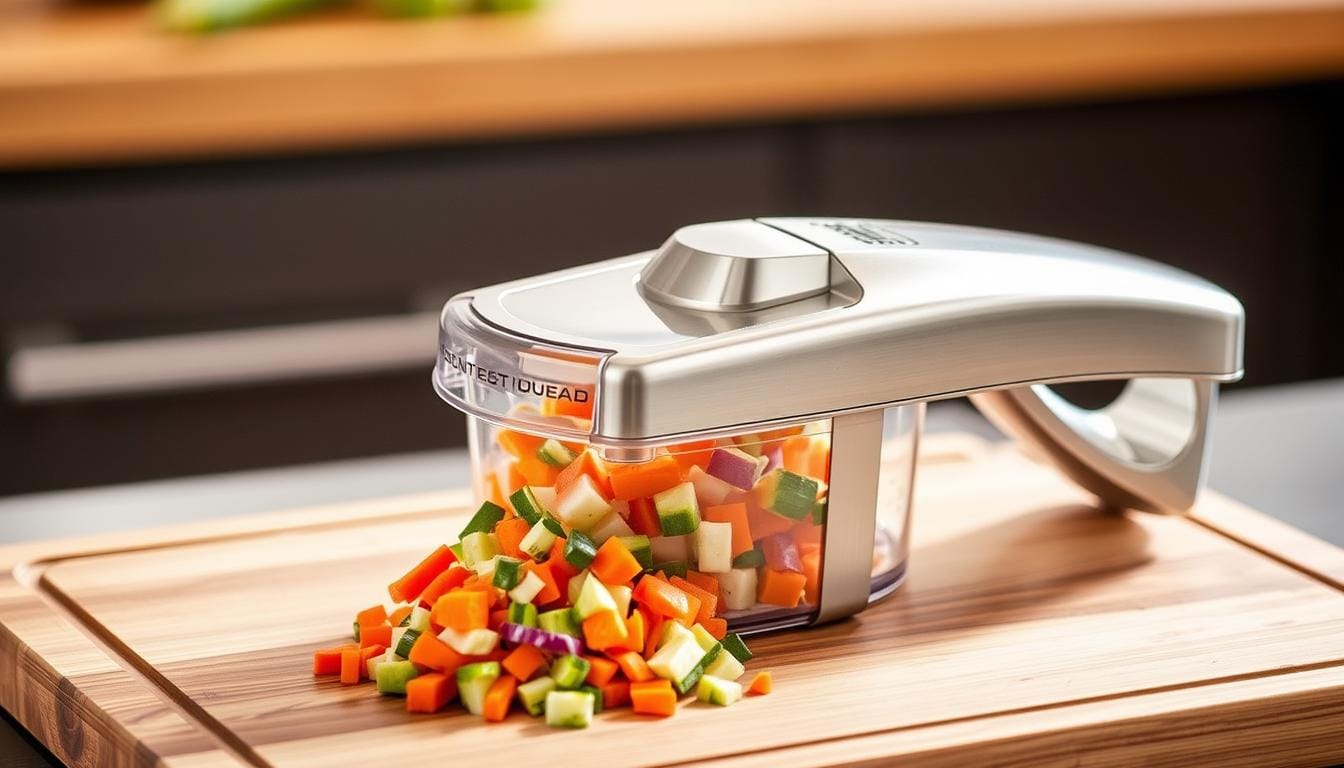

Efficient cooking starts with the right kitchen utensils. A vegetable chopper is key. It cuts down prep time and makes cuts even.
Choosing the right chopper can be tough. There are many types, from manual to electric. Think about how often you use it, the veggies you chop, and where you’ll store it.
Knowing these details helps you pick wisely. Your vegetable chopper will then be a great kitchen tool.

Key Takeaways
- Assess your cooking needs to determine the type of vegetable chopper required.
- Consider the frequency of use and storage space available.
- Evaluate the types of vegetables you most commonly chop.
- Research different models, including manual and electric choppers.
- Read reviews to understand the performance and durability of the chopper.
Understanding Different Types of Vegetable Choppers
Vegetable choppers come in many types, each with special features. The right choice depends on what you need, like manual effort, speed, or multifunctionality. These factors help decide which kitchen gadget is best for you.
Manual Vegetable Choppers
Manual choppers are great for those who like to do things by hand. They are cost-effective and don’t need electricity. This makes them perfect for small kitchens or when you’re outdoors.
They are portable, don’t need power, and are easy on the wallet. But, they can take a lot of time and effort, mainly for big jobs.
Electric Vegetable Choppers
Electric choppers are fast and convenient, perfect for frequent users. They are efficient and can handle lots of veggies with ease. This saves time and effort.
But, they cost more and need electricity. This can be a problem in some places.
Food Processor Choppers
Food processor choppers do more than just chop. They can slice, puree, and more. They are multifunctional and add value to your kitchen. They save space too.
But, they can be big and expensive. This might not fit everyone’s needs or budget.
In summary, knowing about the different vegetable choppers helps you choose wisely. Whether you prefer manual, electric, or food processor choppers, each has its own pros and cons.
How to Choose a Vegetable Chopper? Key Factors to Consider

Choosing the right vegetable chopper is key. It can make cooking faster and easier. Knowing what to look for is important.
Size and Capacity
The size and capacity of a chopper matter a lot. A bigger chopper can chop more veggies at once. But, it takes up more space in your kitchen.
Compact choppers are great for small kitchens or when you don’t chop veggies often. Larger models are better for big families or if you chop a lot.
Blade Quality and Options
The blades of a chopper are very important. High-carbon stainless steel blades are best because they last long and don’t rust.
- Look for choppers with interchangeable blades for more uses.
- Some choppers come with special blades for tasks like slicing or dicing.
Ease of Cleaning and Maintenance
A chopper that’s easy to clean and maintain is a big plus. Look for ones with parts that can go in the dishwasher. Also, choose designs that are simple to wash.
“A clean chopper is not just a matter of hygiene; it’s also about maintaining the device’s longevity and performance.” – Kitchen Expert
Durability and Construction Materials
The durability of a chopper depends on its materials. Look for ones made from stainless steel and BPA-free plastics. These are durable and safe for food.
| Material | Durability | Safety |
|---|---|---|
| Stainless Steel | High | Safe |
| BPA-Free Plastic | Medium | Safe |
| Low-Carbon Steel | Low | Less Safe |
Price and Budget Considerations
Think about your budget when picking a chopper. Prices change based on features, brand, and quality. Find the best deal within your budget.
Just because something costs more doesn’t mean it’s better. Look at features and read reviews to choose wisely.
Conclusion
Choosing the right vegetable chopper can make cooking faster and easier. There are many types, like manual, electric, and food processor choppers. Each has its own benefits, depending on your cooking style.
When picking a chopper, think about size, blade quality, and how easy it is to clean. Also, consider its durability and price. This way, you’ll find a chopper that fits your needs perfectly.
Using these kitchen tips will help you pick the best vegetable chopper. The right chopper can change how you cook. It lets you spend more time on making tasty meals, not just preparing them.
FAQ
What are the main types of vegetable choppers available in the market?
You can find manual, electric, and food processor choppers. Each has its own benefits and drawbacks.
How do I choose the right size and capacity for my vegetable chopper?
Think about how many people you cook for and what veggies you chop most. This will help you pick the right size and capacity.
What factors should I consider when evaluating the blade quality of a vegetable chopper?
Look at the material, sharpness, and if you can change the blades. This will help you decide on blade quality.
How important is ease of cleaning and maintenance for a vegetable chopper?
It’s very important. A chopper that’s easy to clean and maintain will last longer and stay hygienic. Look for dishwasher-safe parts and simple designs.
What construction materials are most durable for vegetable choppers?
Stainless steel, high-quality plastics, and robust composites are durable. They can handle regular use.
Are electric vegetable choppers worth the investment?
Electric choppers save time and effort if you chop veggies often. But think about your needs and budget first.
Can food processor choppers be used for tasks other than chopping vegetables?
Yes, they’re versatile. You can use them for slicing, pureeing, and mixing, depending on the attachments.
How do I determine the appropriate price range for a vegetable chopper?
Your budget, how often you use it, and needed features matter. Manual choppers are cheaper, while electric and food processor ones are pricier.