


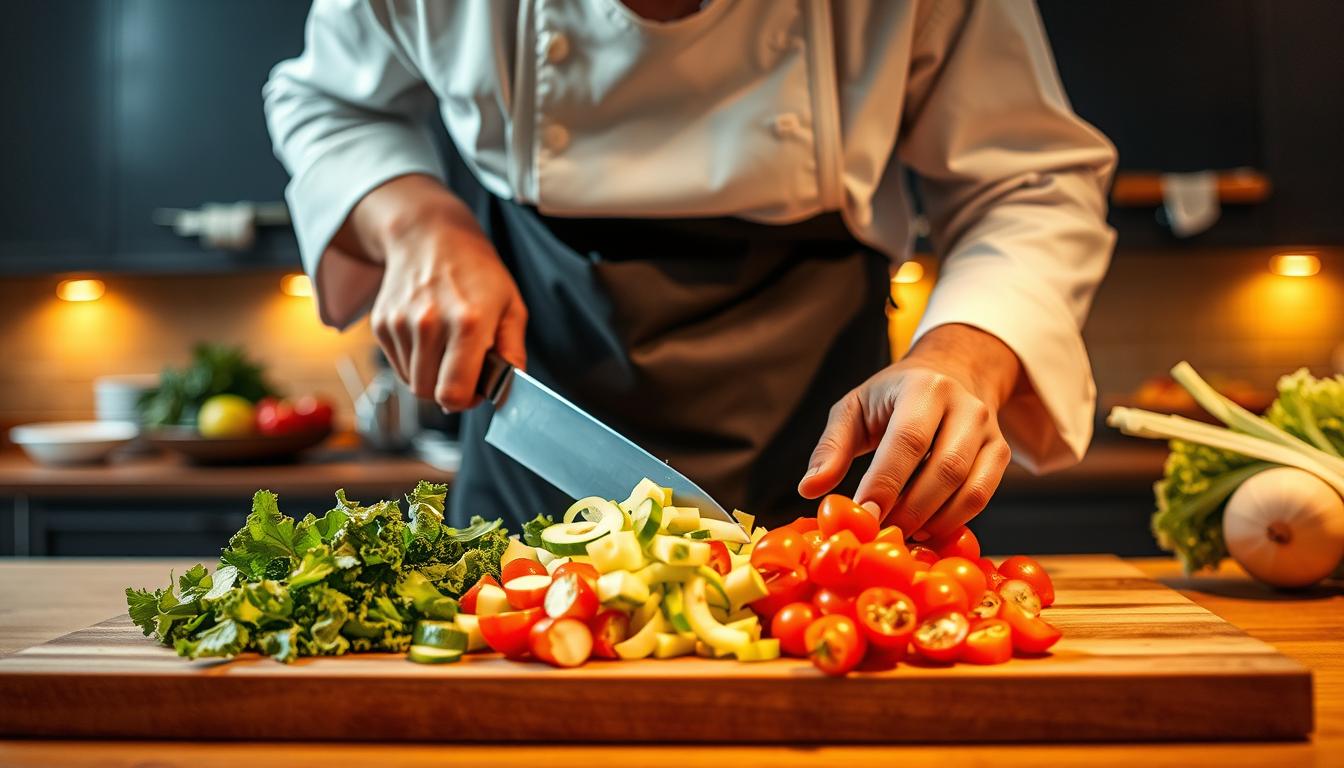

Learning to use a vegetable chopper can change how you cook. It makes food prep easier, letting you improve your cooking skills. With it, chopping, slicing, and dicing becomes quick and simple.
We’ll show you how to use a vegetable chopper well. You’ll learn its benefits and get tips for using it. By the end, you’ll be more skilled in the kitchen.

Key Takeaways
- Simplify food preparation with a vegetable chopper
- Enhance your cooking techniques with efficient chopping
- Mastering the vegetable chopper can improve kitchen efficiency
- Learn tips for effective use of kitchen tools
- Discover the benefits of using a vegetable chopper in cooking
Understanding Vegetable Choppers
The success of a vegetable chopper depends on its design and how it works. It’s important to know its parts. This knowledge helps make your kitchen work better and your cooking more enjoyable.
Basic Components of a Vegetable Chopper
A vegetable chopper has several key parts. These parts work together to make chopping easier. The blades and attachments, and the container and body are the most important.
Blades and Attachments
The blades and attachments of a vegetable chopper are made for different tasks. You can use different blades for dicing, slicing, or julienne cutting. This makes your chopper very useful.
For example, a chopper with interchangeable blades can chop coarsely or finely.
Container and Body
The container and body of the chopper are also key. They affect how stable and big the chopper can be. A strong base keeps the chopper steady, and a big container lets you chop more veggies at once.
How Vegetable Choppers Work
Vegetable choppers make chopping veggies easier by using blades and leverage. When you use the chopper, the blades cut the veggies into the right size and shape. Knowing how to use these parts well is essential for chopping veggies well.
| Component | Function |
|---|---|
| Blades and Attachments | Handle various chopping tasks |
| Container and Body | Determine stability and capacity |
Understanding how vegetable choppers work helps you use them better. This improves your cooking efficiency.
Types of Vegetable Choppers
The world of vegetable choppers is full of options for different cooking needs. It’s key to pick the right one for your cooking style and kitchen setup.
Manual Choppers
Manual choppers are great for those who like to get hands-on with food prep. They need you to push them to chop veggies and are often cheaper than electric ones. They’re perfect for small kitchens or when you’re making a little food. They work well for chopping herbs or making thin slices of veggies.
Electric Choppers
Electric choppers are all about speed and convenience, making them ideal for busy kitchens or big veggie tasks. They save a lot of time in meal prep, letting you focus on other things. They can do lots of tasks, from chopping to pureeing.
Pull-String Choppers
Pull-string choppers are a special mix of easy use and manual effort. You pull a string or handle to slice or chop veggies. They’re great for those who want easy chopping without the hard work. They’re also small and easy to clean, adding to their kitchen appeal.
In short, the right vegetable chopper depends on your cooking habits and kitchen needs. Whether you choose manual, electric, or pull-string, knowing their benefits will help you pick the best one. This choice will improve your cooking and kitchen efficiency.
Preparing Your Vegetables
Effective vegetable chopping starts with good preparation. This makes chopping safer and more efficient. It’s key to get your veggies ready right.
Washing and Drying
Start by washing your veggies well. This gets rid of dirt, pesticides, and other harmful stuff. Then, dry them off. Too much water can cause slipping or uneven cuts.
Use a clean towel or salad spinner to dry them.
Peeling When Necessary
Not all veggies need peeling, but some do. Carrots and potatoes are examples. Peeling them helps avoid contamination and makes chopping easier.
Use a vegetable peeler for this step.
Pre-cutting for Larger Vegetables
For big veggies, cut them into smaller pieces first. This makes them fit better in the chopper. For instance, cutting a big cabbage into quarters helps a lot.
By following these steps, your veggies will be ready for chopping. This makes the whole process safer and more efficient.
Setting Up Your Vegetable Chopper
Setting up your vegetable chopper right is key for safety and efficiency. A well-set chopper makes cooking better and helps you get consistent results. We’ll show you how to put your chopper together and pick the right blade.
Assembling the Parts
Assembling your chopper takes a few steps. First, make sure you have all the parts as the manual says. You’ll need the main unit, blades, and a container for the chopped veggies.
Connecting Blades Safely
When putting on the blades, be careful to avoid accidents. Always unplug or take apart the chopper before changing or cleaning blades. Place the blade in the right slots and lock it tight, following the manual’s instructions.
Securing the Container
The container for chopped veggies must be securely attached. Make sure it’s locked well to avoid spills or accidents. A well-attached container also makes chopping more efficient.

Choosing the Right Blade
The blade you pick greatly affects your chopping results. Different blades are for different veggies and chopping needs.
Blade Types and Their Uses
There are many blades for various tasks. For example, a fine blade is great for herbs and small veggies. A coarse blade is better for big, hard veggies. Choosing the right blade means better performance and a longer chopper life.
Matching Blades to Vegetables
It’s important to match the blade to the veggie you’re chopping. Soft veggies like tomatoes need a different blade than hard ones like carrots.
“The right blade for the job makes all the difference in achieving perfectly chopped vegetables.”
Check your chopper’s manual for advice on which blades to use for different veggies.
How to Use Vegetable Chopper: Step-by-Step Guide
A vegetable chopper is a must-have in the kitchen. Learning to use it right is key. It helps you chop veggies efficiently and safely, making cooking easier.
Positioning the Chopper
First, place the chopper on a stable, flat surface. Make sure it’s secure and won’t move. Stability is key to safe and effective chopping. Use suction cups or a clamp if your chopper has them.
Loading Vegetables Correctly
It’s important to load vegetables correctly for even cuts. Prepare your veggies as the chopper’s manual suggests. Some choppers need you to cut veggies into smaller pieces first.
Size Considerations
The size of veggies you can chop depends on the chopper. Always refer to the manufacturer’s guidelines for max size. Cutting big veggies into smaller pieces helps get even results.
Quantity Limitations
Don’t overload the chopper to avoid uneven cuts and damage. Be mindful of the quantity limitations to keep your chopper working well and lasting long.
Applying Proper Pressure
The pressure you apply affects the cut. Apply gentle, consistent pressure for even cuts. Too much pressure can damage the chopper or cause accidents.
By following these steps and guidelines, you can master the vegetable chopper. Remember, practice makes perfect. So, don’t get discouraged if it takes time to get it right.
Advanced Chopping Techniques
To take your cooking to the next level, learning advanced chopping techniques is key. Using a vegetable chopper can make a big difference. You’ll not only improve how your dishes look but also ensure they cook evenly. Let’s dive into dicing, julienne cutting, and making uniform pieces.
Dicing Techniques
Dicing means cutting veggies into small, even cubes. Start by slicing them thinly, then into strips, and lastly, into cubes. Keeping them uniform helps them cook the same way.

Julienne Cutting
Julienne cutting makes long, thin strips from veggies. It’s great for stir-fries and salads. To get perfect strips, first slice the veggie flat, then into thin strips. A vegetable chopper with a julienne attachment makes this easier.
Creating Uniform Pieces
Uniform pieces are important for both looks and cooking. Use the right blade and apply even pressure. Keeping your chopper clean and blades sharp helps too.
Mastering these techniques will make cooking more efficient. You’ll get better at using your kitchen tools and make a variety of dishes.
Safety Tips When Using a Vegetable Chopper
Vegetable choppers make chopping easier, but they can be risky if not used right. It’s key to keep your kitchen safe to avoid accidents and injuries.
Handling Blades Safely
The blades of a vegetable chopper are the most dangerous part. It’s important to know how to safely remove and install them.
Blade Removal and Installation
Always unplug or disassemble the chopper before removing or installing blades. Hold the blade by the handle, not the sharp edge, to avoid cuts.
Finger Protection
Keep your fingers away from the blade’s path. Use a pusher or the safety feature to guide vegetables through the chopper.
Proper Hand Positioning
Proper hand positioning is key to avoid injuries. Knowing the right grip and common injuries can help.
Grip Techniques
Hold the chopper firmly with one hand and guide vegetables with the other. Make sure your fingers are curled under and out of the blade’s way.
Avoiding Common Injuries
Injuries happen when fingers are too close to the blades or when chopping on an unstable surface. Always chop on a firm, flat surface.
By following these safety tips, you can reduce the risk of injury and enjoy safe food preparation.
| Safety Tip | Description |
|---|---|
| Handle Blades Carefully | Always hold blades by the handle to avoid cuts. |
| Use Pusher or Safety Feature | Guide vegetables with a pusher or the chopper’s safety feature. |
| Firm Grip | Hold the chopper firmly and keep fingers curled under. |
Cleaning and Maintaining Your Vegetable Chopper
Cleaning your vegetable chopper often is key to its lasting performance. A clean chopper means better chopped veggies and less chance of bacteria. It keeps your kitchen safe and your food fresh.
Immediate After-Use Cleaning
Right after using it, take apart the chopper (if you can) and wash its parts under warm water. Use a soft brush to get rid of any leftover veggies, focusing on the blades and small spots. This quick clean makes the next wash easier.
Deep Cleaning Methods
For a deeper clean, mix warm water with a bit of mild soap. Let the chopper soak for 10-15 minutes. Then, use a soft-bristled brush to clean the blades. Rinse well to get rid of soap. For hard spots, try a baking soda and water paste.
Storage Best Practices
After drying, store your chopper in a dry spot. Use the storage container it came with to keep everything together. If your chopper has removable blades, store them apart to avoid damage.
By following these vegetable chopper tips and keeping your kitchen tools in check, your chopper will last longer. It’s worth the effort for the ease and speed a chopper adds to your kitchen.
Troubleshooting Common Issues
Troubleshooting is key for those who often chop veggies. Even with good care, problems can pop up. They can mess with how well your chopper works.
Dealing with Stuck Vegetables
If veggies get stuck, stop and unplug your chopper. Carefully pull out the veggies to avoid harming the blades. Keeping it clean can help avoid this problem.
Fixing Dull Blades
Dull blades need sharpening or replacing. Use a sharpening stone or a special tool for sharpening. If they’re too far gone, it’s time to get new ones. This keeps your chopping sharp.
Addressing Uneven Cutting
Uneven cuts often come from dull blades or wrong loading. Make sure you’re loading veggies right and check the blades. Also, tweaking your chopping technique can make a big difference.
Best Vegetables for Your Chopper
Choosing the right vegetables for your chopper is key for great food preparation and kitchen safety. Not all veggies are good for chopping. The wrong ones can make chopping hard or even harm your chopper. Knowing which veggies are best will make cooking better.
Soft Vegetables
Soft veggies like tomatoes, cucumbers, and bell peppers are great for most choppers. They’re easy to chop and need little effort. Make sure they’re firm but soft enough for your chopper to slice or dice well.
Hard Vegetables
Hard veggies like carrots, beets, and potatoes can be chopped with the right chopper. Use a chopper with sharp, strong blades for these tough veggies. Some choppers are made just for hard veggies, so pick the right one.
Vegetables to Avoid
While choppers are versatile, some veggies are better left out. Fibrous veggies like celery or very leafy greens can get stuck in the blades. Also, very hard or rocky veggies can damage the blades. Knowing which veggies to skip helps keep your chopper in good shape and safe for food preparation.
Conclusion
Using a vegetable chopper can really improve your cooking. You learn about the different types, how to prepare veggies, and safety tips. This makes food prep easier and faster.
We’ve looked at everything about vegetable choppers. From their parts and types to advanced chopping and how to keep them in good shape. With practice, you’ll get better at using this kitchen tool, making meal prep quick and easy.
Learning to use a vegetable chopper well will save you time and effort in the kitchen. As you keep using it, you’ll find new ways to use it every day. It will become a key tool in your kitchen.
FAQ
What type of vegetable chopper is best for my kitchen?
Think about what you need. Manual, electric, or pull-string choppers work well. Electric ones are perfect for lots of chopping. Manual choppers are better for simple tasks.
How do I clean my vegetable chopper effectively?
Clean it right after use with soap and water. Then, soak and scrub it for a deep clean. This keeps it working well.
Can I chop all types of vegetables with my chopper?
No, don’t chop hard or fibrous veggies. They can break the blades. Carrots, potatoes, and cucumbers are okay. But always check what the maker says.
How do I handle stuck vegetables in my chopper?
Turn off and unplug the chopper first. Then, carefully take out the stuck veggies. For manual choppers, rock the blades to loosen the veggies.
What safety precautions should I take when using a vegetable chopper?
Be careful with the blades. Keep your hands right and avoid injuries. Always follow the maker’s safety tips and be careful with sharp objects.
How do I store my vegetable chopper to maintain its longevity?
Store it dry, away from kids and pets. Clean and dry it first. Disassembling it can also help prevent damage.
Can I use my vegetable chopper for other tasks beside chopping vegetables?
Check the maker’s guidelines for other uses. Some choppers can chop nuts or herbs. But be careful not to harm the blades or risk safety.