


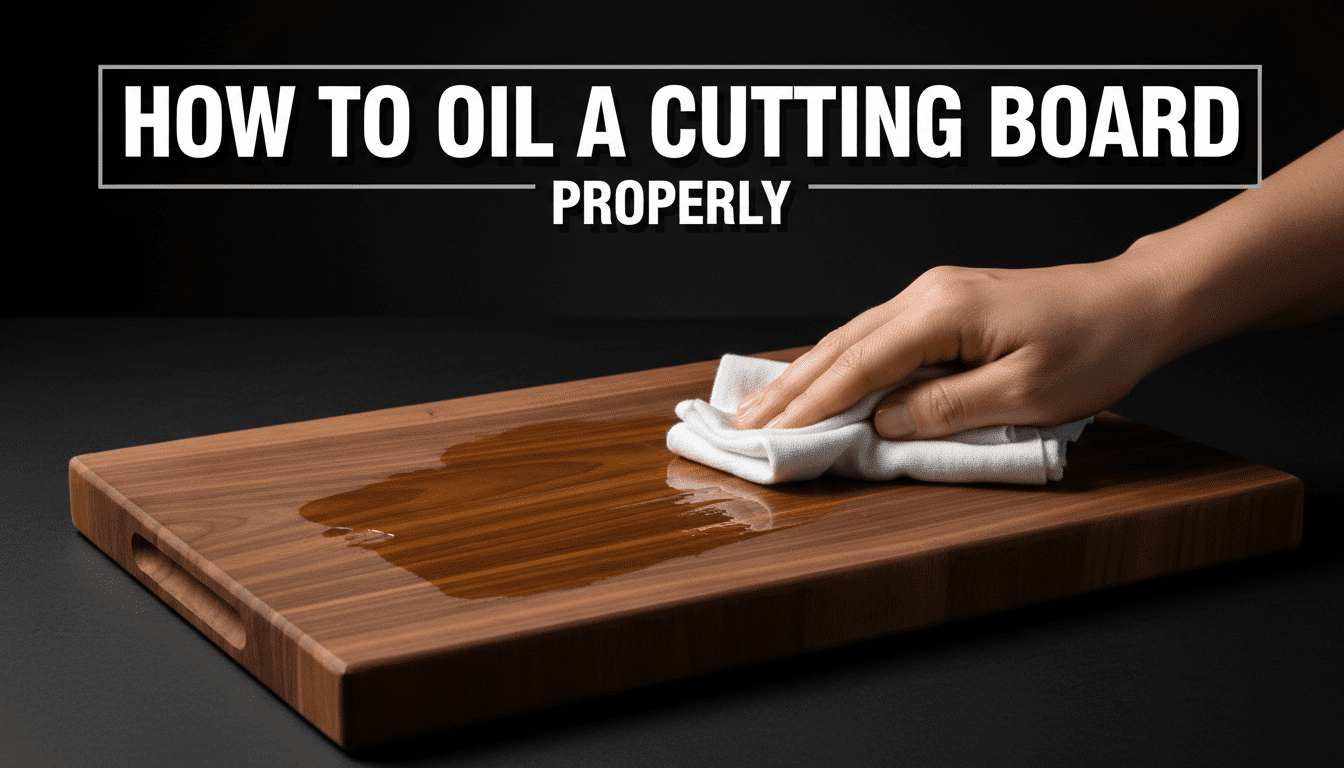

I made a classic beginner’s mistake when I first started cooking: I bought a beautiful, thick wooden chopping block and never used it. I washed it and dried it (sometimes), and that was all. It was gray, rough, and starting to split six months later. That’s when I finally learned how to oil a cutting board to protect my money.
I switched to Howard Butcher Block Conditioner after trying plain mineral oil and finding that it disappeared too quickly. It is a mix of food-grade mineral oil and waxes like beeswax and carnauba. To be honest, it changed the way I cook. Not only did it moisturize the wood, but it also made a seal that lasted. This review is for you if you’ve been staring at your dry, sad-looking wooden boards and wondering if they’re ruined.
Table of Contents
What is Howard Butcher Block Conditioner?
Most people know they should oil their wooden boards and spoons, but not many know the difference between oil and conditioner. Howard Butcher Block Conditioner is for people who want more protection than regular oil can give. This conditioner adds a layer of wax to the wood to keep the moisture in, while plain mineral oil soaks into the wood to moisturize it.
It was made just for wooden butcher blocks, cutting boards, bowls, and utensils. This product is often the missing link between a cutting board that looks good for a day and one that stays protected for weeks if you want to know how to oil a cutting board properly. It’s best for home cooks who use their wooden boards every day and don’t want to have to keep applying it to keep them from drying out and cracking.
How it actually performs in a home kitchen
A lot of people know they should oil their wooden spoons and boards, but not many know what the difference is between oil and conditioner. Howard Butcher Block Conditioner is for people who want more protection than regular oil can give. This conditioner puts a layer of wax on the wood to keep the moisture in. Plain mineral oil, on the other hand, soaks into the wood to keep it moist.
It was made just for wooden cutting boards, bowls, butcher blocks, and utensils. If you want to know how to properly oil a cutting board, this product is often the missing link between a cutting board that looks good for a day and one that stays safe for weeks. It’s best for people who cook at home every day and don’t want to have to keep putting it on their wooden boards to keep them from drying out and cracking.
Real results: Does it actually protect?
The real test isn’t how it looks when it’s wet; it’s how well it works when you start chopping onions an hour later. I found that juices from tomatoes or meat would still sometimes soak into the wood, even with plain mineral oil.
Water and juices bead up on the surface of the Howard Conditioner. That waxy barrier really does protect you. This makes cleaning a lot easier because you don’t have to scrub food out of the wood grain; you can just wipe it off the surface. My board stopped smelling like garlic after a few weeks of using this, which is a huge win for me.
Ease of use for beginners
Don’t be scared of maintenance if you are. It’s as easy to use as wiping down a table. You put some on the wood, rub it in with a clean cloth, and then let it sit for at least 20 minutes or overnight if you’re organized. Then you buff off the extra.
One thing I learned was to make sure your board is completely dry before you start. The wax will keep any moisture that is already in the wood inside, which isn’t good. I always clean my board and let it dry for a full day before I condition it.
Maintenance reality
Be realistic; this isn’t a “do it once and forget it forever” fix. But I only need to use the Howard Conditioner again about once a month, while plain mineral oil needs to be used every week. The bottle says “periodically,” which isn’t very clear. But in a busy kitchen where the board is washed every day, a monthly refresh keeps it in great shape.
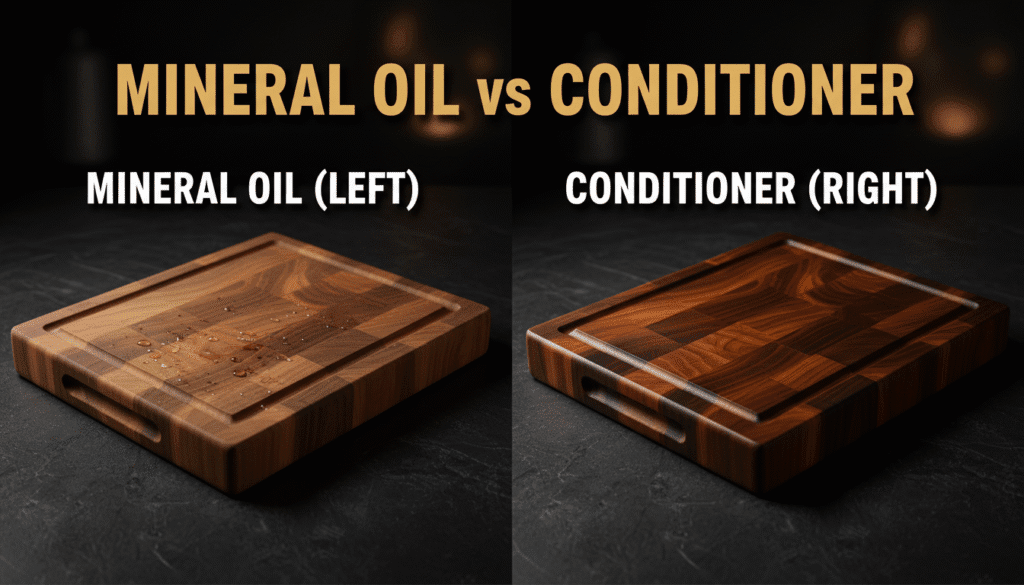
Comparison: Mineral Oil vs. Conditioner
This is the big question. Why buy this blend when a bottle of generic mineral oil is cheaper?
- Generic Mineral Oil: Great for deep hydration. It penetrates deep into the fibres but washes out quickly. It offers zero surface protection against knife scars or water.
- Howard Butcher Block Conditioner: Offers hydration plus protection. The carnauba and beeswax stay on the surface longer.
You need to be realistic; this isn’t a “do it once and forget it forever” fix. I only need to use the Howard Conditioner once a month, but I need to use plain mineral oil every week. It says “periodically” on the bottle, which isn’t very clear. But a monthly cleaning keeps it in great shape in a busy kitchen where the board is washed every day.
Who is this product best for?
- The Daily Cook: If you use and wash your wooden board every day, you need the water-repelling wax barrier this provides.
- The Vintage Restorer: If you have old wooden bowls or an inherited butcher block that looks dead, this brings the colour back beautifully.
Who should probably skip it?
- The Dishwasher User: If you insist on putting wood in the dishwasher (please don’t!), no amount of conditioner can save it.
- Plastic Board Owners: Obviously, this does nothing for plastic or composite boards.
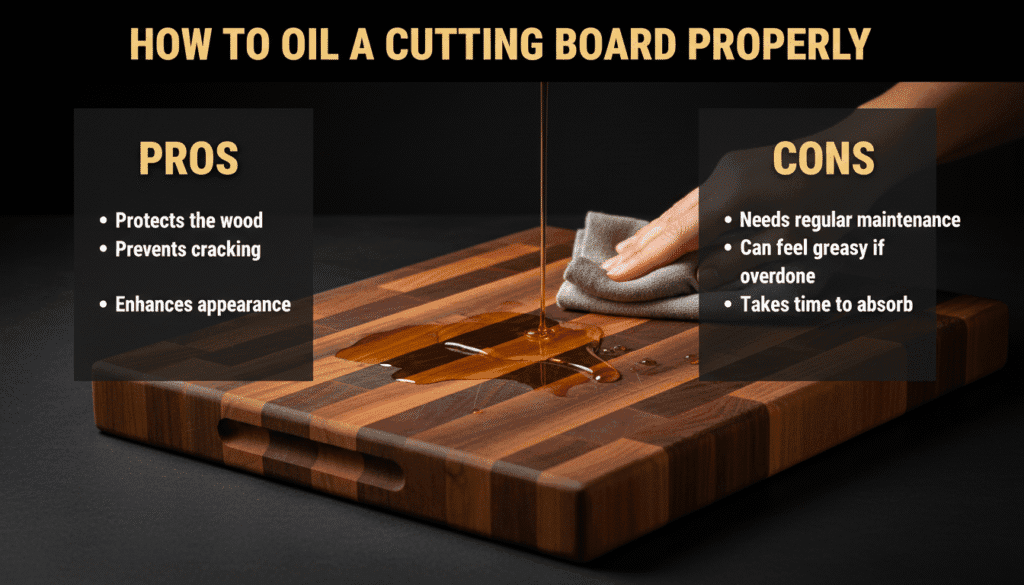
Pros & Cons
| Pros | Cons |
|---|---|
| Water Repellent – The wax blend makes liquids bead up instantly. | Requires Warmth – Can be hard to squeeze out of the bottle in cold weather; needs warming up. |
| Long-lasting – Stays effective longer than plain mineral oil. | Slightly Sticky – If you don’t buff it off properly, it can leave a tacky residue. |
| Odourless – Doesn’t smell of chemicals or interfere with food flavour. | Preparation Time – Needs to sit for at least 20 minutes to work properly. |
| Aesthetic – Brings out a beautiful, deep grain in the wood. | Cost – More expensive than basic pharmaceutical mineral oil. |
| Safe – Meets US FDA requirements for food contact surfaces. |
Overall Rating
4.5/5
I’m taking off half a point just because the wax hardens a little when the temperature drops, making it hard to squeeze the bottle. This is a must-have in my kitchen cupboard, though. It turned a task I hated into a monthly ritual that I look forward to, and my cutting boards look better now than when I bought them.
Conclusion
The best thing you can do for your kitchen tools is learn how to oil a cutting board. It keeps bacteria from hiding in cracks, keeps your board from soaking up bad juices, and keeps the wood looking great.
This process is very easy with Howard Butcher Block Conditioner. It works, is safe, and protects much better than oil alone. I strongly suggest getting a bottle if you want your wooden boards to last more than a few years.
Frequently Asked Questions:
u003cstrongu003eWhat kind of oil should to use on a cutting board?u003c/strongu003e
Always use mineral oil, beeswax, or carnauba wax that is safe for food. These don’t smell, aren’t toxic, and won’t go bad. Howard’s and other brands that label their products as u0022cutting board oilu0022 or u0022butcher block conditioneru0022 typically contain mixes of these safe ingredients.
u003cstrongu003eCan you use olive oil on a cutting board?u003c/strongu003e
No, you should not do that. Olive oil, vegetable oil, and coconut oil (unless they are fractionated) are cooking oils that will eventually go bad and smell bad. This will make your board smell bad and may even make your food taste bad. Use mineral oils that won’t go bad.
u003cstrongu003eHow do I oil my chopping board?u003c/strongu003e
Begin with a clean board. Apply a generous amount of oil or conditioner to the surface. Use a clean cloth or paper towel that doesn’t leave lint behind to rub it into the grain, making sure to cover the sides and back as well. Soak it for at least 20 minutes (or overnight). Finally, use a dry cloth to buff off any extra oil until the board feels smooth and dry.
u003cstrongu003eDo you oil cutting boards wet or dry?u003c/strongu003e
Always put oil on a dry board. The water inside the pores will keep the oil from soaking in properly if the wood is wet. Before you try to oil your board, wash it and let it dry completely, preferably for 24 hours while standing