


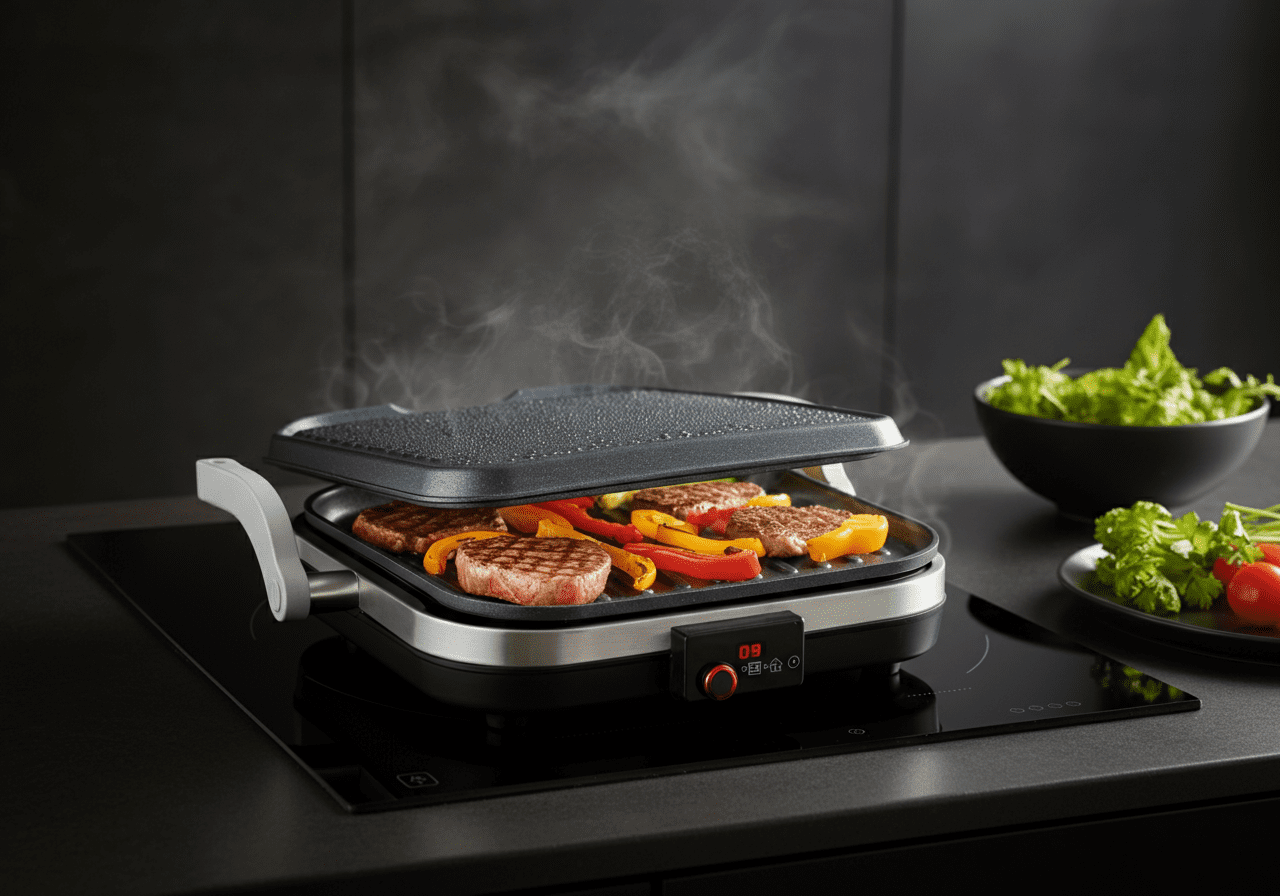

I won’t lie to you; when I first heard about induction grill pans, I was a complete skeptic. My mind made up pictures of sad, floppy mushrooms and steaks that were as gray as February in England. It was a cruel joke because all I wanted was the smoky, carnal bliss of a real barbecue. How could a fancy frying pan on an induction hob compete with fire and charcoal? But sadly, my flat is too small for me, let alone a Weber grill. Right? Things are getting bad. So, with low hopes and an even lower balcony, I gave in and bought an induction cookware grill.
I was wrong, reader. My first test was a simple chicken breast. I preheated the pan with (somewhat dramatic) excitement, lightly oiled the chicken, and listened as it hit the pan with a sizzle that felt strangely victorious. There they were on the other side—beautiful grill marks that would look great in a magazine. The best part? The chicken was juicy and would have been great on a barbecue. That night, I not only ate dinner, but I also ate my own words.
If you’re rolling your eyes and thinking that an induction cookware grill will end up in the back of the cupboard with your spiralizer and waffle iron, which you only use twice, don’t give up yet! Let me show you how this thing has become a must-have in the kitchen and how you can fake a barbecue without going outside (or, you know, making your landlord mad).
What Exactly Is an Induction Cookware Grill?
Okay, let’s get rid of the smoke. An induction cookware grill is basically a heavy, ridged griddle pan that is made to work with induction hobs. It is usually made of cast iron or high-quality stainless steel and has a magnetic base that lets it use the hob’s fancy electromagnetic magic to do its job.
The best part? Those little bumps on the cooking surface that won’t go away. I used to think they were just there to make doing the dishes harder, but they’re not.
- Sear marks to make you proud. Stripes that are shiny and burned? Thank the hills.
- Less grease, more glory. The raised parts lift your food up so that fat and water can run off into the pan’s small channels. So things sear, not steam. Sorry, but no thanks on the steamed steak.
You can really grill right on your kitchen stove, no matter what the weather is like, and you don’t have to wear shoes. An induction cookware grill can give you that smoky, charred taste without the worry that “I might set off the fire alarm.”
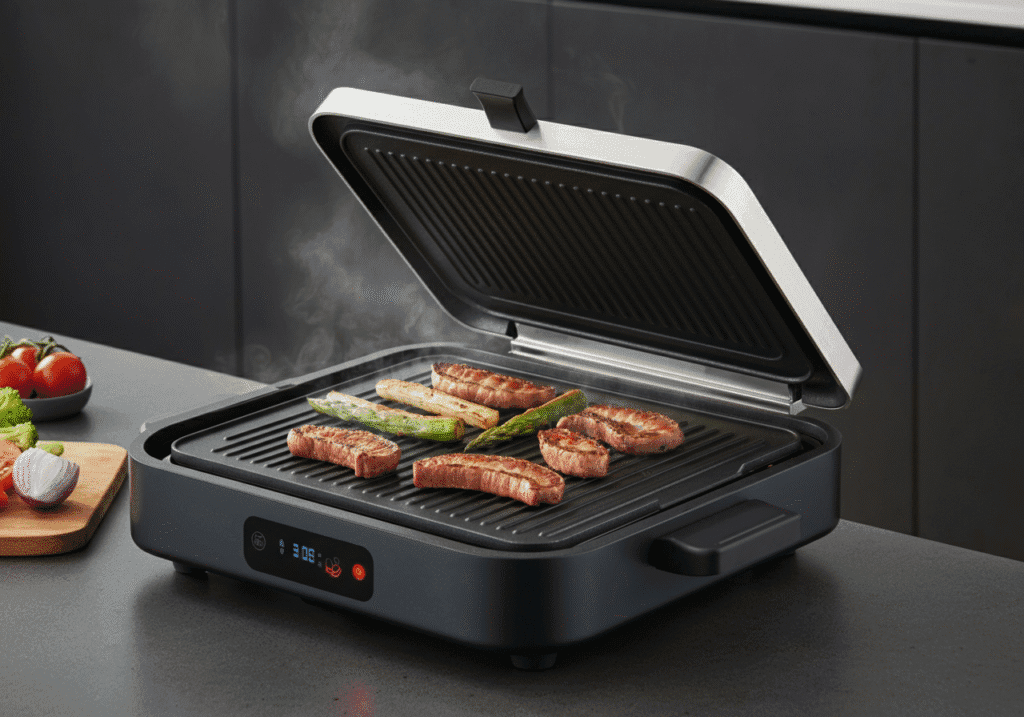
The Sizzling Benefits of a Grill Pan
Since letting one into my kitchen, I’ve discovered a bunch of perks (and very few downsides).
That Unmistakable Flavour and Texture
Do you want the outside to be crusty and a little caramelized and the inside to be juicy? This is your pass. The Maillard reaction, which is the scientific name for the magic that makes food taste like it was grilled, happens because of the ridges and the pan’s extreme heat. My salmon fillets taste fancy now that I have this pan. They have crispy skin and flake off easily. If dinner could strut, mine would.
A Healthier Way to Cook
Here’s a twist: you might end up eating better. When I first grilled burgers, I was shocked (and, to be honest, a little grossed out) by how much fat just dripped down the ridges and sat in the grooves. You eat the food, not the greasy footprints it leaves behind. It’s a nice change from frying, where your food sits in its own oils like it’s at a spa resort that no one really wants to go to..
Versatility Is Its Middle Name
And don’t put your grill pan in a box! Of course, it can cook a steak that will make you speak French or burgers that will keep everyone at the table quiet. But here’s something interesting: I’ve grilled halloumi for salads (so good), asparagus for snacks, and even peaches for dessert. You won’t believe how fancy you feel when you eat grilled fruit with a scoop of vanilla ice cream.
Quick, Even Heating
Who wants to wait for pans to get hot? Not me! Induction gets you up to full speed in no time. These grill pans heat up quickly and evenly, so you won’t get half-cooked carrot sticks or burnt edges. Everything goes as planned, unless you get sidetracked and forget the pan. That’s your fault.
Getting the Best Results from Your Induction Grill
So you’re game to give it a shot? Here are a few rookie tips and lessons I’ve collected (sometimes the hard way):
- Preheat, Preheat, Preheat! Before you start, make sure your grill is hot, just like your morning coffee. If you flick some water on the pan and it dances and disappears right away, you’re good to go. If not, make yourself a cup of tea and try again.
- Oil the Food, Not the Pan. If you put oil in the grooves, you’ll just get a lot of smoke alarms going off. Lightly brush oil on your food. Think of it as giving your chicken or vegetables a little spa treatment before they go on stage.
- Don’t Crowd the Pan. I know you’re hungry, but putting a lot of stuff on top of each other just steams everything and ruins that great sear. It’s worth the wait to cook in batches, I promise!
- Hands Off Until It’s Ready. Put down the tongs and back away. It’s still working on those grill marks if your food is stuck. Don’t poke, prod, or beg; just wait a minute and you’ll be rewarded for your patience.
Is It Time to Invest?
So, is it worth giving up some cupboard space and money to buy an induction cookware grill? Yes, for sure. It’s made a big difference in my kitchen, making dinner (and sometimes lunch and breakfast, too—grilled toasties?) more fun. Yes, please.
Try this pan if you can’t have a real grill or if you just want less trouble and more consistent results. Sorry, purists, but it won’t completely replace barbecue season. However, it does fill the gap for the other 11 months of the year with style and flavor.
An induction cookware grill is a great choice if you love steak, live for veggie skewers, or just want to make your salmon taste better. It’s small but powerful, and after all the great meals it makes, you’ll wonder how you lived without it. Also, you won’t have to wear a coat just to flip a burger, which is great.