



Why I Swapped to a Rubber Cutting Board (and Never Looked Back)
I’ve been on a long journey in the kitchen, full of gadgets, gizmos, and many mistakes. I’ve burned more toast than I want to admit, and once I put salt in a birthday cake instead of sugar (it didn’t taste good). But after all the mistakes and failures, I’ve learned that the simplest tools are often the most useful. I used to think that plastic and wooden chopping boards were identical. I didn’t know how much of a difference a good surface could make until I found the rubber cutting board.
It began quietly. I saw that my knives were getting dull faster than they should. The grooves in my plastic boards were so deep that they seemed impossible to clean, and the crack in my beautiful oak board seemed to get bigger every day. I was angry. When my friend, a professional chef, saw my sad-looking boards, he told me, “You need to get a rubber one.” At first, I didn’t believe him, but he always gave me sound advice. So I went for it; honestly, it’s one of the best things I’ve ever done for my kitchen.
It’s not just about getting another kitchen tool; it’s about finding one that makes cooking more fun, safer, and faster. I want to share my experiences and everything I’ve learned about the simple rubber cutting board in this post. We’ll talk about what makes them unique, their pros and cons, and why they might be the kitchen hero you didn’t know you needed.
Table of Contents
- What Exactly is a Rubber Cutting Board?
- The Pros: Why I Love My Rubber Cutting Board
- The Cons: What to Consider Before Buying
- Making Your Rubber Cutting Board Last
- Is a Rubber Cutting Board Right for You?
- Frequently Asked Questions

What Exactly is a Rubber Cutting Board?
I had a general idea of a rubber cutting board before my chef friend told me about it. I imagined something that would bend and break, like a yoga mat for my veggies. I was utterly wrong.
A real rubber cutting board is usually made of a synthetic composite material like thermoplastic elastomer (TPE) or natural rubber from rubber trees. These mats aren’t the kind that you might find rolled up in a kitchen drawer. They are strong, heavy, and made for serious use. You can think of them as the choice of professionals, and you can often find them in the harsh conditions of restaurant kitchens.
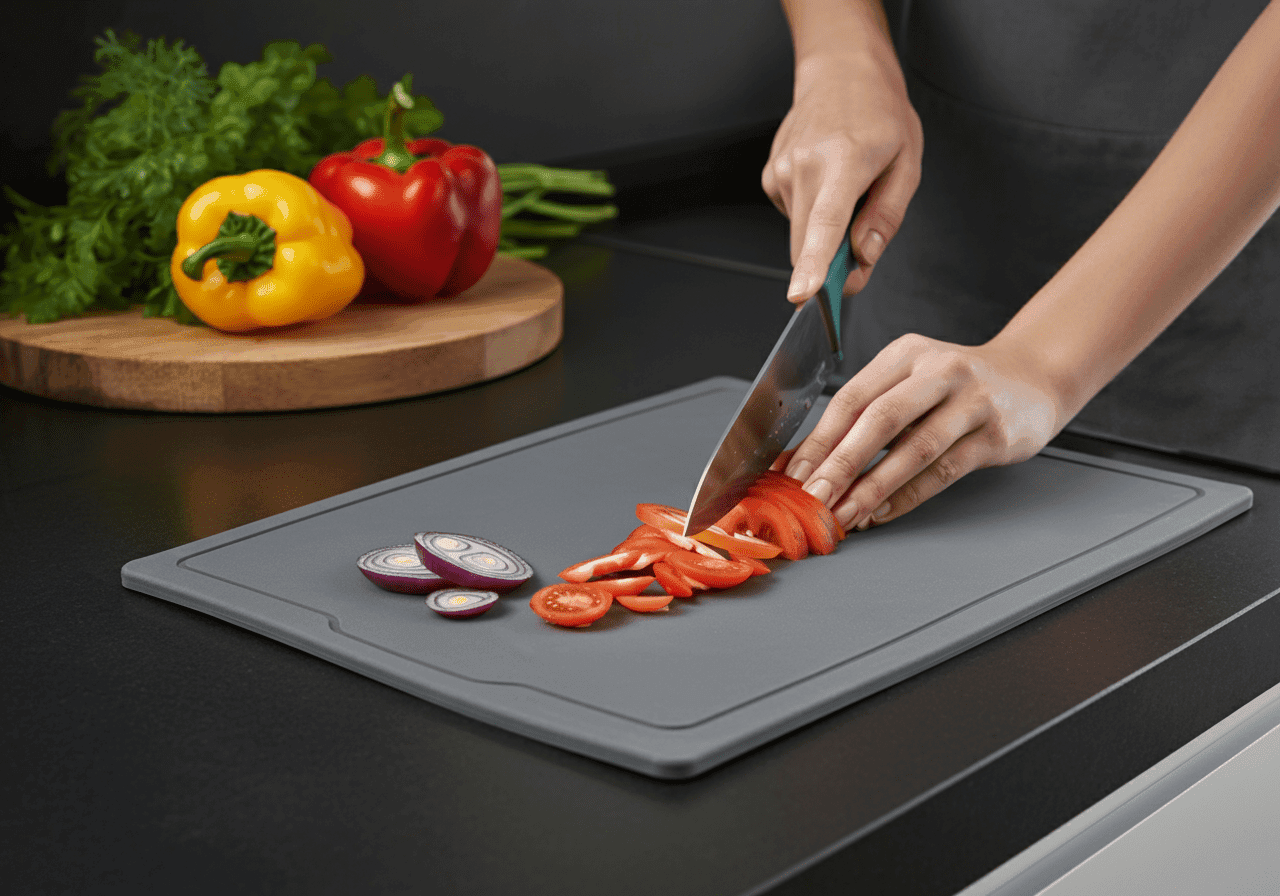
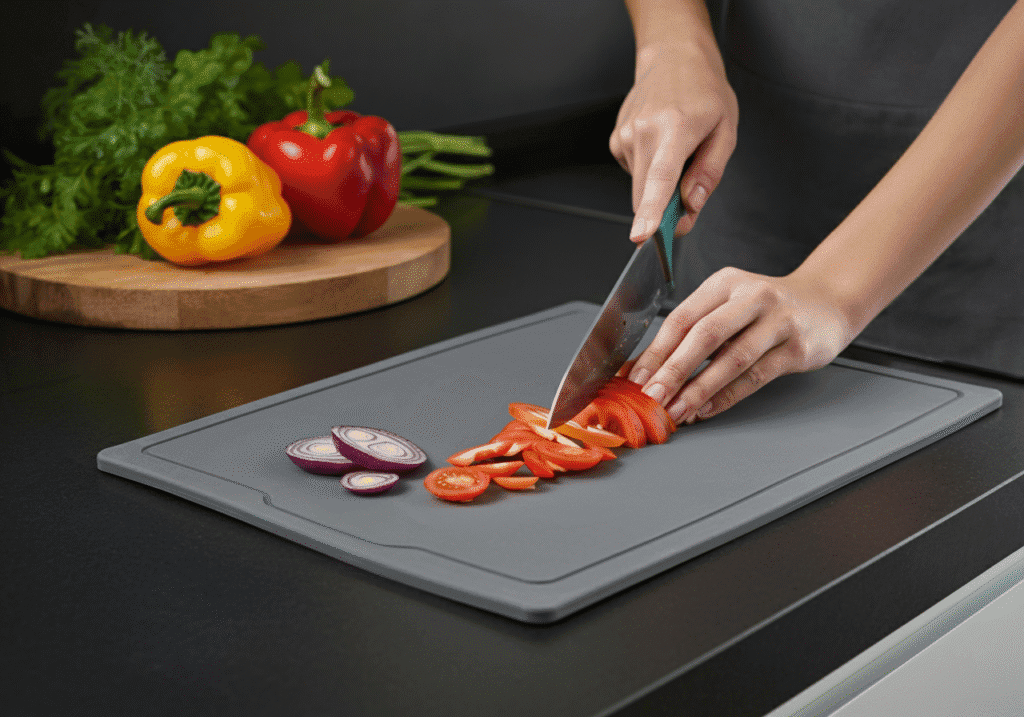
When I took mine out of the box, the first thing I noticed was how heavy it was. It was heavy and didn’t slide around on my counter, a significant safety plus. The surface also felt different. It was smooth, but it had a little give to it. It was a revelation when I first ran my knife across it. The blade sank into the surface, making a stable and satisfying cut. There was no loud noise like you get with plastic or the stiff resistance of glass. It was a whole new experience for my senses.
These boards are made to work well. Because the material is non-porous, liquids like vegetable stains or meat juices don’t get in. This makes them very clean and easy to keep clean. They don’t need to be oiled as often as wood, and they are much more resistant to deep grooves that can form over time and trap bacteria than plastic. A rubber cutting board mixes wood’s knife-friendly qualities and plastic’s low-maintenance, hygienic qualities, but it’s better than both.
The Pros: Why I Love My Rubber Cutting Board
Switching to a rubber cutting board seemed like a small change, but the benefits have been tremendous. It has really made my daily cooking easier. Here are the pros I’ve seen for myself.
Your Knives Will Thank You
Without a doubt, this is the best thing. I used to sharpen my knives all the time. I thought it was just a regular part of cooking at home. But the hard surfaces of my old plastic and glass boards were slowly dulling the edges of my knives.
- The “Self-Healing” Myth and Reality: Some might call a rubber cutting board “self-healing.” It’s not quite Wolverine-level regeneration, but there is some truth to it. The blade can go through the soft, flexible surface, meaning the board and your knife get less damage. The rubber surface doesn’t make deep, permanent cuts; instead, it tends to close back up after shallow cuts.
- A Softer Landing: It’s quieter and doesn’t feel as jarring when I chop on my rubber cutting board. That little “give” absorbs the shock and protects the blade’s delicate edge. It’s like running on the street instead of on a professional running track. This significantly affects how long your knives stay sharp after thousands of cuts. I only need to occasionally sharpen my knives instead of constantly dealing with a dull edge.
Unmatched Hygiene and Easy Cleaning
There were a lot of stains and deep cuts on my old plastic boards. I scrubbed them repeatedly, but I never felt like they were spotless. I was worried about cross-contamination, especially after I had handled raw meat.
- Non-Porous Power: A rubber cutting board is non-porous, which means that liquids and bacteria can’t get through it. You can easily wipe away the juices from a juicy steak or beetroot. This is a big step forward for food safety. The Food and Drug Administration (FDA) says that non-porous surfaces are essential for stopping the growth of bacteria, and rubber boards are great for this.
- Simple to Clean: It’s easy to clean. Usually, all you need to do is wash it quickly with hot, soapy water. My rubber cutting board doesn’t need as much care as my old wooden board, which must be dried immediately and oiled often. Many of them are safe to put in the dishwasher, but I like to wash mine by hand to make it last longer. It only takes a minute.
Stability and Safety on the Countertop
When holding a sharp knife, a slipping cutting board is one of the scariest things that can happen in the kitchen. I used to put a wet tea towel under my old boards to keep them from moving, but it was a lot of work..
- Weight and Grip: A good rubber cutting board is heavy. That weight and the material’s natural grip keep it in place. I can chop, slice, and dice without worrying that my work surface will move independently. This stability has made me feel much safer, especially when I’m in a hurry or teaching my kids how to use a knife.
Built to Last
Every year or so, I had to buy new plastic boards because the old ones got warped and scratched up. A good rubber cutting board is an investment, but it pays off.
- Durability: These boards are made to meet the demands of a professional kitchen, where they are used for hours every day. They are powerful and won’t warp, crack, or stain easily. They aren’t unbreakable, but can handle heavy use better than most other materials. It still looks almost new after using mine every day for several years. Some high-end rubber boards can even be sanded down to show a new surface, making them last longer.
The Cons: What to Consider Before Buying
My rubber cutting board is excellent, but it’s not the best choice for everyone or every situation. You should know about the possible downsides before you put your money in..
The Price Tag Can Be a Shock
First, a good rubber cutting board costs a lot of money. You should expect to pay more than you would for a regular plastic or bamboo board.
- An Investment Piece: I was shocked by the price at first. It seemed like a lot of money for “just a chopping board.” But I’ve come to see it as a good investment. I had to buy new, cheap plastic boards yearly, which increased over time. My rubber cutting board has already lasted longer than a few of them, and it doesn’t look like it will stop anytime soon. You are paying for things that last, work well, and last long.
They Are Heavy
The weight that provides such excellent stability can also be a drawback.
- Manoeuvrability: These boards are heavy. If you don’t have a lot of strength or mobility, or if you like to move your board around a lot (like to scrape ingredients directly into a pan), the weight might be too much. Lifting my big board to clean it in the sink takes some strength. If this is a problem, think about getting a smaller size.
Susceptibility to Heat
Rubber and high heat are not friends. This is something you have to be mindful of in a busy kitchen.
- No Hot Pans: You can’t use a rubber cutting board as a trivet. A hot pan or dish on the surface will permanently warp or melt it. I have a special place for hot pots and have taught myself to be extra careful. Getting into the habit is easy, but forgetting could cost a lot.
Aesthetic Appeal
Finally, let’s talk about looks. While I find my rubber cutting board’s professional, utilitarian design, it might not suit every kitchen’s decor.
- Function Over Form: A rubber cutting board is made to work well, not to look good. It usually comes in neutral colours that are good for food service, like beige, brown, or black. It doesn’t have the warm, natural beauty of a wooden board made by hand, which you might want to use to serve cheese. I use my wooden board to serve, but I use a rubber for prep work.
Making Your Rubber Cutting Board Last
A rubber cutting board doesn’t need much care, but if you take care of it, it will last for years. These are my best tips:
- After each use, wash it with soap and hot water. This is usually enough to get rid of any leftover food and germs.
- Use diluted bleach (about one tablespoon of bleach per gallon of water) to clean more thoroughly, especially after handling raw meat. Please wait a few minutes, then rinse it well.
- Don’t use the dishwasher if you can help it. Even though many of them are safe to put in the dishwasher, the high heat can cause some boards to warp over time. It’s easier on your hands and only takes a moment.
- Store It Flat: Always keep your rubber cutting board on a flat surface or a vertical rack to keep it from warping. Please don’t keep it leaning against a wall for a long time.
- Please don’t put it near heat; remember, no hot pans!
Conclusion: Is a Rubber Cutting Board Right for You?
So, after all this, do you need a rubber cutting board? Yes, for me, the answer was yes. It has made me a better, safer, and happier cook. Because it protects my knives, is easy to clean, and lasts long, I can’t live without it in my kitchen. At first, the cost was a problem, but the long-term value became clear. It’s a tool for professionals that adds a little bit of the restaurant kitchen to your home.
I strongly suggest switching if you love cooking at home and want to keep your expensive knives in great shape. It may look like a small change, but sometimes minor changes have the most significant effects.
Frequently Asked Questions
Q: Is it better to use rubber cutting boards than wood?
A: They both have good points. Wood is pretty and suitable for knives, but needs more care (oiling) because it is porous. Some people like the look and feel of wood better than rubber, even though rubber cutting boards are non-porous, more hygienic, and easier to clean.
Q: Is it safe to use rubber on cutting boards?
A: Yes, rubber is an excellent material for cutting boards. Because it is non-porous, it doesn’t soak up liquids and bacteria, which makes it clean and easy to care for. Rubber boards are also soft, suitable for knives, and keep their edges from getting worn down. Also, they usually have a surface that doesn’t slip, which keeps you stable while you work.
Q: What are some bad things about rubber cutting boards?
A: There are many good things about rubber cutting boards and a few bad things. They may be harder to move or store because they are heavier than plastic or bamboo boards. Also, rubber boards made well can cost more than other materials. Some people might also not realise how nice natural wood cutting boards look.
Q: What kind of material is best for a cutting board?
A: The best cutting board material depends on how you plan to use it and what you like. Even though wood needs more care, it is still popular because it looks good and lasts longer. Plastic cutting boards are light, cheap, and can go in the dishwasher without problems. On the other hand, rubber cutting boards are great for people who care about cleanliness and knife safety. End-grain wood or high-quality rubber boards are often the best choice for heavy-duty use because they are strong and work well.
Q: What is the material of a rubber cutting board?
A: Most rubber cutting boards are made of a thick, high-quality synthetic rubber. This material is made to be safe for food, last a long time, and not get cuts or scratches. Some rubber boards may have extra chemicals or treatments that make their surfaces less slippery and last longer.