



JK Adams Cutting Boards: Why These Wood Boards Rule My Kitchen
Imagine that you’re getting ready for dinner after a long day, and your flimsy plastic cutting board keeps sliding around on the counter and dulling your favourite chef’s knife. Does this sound familiar? Three years ago, I was in the same annoying situation until I found JK Adams cutting boards.
JK Adams has been making great wooden cutting boards for almost 80 years. The company was founded in 1944 in Dorset, Vermont. What began as a small woodworking shop has become a well-known brand among both home cooks and professional chefs. I was interested in their dedication to high-quality Vermont craftsmanship and environmentally friendly practices, but it was their performance that really won me over.
It’s not enough to just have a place to chop; you also need to protect your knives, make cooking easier, and add lasting value to your kitchen. After using my JK Adams maple cutting board a lot, I’m excited to share my honest thoughts, including the great things about it and the things that could be better.
You’ll find out what makes JK Adams cutting boards so great, see how I’ve used them every day for three years, learn about the main pros and cons, and see how they stack up against other high-end cutting boards. This review will help you decide if a JK Adams cutting board is worth having in your kitchen, whether you cook for fun or are a serious home chef.

What Makes JK Adams Cutting Boards Special?
In the crowded cutting board market, JK Adams stands out because of their deep Vermont roots and commitment to high-quality craftsmanship. The company gets high-quality hardwoods like maple, cherry, and walnut from forests that are managed in a way that protects the environment and makes the wood better.
Their famous reversible carving board design shows how well they think about engineering. One side has a smooth surface that is great for chopping vegetables and doing other prep work. The other side has a carved groove around the edge that catches juices when you carve meat. This two-in-one feature means you don’t need more than one board, which frees up space on your counter.
Wood cutting boards are much better than plastic ones, especially when it comes to taking care of knives. When wood is cut, the natural fibres in it actually close up, which helps to seal the surface and keep the structure strong. This surface is soft but strong, so it keeps your knives sharper longer than hard plastic surfaces that can chip and dull the edges of the blades.
JK Adams also cares about sustainable forestry and works with Vermont suppliers who use responsible harvesting methods. This promise goes beyond helping the environment. Working with local sources makes sure that quality is always good and helps the regional economy, which has been a big part of their brand for decades.
My Personal Experience: 3 Years with a JK Adams Maple Board
After reading so many great reviews and getting sick of switching out cheap plastic cutting boards every few months, I bought my first JK Adams cutting board, a 20″ x 15″ reversible maple carving board. At first, I was a little shocked by the $89 price tag, but I ultimately chose to see it as a long-term kitchen investment.
I was impressed right away by the unboxing experience. Along with a bottle of food-safe mineral oil and comprehensive care instructions, the board was delivered in a carefully wrapped package. From the first touch, the craftsmanship was apparent: the wood grain was precisely aligned, the surfaces were smooth and evenly sanded, and the construction was sturdy without being cumbersome.
My cooking routine immediately improved during the first week of use. Even during intense chopping sessions, the board remained securely fixed on my counter without sliding. The large size offered plenty of room for preparation work, and the reversible design was very useful for alternating between preparing meat and vegetables.
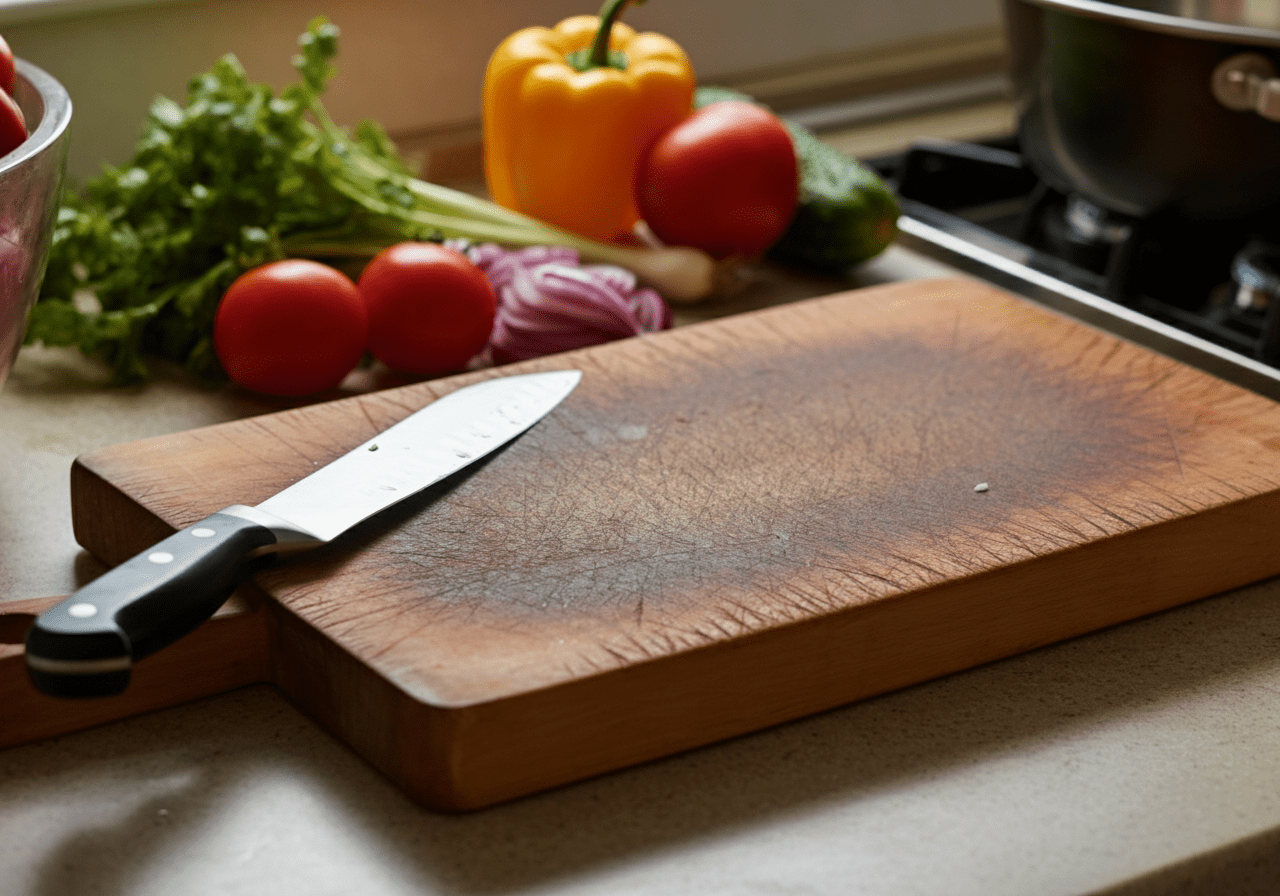
This board has reacted admirably to everyday use over the last three years. I have sliced fresh bread, carved holiday roasts, chopped innumerable vegetables, and even used it as a pretty platter for cheese and charcuterie. The surface of the maple has acquired a lovely patina that preserves its functionality while adding character.
After every use, I wash with warm, soapy water, dry completely, and condition once a month using mineral oil that is safe for food. Despite extensive use, the board has remained immaculate and looks fantastic thanks to this easy maintenance routine; it has not cracked, warped, or become significantly stained.
The Pros: Why I Love My JK Adams Cutting Board
Knife-Friendly Surface
The softness of the wood surface on my knife edges is the biggest advantage I’ve noticed. I was sharpening my knives every month before I made the switch to wood because plastic boards were causing damage. My knives now remain sharp for much longer, saving me money on professional sharpening services as well as time.
Outstanding Durability
My JK Adams board is barely worn after three years of regular use. With only minor knife marks that enhance character rather than degrade performance, the surface is still smooth and useful. Compared to replacing several inexpensive boards over the same time period, this durability makes the initial investment worthwhile.
Natural Antimicrobial Properties
Natural antimicrobial substances found in wood aid in preventing the growth of bacteria. According to studies, because bacteria can conceal themselves in the knife cuts of plastic surfaces, wooden cutting boards may actually be more hygienic than plastic ones. My JK Adams board has a self-healing surface because the wood fibres naturally close after cutting.
Beautiful Craftsmanship
It is impossible to overstate the aesthetic appeal. This board’s rich maple grain pattern makes it visually appealing enough to serve as a serving piece for parties. Its appearance is constantly praised by guests, and it gives my kitchen’s décor a cosy, organic touch.
Perfect Size Options
JK Adams provides a great selection of sizes to accommodate various counter spaces and kitchen requirements. While their smaller options are ideal for apartments or secondary prep areas, my 20″ x 15″ board offers ample workspace for large prep tasks.
Clever Reversible Design
It is very useful to have two different surfaces on a single board. While the grooved side retains juices when carving meats, protecting my countertops and simplifying cleanup, the smooth side is ideal for everyday chopping tasks.
The Cons: Areas Where JK Adams Could Improve.
Upkeep Needs
Compared to plastic boards, wood boards need more maintenance. For busy households, hand washing alone, proper drying, and routine oiling can be inconvenient. Bacterial growth, warping, and cracking can result from neglecting maintenance.
Substantial Weight
High Users with limited strength or mobility may find JK Adams boards less convenient due to their weight. Because my 20″ board weighs more than 8 pounds, it can be difficult to move around while cleaning or storing.
Staining Potential
Beets, berries, and turmeric are among the foods that can permanently discolour wood surfaces. Although these marks don’t interfere with functionality, they can eventually make the board look less appealing.
Not Dishwasher Safe
Hand washing alone can be inconvenient, particularly for households that depend on the convenience of dishwashers. Wood boards need to be carefully cleaned by hand because dishwashers’ hot water and strong detergents can harm them.
Initial Break-In Period
Before being used for the first time, new boards must be seasoned with mineral oil. Several conditioning treatments may be necessary to achieve optimal performance. Some users may be discouraged by this initial time and effort commitment.
JK Adams vs. The Competition
| Feature | JK Adams Maple | Boos Block End Grain | OXO Good Grips | Ironwood Acacia |
|---|---|---|---|---|
| Material | Maple edge-grain | Maple end-grain | Plastic/wood composite | Acacia end-grain |
| Size | 20″ x 15″ | 18″ x 12″ | 15″ x 11″ | 17″ x 11″ |
| Warranty | 1 year | Lifetime | 1 year | None |
| Reversible | Yes | No | No | Yes |
| Weight | 8 lbs | 12 lbs | 3 lbs | 6 lbs |
JK Adams is a master at striking a balance between cost and quality, providing fine craftsmanship without the exorbitant price tag of Boos Block boards. While the lighter weight makes daily use easier, the reversible design adds value.
Because of their end-grain construction, Boos Block boards are much more expensive and heavier than other options, but they are also much more knife-friendly. OXO offers reasonably priced options with contemporary features, but it lacks the solid wood’s strength and visual appeal. Ironwood provides comparable quality to JK Adams at a lower cost, but it lacks a track record of success and warranty protection.
Choosing Your Perfect JK Adams Cutting Board
To accommodate various cooking styles and kitchen requirements, JK Adams provides several unique models. For home cooks who want the most versatility, their traditional reversible carving boards are ideal, and their special bread boards have slots to catch crumbs while slicing.
Wood Type Differences:
- Maple: The most popular choice, offering durability, light color, and subtle grain patterns
- Cherry: Provides rich reddish tones that darken beautifully with age and use
- Walnut: Features dramatic dark chocolate colors with striking grain patterns, though it’s softer than maple
Size Recommendations:
- 12″ x 8″: Perfect for small kitchens or single-person households
- 15″ x 11″: Great all-around size for most home cooks
- 20″ x 15″: Ideal for serious home chefs or large family meal prep
- 24″ x 18″: Professional-size option for extensive cooking projects
Care and Maintenance Tips:
The wood is kept conditioned and protected from cracking by applying food-safe mineral oil once a month. Always give it a hand wash in warm, soapy water, let it air dry completely, and store it somewhere with good ventilation. Re-oil the entire surface after using fine-grit sandpaper to remove any deep scratches.
FAQ:
How do I properly care for my JK Adams cutting board?
After every use, wash your board with warm, soapy water and pat dry completely with a fresh towel. Every month or whenever the wood seems dry, apply mineral oil that is safe for food. Never place it in the microwave or dishwasher; instead, keep it in a well-ventilated area.
Are JK Adams cutting boards worth the investment?
Definitely for serious home cooks who appreciate longevity and quality. The higher price is justified by the excellent craftsmanship, knife-friendly surface, and appealing appearance. Casual cooks, however, may find less costly options adequate for their purposes.
What’s the difference between end-grain and edge-grain boards?
JK Adams uses edge-grain construction, where wood strips are glued with the grain running lengthwise. End-grain boards (like Boos Block) have grain running perpendicular to the surface, creating a more knife-friendly surface but requiring more maintenance and costing significantly more.
How often should I oil my wooden cutting board?
Wood strips are glued with the grain running lengthwise in JK Adams’ edge-grain construction method. End-grain boards, such as Boos Block, have grain that runs perpendicular to the surface, making them easier to cut with a knife. However, they are much more expensive and require more upkeep.
Can I use my JK Adams board for raw meat?
Yes, but make sure to clean thoroughly after using the grooved side to contain juices. If you want the highest level of food safety, think about using separate boards or allocating one side to meat and the other to vegetables.
What size JK Adams cutting board should I buy?
Consider your counter space, storage options, and typical cooking volume. Most home cooks find the 15″ x 11″ size ideal, while serious chefs often prefer the 20″ x 15″ model for its generous workspace.
Where are JK Adams cutting boards made?
All JK Adams cutting boards are manufactured in Dorset, Vermont, using locally sourced hardwoods from sustainably managed forests. This local production ensures quality control and supports American craftsmanship.
Conclusion: Is a JK Adams Cutting Board Right for Your Kitchen?
I can state with confidence that my JK Adams cutting board has surpassed my expectations after three years of regular use. Its well-considered design, premium components, and superb craftsmanship combine to produce a tool that protects my knife investment while improving every cooking session.
JK Adams cutting boards are a great investment for serious home cooks who appreciate high-quality kitchenware and don’t mind the upkeep. Years of dependable performance and appealing appearance make the higher initial cost worthwhile.
Less costly options may satisfy the basic needs of casual cooks or those on a tight budget, particularly if the upkeep requirements seem onerous. The advantages of switching to a high-quality wood cutting board, however, will be felt by anyone who cooks frequently and wishes to safeguard their knives.
Are you prepared to step up your cutting board skills? Discover the ideal size and type of wood for your kitchen needs by looking through JK Adams’ entire collection. Your cooking experience and your knives will both appreciate the high-quality craftsmanship you invested in.
Are you unsure which cutting board would be best for your needs? I’ll assist you in finding the ideal fit for your kitchen setup and cooking style if you leave a comment below.
Resources:
- JK Adams Cutting Board Collection – Explore a wide range of high-quality cutting boards designed to meet every kitchen’s needs.
- 10 Essential Kitchen Tools Every Home Cook Needs – Discover must-have tools that elevate your cooking experience.
- Connect with Us for Expert Advice – Reach out for personalized recommendations or answers to your questions about our products.
- Best Wood for Cutting Boards: Complete Guide (2025)
- Cherry Cutting Board
Take your kitchen essentials to the next level by exploring these useful resources!