


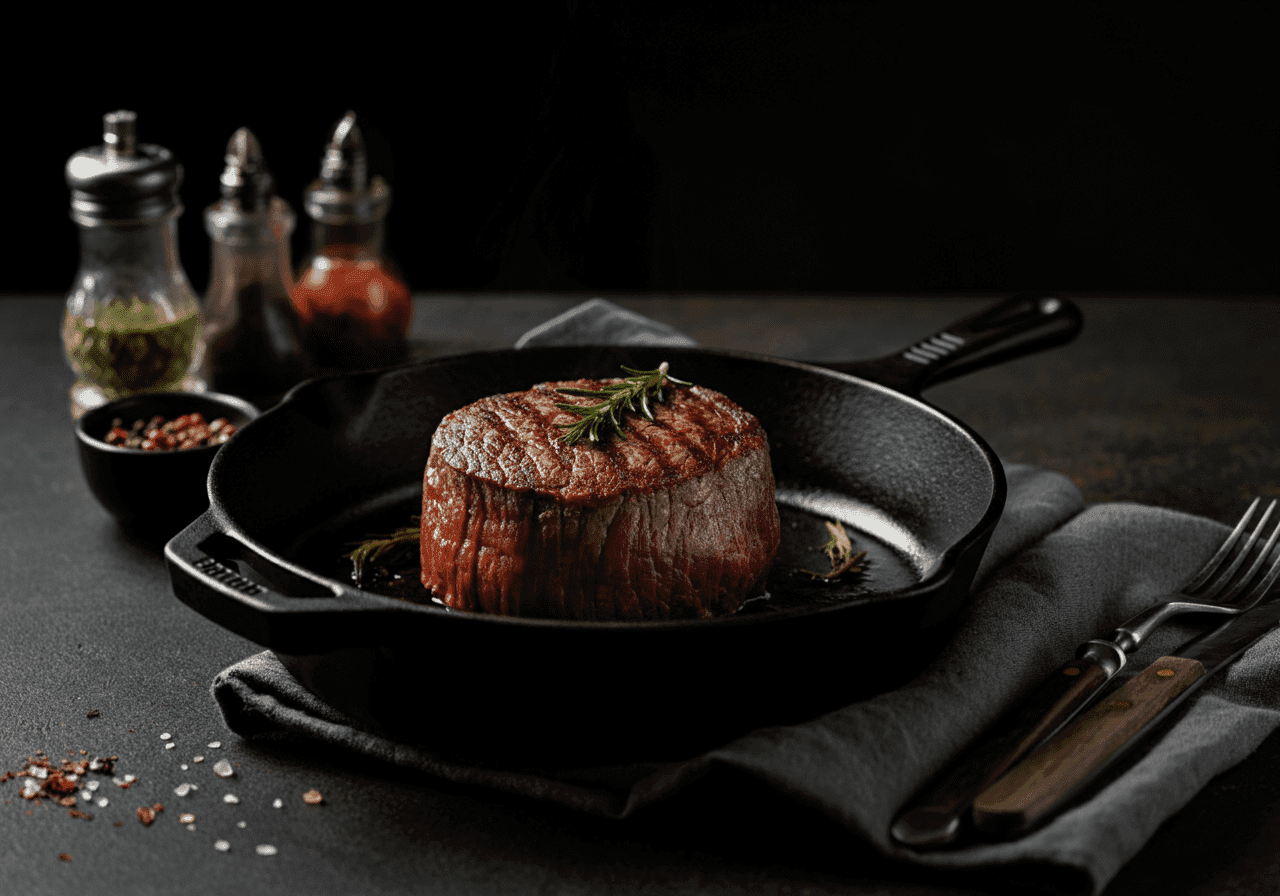

It can feel like a big deal to make Filet Mignon in a Cast Iron Skillet. You bought a nice, tender piece of beef, and now you need to cook it perfectly. I remember the first time I tried. I was so scared of cooking it too much that I ended up with something that was almost still mooing. It taught me something, at the very least.
You don’t need to know how to cook steak in a complicated way to make it taste like it came from a restaurant. You only need your trusty cast iron skillet. This simple pan is the key to getting that tasty, dark brown crust while keeping the inside soft and juicy. This guide will show you how to cook filet mignon perfectly every time in a cast iron skillet.
Table of Contents
Why Your Cast Iron Skillet is a Steak‘s Best Friend
If you’ve ever wondered why chefs love cast iron, it’s because of one thing: heat. Cast iron pans are great at keeping heat in and spreading it out evenly. The pan doesn’t lose its heat when you put a filet mignon in a pan that is very hot. Instead, it starts the Maillard reaction right away. This is a chemical reaction between sugars and amino acids that gives food its unique taste and color.
This steady, high heat is what makes the perfect dark brown crust that steak lovers dream of. A non-stick pan, on the other hand, often cools down when the steak hits it, which makes the steak look grey, steamed, and all-around bad. Because cast iron is so strong, it gives you a better sear that locks in all the juices, leaving the center tender and pink. Also, using a pan that might have been passed down through generations has a certain old-fashioned, romantic charm, don’t you think?
The Challenge: Avoiding a Smoky Kitchen Catastrophe
You might know this scene: you’re trying to sear a nice steak, and in a few minutes, the smoke alarm goes off, the smoke fills the kitchen, and your family runs for cover. This happens when the oil you use to cook can’t handle the heat.
To get the perfect sear on a filet mignon, your cast iron skillet needs to be very hot, between 230 and 260 degrees Celsius (450 and 500 degrees Fahrenheit). A lot of common cooking oils, such as extra virgin olive oil, have a low smoke point. This means that they start to fall apart and burn at temperatures much lower than what is needed for a good sear. When oil burns, it not only makes a lot of bad smoke, but it also makes your expensive meat taste bitter and burnt. For steak night, you have to use an oil with a high smoke point in your cast iron skillet.
Choosing the Right High Smoke Point Oil
So, what oil should you reach for? The goal is to find a neutral-flavoured oil that can withstand the high temperatures of your cast iron pan. Here are a few excellent choices:
- Avocado Oil: This is my favorite. It can handle the heat because its smoke point is about 271°C (520°F). It has a clean, neutral flavour that won’t interfere with the rich taste of the filet mignon..
- Grapeseed Oil: Grapeseed oil is another great choice. It has a smoke point of about 216°C (420°F) and a light, neutral taste. It’s a great all-purpose tool for cooking at high temperatures.
- Clarified Butter (Ghee): Milk solids in regular butter burn at low temperatures. Ghee is pure butterfat with the milk solids taken out. It has a high smoke point of about 232°C (450°F) and a rich, nutty flavor that goes well with beef.
- Vegetable or Canola Oil: These options are easy on the wallet and have smoke points around 204°C (400°F). They taste neutral and always do what they are supposed to do.
Avoid oils like extra virgin olive oil or unrefined coconut oil for searing. While delicious in other contexts, their low smoke points will lead to a smoky kitchen and a less-than-perfect steak.
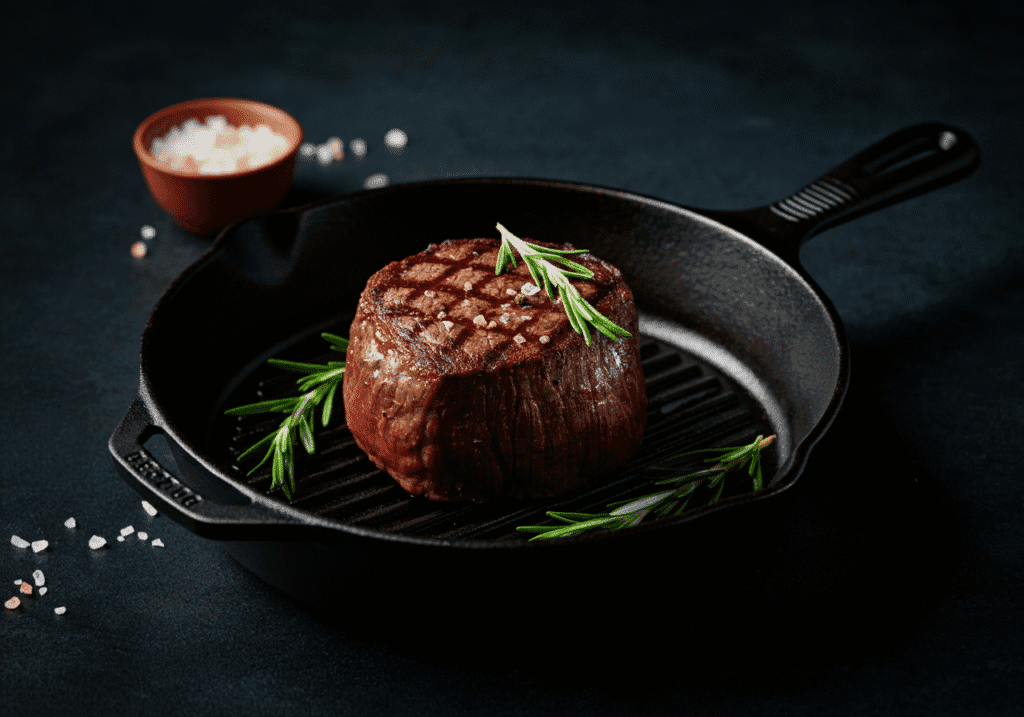
Step-by-Step Guide to the Perfect Filet Mignon
Ready to cook the best steak of your life? Here’s how to do it.
Serves: 2
Prep time: 40 minutes
Cook time: 10-15 minutes
Ingredients
- Two filet mignon steaks that weigh 6 to 8 ounces each and are 1.5 to 2 inches thick
- Black pepper and coarse sea salt that has been freshly ground
- 1–2 tablespoons of an oil with a high smoke point, like avocado oil
- 2 tablespoons of butter without salt
- 2 to 3 cloves of garlic, lightly crushed
- A few sprigs of fresh rosemary or thyme
Instructions
- Prepare the Steak: Take your filets out of the fridge 30 to 40 minutes before you plan to cook them. Use a paper towel to dry them off completely. Moisture is bad for a good crust. Add a lot of salt and pepper to all sides of them. Let them sit out at room temperature. This helps them cook more evenly.
- Preheat Everything: Put your cast iron skillet on high heat for about 5 to 10 minutes. You want it to be very hot. Set your oven to 200°C (400°F) while it heats up.
- Sear the Steak: Put the oil with the high smoke point in the hot skillet. It should shimmer immediately. Put the steaks in the pan with care. You should hear a loud, satisfying sizzle. Sear for 2-3 minutes per side without moving them. This is how you make that great crust. Also, use tongs to sear the edges.
- Add the Aromatics: Turn the heat down to medium. Put the thyme sprigs, garlic cloves, and butter in the pan. As the butter melts, tilt the pan and use a spoon to keep basting the steaks with the hot, fragrant butter. For about a minute, do this. This is my favorite part because the smell is so good.
- Finish in the Oven: Transfer the entire skillet to the preheated oven. Let it cook until it reaches your desired doneness. Use a meat thermometer for accuracy.
- Rare: 52°C (125°F)
- Medium-Rare: 57°C (135°F)
- Medium: 63°C (145°F)
- Rest the Steak: This is the most important step! Take the steaks out of the pan and put them on a cutting board. Give them a break for 5 to 10 minutes. This lets the juices spread out through the meat, making sure that every bite is juicy and tasty. Don’t miss this!
- Serve: Slice the filet against the grain and serve immediately. Drizzle any remaining pan juices over the top.
Final Thoughts on Your Culinary Triumph
Here it is: a sure-fire way to cook a great filet mignon in a cast iron skillet. It’s not about using fancy tools or hard-to-understand methods. It’s all about knowing the basics: the right pan, the right heat, and a little bit of time. When you cut into a perfectly cooked steak with a dark, savory crust and a soft, pink inside, it’s the best feeling in the world. It shows that sometimes the easiest ways to do things make the best food. So, go ahead and turn on that skillet. You can have a steakhouse-style dinner at home. You deserve it.
References
- On Food and Cooking: The Science and Lore of the Kitchen by Harold McGee (for information on the Maillard reaction).
- The Spruce Eats – Smoke Point of Oils.
Frequently Asked Questions
What oil has the highest smoke point for cast iron?
Refined avocado oil generally has the highest smoke point, around 271°C (520°F), making it an excellent and safe choice for searing in a very hot cast iron skillet.
What is the best oil for a cast iron skillet?
What kind of food you’re cooking will determine what the “best” oil is. Avocado oil, grapeseed oil, or ghee are the best oils to use for high-heat searing, like with filet mignon, because they have high smoke points and neutral flavors. Flaxseed oil is often suggested for general seasoning, but many people have had success with vegetable or canol oil.
Is olive oil OK for cast iron?
It depends on the kind of olive oil and how hot the food is. Extra virgin olive oil has a low smoke point (about 160°C or 320°F), so it can’t be used for high-heat searing. You can use light or refined olive oil, which has a higher smoke point (around 240°C or 465°F), but neutral oils are often better because they don’t change the taste of the food.