


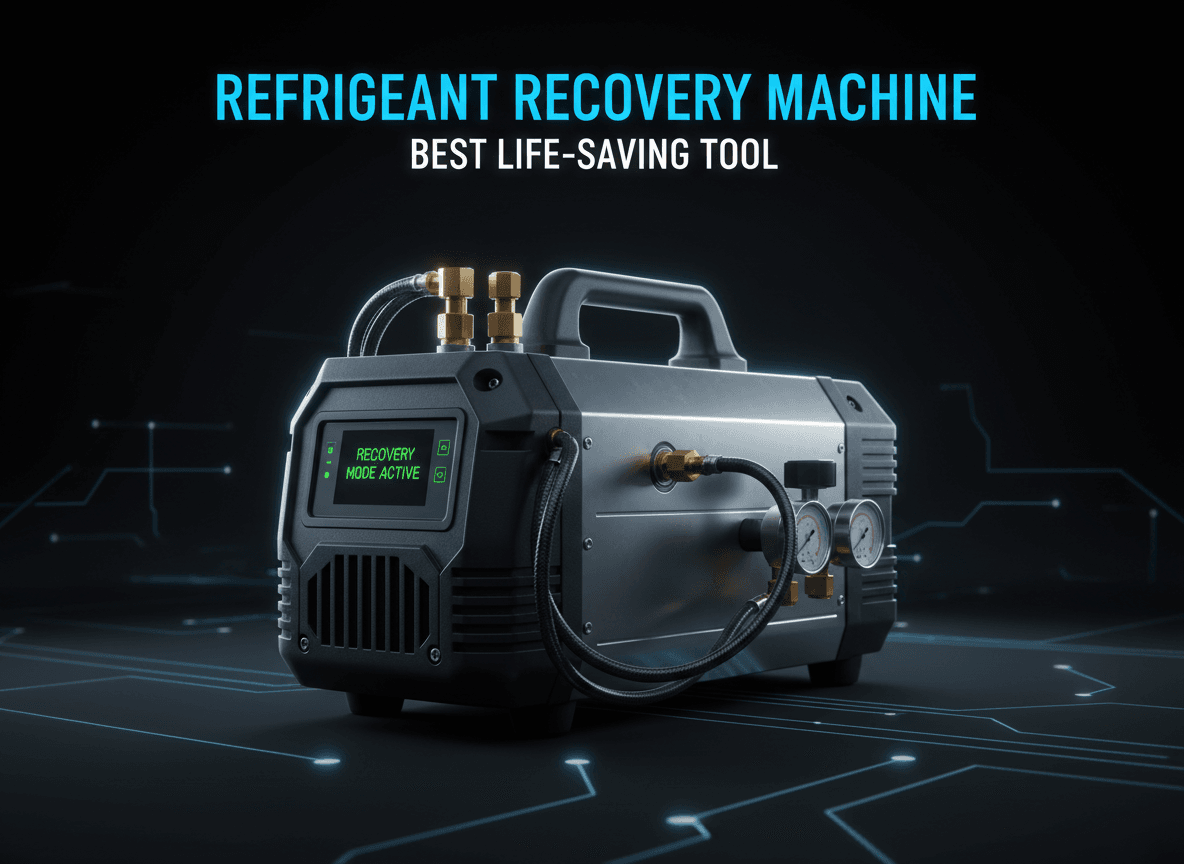

That summer, when my reliable chest freezer broke down, I still remember how scared I was. It wasn’t just that the ice cream was melting; it was also that I realized it wasn’t as easy to fix as just changing a fuse. When the technician got there, he brought in a big, loud, yellow box that looked more like it belonged on a construction site than in my kitchen. He said it was a refrigerant recovery machine, which is the only safe and legal way to drain the “gas” before he could fix the compressor.
I have a new respect for what keeps our food cold after watching that machine work. It wasn’t just fixing something; it was important for the environment. Since then, I’ve learned a lot about how kitchen appliances work. This tool changes how you see your kitchen’s ecosystem, whether you’re a certified DIYer with the right credentials or just a homeowner who wants to know what you’re paying for during a repair. It’s loud and industrial, but it’s very important.
Table of Contents
Introduction
If you’ve ever had to fix your refrigerator or freezer, you may have heard the term “refrigerant recovery machine.” It sounds very technical, and it is, but it plays a huge role in a kitchen that is good for the environment. In short, this device is a pump that takes refrigerant (the fluid that keeps things cold) out of appliances that cool things down, like air conditioners, freezers, and fridges.
But why should a home cook care? You can’t just let that gas out into the air. It is against the law because of environmental rules, and it also hurts the ozone layer and makes climate change worse. A good recovery machine collects that refrigerant so it can be safely recycled or thrown away. In this guide, we’ll explain how these machines work, why they’re important for keeping your kitchen clean, and what features set the best ones apart from the rest.
What a Refrigerant Recovery Machine Actually Does
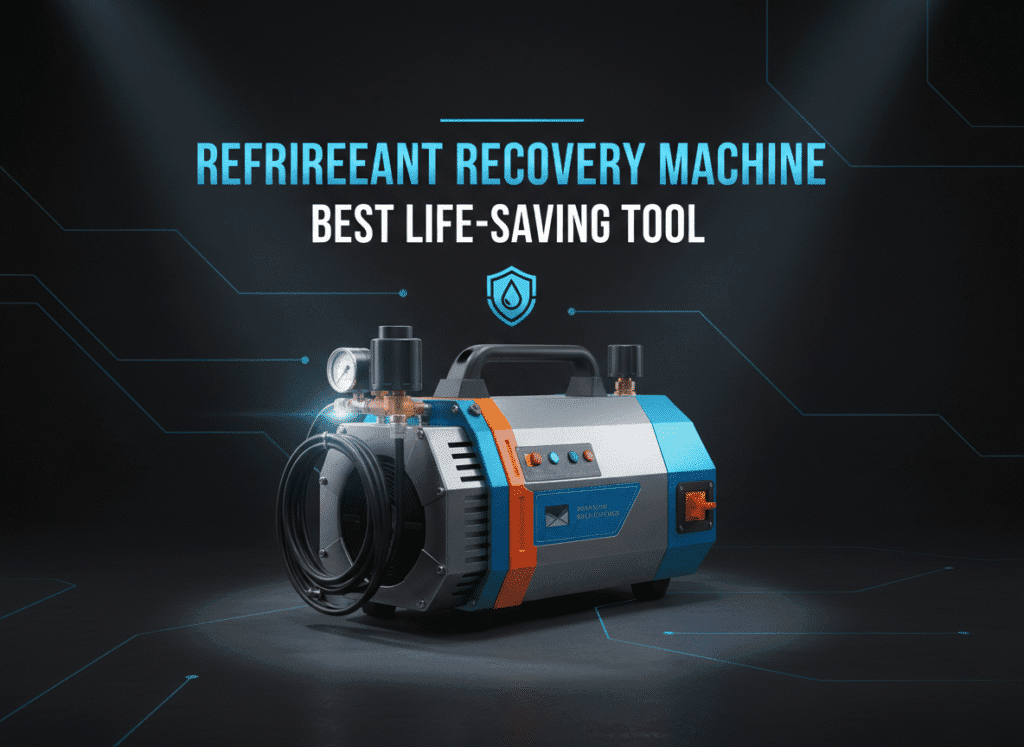
A refrigerant recovery machine is like a special vacuum cleaner for gas. When a fridge needs a big repair, like changing the compressor, the system has to be “opened.” If you just cut the pipes, the refrigerant, which is often called Freon, would come out as a gas.
The recovery machine connects to the appliance via hoses. It takes the refrigerant out of the fridge, compresses it, and sends it to a special recovery tank. It’s a closed loop. Nothing comes out. The machine makes sure that every gram of that chemical is counted, so the fridge is empty and safe to work on.
The Environmental Why: Understanding Refrigerants
You need to know what the machine is pumping to understand it. For many years, kitchens used refrigerants that worked well to cool things down but were bad for the environment.
- CFCs and HCFCs (Old School): These are the things that hurt the ozone layer. These might still be in your old retro fridge.
- HFCs (Modern Standard): R-134a and other things like it. They don’t hurt the ozone layer, but they act like a thick blanket in the air that keeps heat in. Their “Global Warming Potential” (GWP) can be thousands of times higher than that of carbon dioxide.
- Hydrocarbons (The Future): New fridges might have stickers that say R-600a (Isobutane). These work very well and don’t hurt the environment much, but they are flammable, so it’s even more important to use the right refrigerant recovery machine.
Regulations like the EPA’s Section 608 (in the US) and similar laws in the UK and Europe strictly prohibit “venting” (releasing) these gases. This is why this machine is not just a tool; it is required by law.
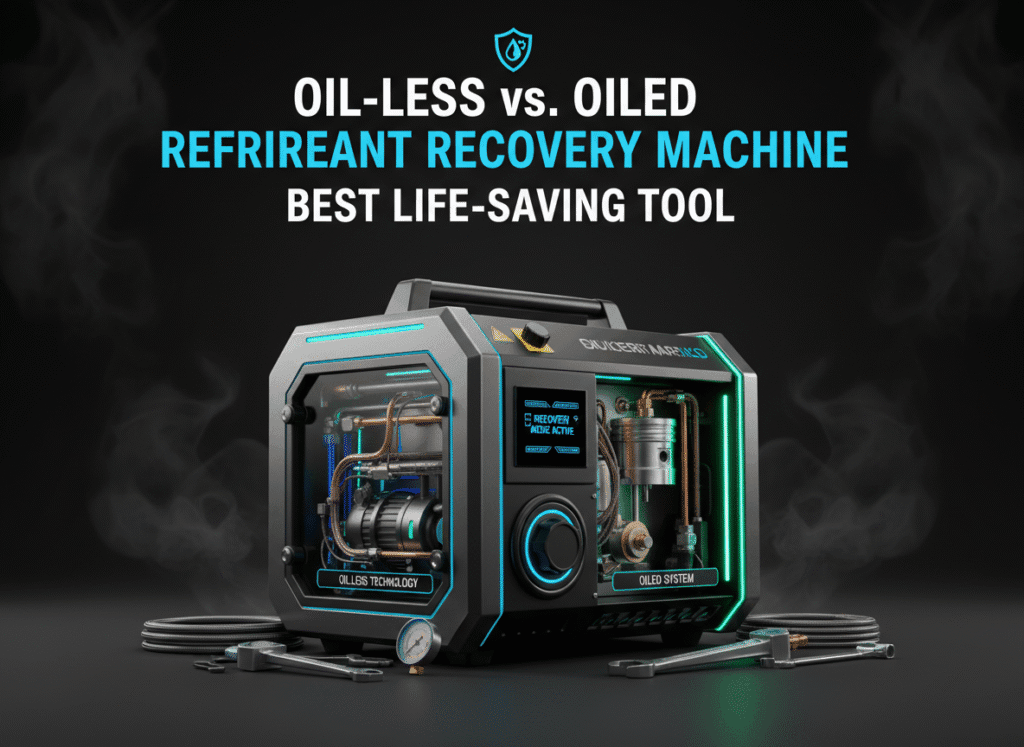
Types of Machines: Oil-less vs. Oiled
There are usually two main types of compressors in these machines.
| Oil-less Compressors | Hermetic (Oiled) Compressors |
| ✅ Pros: They can handle more than one type of refrigerant without mixing them up. You don’t have to worry about changing the oil in the machine. They usually recover from the vapor faster. | ✅ Pros: Usually quieter and very strong if they are taken care of properly. |
| ❌ Cons: They can be louder and cost more up front at times | ❌ Cons: You should always check the oil levels. You could contaminate the batch if you switch between different kinds of refrigerants. |
For a general-purpose kitchen maintenance setup, an oil-less unit is almost always the better, more versatile buy.
Key Features to Look For
If you’re looking for one or just want to know what specs your repair person is using, here’s what you need to know:
Recovery Speed
Everything is about speed. You don’t want to have to wait three hours in a customer’s kitchen (or your own) for a freezer to drain. Find machines that have “Twin Cylinders,” like the Appion G5Twin. These have two pistons that pump at the same time, which makes it much faster to get the gas out.
Weight and Portability
Kitchens are often small. You could be stuck between an island and a pantry. It’s much easier to move a 10kg machine, like the Fieldpiece MR45, than an old-school 20kg beast.
Compatibility (A2L and A3)
This is very important for kitchens today. New refrigerators use either Isobutane (R-600a) or Propane (R-290), as I said. These refrigerants are either “A3” (flammable) or “A2L” (mildly flammable). Not all machines are safe from sparks. To keep a repair from becoming a fire hazard, you need to make sure the machine can handle flammable refrigerants.
Safety First: Handling Hazardous Gas
We need to talk about safety before we get into the “how-to.” This isn’t the same as fixing a toaster.
- Airflow: Always work in a space with good airflow. Open the windows if you are using R-600a (Isobutane).
- Safety goggles and gloves are a must-have for PPE. If refrigerant sprays on your skin, it can freeze you right away.
- You need to use a refrigerant scale for the scale. To make sure you don’t fill the recovery tank too much, you need to know exactly how much gas you took out. If it gets too hot, a tank that is too full can blow up.
Step-by-Step Usage Guide
Note: In many regions, you must be certified to handle refrigerants. Always check your local laws.
1. Getting ready
Check your hoses. Are there any cracks? Change them. Put your recovery tank on a scale and set it to zero. Plug your manifold gauge set into the service ports on the appliance.
2. Connect
Connect a hose from the manifold (the yellow center hose) to the refrigerant recovery machine‘s inlet port. Connect a second hose from the machine’s outlet port to the recovery tank’s liquid port.
3. Getting rid of air
You don’t want regular air to get into the refrigerant. A “self-purge” feature is common in most good machines. You loosen the hose at the tank a little bit and let some gas flow through to push the air out. Then you tighten it back up.
4. Begin the recovery
Open the tank and manifold’s valves. Start the machine. You will hear the compressor start up. It starts by pulling in vapour. Keep a close eye on the scale.
5. Keeping an eye on
Look at the gauges. The pressure on the appliance side should go down. When it reaches a vacuum, which is usually between 10 and 15 inches of mercury, the process is over.
6. Clean the machine
Set the machine to “Purge” before unplugging it. This sends the last bit of refrigerant in the machine’s internal pipes to the tank. This keeps the machine from leaking and makes sure it stays clean.
7. Finish
Close all the valves. Stop the machine. You have now safely gotten the gas back.
Maintenance and Care
These machines are workhorses, but they need love.
- Cleaning the mesh filter: Every machine has a small mesh screen at the inlet port to catch copper shavings or other debris. If this gets blocked, your machine will run slowly and get too hot. You should clean it or change it often.
- Don’t use extension cords because these machines use a lot of power (amps). Using a thin extension cord can lower the voltage, which can cause the motor to burn out. If you can, plug it straight into the wall.
- Run It Regularly: Just like a car, seals don’t like to sit still for months at a time. Running it for a short time, even if you’re not fixing it, helps keep the parts inside moving.
Common Mistakes to Avoid
- Filling the tank too much: This is the most dangerous thing you can do. You should never fill a recovery tank more than 80% full.
- Not paying attention to the filter: I’ve heard people say their machine is “broken” when all it needs is a 50p mesh filter that is clogged with dirt.
- Never put R-134a back into a tank that already has R-22 in it. You ruin both batches, and recyclers won’t take the drink.
- Venting the Hoses: When you unplug them, a small amount of gas escapes with a “pssh.” Use “low-loss” fittings on your hoses to cut down on this. It is good for the environment and saves money.
Top Recommendations 💥
If you are looking to invest in a machine, here are two that stand out in the market based on reliability and features.
1. Fieldpiece MR45
- Best For: Tech-savvy users and those wanting “smart” features.
- Why It Wins: It has a digital screen that shows you exactly what the motor is doing. It weighs only about 10 kg and has a “smart” motor that can change speed. It starts slowly, so it doesn’t suck up too much liquid (which can break compressors) and speeds up when it hits vapor.
- My Verdict: It seems like a tool for a modern kitchen. The digital display makes it easy to know what to do.
2. Appion G5Twin
- Best For: Speed demons and heavy-duty use.
- Why It Wins: This thing is a monster. It has two cylinders and a big fan that keeps it cool even when it’s hot outside. It moves refrigerant very quickly. It’s a little more “analog” than the Fieldpiece, but it’s tough.
- My Verdict: This machine will get the job done faster than any other if you have a big American-style fridge freezer with a lot of refrigerant.
Expert Rating: 4.8/5 ⭐
I really like the idea of the modern refrigerant recovery machine because it makes a hard problem much easier to solve.
- Usability: 4 out of 5 (You need to know how to use it, but modern screens make it easier)
- Performance: 5 out of 5 for performance (the new twin-cylinder models are very fast)
- Value: 4 out of 5 (Costs a lot up front, but pays for itself by letting you do legal repairs)
- Sustainability: 5/5 (A green kitchen needs this)
Future of Kitchen Cooling
We are in a time of change right now. The AIM Act and other international agreements are getting rid of HFCs, which are gases that cause a lot of global warming. This means that kitchens in 2030 will probably use mostly natural refrigerants like propane and isobutane.
In the future, recovery machines will need to be more sensitive and less likely to catch fire. We might even see machines that work directly with “smart” fridges to check the gas levels before you even connect a hose. For now, the best way to make sure your toolkit will last is to make sure your machine is “A2L/A3 compatible.”
FAQ:
u003cstrongu003eWhat is a refrigerant recovery machine?u003c/strongu003e
It is a pump that takes refrigerant gas out of cooling appliances like air conditioners and refrigerators and stores it in a tank so it doesn’t get into the air.
u003cstrongu003eWhat are the steps of refrigerant recovery?u003cbru003eu003c/strongu003e
The first steps are: 1. Attach the hoses and the manifold. 2. Get rid of air in the lines. 3. Get back the liquid refrigerant. 4. Get the vapor refrigerant back. 5. Clean out the machine. 6. Shut off the valves and disconnect.
u003cstrongu003eHow much does a machine that recovers refrigerant cost?u003cbru003eu003c/strongu003e
A good unit for home use usually costs between £500 and £900. Units that are professional-grade can cost more than £1,000.
u003cstrongu003eWhat are the basic parts of a refrigerant recovery machine?u003cbru003eu003c/strongu003e
It has a compressor, an inlet port (suction), an outlet port (discharge), pressure gauges, and a fan to keep the unit cool.
Conclusion:
The refrigerant recovery machine isn’t as cool as a stand mixer or as sharp as a chef’s knife, but it’s the unsung hero of the eco-friendly kitchen. We can fix our appliances instead of throwing them away, and it makes sure that the chemicals that keep our food fresh don’t make the Earth warmer.
If you are a certified technician or just a homeowner who wants to know how to fix things, knowing how this machine works gives you power. It helps you ask the right questions and makes sure that your kitchen repairs are done in a safe, legal, and responsible way. If you really want to take care of your appliances, learning how to use this tool is one of the best things you can do.