


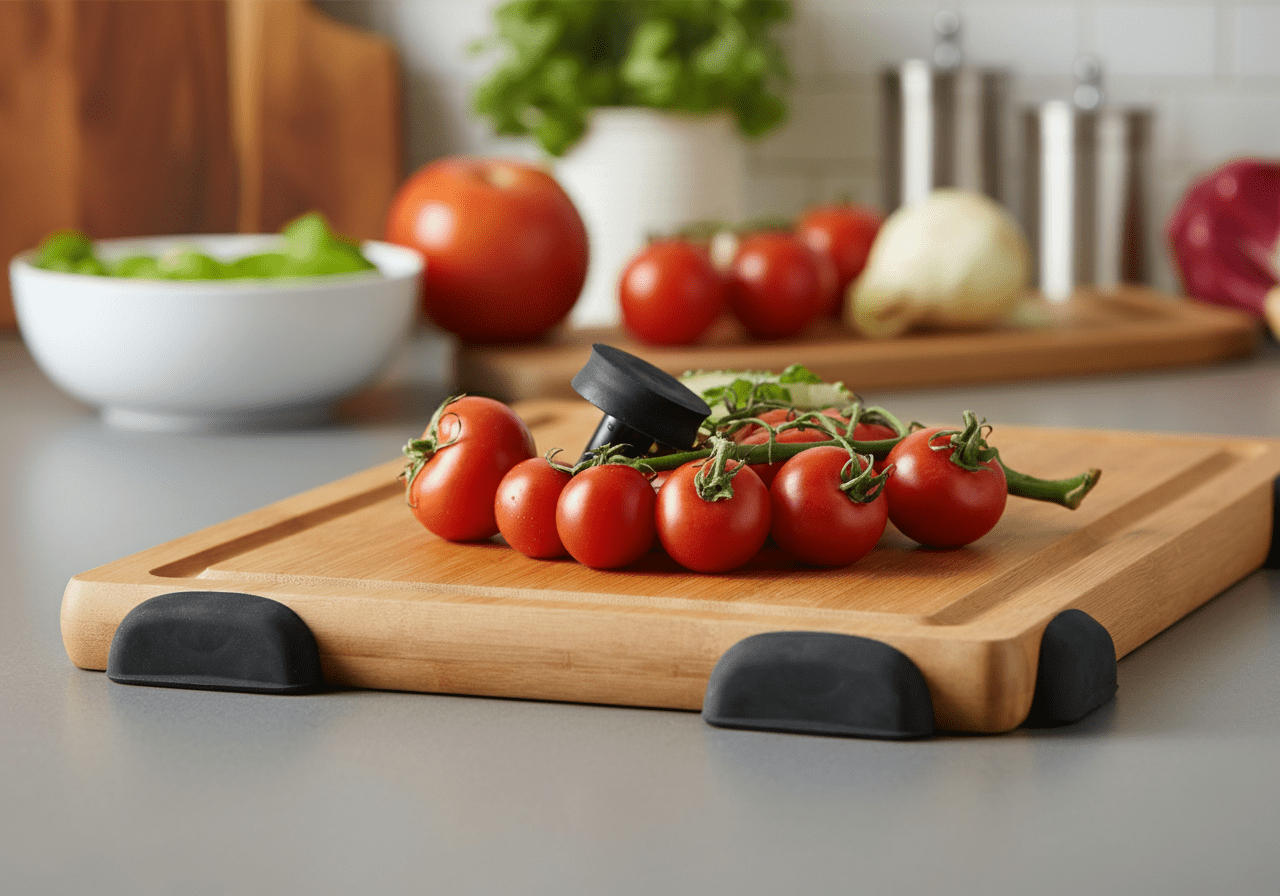

Imagine chopping up onions for dinner when your cutting board suddenly moves across the counter. Your knife slips, and you barely miss a nasty cut. Does this sound familiar? We’ve all been through it.
You don’t have to make this common kitchen mistake every time you cook. Cutting boards with rubber feet are the answer, and it’s easier than you think.
As someone who has spent years making my kitchen better, I can tell you that adding rubber feet to cutting boards is one of the best things you can do to improve it. It’s a small change that makes a big difference in safety, hygiene, and the life of the board.
This complete guide will show you everything you need to know about rubber feet for cutting boards. We’ll look at the different kinds, what they can do for you, and how to pick the best ones for your needs. By the end, you’ll know why this simple addition is a game-changer for anyone who loves to cook at home.
What Exactly Are Rubber Feet for Cutting Boards?
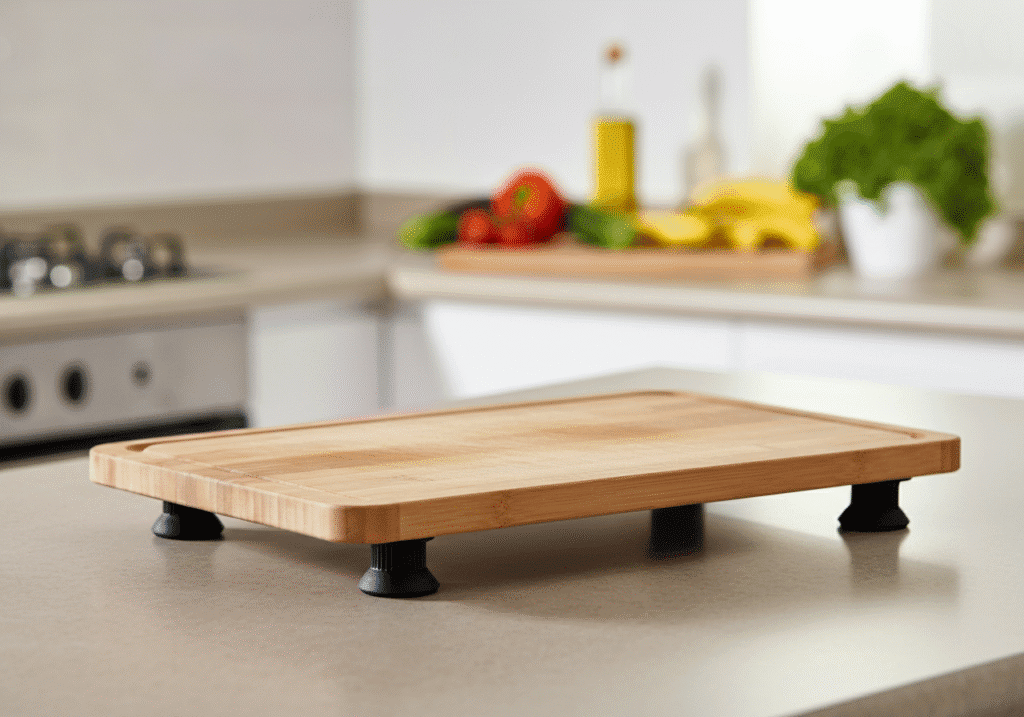
Rubber feet for cutting boards are small pads or bumpers made of Rubber that keep the board from slipping. We put these on the bottom of cutting boards to make them more stable and raise them.
Their main jobs are to keep the board from sliding on the countertops, let air flow underneath, and protect both the board and the surfaces of your counters. They are like the base that turns a regular cutting board into a professional-grade prep station.
Most rubber feet for cutting boards are safe for food and can go in the dishwasher, but I recommend washing the boards with feet by hand whenever possible.
A Brief History: From Wet Towels to Dedicated Feet
My grandmother put wet kitchen towels under her cutting boards so they wouldn’t slide. This old-fashioned method worked but raised hygiene issues and wasn’t very reliable.
As kitchenware design changed, companies started making specialised products. The idea for rubber feet for cutting boards came from professional kitchens, where stability and efficiency were essential.
The options available on the market today are much more advanced than those first ones. We can now get materials and designs that look better, last longer, and have a better grip.
Types of Rubber Feet for Cutting Boards
You need to know your options to make the right choice. Let me explain the main types of rubber feet that can be used on cutting boards.
Screw-In Rubber Feet
These are the safest and most permanent choices for rubber feet for cutting boards. They usually come with screws made of stainless steel, so they don’t rust or corrode.
I like screw-in feet better for thicker wooden boards because they make a stable connection. You have to drill pilot holes for the installation, but the result is almost unbreakable.
The main benefit is that it lasts a long time. Once they are put on, good screw-in rubber feet for cutting boards can last for years without needing to be replaced.
Adhesive (Stick-On) Rubber Feet
Cutting boards with adhesive rubber feet are an easy-to-install, non-permanent fix. They work best on plastic, glass, or thinner boards where screws won’t work.
The most important thing to do to make adhesive feet work is to prepare the surface correctly. Before I apply it, I constantly clean the bottom of the board with isopropyl alcohol to make sure it sticks well.
High-quality adhesive rubber feet for cutting boards use industrial-strength adhesives, like 3M products, ensuring the feet stay on for a long time.
Push-In/Snap-In Feet
Some factory-made cutting boards have holes already drilled so that push-in rubber feet can be used. This kind makes a strong connection without using screws or glue.
These feet aren’t as standard in the aftermarket, but they work well with boards that are made to fit them.
The Undeniable Benefits of Using Rubber Feet for Cutting Boards
After years of using boards with and without feet, I can confidently say the benefits are substantial:
Enhanced Safety: The most crucial benefit. Stable boards greatly lower the risk of knife slips and injuries. Since I added rubber feet to my cutting boards, I’ve never had a close call.
Improved Hygiene: Elevation lets air flow underneath, preventing moisture from building up. This stops mould and bacteria from growing, which is especially important for wooden boards.
Increased Board Longevity: Keeping water from pooling helps stop warping, cracking, and splitting. After five years of heavy use, my oldest cutting board with rubber feet still looks almost new.
Countertop Protection: Soft rubber materials keep delicate surfaces like polished granite or marble from getting scratched. This protection alone can save you hundreds of dollars on countertop repairs.
Easier Handling: The extra height makes picking up boards off flat surfaces much easier. You won’t have to fight to get your fingers under a flush board anymore.
Potential Challenges and How to Overcome Them
Installing rubber feet for cutting boards isn’t always straightforward. Here are common issues I’ve encountered and their solutions:
Installation Alignment: Getting screw-in feet in the right place can be hard. I fix this by making a simple template out of cardboard, marking the best spots, and then moving those marks to the board. From cardboard, marking the ideal positions, and then transferring those marks to the board.
Adhesive Failure: Cheap adhesive feet don’t always work well over time. I only buy cutting boards with high-quality silicone rubber feet from trusted sources. The difference in initial costs is slight compared to the trouble of replacing them.
Size Mismatch: Small rubber feet for cutting boards can sometimes look out of place on bigger boards. I suggest that your feet be about 1/16th the length of the shortest side of your board.
Comparing Materials: Making the Right Choice
Different materials offer unique advantages for rubber feet for cutting boards:
Silicone gives you an excellent grip and can handle heat well. It’s my first choice for most things, especially for wooden boards that might come into contact with hot pots or pans.
Natural Rubber: Rubber. It has a good grip for less money, but it can break down when it comes into contact with oils or cleaning chemicals. I only use these for light-duty tasks.
Polyurethane gives you excellent durability and resistance to wear and tear. It’s worth considering for business or heavy use, even though it’s more expensive.
Santoprene brings together the best qualities of Rubber and Rubberbberite. Because it is consistent and lasts long, it has become my go-to material for making small rubber feet for cutting board projects.
Real-World Application: A Home Cook’s Perspective
Tell you how rubber feet for cutting boards changed how I cook in my kitchen.
I put screw-in silicone feet on my main wooden board three years ago. The change happened right away and was huge. Chopping got better and more sure of itself. Cleaning up was easier because crumbs were no longer stuck under the board.
Most importantly, I felt better. I would never have to worry about the board sliding while using a knife.
I use small rubber feet with adhesive on my smaller prep boards for cutting boards. These are great for light work when you only need to use them occasionally.
Current Trends: Integrated vs. Add-On Options
The market for rubber feet for cutting boards keeps changing. Many high-end brands now sell boards with feet already attached because they know how important they are.
Common. You can change your cutting boards’ height, material, and position by adding rubber feet.
It’s nice to have both choices. People who want their feet to work right away, like pre-installed feet, while people who like to be precise, like add-on feet.
Installation Best Practices
If you install your rubber feet for cutting boards correctly, they will work their best:
For screw-in feet, you should always drill pilot holes that are a little smaller than the screw’s diameter. This keeps the wood from splitting and makes sure it fits snugly.
Before using adhesive feet, clean the surface with degreasing agents and let it dry completely. Press firmly and avoid using the board for 24 hours to allow complete adhesive cure.
Put your feet close to the corners, but not to the edges. This gives the most stability and keeps the feet safe from getting hurt while handling the board.
Maintenance and Longevity
You don’t have to do much to keep good rubber feet on cutting boards. I check mine monthly to see if it’s worn out or loose.
It’s easy to clean. Most dirt can be washed away with warm, soapy water. To keep things clean, you should also use a diluted bleach solution occasionally.
If your feet start to crack, harden, or lose their grip, you should replace them immediately. Feet that aren’t working right don’t do their job of keeping you safe and can make things worse than not having feet at all.
Where to Source Quality Feet?
You need to know where to look to find good rubber feet for cutting boards. Speciality woodworking stores, professional kitchen equipment stores, and some online stores have all worked very well for me.
Don’t buy things from a generic hardware store unless you can be sure the materials are safe for food. The difference in performance between good and cheap feet is much bigger than the price difference.
I highly recommend suppliers that cater to professional woodworkers for small rubber feet that can be used on cutting boards. They know what it takes to use things in the kitchen and have the right supplies.
Transform Your Kitchen Experience
One of the best and cheapest ways to improve your kitchen is to put rubber feet on your cutting boards.
The safety benefits make the upgrade worth it, but the extra cleanliness, board protection, and ease of use make it almost necessary for serious home cooks.
Stop having trouble with cutting surfaces that aren’t stable. Quality rubber feet for cutting boards will give your primary prep tool the stable base it needs.
This simple but significant change will make your knives, counters, and most importantly, your fingers happy.
Frequently Asked Questions
Where can I buy rubber feet for cutting boards?
You can find good choices at woodworking supply stores, stores that sell professional kitchen equipment, and well-known online stores. Unless you can be sure that the generic versions from hardware stores are safe for food, I suggest you avoid them.
What size rubber feet should I choose for my cutting board?
Most home boards work well with feet 3/4″ to 1″ wide and 1/4″ to 1/2″ tall. The size and weight of your cutting board should determine the size of the small rubber feet you use.
Can I put cutting boards with rubber feet in the dishwasher?
I don’t think cleaning boards with feet in the dishwasher is a good idea. Wooden boards can be damaged by high heat, and this can also weaken adhesives. Washing by hand protects both your board and the rubber feet on cutting boards.
Will screw-in feet go completely through my board?
Not the correct size. Always measure the thickness of your board and pick screws that are 1/4″ shorter than that. This makes sure that the attachment is safe and won’t break.