


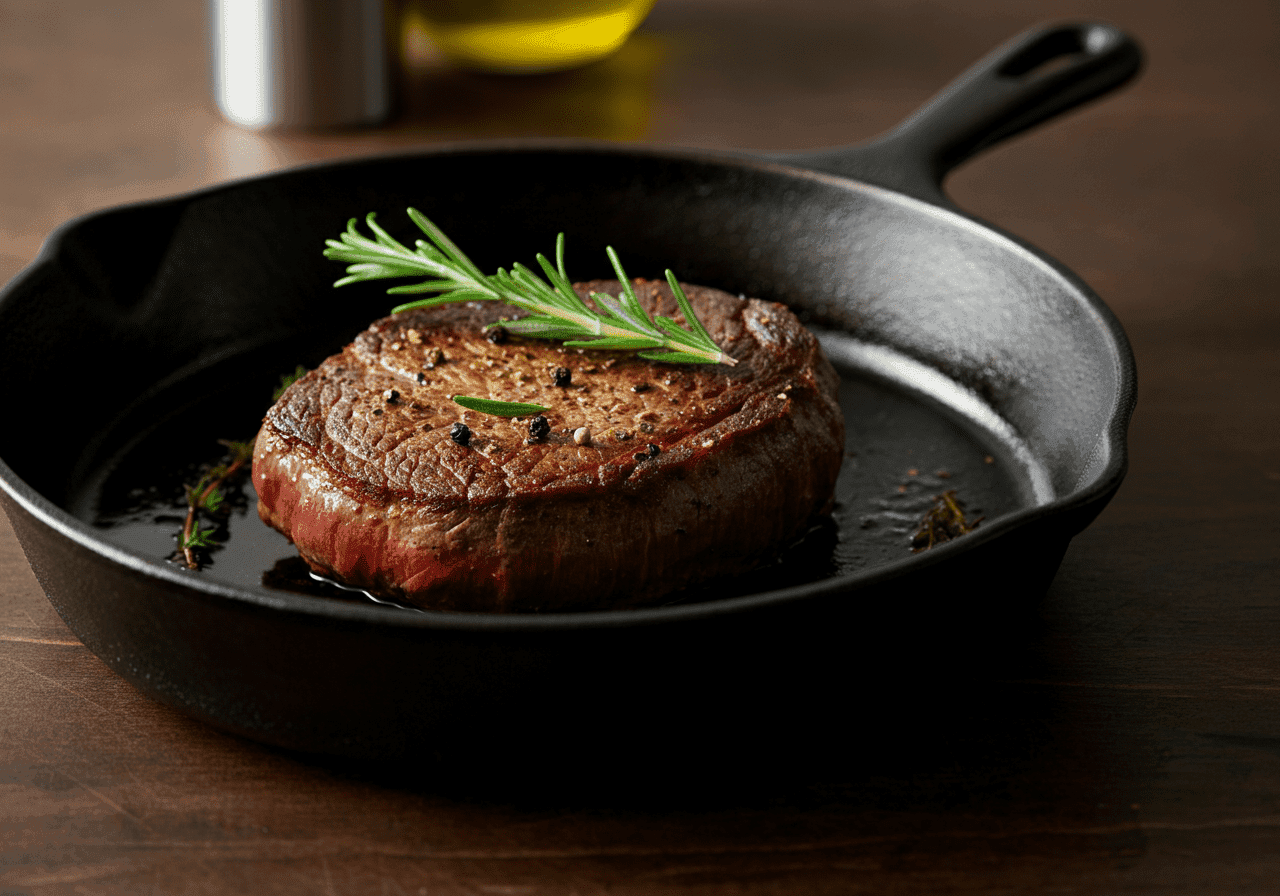

When a perfect steak hits a hot cast-iron skillet, it makes an almost magical sound. That sound means that something great is about to happen: you’re cooking a meal that tastes like it came from a restaurant in your own kitchen. This guide will change how you cook steak, whether you’re a total beginner who wants to know “how do I cook steak in cast-iron skillet?” or someone who has tried and failed a few times.
Professional chefs and home cooks have been using cast-iron skillets as their secret weapon for generations. They give off steady heat, make beautiful sears, and bring out flavors that other cooking methods can’t match. But a lot of people are afraid of the process because they don’t know the right times, temperatures, or methods.
You’ll wonder why you ever tried cooking steak in any other way once you learn how to do it in a cast-iron skillet. Let’s talk about everything you need to know to make restaurant-quality food every time.
Table of Contents
- Why Cast Iron Skillets Are Perfect for Steak
- Essential Equipment and Preparation
- Common Challenges When Cooking Steak in Cast Iron
- Step-by-Step Guide to Perfect Cast Iron Steak
- Real-Life Examples and Success Stories
- Advantages and Disadvantages of Cast Iron Cooking
- Troubleshooting Your Steak Game
- Wrapping Up Your Cast Iron Journey
Why Steak in Cast-Iron Skillet Is Perfect for Steak?
Superior Heat Retention and Distribution
Cast iron is a great material for cooking steak because it holds heat well. If you put food in a thinner pan, it loses heat right away. But a Steak in Cast-Iron Skillet that has been preheated correctly stays hot while you cook. The Maillard reaction happens because of this consistency, which is what gives your steak its beautiful crust and complex flavors.
The heat is spread out evenly, so every part of your steak gets the same amount of heat. No hot spots or uneven cooking; just results that are always the same from edge to edge.
Achieving Restaurant-Quality Sears at Home
Professional kitchens use very high-heat cooking methods, and your cast-iron skillet lets you do the same thing in your own kitchen. The thick metal gets very hot and stays that way, making a dramatic sear that keeps juices in and makes amazing flavor compounds.
Versatility Beyond the Stovetop
This is where cast iron really shines: you can start cooking your steak on the stovetop to get that perfect sear, then put the whole skillet in a hot oven to finish cooking. With this stovetop-to-oven method, you can control exactly how well done the outside and inside are.
Essential Equipment and Preparation
Choosing Your Steak in Cast-Iron Skillet
For most home cooking, a cast-iron skillet that is 10 to 12 inches wide is best. Lodge and Le Creuset are both great choices, but any well-seasoned cast iron will work just as well. Make sure your skillet is well-seasoned. The polymerized oil on it keeps food from sticking and helps it taste better.
Choosing and cooking steak
Pick cuts that are at least 1 to 1.5 inches thick. Ribeye, sirloin, and New York strip are all great choices. Thinner cuts cook too quickly and can easily get too done before the crust forms.
Take your steak out of the fridge 30 to 45 minutes before you plan to cook it. Meat that is at room temperature cooks more evenly than meat that is cold from the fridge. Use paper towels to dry the surface completely. Water is bad for a good sear.
Essential Tools and Ingredients
- Oil that can handle high heat, like rapeseed, groundnut, or avocado oil
- Freshly cracked black pepper and coarse sea salt
- Digital thermometer for meat
- Tongs (never use a fork, which goes through the meat)
- Oven gloves (the handles of cast iron get very hot)
Common Challenges When Cooking Steak in Cast-Iron Skillet
The Temperature Guessing Game
A lot of people who cook at home have trouble getting their skillet hot enough. It’s not ready yet if you can hold your hand five inches above the surface for more than two or three seconds. When you add the oil to a properly heated Steak in Cast-Iron Skillet, it should start to smoke a little.
Sticking and Tearing
It is very annoying when your beautiful steak sticks to the pan and tears when you try to flip it. This happens a lot when the pan isn’t hot enough or when you try to move the steak too soon. When it’s ready, a properly seared steak will come off the grill.
Overcooking Disasters
Many people accidentally overcook their steaks because cast iron holds heat so well. The most important thing to remember is that the steak keeps cooking even after you take it off the heat. This is what chefs call “carryover cooking.”
Smoke Management
When you cook Steak in Cast-Iron Skillet, it makes a lot of smoke. Don’t worry about a little smoke; it’s part of the process. Just make sure there is enough airflow. But if your smoke alarm goes off, your pan might be too hot.
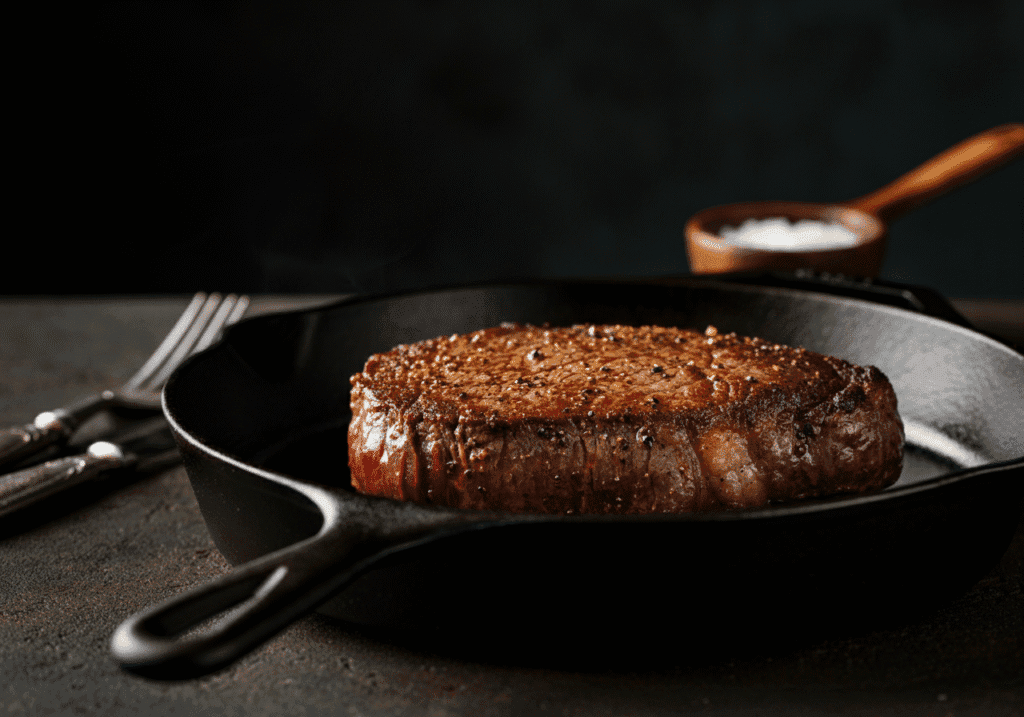
Step-by-Step Guide to Perfect Cast Iron Steak
Preheating Your Skillet (5-7 minutes)
Put your cast-iron skillet on the stove over medium-high heat and let it slowly warm up. This stops thermal shock and makes sure that the heat is spread evenly. You’ll know it’s done when a drop of water sizzles and then disappears.
The Searing Process
Put a thin layer of oil that can handle high heat in your hot skillet. The oil should shimmer but not smoke too much. Put your well-seasoned steak in the pan carefully; it should sizzle a lot. Don’t touch it! Let it sear for 3 to 4 minutes without touching it.
The Perfect Flip
When your steak comes out of the pan easily, it’s time to flip it. Use tongs to flip it over once and only once. Flipping all the time stops the crust from forming properly..
Oven Finishing (Optional)
After searing both sides, move the whole skillet to a preheated oven (200°C/180°C fan) for thicker steaks. This keeps the beautiful crust while making sure the food cooks evenly all the way through..
Temperature Guidelines
- Rare: 49-52°C internal temperature
- Medium-rare: 54-57°C internal temperature
- Medium: 60-63°C internal temperature
- Medium-well: 65-68°C internal temperature
Resting Period
Remove your steak from the heat and let it rest for 5-10 minutes. This allows juices to redistribute throughout the meat, ensuring every bite is succulent.
Real-Life Examples and Success Stories
Sarah’s Sunday Supper Transformation
Sarah from Manchester had been scaring herself with hard steak recipes for years. “I thought I needed special tools and pricey cuts,” she says. “After I learned how to cook with cast iron, my family looked forward to Sunday dinners instead of dreading them.”
What is her secret? She preheats her skillet while making a simple salad, keeps things simple with just salt and pepper, and uses a meat thermometer to check how done the meat is instead of guessing.
The Busy Professional’s Weeknight Solution
James, a consultant who lives in London, found that using a cast-iron skillet to cook steak is actually faster than using more complicated methods. “I can have a steak that tastes like it came from a restaurant on the table in 15 minutes, prep time included.” When I want something special but don’t have a lot of time to cook, this is what I always turn to.
Advantages and Disadvantages of Cast Iron Cooking
Advantages
Exceptional Heat Retention: Once cast iron gets hot, it stays hot, which keeps the cooking conditions the same the whole time.
Durability: A Steak in Cast-Iron Skillet that is well cared for can last for generations, making it a great buy.
Versatility: You can use it on the stove, in the oven, or even over a campfire.
Natural Non-Stick Properties: When you use cast iron that has been properly seasoned, it becomes naturally non-stick.
Flavour Development: Cast iron contributes subtle flavour notes that enhance the overall eating experience.
Disadvantages
Weight: Cast-iron skillets are significantly heavier than other cookware options.
Maintenance Requirements: To keep working well, they need to be cleaned properly and seasoned again from time to time.
Slow to Heat: When compared to stainless steel or aluminum pans, cast iron pans take longer to heat up.
Rust Potential: If you don’t take care of it, cast iron can get rusty spots.
Your Cast Iron Steak Journey Starts Now
Learning how to cook Steak in Cast-Iron Skillet changes more than just what you eat for dinner. It also gives you confidence in the kitchen and connects you to cooks from generations past who knew that simple techniques could lead to amazing results. With the right preparation, enough heat, and some patience, you can make steaks that are as good as those at the best restaurants.
Keep in mind that practice makes perfect. It’s normal for your first try to not be perfect. You learn something new about timing, heat management, and your equipment with every steak you cook. Take notes on what works and what doesn’t; you’ll be amazed at how quickly your skills get better.
The best thing about this method is how easy it is. You don’t need to spend a lot of money on gadgets, make complicated marinades, or go to culinary school for years. You only need good ingredients, the right way to cook, and the desire to embrace the sizzle. Your cast iron skillet is ready to help you make meals that people will remember and want to come to your table for.
References and Sources
FAQ Section
How long to cook a steak in a cast-iron skillet?
How long it takes to cook a steak in a Steak in Cast-Iron Skillet depends on how thick it is and how well you want it done. A medium-rare steak that is 1 inch thick and cooked over medium-high heat usually takes 3 to 4 minutes per side, a medium steak takes 5 to 6 minutes per side, and a medium-well steak takes 7 to 8 minutes per side. To be sure, use a meat thermometer. The internal temperatures should be 130°F for medium-rare, 140°F for medium, and 150°F for medium-well.
What is the 3-3-3 rule for steaks?
The 3-3-3 rule is a simple way to make sure your steak is cooked just right. In your cast-iron skillet, sear the steak on one side for three minutes over high heat. Then, flip it over and sear it on the other side for another three minutes. Lastly, use the last three minutes to baste the steak with garlic, butter, and herbs. This makes the steak taste better and gives it a delicious crust.
Do you add oil to cast iron when cooking steak?
Yes, you need to add oil to the cast-iron skillet when cooking steak so that it doesn’t stick and you can get a nice sear. Before heating the skillet, spread a thin layer of oil with a high smoke point, like canola, vegetable, or avocado oil. The oil helps spread the heat evenly and makes the perfect setting for a golden, tasty crust to form.
How does Gordon Ramsay cook steak in a cast-iron skillet?
Gordon Ramsay’s way of cooking steak in a cast-iron skillet uses high heat, exact timing, and strong flavors. He first adds a lot of salt and pepper to the steak and then heats the skillet over high heat with a little oil. When the skillet is hot, he sears the steak on both sides to make a beautiful crust.
He then adds butter, garlic, and fresh herbs like thyme or rosemary and keeps basting the steak to make it taste better. Ramsay says that letting the steak rest for a few minutes after cooking will help the juices spread out evenly, which will make it tender and tasty.