



You just got a nice wooden cutting board for your home. It could be a big maple butcher block or a beautiful walnut slab. You can see it on your counter, ready to be cut up and used. You can’t skip an essential step before you chop that first onion: oiling it. You should use the Oil for Cutting Board. The key to keeping your cutting board from cracking, warping, or becoming a hygiene nightmare is to use the right oil.
It’s like a spa day for your board. This easy ritual is essential for its long-term health, beauty, and safety. This guide will show you the best oils for your cutting board, the ones you should never use, and a simple, step-by-step way to do it right.
Why Oiling Your Cutting Board is Essential
So, what’s the big deal with oiling? Let’s talk about its science, but don’t worry; there won’t be a test. Wood is a natural material that has holes in it. Picture it full of straws. These straws are dry and want water when they’re empty. Oiling the board fills these holes, preventing food and water from getting in and causing problems.
Here are the most important reasons to take care of a wooden cutting board:
- Prevents drying and cracking: Regular oiling keeps the wood moist and flexible. A dry board is fragile, and it will break soon.
- Creates a protective barrier: The oil works like a barrier, keeping food and moisture out. This makes the board cleaner and easier to clean.
- Enhances natural beauty: The oil brings out the wood’s natural colour and grain. It makes everything look more prosperous and more vibrant, just like turning up the saturation on a picture.
Increases lifespan: A good wooden cutting board can last a lifetime if you take care of it. It can become a family heirloom full of stories and good food that you pass down. Memories.
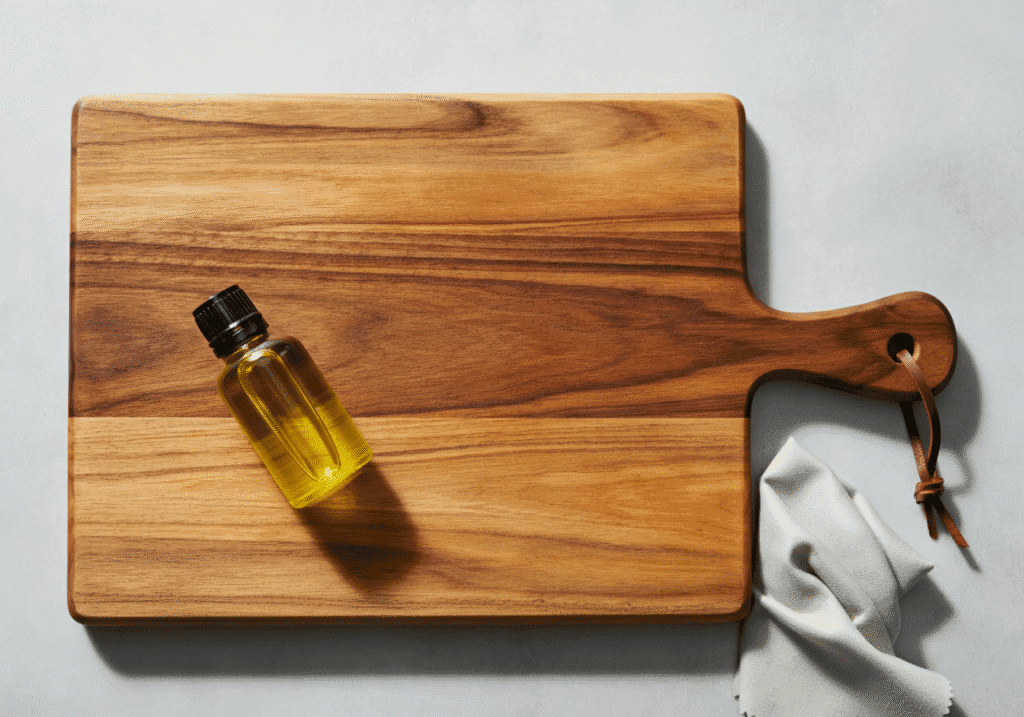
The Best Oils for Your Cutting Board
When treating your board, not all oils are the same. You need something safe for food, won’t go bad, and will protect the wood well. These are the best candidates.
Food-Grade Mineral Oil
This is the best cutting board oil, and there’s a good reason. You can find it almost anywhere for a reasonable price, and it’s not harmful to people or animals. Most board makers and professionals say it’s a good idea. It smells and tastes like nothing else; it’s just protection. It’s obvious.
Beeswax Blends
These products are often sold as “board cream” or “board butter.” They usually mix mineral oil with beeswax and sometimes other waxes, like carnauba. The beeswax makes the surface even more water-resistant by forming a seal. It makes the board feel great to touch and gives it a silky, smooth finish. You can use it by itself, but it works best after deeply oiling your hair with mineral oil..
Fractionated Coconut Oil
Fractionated coconut oil is an excellent option if you want a plant-based, food-safe oil for wood. “Fractionated” means that the part of the oil that hardens at room temperature has been taken out. This method also removes the parts that make regular coconut oil go bad. It stays liquid, doesn’t go bad, and soaks into the wood like mineral oil.
Oils to Avoid for Your Cutting Board
This part is essential. If you use the wrong oil, your beautiful board could become sticky, smelly, and a place where bacteria can grow. I’ve seen it happen, and it’s a sad, greasy sight.
Here’s a straightforward “Do Not Use” list:
- Cooking Oils (Olive, Vegetable, Canola, etc.): I know it’s hard to resist. You already have them in your pantry. But please, don’t give in! These are natural oils that will go bad and turn rancid over time. Your board will start to smell bad and get a sticky, gummy residue you can’t eliminate.
- Finishing oils like tung oil, varnish, and linseed oil are great for furniture, but many of them aren’t safe to eat. Some have heavy metal dryers and other chemicals that you don’t want to get near your food. Always use oils that say “food-grade” or “food-safe” on the label.
A Step-by-Step Guide to Oiling a Cutting Board
Ready to give your board the treatment it deserves? Here’s how to do it.
Step 1: Clean and Dry Your Board
First of all, your board needs to be clean and, most importantly, totally dry. To clean it, use some warm water and mild dish soap. Then, it is put on its side to dry so that air can get to all sides. Leave it alone overnight. Don’t rush this part, really. If you oil a wet board, it will keep moisture inside, which is not what you want.
Step 2: Apply the Oil
It’s time for the main event once your board is completely dry. Put a lot of food-grade mineral oil right on the surface. Don’t be afraid! You want the new board to look very wet. Spread the oil evenly over the top, bottom, and all the sides with a clean, soft cloth.
Step 3: Let It Soak
Now, go. Let the board sit in the oil for at least four to six hours. If possible, leave it overnight. This lets the oil soak into the wood fibres, which makes it wet from the inside out. You might even see it looking thirsty and soaking up the oil in some places. You can add more oil to those spots if you want.
Step 4: Wipe Away Excess
After it has had a long drink, use a clean, dry cloth to wipe off any oil that is still on the surface. The board shouldn’t feel oily or slippery. It should feel very smooth and have a lot of colour.
Step 5 (Optional): Add a Protective Finish
You can now use a board conditioner, like a beeswax blend, to protect your board from moisture even more. Put a small amount on the board and rub it in circles with a clean cloth. After about 15 minutes, buff it off. This will make your board look great and give it a finish that repels water.
How Often Should You Oil Your Board?
There’s a well-known rule of thumb for a brand-new board: “Once a day for a week, once a week for a month, and once a month for life.” This first deep conditioning gets it ready to do well.
If you already use the board, oil it at least once a month. When it starts to look dull or dry in some places, that’s a good sign. If water splashes on the surface and soaks in right away instead of forming beads, it’s time for another coat.
In conclusion
Taking care of and cleaning your wooden cutting board on a regular basis is the best way to keep it in great shape for years to come. You can keep it looking nice, avoid damage, and make sure the surface is clean and safe for food preparation by following these easy steps and oiling it as needed. If you take care of your board, it will last longer and look great in your kitchen.
Taking care of a wooden cutting board is an easy but important task. Using the right oil, like food-grade mineral oil or a blend of beeswax, is the most important part of the process. If you take care of your kitchen tools, they will last longer, be safer, and look better.
So, take care of your cutting board. Get some food-grade mineral oil this weekend and do these things. Your board will be grateful!
Frequently asked questions:
What is the best oil for cutting board?
Food-grade mineral oil is the best and most recommended oil. It’s safe to eat, cheap, and won’t go bad. Blends of beeswax and fractionated coconut oil are also great food-safe options.
Can I use olive oil to oil my cutting board?
You shouldn’t use olive oil, vegetable oil, or any other common cooking oil. Over time, these oils will oxidise and go bad, leaving a sticky, bad-smelling surface that can hold bacteria.
What is a food-safe oil for wood?
An oil safe for food is not poisonous and can come into contact with food. Food-grade mineral oil, fractionated coconut oil, and specialised board creams or conditioners made with beeswax are the best options for cutting boards made of wood.
More Explore:
- Cherry Wood Cutting Board
- Cutting Board Feet: Enhance Stability and Style
- Why Cutting Board Feet Matter
- Black walnut cutting board: a complete guide
- Olive Wood Cutting Board – Premium Quality & Durability