


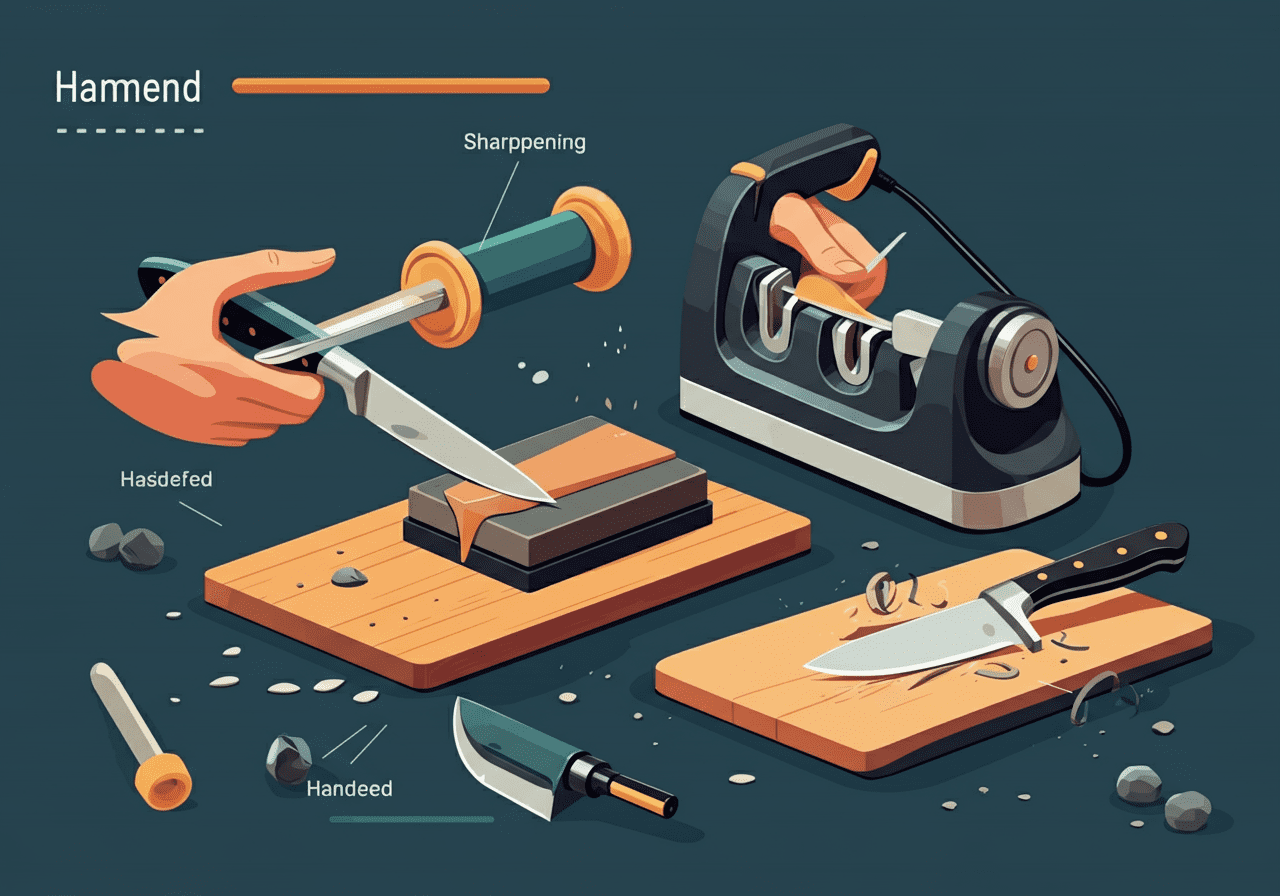

A dull knife is not only annoying, but it can also be dangerous. When I was a teenager, I tried to cut a tough butternut squash with my mom’s old, rusty chef’s knife. I learned the hard way. The blade slipped, and I almost cut off the tip of my finger. That was the day I learned that a sharp knife is a safe knife because it cuts exactly where you want it to.
But how do you get that edge to be just right? The angle is everything. It may seem like a dark art to sharpen a knife, but once you learn the basics of sharpening angles, you can make any blade razor-sharp. This guide will show you everything you need to know about sharpening knives, from how to choose the right angle for your knife’s purpose to how to find the best tools for the job.
Understanding Knife Sharpening Angles
The sharpening angle of a knife is the angle between the blade and the sharpening stone on one side. The total edge angle is twice the sharpening angle because most knives have a double-bevel edge. If you sharpen each side at 20 degrees, for instance, the edge’s total or “included” angle is 40 degrees.
Why does this matter? The angle determines the trade-off between sharpness and durability.
- Lower Angles (e.g., 15-17 degrees): A smaller angle makes the edge much sharper and finer. This is great for tasks that require a lot of care, like cutting tomatoes or filleting fish. The bad thing is that this edge is weaker and can d
- Higher Angles (e.g., 25-30 degrees): A bigger angle makes the edge stronger and last longer. It won’t feel as sharp as a knife, but it can handle heavy use, like cutting through bones, tough vegetables, or even things that aren’t in the kitchen, like cardboard.
Finding the right balance for your knife’s intended use is the key to a great edge.
A Guide to Common Sharpening Angles
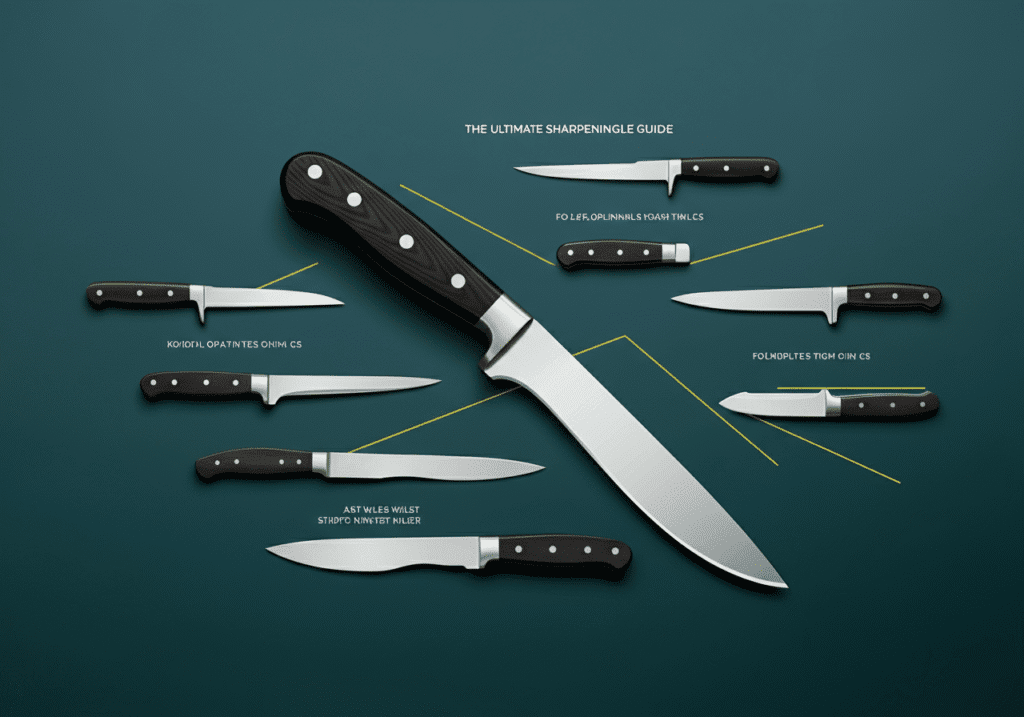
Not all knives are the same, and they don’t all need the same kind of sharpening. Here is a list of common angles and the types of blades that work best with them. This should help you find the right angle for sharpening your knife.
15° to 17°: The Razor’s Edge
This is the sharpest you’ll want to go for most kitchen knives. This angle is perfect for:
- Japanese Cutlery: A lot of high-quality Japanese knives come from the factory with an angle of about 17 degrees. This fine edge can be supported by their harder steel.
- Fillet knives need a very sharp, thin edge to separate the skin from the fish.
- Slicing knives are great for cutting roast beef or cured meats into very thin slices.
Sharpening at such a low angle requires a bit more care, but the slicing performance is unmatched.
20°: The Kitchen Workhorse
If you’re unsure where to start, 20 degrees is a fantastic all-around angle for most kitchen knives. It offers a great blend of sharpness and durability, making it ideal for:
- Chef’s Knives: A 20-degree edge will make your daily chopping, dicing, and mincing knife work great.
- Paring Knives: This angle makes the knife sharp enough for fine work and strong enough for everyday use.
- European/American Knives: This is the angle that most Western-style knives are made to be sharpened at. For brands like Wüsthof and Zwilling, it’s a safe and effective choice.
For a reliable, sharp, and sturdy edge on your daily-use kitchen blades, 20 degrees is the sweet spot.
25°: The Outdoor & Utility Blade
A 25-degree angle makes a knife strong enough to handle a lot of abuse. This angle is best for:
- Hunting knives: These knives need to be strong enough to do things like field dressing and other outdoor work.
- Pocket Knives: A general-purpose pocket knife has a stronger edge that won’t chip when cutting through harder materials.
- Heavy-Duty Utility Knives: This angle will hold up better than a finer one when you’re cutting rope or thick cardboard.
The edge won’t be as slick as a 17-degree kitchen knife, but it will be far more resilient.
30°: The Tough Stuff
For tools that need to withstand serious abuse, a 30-degree angle is the way to go. This is less for slicing and more for chopping and heavy cutting. Think of:
- Machetes: Used for clearing thick brush.
- Axes: For splitting wood.
- Heavy Cleavers: Designed for chopping through bones.
You wouldn’t use this angle on your chef’s knife, but for heavy-duty tools, it provides the necessary strength to prevent the edge from failing.
Author’s Take
I used to be scared of sharpening. I thought only professionals could do it. When I first tried to sharpen a knife by hand, it was a disaster. The bevels were uneven, and the knife was duller than when I started. It wasn’t until I bought a simple angle guide for sharpening knives that everything made sense. It made the whole thing easy to understand.
I can’t say enough good things about a guided system for people who are just starting out. The Work Sharp Knife Sharpener or even a simple Lansky system takes away the biggest problem: keeping a consistent angle. Once you get the hang of the motion and see the results, you’ll feel more confident about keeping all of your knives sharp. This will save you money and make your time in the kitchen safer and more fun.
Tools to Help You Get the Perfect Angle
Even for experienced professionals, it’s hard to keep a consistent angle by hand. The good news is that there are great tools that make it simple.
Sharpening Systems with Angle Guides
The best way to get a perfect edge is with guided sharpening systems. They hold the knife in place with clamps and use guide rods to make sure that the sharpening stone hits the blade at the same angle every time.
- Work Sharp Knife Sharpener: This brand has both powered and manual systems. Their powered sharpeners have flexible abrasive belts that fit the blade, making it very easy to get a sharp, durable convex edge.
- Lansky Systems: Lansky’s controlled-angle system is a cheap and popular choice that works with almost every knife you own. It uses a clamp and guide rods with preset angles of 17°, 20°, 25°, and 30°.
Other Sharpening Tools
- AccuSharp Knife Sharpener: TThis is a simple sharpener that you pull through. It won’t give you the sharp edge of a stone, but it’s quick, easy, and great for putting a working edge back on a knife that is very dull in seconds. It has carbide sharpeners with fixed angles.
- Ceramic Knife Sharpeners: These often come as rods, like honing steels. A ceramic rod is a great way to keep an edge that is already sharp. You can keep the edge sharp for much longer between full sharpening sessions by giving it a few light strokes before each use.
Frequently Asked Questions (FAQ)
What is the correct angle to sharpen a knife?
The right angle depends on the knife you have. Most kitchen knives have edges that are either 15 or 20 degrees sharp. A 15-degree angle makes the edge sharper, while a 20-degree angle makes it last longer.
How to know if a knife is 15 or 20 degrees?
You can look at the manufacturer’s guide or specifications. Japanese knives usually have a 15-degree angle, while Western-style knives usually have a 20-degree angle.
Which is finer, 1000 grit or 6000 grit?
The grit on 6000 is finer than the grit on 1000. You use lower grits, like 1000, to sharpen the edge a lot, and higher grits, like 6000, to polish and refine the edge..
What is the most durable knife angle?
A 20-degree angle on each side is thought to last longer. It’s great for tough jobs because it strikes a good balance between sharpness and edge life.