


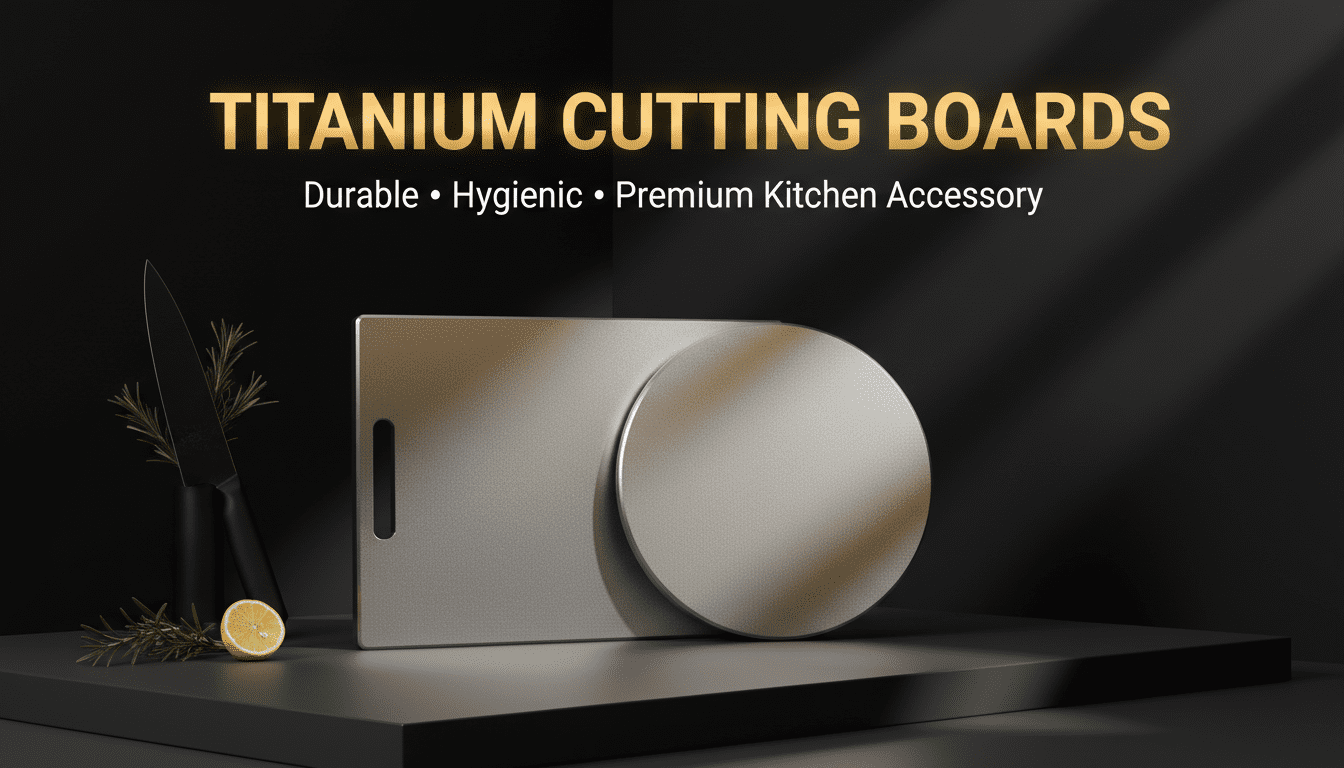

When I first saw the ads on social media, I had to admit I was interested. A cutting board that never gets moldy, never gets scratched, and lasts forever? It sounded great. But if you want to know if titanium cutting boards are good for everyday cooking, the answer isn’t a simple “yes.”
I love and hate it after using it in my own kitchen for a few weeks. On the one hand, putting it in the dishwasher after preparing raw chicken feels very clean. The sound of my knife hitting the metal, on the other hand, makes my teeth hurt, and I’ve had to sharpen my chef’s knife twice as often as usual. It definitely gets people talking, but it hasn’t taken the place of my trusty wooden block for everything.
Table of Contents
Introduction
We’ve all been there: looking at a plastic chopping board that has turned a strange shade of orange from pasta sauce or a wooden board that is starting to look fuzzy with mold because it wasn’t dried properly. Most of us look at other materials like glass, marble, and now titanium because we want to find the “perfect” sanitary chopping surface.
People say that titanium boards are the “last cutting board you’ll ever buy.” They are smooth, very strong, and chemically inert, so they won’t react with your food. This sounds like a dream for home cooks who are sick of having to scrub deep knife grooves out of plastic boards.
A kitchen tool needs to do more than just last a long time, though. It needs to work. This review is for people who cook at home and want to know if this purchase will really save them time and effort or if it will just be a pretty serving platter.
What is Titanium and Why Use It in a Cutting Board?
We need to look at the material itself to understand how it works. Titanium is a metal that is well-known for being very strong while also being very light. It is used in a wide range of fields, from aerospace engineering to medical implants.
The Appeal of the Material
Manufacturers started using titanium for kitchenware mainly because it doesn’t rust. Titanium doesn’t rust like iron or cheap steel because it forms a natural oxide layer on its own. This is a lot for a kitchen where there is a lot of water, acidic lemon juice, and salty brines.
Also, titanium is safe for living things and won’t hurt them. It doesn’t leak chemicals, which is a big plus over cheap plastic boards that might release microplastics into your food over time.
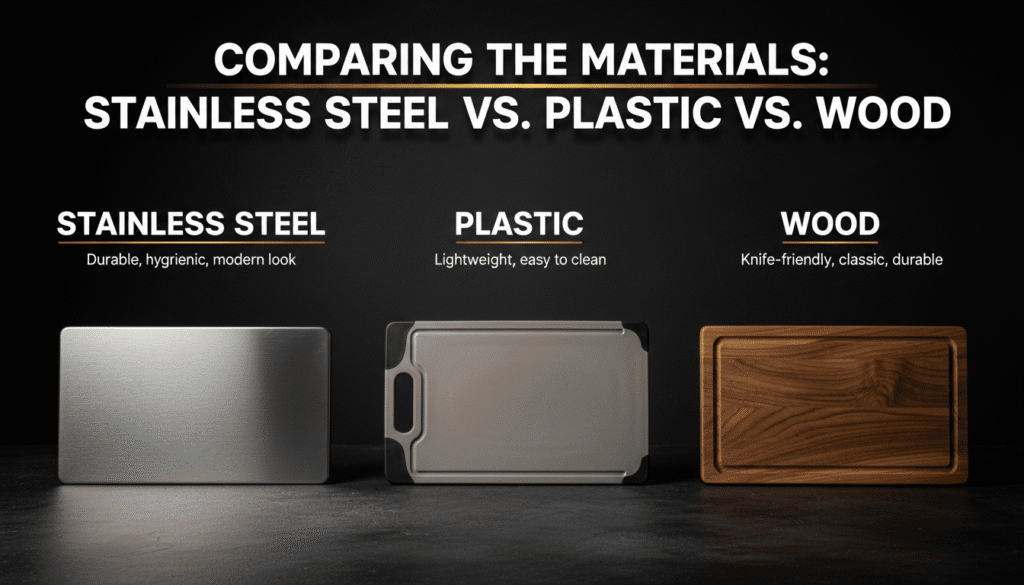
Comparing the Materials
- Vs. Wood: Wood is soft and “heals” a little from knife cuts, but it is also porous. If you don’t oil it, it will soak up bacteria and moisture. Titanium is not porous and cannot be broken down.
- Vs. Plastic: Plastic is cheap and doesn’t hurt knives, but it scars easily, which makes it a good place for bacteria to grow. Titanium is harder and doesn’t scratch, but it is much harder on the edge of your knife.
- Vs. Stainless Steel: Titanium is a metal, but it is much lighter (about 45% less heavy than steel) and harder than stainless steel. This makes it easier to get around the kitchen, but it could hurt delicate blades more.
Benefits of Titanium Cutting Boards
There are some real benefits to switching to titanium, especially for certain tasks, if you are thinking about it.
Durability and Longevity
This is the main selling point. A tank would probably be able to run over a high-quality titanium board and not break it. When I tested it, aggressive chopping didn’t leave a single mark on the surface. My plastic boards looked like a map of cuts after a month, but the titanium boards looked brand new. It won’t break like bamboo or bend like a thin plastic sheet in a hot dishwasher. You really are buying it for life if you buy one.
Hygiene and Safety
This is the best option for people who are afraid of cross-contamination. Bacteria like Salmonella and E. coli can’t hide on the surface because it is metal and completely non-porous.
I only used this board to prepare raw meat. I could cut up a chicken breast, wash the board with hot soapy water (or put it in the dishwasher), and be sure it was clean. You don’t have to worry about meat juices getting into the wood grain.
Weight and Handling
It felt very light to me. You know how hard it can be to scrub a heavy wooden butcher’s block if you’ve ever had to carry it to the sink. Titanium is very strong, but it is also very light. You can easily grab it with one hand to sweep vegetables into a pot, and it doesn’t take up extra space on your drying rack.
Aesthetics
Let’s not act like looks don’t matter. These boards are cool. The matte, industrial gray finish looks great in a modern kitchen. It looks much nicer than a scratched-up white plastic slab when you serve charcuterie or cheese on it.
Drawbacks of Titanium Cutting Boards
The hygiene benefits are great, but you should know about some big problems with the daily user experience before you spend your money.
The “Nails on a Chalkboard” Factor
We need to talk about the sound. I can’t say enough how loud it is to chop on titanium. It’s not the satisfying thud-thud sound you get with wood. It makes a high-pitched, metal clank-clank sound.
When you use a serrated knife or drag the edge of the blade across the board to pick up chopped onions, it makes a noise like nails on a chalkboard. This board might drive you crazy if you have sensory issues or cook late at night when everyone else is asleep.
Surface Hardness and Knife Health
Many people would say that this is the dealbreaker. Titanium is stronger than the steel used in most kitchen knives. Soft things (like the edge of your knife) lose when they hit hard things (like the board) over and over again.
I used my chef’s knife a lot for a month, and it started to feel dull and slip on tomato skins after just a few days of heavy use on the titanium board. It usually stays sharp for weeks. If you have expensive Japanese knives or don’t like sharpening them, this board is like kryptonite for your blades.
The “Slip” Factor
Titanium is smooth. Very smooth. It slides around the worktop like it’s on ice unless the board has big rubber feet (and a lot of cheaper ones don’t). I had to put a wet tea towel under it to keep it safe.
Also, the food slides around. It was hard to cut an onion into small pieces because the layers kept slipping off the smooth metal surface. Wood, on the other hand, gives the surface a little bit of “grip” or friction.
Cost
These boards cost a lot of money. You are paying for high-quality material. The argument is that you only buy it once, but the initial cost is much higher than that of a regular plastic or bamboo board.
Addressing Common Concerns
Knife Dullness Mitigation
You have to accept that titanium will dull if you really want to use it for its hygienic benefits. I suggest using a honing steel before each use to deal with this. Don’t use your best knife, which costs £200, on this board. Use a “beater” knife or a cheap stainless steel knife that you don’t mind sharpening often.
Maintenance
Maintenance is very easy. Safe to use in the dishwasher. No need to oil. No need to sand. Just clean and dry. It will easily get fingerprints, but they come off.
What Do Chefs Think of Titanium Cutting Boards?
I looked through chef forums and talked to a few people I know in the food business to get the professional opinion. What did the jury say? Most professional chefs don’t like them.
A knife is a chef’s most important tool in a professional kitchen. They spend hundreds of pounds and hours taking care of high-carbon steel blades. They are terrified of the thought of hitting that fragile edge against a piece of titanium.
One chef said, “It’s just marketing.” A serious cook doesn’t want a surface that is harder than their knife. It’s dangerous because a dull knife slips, and it slows you down because you’re fighting the surface.
Some people, on the other hand, said they only used them for food safety stations, like when they were handling raw chicken and then putting the board straight into an industrial sanitizer. But what about cutting up mirepoix or herbs? No.
Titanium vs. Stainless Steel Cutting Boards
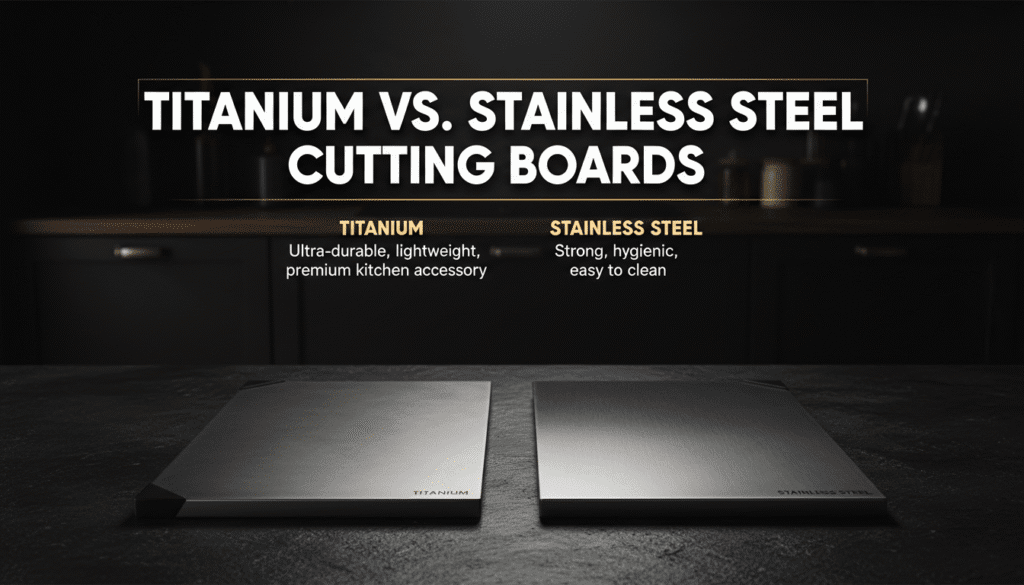
If you are sold on metal but stuck between titanium and stainless steel, here is how they stack up.
| Feature | Titanium Cutting Board | Stainless Steel Cutting Board |
|---|---|---|
| Weight | Very light and easy to handle. | Heavy and dense. |
| Hardness | Very hard; dulls knives quickly. | Hard; dulls knives, but slightly less aggressive than titanium. |
| Corrosion | Excellent; virtually rust-proof. | Good, but lower grades can pit over time with salt/acid. |
| Noise | High-pitched clanking/screeching. | Loud clanking. |
| Price | Expensive (£50 – £100+). | Moderate (£20 – £50). |
| Hygiene | Excellent (Non-porous). | Excellent (Non-porous). |
Verdict: Titanium is better at resisting corrosion and is lighter. Stainless steel is cheaper. Both are bad for your knives and clean at the same time.
Rating: 2.5 / 5 Stars
Why this score?
I wanted to love it just because it was clean. But the main job of a cutting board is to be a place to cut, and titanium doesn’t feel good when you cut.
- Hygiene: 5/5
- Durability: 5/5
- Knife Friendliness: 1/5
- Usability (Noise/Grip): 2/5
It loses massive points because it actively damages your other kitchen tools (knives) and creates an unpleasant sensory experience.
Pros & Cons
| Pros (The Good Stuff) | Cons (The Bad Stuff) |
|---|---|
| Incredible Hygiene: Non-porous surface means zero bacteria hideouts. Perfect for raw meat. | Knife Killer: The hard surface rolls and dulls blade edges very fast. |
| Dishwasher Safe: Can handle high heat without warping or cracking. | The Noise: Creates a harsh, high-pitched screeching and clanking sound. |
| Lightweight: Much easier to lift and wash than stainless steel or heavy wood blocks. | Slippery: Food slides around on the surface, making precision cutting dangerous. |
| Odour Free: Does not hold onto garlic or onion smells. | Price: Significantly more expensive than wood or plastic. |
| Aesthetics: Looks sleek and modern; doubles as a nice serving platter. | Fingerprint Magnet: Shows grease and marks easily. |
Conclusion:
So, are cutting boards made of titanium good? They are great at staying clean, but not so great at being cutting boards.
A titanium board is a great addition to your kitchen if you want a board just for prepping raw chicken or fish that you can throw in the dishwasher to make sure it’s completely clean. It’s safe, light, and long-lasting.
But if you need a daily driver for chopping onions, mincing garlic, and slicing vegetables, stick with a high-quality wooden board. Your ears, your wallet, and your knives will all be happy.
FAQ
What is the healthiest type of cutting board to use?
From a strictly bacterial point of view, titanium, glass, and stainless steel are the “healthiest” because they don’t have any holes in them and are easy to clean. Bacteria sit on top and wash off easily. But research has shown that wood boards, like maple or acacia, have natural antibacterial properties because the wood fibers trap and dry out bacteria. Plastic is often thought to be the least healthy over time because deep knife scars hold bacteria that dishwashers can’t get to.
Which is better for a cutting board, titanium or stainless steel?
Your budget and strength will determine what you can do. If you want something light that you can easily grab with one hand, titanium is better. Lemon juice also makes it less likely to rust. If you’re on a budget, stainless steel is a better choice because it has the same health benefits for half the price, even though it’s much heavier.
What do chefs think of titanium cutting boards?
Most professional cooks don’t use them to chop things. Everyone agrees that they dull knife edges, so they need to be sharpened all the time. Chefs like to chop on end-grain wood boards and use cheap plastic color-coded boards for raw meat, which they change often. Most people think of titanium as a kitchen tool for the home, not a serious professional tool.
Which is better, stainless steel or titanium?
When it comes to handling (weight) and corrosion resistance, titanium is better than other materials for cutting boards. But for most kitchen tools, like pots and pans, stainless steel is better at conducting heat. When it comes to chopping boards, titanium is the “luxury” version of the metal board, but both have the same problem with dulling knives.