


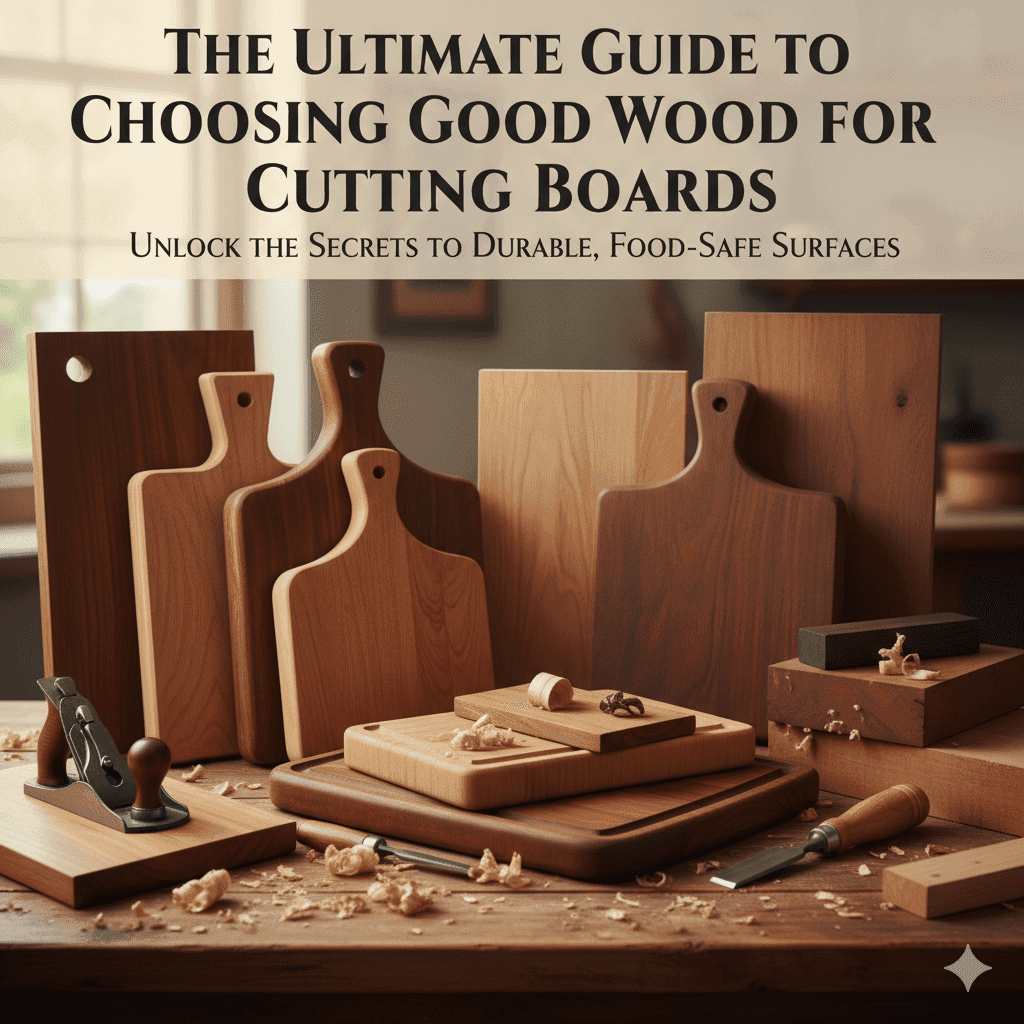

I thought any wooden cutting board would be fine when I started cooking. I was so wrong. I ruined a lot of knives on boards that were too hard and dealt with boards that had bacteria on them because they were too porous. Choosing the right wood for Cutting Boards is crucial for kitchen performance and food safety.
I’ve tried many cutting boards made from different types of wood over the years. I’ve also talked to professional chefs and looked into the science behind what makes wood suitable for cutting boards. The truth is that many people who cook at home have trouble picking the right types of wood, which can cause boards to break, bacteria to grow, or boards to wear out quickly.
Knowing about wood properties isn’t just about making your cutting board last longer. It’s also about keeping your knives safe, making sure your food is secure, and making cooking more fun overall. You could lose hundreds of dollars on knife damage and replacement boards if you make the wrong choice, not to mention the health risks.
In this complete guide, I’ll tell you everything I know about choosing the Good Wood for Cutting Boards. We’ll look at different kinds of wood, talk about safety, compare how much maintenance each one needs, and I’ll give you my expert advice based on real-world testing and professional knowledge.

What Makes Wood Good for Cutting Boards?
I’ve learned through years of testing different cutting boards that not all types of wood are suitable for preparing food. Three main things make wood ideal for cutting boards: how hard it is, how its grain is arranged, and how porous it is.
When looking at woods for cutting boards, the Janka hardness scale is your best friend. This scale shows how much force it takes to push a steel ball halfway into wood. You want woods for cutting boards with a sweet spot of 900 to 1500 pounds-force (lbf). Your board will get knife marks and germs if it’s too soft. If you make it too hard, your knives will dull quickly.
The structure of the grain is essential for both safety and performance. I have learned that closed-grain woods are much better at keeping bacteria out than open-grain woods. The direction of the grain also affects how long it lasts. End-grain boards are easier on knives but need more care, while edge-grain boards are easier to clean but show knife marks more easily.
Porosity is probably the most essential thing for food safety. Bacteria can’t grow as easily on woods with low porosity, and they are easier to clean. The FDA doesn’t have specific rules about what materials can be used to make cutting boards, but they suggest that businesses use surfaces that aren’t porous. Choosing woods with naturally low porosity is the best way to protect your home’s kitchen.
The Evolution of Wood Cutting Boards
I think it’s interesting how people’s tastes in cutting boards have changed over the years. In Europe, they used oak; in North America, they used Maple; and in AsMaplehey, they used bamboo. Every culture made choices based on what grew in their area and what they saw worked best over time.
European butchers liked beech wood because it was strong and didn’t stain easily. American colonists quickly switched to Maple because it was easy to find and worked well. Interestingly, these historical choices match perfectly with what modern food science says about good woods for cutting boards.
Everything changed when people started to understand food safety in the 20th century. We began testing woods scientifically for bacterial resistance, which helped us make better choices instead of just using whatever we could find. This scientific method proved that many old choices were excellent—our ancestors knew good wood when they saw it.
Types of Good Woods for Cutting Boards
Dense Hardwoods: The Gold Standard
Maple is still my top choice for most home cooks. Maple has a JankMapleing of 1450 lbf, which means it is strong and easy to cut with a knife. I’ve had the same maple board for over five years, and it still works great as long as I take care of it. The light color makes it easy to see any stains or damage, and the tight grain structure keeps bacteria from getting in.
I like walnuts the best because they look great and work well. It is a softerMaple maple at 1010 lb. Maple leaf makes it very gentle on knife edges. Over time, the dark chocolate color gets a nice patina. I use walnut boards for special events and food photography because they make everything look nicer.
Cherry is unique in that it gets better with age. Cherry starts as a light pink color and gets darker and redder over time. It has a Janka rating of 995 lbf, which means it is tough but not too tough on knives. Because of its fine-grained structure, it naturally fights bacteria.
There is a good reason why beech wood is popular in European kitchens. At 1300 lbf, it’s tough enough to handle heavy use and has a smooth surface that’s easy to clean. It can go with any kitchen style because of its light color and fine grain.
Medium-Density Champions
Acacia has become increasingly popular, and for good reason. When people ask me, “Is acacia suitable for cutting boards? ” When someone asks me if wood suits cutting boards, I always say yes. Acacia has a Janka rating of about 1170 lbf, which means it is powerful and won’t hurt knives. The beautiful golden-brown grain patterns on each board make it one of a kind, and it’s made from wood that was grown in a way that doesn’t hurt the environment.
Bamboo isn’t really wood; it’s a grass. But it should be mentioned here. I like that bamboo is good for the environment, but I’ve found that it can be tough on knife edges and shows knife marks more easily than real hardwoods. It’s easy to take care of, but it doesn’t have the self-healing properties of real wood grain.
Teak is naturally water-resistant because it has a lot of oil in it. This means it doesn’t need much care, but the oil of food can sometimes change the taste of food. Teak is a good choice for outdoor kitchens or cooks who don’t want to do much work to keep things clean.
Exotic Options for Special Uses
African hardwoods like Iroko and Sapele have unique grain patterns and are very strong. Purpleheart has a bright purple color that turns brown over time. These woods work well but cost more and are harder to find than other options.
Why Choose Good Wood for Cutting Boards?
The most important reason for me to choose wood is food safety. I’ve seen too many home cooks use the wrong types of wood, like pine or cedar, which can hold harmful bacteria because they are porous. Studies have shown that bacteria die faster on properly cared-for wood surfaces than on plastic. This is because good cutting board woods have natural antimicrobial properties.
It is just as important to keep knives in good shape. I learned this lesson the hard way when I ruined several expensive knives by using a cutting board made of wood that was too hard. The right wood protects your knife’s edges, keeping them sharp for longer and saving you money on sharpening or replacing them often.
Durability means that something is worth the money. A good wood cutting board costs more initially, but it can last for decades if you take care of it. I still use boards I bought fifteen years ago, but I’ve thrown away a lot of plastic boards that got scratched and stained.
Don’t forget how good it looks, either. A nice wooden cutting board makes your kitchen look better and makes cooking more fun. When I buy nice-looking, high-quality tools, I’m more likely to cook and take care of my tools.
Common Problems with Poor Wood Choices
I’ve made mistakes when choosing woods for cutting boards, and I want to help you avoid them. Bacteria love to breed in woods that are too porous, like oak. Because the grain structure is open, it traps food and moisture, making cleaning almost impossible.
Some exotic woods with Janka ratings over 2000 lbf are too complex and will quickly dull your knives. I used a wooden cutting board, which was so hard that I had to sharpen my knives every time. It’s not worth it to hurt the edges of your blade.
Warping and cracking happen to boards made from the wrong kinds of wood or those that haven’t been appropriately dried in a kiln. When the humidity changes, softwoods like pine swell and shrink a lot, making boards that won’t lie flat or crack, which can let bacteria in.
Do not use treated wood or wood with natural toxins to make cutting boards. When cedar and other aromatic woods touch food, they can release harmful chemicals for you. Chemicals that don’t belong in your kitchen are often used to treat pine and other softwoods.
Wood Comparison Guide
| Wood Type | Janka Rating (lbf) | Porosity | Maintenance | Best For |
|---|---|---|---|---|
| Hard Maple | 1450 | Low | Medium | All-purpose use |
| Walnut | 1010 | Low | Medium | Knife-friendly cutting |
| Cherry | 995 | Low | Medium | Special occasions |
| Acacia | 1170 | Low | Low | Sustainable choice |
| Beech | 1300 | Low | Medium | Heavy-duty use |
| Teak | 1155 | Very Low | Very Low | Low maintenance |
| Bamboo | 1380 | Medium | Low | Budget-conscious |
After much testing, Maple is the best value for most home cooks. It’s easy to find, inexpensive, and works well. If you care about how your knife looks and how well it works, walnut is my top choice. If you want the best balance of performance and sustainability, acacia is the best choice.
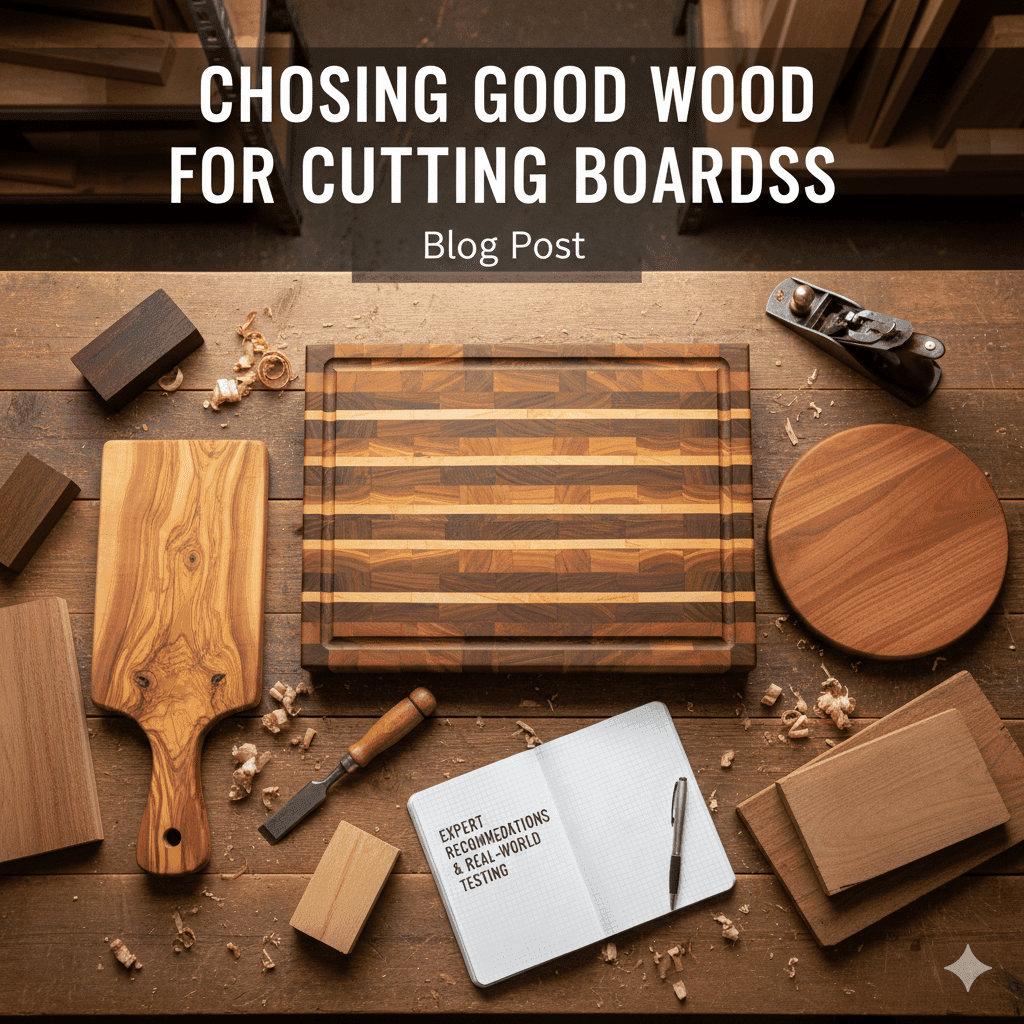
Expert Recommendations and Real-World Testing
are a must. Maria Rodriguez, a chef at a fancy restaurant, told me, “In a commercial kitchen, we go through cutting boards quickly, but maple boards last longer than anything else we’ve tried.”
My woodworking teacher told me to look for quarter-sawn lumber when I can. This grain orientation makes the wood more stable and less likely to warp. Some boards have beautiful cathedral grain patterns, but are more likely to move and split.
Pros & Cons:
Walnut and other softer woods are gentle on knives and get beautiful patinas over time. However, they show knife marks more easily and may need to be sanded more often to keep their smooth surface.
Exotic woods can look and perform better than regular woods, but they cost more and may be harder to find. People who care about sustainability should consider how their choice of wood will affect the environment.
Current Trends in Cutting Board Materials
In the last few years, I’ve seen a significant change toward sustainability. More people are asking about responsibly sourced woods, which is making fast-growing species like acacia and bamboo more popular. More environmentally conscious buyers seek Forest Stewardship Council (FSC) certification.
Serious home cooks who know how it helps keep knives sharp are starting to use end-grain construction more and more. These boards need more care, but many users think the extra work is worth it because they work better.
There is also a trend toward bigger, thicker boards that give you more space to work and are more stable. I have found that boards at least 1.5 inches thick work much better than thinner ones because they are less likely to warp and make cutting easier.
The Future of Cutting Board Woods
In the future, I think there will be more new ideas about getting and processing wood in a way that doesn’t harm the environment. New finishing methods are being created that improve wood’s natural antibacterial properties while keeping food safe.
Climate change is making it harder to find specific types of wood, which could make people want species that are more resistant or that can grow in changing conditions. This could mean people use faster-growing plants like bamboo or hardwoods to attain.
Improvements in technology for drying and stabilizing wood make cutting boards more consistent and of higher quality than ever before. They also resist warping and cracking better than ever.
Conclusion:
Making the Right Wood for Cutting Boards for Your Kitchen
After years of testing and research, I can confidently say that the Good Wood for Cutting Boards depends on what you want and how you cook. Hard Maple is the best if you want the most flexible and dependable. It is choicest. Dtesting,g kitchens are strong, resist bacteria, and are inexpensive.
For people who care about their knives above all else, walnut is the best choice because it is soft on knives, works well, and looks great. Buying a good walnut board is worth it because it will make your knives last longer and make cooking fun.
Acacia wood is an excellent choice for cutting boards because it’s good for the environment and the people who use them. The performance is on par with traditional hardwoods and supports responsible forestry practices.
Keep in mind that any good cutting board made of wood needs to be taken care of and cleaned. Your board will work well for years if you oil it regularly, dry it right away after washing it, and sand it when it needs it. The wood for the best cutting board is only as good as how well you care for it.
Your knives, food, and cooking experience will all thank you if you buy good ones, know what you need, and make the right choice.
FAQ:
Is acacia wood good for cutting boards?
Yes, acacia wood is an excellent choice for cutting boards. It has a Janka hardness rating of about 1170 lbf, which means it is powerful but won’t hurt knife edges. Acacia’s tight grain structure naturally keeps bacteria from getting in, and the beautiful golden-brown patterns on each board make it one of a kind. It’s an environmentally friendly choice because it’s made from sustainably sourced hardwood. It also doesn’t need much maintenance and works like a professional.
What wood is for cutting boards besides MapleMaple?
Other maples are very knife-friendly and have beautiful grain: cherry (which develops an attractive patina over time), acacia (which is sustainable and has unique patterns), beech (which is a European favorite for durability), and teak (which is naturally water-resistant). Each has advantages: walnut keeps knives sharp, cherry looks nice, acacia lasts a long time, beech is suitable for heavy use, and teak needs little care.
How does acacia wood compare to bamboo for cutting boards?
In many important ways, acacia wood is better than bamboo for cutting boards. Bamboo grows faster and is technically more sustainable, but acacia is better for protecting knives because its real hardwood grain structure heals minor cuts. Acacia also has more interesting and beautiful grain patterns, and its fibers are less likely to show permanent knife marks than bamboo’s compressed fibers.
Which woods should I avoid for cutting boards?
Avoid softwoods like pine and cedar, treated lumber, and very porous woods like oak. Softwoods are too porous and can hold harmful bacteria, and treated lumber has chemicals that aren’t safe to touch food. The open grain structure of oak traps food and moisture, making it hard to clean thoroughly. Also, avoid aromatic woods that might add sour flavors or have natural chemicals that are bad for food safety.
How do I properly maintain wood cutting boards?
After using, wash with warm water and mild soap immediately, then dry thoroughly. Use food-grade mineral oil or a special board conditioner once a month to keep the wood from cracking and ensure it stays water-resistant. If the surface gets rough or stained, lightly sand it with fine-grit sandpaper. When deep cuts or cracks appear that can’t be sanded smooth, it’s time to replace the board. These can hold bacteria, no matter what type of wood it is.