



If you’ve ever wondered why professional chefs can do their prep work so quickly and accurately, the answer is often the knife they use. I’ve worked in many different kitchens over the years, and the offset chef’s knife is always my favourite tool.
At first glance, these knives may look strange, but they have features that can change how you cook. If you want to learn about offset chef’s knives, it will change your thoughts about cooking. If you’re using your kitchen tools or are just curious about professional-grade equipment, learning about offset chef’s knives will change your thoughts about cooking.
Table of Contents
- Definition and Overview
- History and Background
- Types and Categories
- Benefits and Uses
- Challenges to Consider
- Real-World Examples
- Advantages vs Disadvantages
- Current Trends and Comparisons
- Future Outlook
- FAQ Section
What Are Offset Chef’s Knives?
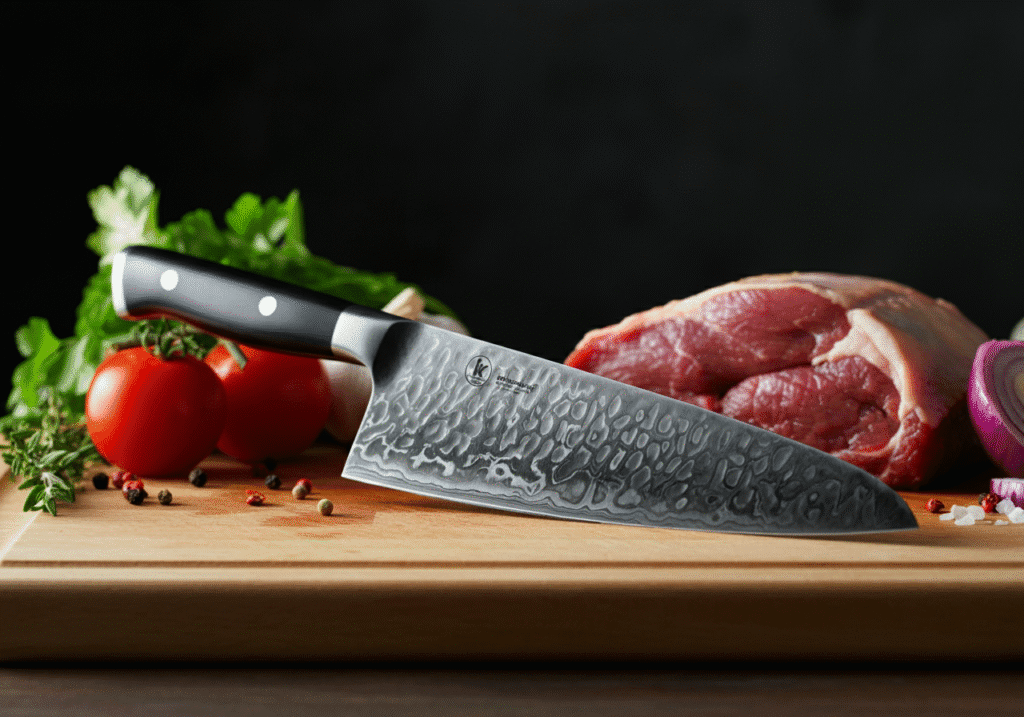
The blade of an offset chef’s knife is lower than the handle, which is a unique feature. When you chop, this makes a clear space between your knuckles and the cutting board.
The offset design has a valuable purpose. When I chop herbs or dice onions, my knuckles stay safely away from the cutting board. This small change in shape makes a big difference in comfort and safety.
Most offset chef’s knives are between 6 and 10 inches long. Typically, the blade keeps the classic chef’s knife shape, which is wide at the base and tapers to a point below the handle line.
History and Background of Offset Design
The offset knife design originated in professional kitchens, where safety and speed were essential. Restaurant chefs require tools capable of handling extensive prep work without causing strain or fatigue in their hands.
In the middle of the 20th century, traditional knife makers started to play around with where the handles went. They found that lowering the blade in relation to the handle made it easier on the wrist when used for a long time.
Japanese knife makers liked this idea and used it in their designs, focusing on precision. Later, European manufacturers used similar methods, each adding their own cultural touches to the basic concept of offset.
Evolution of Kitchen Safety
Many new ideas for offset designs came from restaurant insurance claims for knife injuries. Kitchen managers knew safer tools would lead to fewer accidents and more productive workers.
Types and Categories
Standard Offset Chef’s Knives
A moderate offset between the handle and the blade is usually 10 to 15 mm. They work well for most kitchen tasks and give your knuckles some room.
Deep Offset Designs
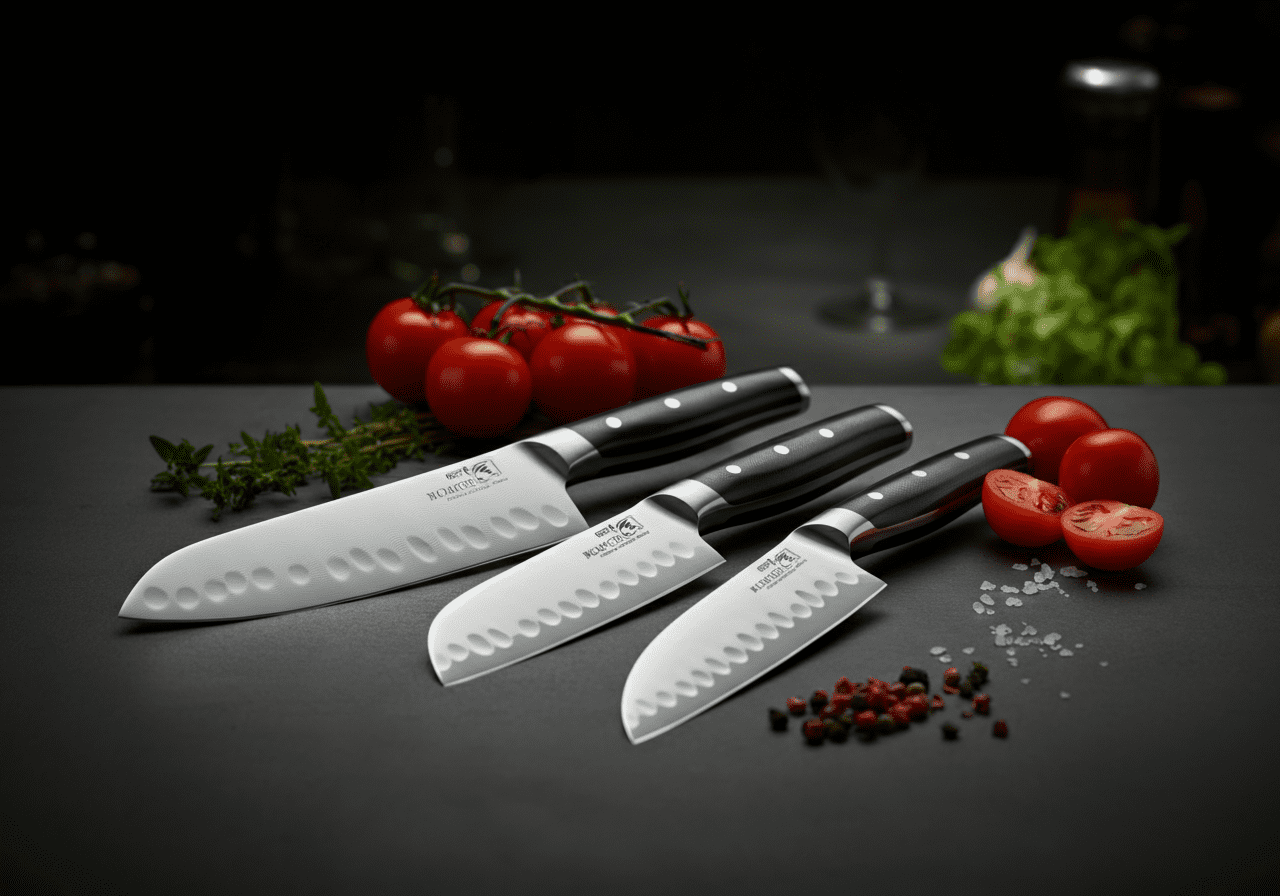
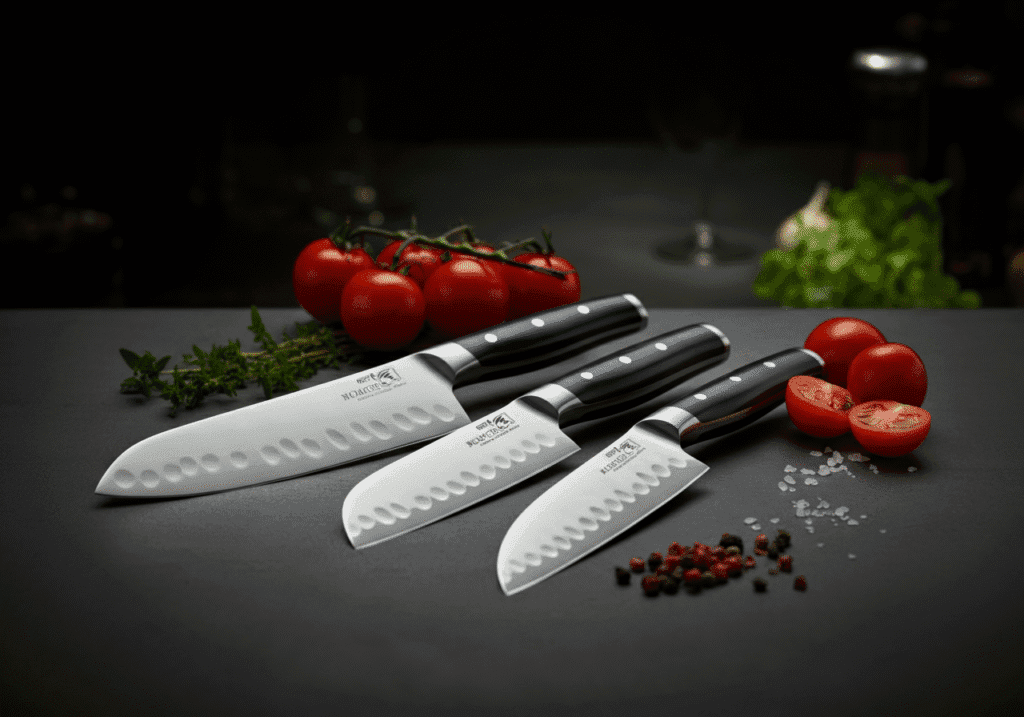
These knives are excellent for heavy chopping due to their 20–25 mm offset. They are instrumental when preparing a large quantity of vegetables. Smaller versions, measuring 4 to 6 inches, offer the same offset advantage in a more manageable size, making them great for individuals with smaller hands or for detailed work.
Smaller versions (4 to 6 inches) have the offset benefit in a size that is easier to handle. Great for small hands or detailed work.
Speciality Offset Variants
Some manufacturers create offset versions of specific knives:
- Offset santoku knives
- Offset utility knives
- Offset bread knives
Importance and Benefits
Enhanced Safety
The main benefit I’ve seen is that my knuckles are less likely to get hurt. When you chop quickly, your fingers naturally stay safe above the cutting surface.
Improved Ergonomics
Long cooking sessions are less tiring. The offset design lowers the wrist’s angle, reducing strain when cutting repeatedly.
Better Leverage
The handle position makes it easier to cut through tough things. It gets easier to cut through thick vegetables or break down whole chickens.
Increased Precision
My cuts are more consistent when my hands are in the right place. With a stable grip, you can better control the angle and pressure of the blade.
Professional Appearance
Using offset chef’s knives makes your knife work look like a pro. When you use these tools a lot, the technique comes naturally.
Learning Curve
It takes time to get used to switching to offset chef’s knives. Your muscles need time to get used to the new balance point.
Limited Availability
Not all stores that sell kitchen supplies carry offset designs. You often have to shop online or go to speciality stores to find good options.
Higher Cost
High-quality offset chef’s knives usually cost more than regular ones. The specialised way of making things costs more to make.
Maintenance Considerations
Some offset designs are more complex to sharpen correctly. The position of the handle could get in the way of some sharpening angles.
Case Studies
Professional Kitchen Success
The head chef at the busy Italian restaurant where I worked made all the prep cooks use offset knives. After the switch, injuries at work decreased by 40%, and prep times improved.
Home Cook Transformation
Sarah loved to cook, but her hands got tired while preparing meals. She could make fancy dinners without hurting her wrist after switching to an offset chef’s knife.
Culinary School Adoption
Many cooking schools now teach how to use offset knives. Students learn the correct way to do things from the start, which helps them build good habits early on.
Pros vs Cons
| Pros | Cons |
|---|---|
| Protects knuckles from injury | Different balance feels |
| Reduces wrist strain | Higher purchase cost |
| Improves cutting leverage | Limited retail availability |
| Enhances precision | Potential sharpening challenges |
| Professional technique development | Different balance feel |
| Better for extended use | Storage considerations |
Current Trends and Comparisons
Market Growth
Home cooks are starting to like offset chef’s knives more and more. Sales have increased 25% in the last three years because cooking shows show how to do things like a pro.
Comparison with Traditional Knives
Most people are still more comfortable with standard chef’s knives. However, many say they like offset designs’ better comfort and safety once they try them.
Material Innovations
Modern offset chef’s knives use advanced steel alloys and comfortable handle materials. These enhancements address previous concerns regarding balance and maintenance.
Future Outlook and Trends
There is a lot of room for growth in the offset knife market. Specialised tools are needed as more home cooks learn professional techniques from cooking shows and magazines.
Companies are investing money into research to improve offset designs—new materials and ways of making things promise better balance and easier upkeep.
We will probably see more hybrid designs that combine the best parts of offset and traditional knives. These tools for transitioning could help more cooks learn how to use offset techniques.
Emerging Technologies
With 3D printing, you can make custom handle shapes perfect for each user. This personalisation trend could change how we think knives fit our hands.
Making the Switch Work for You
It takes time and practice to switch to offset chef’s knives. Before trying more difficult techniques, practice with easy ones like chopping herbs or onions.
At first, concentrate on getting the proper form instead of going fast. The safety and comfort benefits become clear once your muscles get used to the new grip and cutting motion.
Instead of removing all your knives, start with just one offset knife. This lets you directly compare performance and decide if the benefits are worth the money.
Keep in mind that quality is more important than quantity. A good offset chef’s knife will work better than many cheap ones.
Frequently Asked Questions
What is the point of an offset knife?
An offset knife is made to make cutting safer and more comfortable by keeping your knuckles off the cutting board. This lowers the chance of damage and strain while you cut.
Which knives does Gordon Ramsay use?
Gordon Ramsay generally utilises high-end brands like Wüsthof and Henckels because they last a long time, are very sharp, and work like a professional.
What is the highest-rated chef’s knife?
The best chef’s knife for you will depend on what you need it for, but the Wüsthof Classic Chef’s Knife and the Shun Classic Chef’s Knife are well-liked since they are well-made.
Are offset bread knives better?
Yes, offset bread knives are frequently preferable for cutting bread because they are designed to fit the hand better, which makes it easier to make clean cuts and gives you more control while cutting.
Resource Links
For more information on offset knives and their uses, check out the following resources:
- Guide to Choosing the Right Chef’s Knife – Learn to select the best knife for your kitchen needs.
- Knife Maintenance Tips – Explore tips on keeping your knives sharp and well-maintained for long-term use.
- Understanding Knife Types and Uses – A comprehensive guide to different types of kitchen knives and their purposes.
- Offset Knife Reviews – Find reviews and recommendations for high-quality offset knives.
These resources will help maximise your kitchen tools and enhance your cooking experience.
More Explore:
Damascus Chef Knives Explained: History, Craftsmanship, and Performance