How to Clean Baking Sheets With Baking Soda and Vinegar Properly
Baking soda and vinegar can remove baked-on food, greasy film, and some dark residue from many baking sheets, but they work best when used in stages rather than mixed together immediately. Start with a baking-soda paste to loosen grease, scrub gently, then use a small amount of vinegar on remaining residue before washing and rinsing the pan.
The baking sheet material matters before you start. Bare stainless steel generally tolerates this cleaning method well, while natural aluminum should have only brief contact with vinegar because prolonged exposure to acid can darken, pit, or corrode the surface.
Non-stick baking sheets need more caution. Baking soda is mildly abrasive, and aggressive scrubbing can wear a coated surface. Vinegar may also fall outside the care instructions for some coatings, so the manufacturer’s cleaning directions should take priority.
For how to clean baking sheets with baking soda and vinegar, the safest approach is to identify the pan material, let it cool completely, loosen the baked-on residue with baking soda first, use vinegar only where needed, and rinse everything away thoroughly.
Mixing baking soda and vinegar creates visible fizzing, but the reaction also causes the acid and alkaline ingredients to neutralize each other. The bubbling can loosen some surface debris, yet a baking-soda paste usually has more time to work on greasy residue if vinegar is added later.
This method is most useful for brown grease marks, sticky oil film, burnt food, and stained sheet pans that do not come clean with ordinary dish soap. The sections below cover the cleaning process, different baking-sheet materials, stubborn stains, burnt grease, and mistakes that can damage the pan.
How to Clean Baking Sheets With Baking Soda and Vinegar Step by Step
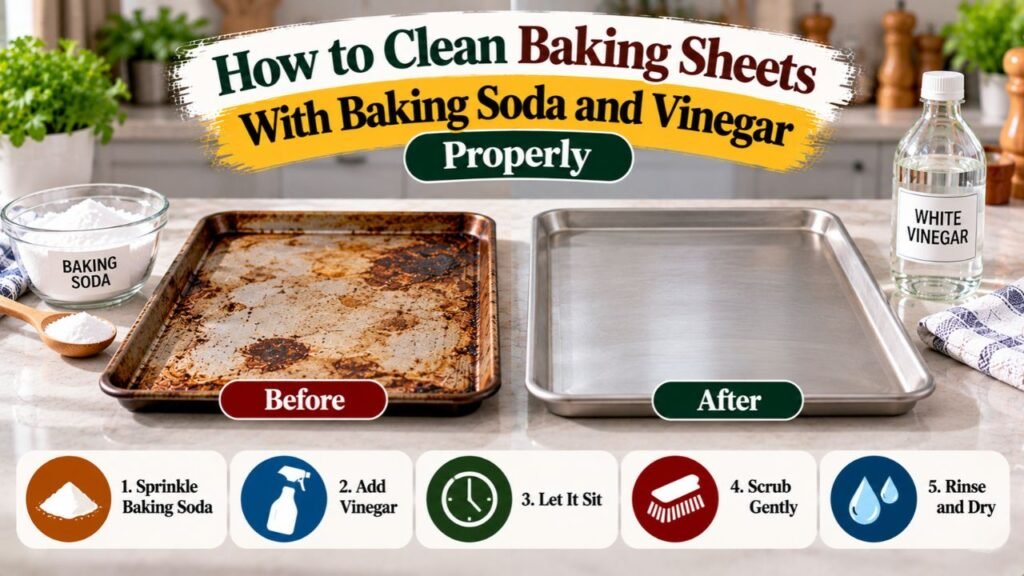
Start with the mildest version of the method before increasing scrubbing or soaking time.
Step 1: Check the Baking Sheet Material
Identify whether the sheet is:
- Bare aluminum
- Stainless steel
- Non-stick coated
- Anodized aluminum
- Another coated material
This matters because the same cleaner can affect different surfaces in different ways.
For coated bakeware, check the manufacturer’s care instructions before using baking soda or vinegar.
Step 2: Let the Baking Sheet Cool Completely
Do not put a very hot baking sheet under cold water.
A rapid temperature change can cause some pans to warp.
Wait until the sheet is cool enough to handle comfortably.
Step 3: Remove Loose Food and Grease
Use a:
- Paper towel
- Silicone scraper
- Nylon scraper
- Wooden utensil
to remove loose crumbs, grease, and food.
Avoid metal knives or sharp scrapers on coated surfaces.
Removing loose material first gives the baking soda direct contact with the baked-on residue underneath.
Step 4: Cover the Dirty Areas With Baking Soda
Sprinkle enough baking soda over the greasy or burnt areas to form a light, even layer.
You do not need to cover clean sections of the pan.
Concentrate on:
- Brown oil marks
- Burnt corners
- Sticky residue
- Dark food deposits
Step 5: Add a Small Amount of Warm Water
Add enough warm water to turn the baking soda into a soft paste.
The paste should remain on the dirty area rather than running off the sheet.
Let it sit for about 15–30 minutes.
For heavier residue, a little more time may be needed, but avoid leaving alkaline cleaners on aluminum for unnecessarily long periods.
Step 6: Scrub the Baking Sheet Gently
Use a soft sponge, nylon brush, or non-scratch pad.
Work the paste over the residue with light pressure.
On bare stainless steel, moderate scrubbing is normally acceptable.
On aluminum or coated bakeware, stay gentle to reduce scratching or surface wear.
Step 7: Use Vinegar on Residue That Remains
After most grease has loosened, apply a small amount of white vinegar to the remaining baking soda and residue.
You can:
- Lightly spray it
- Pour a small amount onto the area
- Wipe with a vinegar-dampened cloth
The mixture will fizz.
Let the reaction finish briefly, then wipe or scrub gently.
Do not leave vinegar sitting on natural aluminum for an extended period.
Step 8: Rinse the Baking Sheet Thoroughly
Rinse away all:
- Baking soda
- Vinegar
- Loose grease
- Burnt food particles
Pay attention to:
- Corners
- Rolled rims
- Textured surfaces
Dried baking soda can leave a white film if it is not completely removed.
Step 9: Wash With Dish Soap
Give the pan a final wash with warm water and mild dish soap.
This removes remaining grease and cleaning residue.
Step 10: Dry the Baking Sheet
Dry it with a clean towel.
Allow moisture trapped around rolled rims to evaporate before storing the pan.
Key Takeaway: Use baking soda first to loosen residue, add vinegar only after the paste has had time to work, then wash and rinse the baking sheet thoroughly.
Why Baking Soda and Vinegar Clean Baking Sheets Differently
Baking soda and vinegar do not perform the same cleaning job.
Understanding that difference explains why using them one after the other can make more sense than mixing them immediately.
Baking Soda Helps With Greasy Baking Sheet Residue
Baking soda is mildly alkaline and mildly abrasive.
A damp baking-soda paste can loosen:
- Baked grease
- Sticky cooking oil
- Food residue
- Burnt-on deposits
The fine particles also add gentle mechanical scrubbing.
That abrasive quality is why coated baking sheets need lighter pressure.
Vinegar Helps With Some Stains and Mineral Residue
White vinegar contains acetic acid.
It can loosen some:
- Mineral deposits
- Discoloration
- Surface residue
Acidic cleaners are less suitable for prolonged contact with reactive metals such as natural aluminum.
Baking Soda and Vinegar Neutralize Each Other
When vinegar touches baking soda, the mixture releases carbon dioxide gas and produces fizzing.
The bubbles may disturb loose debris.
The reaction also reduces the original alkalinity of the baking soda and acidity of the vinegar.
This means immediately combining large amounts of both does not automatically create a stronger cleaner.
Key Takeaway: Baking soda is more useful for greasy residue, vinegar works differently on deposits and staining, and mixing them immediately reduces the chemical properties of both.
Should You Mix Baking Soda and Vinegar Before Cleaning a Baking Sheet?
You can, but premixing them is usually not the best approach for stubborn grease.
If you combine them in a bowl first, much of the fizzing reaction happens before the mixture reaches the baking sheet.
By the time you apply it, you are left with a much less alkaline and less acidic solution.
A better sequence is:
- Apply baking soda.
- Add enough water to make a paste.
- Let the paste work on the grease.
- Scrub gently.
- Add a small amount of vinegar to remaining residue.
- Rinse.
This uses each ingredient for a purpose instead of relying only on the bubbles.
If the baking sheet is only lightly dirty, a brief baking-soda-and-vinegar fizz may still loosen residue enough for normal washing.
How Long to Leave Baking Soda and Vinegar on a Baking Sheet
The contact time should match the material and amount of residue.
Baking Soda Paste
For many dirty sheet pans, let the baking-soda paste sit about:
15–30 minutes
before scrubbing.
Heavier buildup may need another application rather than a much longer soak.
Vinegar
Vinegar does not need prolonged contact.
Once it is added to remaining baking soda, let the fizzing settle and begin cleaning.
For natural aluminum, rinse promptly instead of leaving vinegar on the metal for hours.
Coated Baking Sheets
Avoid long soaking unless the manufacturer specifically permits it.
Some coated bakeware makers recommend against extended soaking because it may affect finishes, seams, or exposed metal edges.
How to Clean Burnt Baking Sheets With Baking Soda and Vinegar
Burnt food often needs more softening than ordinary grease.
Start by removing whatever comes off easily with a silicone or wooden scraper.
Then spread a baking-soda paste over the burnt areas.
Let it sit long enough for moisture to soften the food layer.
Scrub gently with a nylon brush or non-scratch sponge.
If a thin burnt film remains, add a small amount of vinegar and work it across the residue.
Wash with dish soap after the treatment.
For thick carbonized buildup, several gentle cleaning rounds are safer than trying to remove everything with one aggressive scrub.
How to Remove Baked-On Grease With Baking Soda and Vinegar
Baked cooking oil can turn into a brown or amber film after repeated oven use.
This layer can be much harder to remove than fresh grease.
Start With Baking Soda Paste
Cover the oily residue with baking soda and enough water to make a paste.
Let it remain on the grease for 15–30 minutes.
Scrub the Greasy Area
Use a non-metal brush or sponge.
You may notice the paste turning brown as oil begins lifting from the surface.
Add Vinegar After Scrubbing
Apply a little vinegar to residue that remains.
The fizz can loosen small particles left in textured areas or around corners.
Repeat Instead of Using Steel Wool
If the first round does not remove all the grease, repeat the baking-soda treatment.
Avoid switching immediately to steel wool on coated or aluminum baking sheets.
Key Takeaway: Baked-on grease responds better to a baking-soda dwell period followed by gentle scrubbing than to immediately flooding the pan with vinegar.
How to Clean Brown Baking Sheet Stains With Baking Soda and Vinegar
Brown marks may be baked oil, food residue, or permanent discoloration.
The first goal is to determine whether the mark is actually removable buildup.
Run your fingers over the clean, dry surface.
If the brown area feels:
- Sticky
- Raised
- Rough
- Greasy
it may still be residue.
If it feels smooth and clean, some of the color may be permanent staining or patina.
Apply baking-soda paste to raised residue and scrub gently.
Use a small amount of vinegar after the first cleaning pass if the pan material permits it.
Do not damage a usable baking sheet simply to restore its original appearance.
How to Clean Aluminum Baking Sheets With Baking Soda and Vinegar
Natural aluminum requires more restraint than stainless steel.
Both acidic and alkaline cleaners can affect aluminum if contact is prolonged.
Use Baking Soda Briefly
A light baking-soda paste can be used on many natural aluminum baking sheets, but avoid leaving a thick alkaline coating on the pan for hours.
Scrub gently.
Natural aluminum scratches more easily than stainless steel.
Use Vinegar Briefly
Vinegar can brighten some aluminum surfaces, but aluminum is reactive to acids.
Extended vinegar contact can cause:
- Darkening
- Pitting
- Corrosion
- Surface changes
Use a small amount, clean promptly, and rinse thoroughly.
Expect Some Patina
Natural aluminum often changes color with normal use.
A darker surface does not automatically mean the pan is dirty or unsafe.
If the surface feels clean and performs normally, cosmetic color does not always need to be removed.
Key Takeaway: Baking soda and vinegar can be used cautiously on natural aluminum, but short contact times, gentle scrubbing, and prompt rinsing are important.
How to Clean Stainless Steel Baking Sheets With Baking Soda and Vinegar
Stainless steel is generally less reactive than bare aluminum.
That makes this cleaning method easier to use on an uncoated stainless sheet.
Spread baking-soda paste over the baked residue and allow it to sit.
Scrub with a nylon brush or suitable non-scratch pad.
Apply vinegar to stubborn areas after the first scrub.
Rinse thoroughly and wash with dish soap.
Even stainless steel can scratch, so there is rarely a reason to start with the harshest scouring tool.
For polished stainless surfaces, scrub in the direction of the visible grain when possible.
Can You Clean Non-Stick Baking Sheets With Baking Soda and Vinegar?
Use extra caution.
A non-stick surface is a coating rather than bare metal, and the goal is to preserve that coating.
Start With Dish Soap First
For non-stick baking sheets, begin with:
- Warm water
- Mild dish soap
- Soft sponge
Many stains do not need baking soda or vinegar.
Baking Soda Can Be Mildly Abrasive
If the manufacturer permits baking soda, make a soft paste and use very light pressure.
Do not scrub aggressively.
Check Before Using Vinegar
Some coatings tolerate diluted vinegar, while others have specific care restrictions.
Follow the manufacturer’s instructions for your exact baking sheet.
Never Use Steel Wool on Non-Stick Coating
Avoid:
- Steel wool
- Metal brushes
- Sharp scrapers
- Harsh abrasive pads
If the coating is peeling or flaking, cleaning will not restore it.
Key Takeaway: Non-stick baking sheets should be cleaned with soap and soft tools first; use baking soda or vinegar only when the coating maker permits them.
Can You Clean Dark Non-Stick Baking Sheets With Baking Soda and Vinegar?
Dark baking sheets are often coated, so do not judge the cleaning method by color alone.
Check whether the pan has:
- Non-stick coating
- Anodized surface
- Enamel
- Another factory finish
If the sheet is coated, avoid aggressive baking-soda scrubbing.
Dark discoloration may also be difficult to distinguish from the original finish.
If the surface is smooth and food releases normally, cosmetic changes may not need removal.
Once a factory coating is scratched, no household baking-soda or vinegar mixture can replace it.
How Much Baking Soda to Use on a Baking Sheet
You do not need an exact measured amount.
Use enough to cover the dirty areas with a thin layer.
For isolated grease marks, a small spoonful may be enough.
For a heavily stained half-sheet pan, you may need several spoonfuls.
Add water slowly.
The goal is a spreadable paste rather than a pan full of baking-soda solution.
Using more powder than the residue can hold does not make the cleaning action stronger.
How Much Vinegar to Use With Baking Soda on a Baking Sheet
Use less vinegar than many viral cleaning demonstrations suggest.
You only need enough to wet the remaining baking soda and produce a brief fizz.
Flooding the pan:
- Dilutes the mixture
- Increases acid exposure
- Creates unnecessary liquid
- Can be a poor choice for reactive aluminum
A spray bottle or vinegar-dampened cloth gives more control than pouring a large amount directly onto the pan.
Can You Leave Baking Soda and Vinegar on a Baking Sheet Overnight?
It is generally unnecessary.
Long contact can be a poor choice for:
- Aluminum
- Coated pans
- Baking sheets with exposed edges
- Pans with rolled rims
For ordinary baked-on grease, shorter cleaning sessions are preferable.
Apply baking soda for 15–30 minutes, scrub, add vinegar briefly if suitable, rinse, and repeat if needed.
Repeated controlled cleaning is safer than an overnight chemical soak on a material you have not identified.
Can Baking Soda Scratch a Baking Sheet?
Yes, it can scratch or dull some surfaces if scrubbed aggressively.
Baking soda feels soft, but the particles still provide mild abrasion.
The risk is greater on:
- Non-stick coatings
- Polished surfaces
- Soft aluminum
Use:
- Soft sponge
- Nylon brush
- Light pressure
Let soaking time do more of the work instead of pressing harder.
Can Vinegar Damage a Baking Sheet?
It depends on the material.
Stainless steel generally tolerates brief vinegar cleaning well.
Natural aluminum is more reactive.
Prolonged acidic contact can alter the aluminum surface and may lead to:
- Darkening
- Pitting
- Corrosion
Coated bakeware should be cleaned according to its manufacturer instructions.
Do not assume that a household ingredient is automatically harmless to every pan finish.
What Not to Mix With Vinegar When Cleaning Baking Sheets
Vinegar should never be casually combined with other household chemicals.
Never Mix Vinegar With Chlorine Bleach
This can release dangerous chlorine gas.
If bleach has been used on a surface, rinse it completely and do not add vinegar.
Avoid Random Cleaner Combinations
Do not mix vinegar with:
- Unknown oven cleaners
- Strong chemical degreasers
- Toilet cleaners
- Other acidic or chlorine-based products
Use one cleaning system at a time.
For most baking sheets, mild dish soap, baking soda, and controlled vinegar use are enough.
Why Baking Soda and Vinegar May Not Remove Every Baking Sheet Stain
Some marks are no longer removable food residue.
Repeated heat can permanently change the appearance of metal.
Aluminum Can Develop Patina
Natural aluminum darkens over time.
That surface change may remain after the pan is clean.
Oil Can Polymerize
Repeated heating can turn cooking oil into a tough film that needs multiple cleaning cycles.
Coatings Can Discolor
A non-stick coating may change color without having removable dirt on top.
Scratches Cannot Be Cleaned Away
If the mark is actually damaged coating or exposed metal, scrubbing will not restore the original finish.
Trying to remove every stain can do more harm than leaving harmless discoloration.
How to Keep Baking Sheets Cleaner After Using Baking Soda and Vinegar
Prevention reduces how often deep cleaning is needed.
Wash Baking Sheets Soon After Use
Fresh grease is much easier to remove than grease that has been heated repeatedly.
Use Parchment Paper When Suitable
Parchment reduces direct contact between food and the pan.
Stay within the parchment manufacturer’s temperature rating.
Use Silicone Baking Mats for Suitable Recipes
Silicone mats reduce baked-on food residue during many baking jobs.
Wipe Away Oil Before Storage
A thin film that remains on the pan can become harder to remove during the next oven cycle.
Avoid Excess Cooking Spray
Some aerosol sprays leave a sticky residue on coated bakeware after repeated heating.
Use Coating-Safe Utensils
For non-stick baking sheets, use:
- Silicone
- Nylon
- Wood
instead of sharp metal utensils.
Key Takeaway: Prompt washing and suitable baking liners prevent thin grease films from turning into the dark baked-on residue that later needs baking soda and vinegar.
Common Mistakes When Cleaning Baking Sheets With Baking Soda and Vinegar
Several mistakes can make the cleaning process less useful or damage the pan.
Mixing Everything Before Applying It
Premixing baking soda and vinegar uses up much of the reaction before the cleaner reaches the pan.
Soaking Aluminum in Vinegar for Hours
Natural aluminum can react with acid.
Short contact followed by thorough rinsing is safer.
Scrubbing Non-Stick Coating Hard With Baking Soda
Baking soda adds abrasion.
Aggressive pressure can dull or wear a coating.
Using Steel Wool After the Paste Fails
Steel wool can deeply scratch aluminum and destroy non-stick coatings.
Cleaning a Very Hot Baking Sheet
Let the sheet cool before adding water or cleaner to reduce warping risk.
Assuming Every Brown Mark Is Dirt
Some marks are permanent patina or discoloration.
A clean pan does not have to look brand new.
Forgetting the Final Soap Wash
After using baking soda and vinegar, wash the baking sheet with ordinary dish soap before drying and storing it.
Key Takeaway: Use baking soda and vinegar in controlled stages, avoid long acid exposure on aluminum, and do not chase cosmetic stains with increasingly harsh scrubbing.
Conclusion
For how to clean baking sheets with baking soda and vinegar, start with baking soda rather than immediately mixing both ingredients. Make a damp paste, let it sit on baked grease or burnt food for about 15–30 minutes, scrub gently, then add a small amount of vinegar to residue that remains.
The pan material changes the safest method. Stainless steel generally tolerates the process well, while natural aluminum should have only brief contact with vinegar and should be rinsed promptly. Non-stick baking sheets need the gentlest approach because baking soda can act as a mild abrasive and aggressive cleaning can damage the coating.
Do not expect baking soda and vinegar to restore every old baking sheet to its original color. Patina, permanent staining, scratches, and worn coatings are different from removable food residue.
For routine care, wash baking sheets soon after use and reserve the baking-soda-and-vinegar method for stubborn grease and burnt deposits. Gentle repeated cleaning is a better approach than damaging a usable pan with steel wool or harsh scraping.
FAQs About Cleaning Baking Sheets With Baking Soda and Vinegar
Can you use baking soda and vinegar together on baking sheets?
Yes, but using them sequentially is usually more useful. Let a baking-soda paste work on grease first, scrub the residue, then add a small amount of vinegar. Mixing both immediately causes them to neutralize each other.
How long should baking soda and vinegar sit on a baking sheet?
Let baking-soda paste sit for roughly 15–30 minutes. Vinegar only needs brief contact after that. Do not leave vinegar sitting for long periods on natural aluminum.
Does baking soda and vinegar remove baked-on grease?
It can loosen many layers of baked grease. Baking soda does most of the work on oily residue, while a small amount of vinegar can be used during the final cleaning stage.
Can baking soda and vinegar clean aluminum baking sheets?
Yes, with caution. Use both for short periods and rinse thoroughly. Aluminum reacts with acids such as vinegar, and prolonged contact may cause darkening, pitting, or corrosion.
Can I use baking soda and vinegar on non-stick baking sheets?
Only if the baking-sheet manufacturer permits those cleaners. Baking soda is mildly abrasive, so hard scrubbing can wear the non-stick finish. Mild dish soap and a soft sponge should be the first cleaning method.
Will baking soda scratch a baking sheet?
It can scratch or dull delicate surfaces if used with heavy pressure. Use a soft sponge or nylon brush, especially on aluminum and non-stick coatings.
Is it safe to leave baking soda and vinegar on a baking sheet overnight?
An overnight soak is usually unnecessary and may be unsuitable for aluminum or coated bakeware. Short cleaning sessions followed by rinsing are safer.
Why is my baking sheet still brown after cleaning with baking soda and vinegar?
The remaining color may be permanent patina, heat discoloration, polymerized oil, or coating wear rather than removable dirt. If the surface feels clean and smooth, harder scrubbing may only damage the pan.