
Cherry Cutting Board – Everything you need to know
A cherry wood chopping surface offers a beautiful combination of moderate hardness, smooth grain, knife-friendly cutting, and natural reddish-brown coloring. It works well for everyday food preparation, serving, and kitchen display. With proper cleaning, occasional oiling, and protection from excess moisture, a well-constructed board can remain useful for many years.
Choosing the wrong wooden cutting board can lead to frequent knife marks, moisture damage, warping, and frustrating maintenance. The wood species, grain orientation, thickness, and construction all influence how a board performs during regular chopping.
A cherry cutting board stands out because American black cherry has a relatively fine, even grain and a warmer appearance than many common kitchen hardwoods. Its color naturally deepens with exposure to light, giving each board a distinctive character as it ages.
According to The Wood Database, American black cherry (Prunus serotina) has a Janka hardness of approximately 950 pounds-force (lbf). This places it below hard maple, which measures about 1,450 lbf, and slightly below black walnut at approximately 1,010 lbf. These differences affect resistance to dents and surface wear.
Food safety also deserves attention. The U.S. Department of Agriculture recommends keeping separate cutting boards for raw meat, poultry, and seafood and for foods such as fresh produce and bread. Wooden boards can be suitable for food preparation, but their natural characteristics do not replace proper washing and sanitizing.
I recommend looking beyond appearance when selecting a cherry board. A smooth cutting surface, secure glue joints, practical dimensions, and an appropriate food-contact finish matter more than decorative details alone.
Understanding cherry wood’s craftsmanship, cutting properties, grain styles, size options, cleaning requirements, and long-term maintenance will make choosing and caring for this kitchen tool much simpler.
The Craftsmanship of Cherry Cutting Board
One of the few kitchen essentials that successfully blends design and functionality is a cherry cutting board. These cutting boards are the perfect combination of durability, aesthetic appeal, and culinary artistry because they are crafted from one of the most valuable hardwoods in woodworking.
Cherry wood has a long history in American furniture making, cabinetry, and fine woodworking. Its smooth texture and attractive grain also make it suitable for carefully constructed kitchen accessories.
A cutting board requires more than an attractive piece of lumber. The wood must be appropriately dried, cut, joined, sanded, and finished to create a stable food-preparation surface.
The Unique Properties of Cherry Wood
Cherry wood stands out among cutting board materials because of its exceptional qualities. The wood’s deep grain and natural resistance to moisture make it an ideal surface for food preparation. It develops a gorgeous patina that reflects the countless meals it has been used for as its warm, rich reddish-brown tone deepens over time.
American black cherry generally has a fine, straight grain, although natural variations and occasional figured patterns occur. Its heartwood may begin with pinkish or reddish tones before developing deeper brown and amber coloring.
Purdue University notes that black cherry darkens substantially with light exposure. This color change is a natural property of the wood rather than proof that the cutting board has been heavily used.
Cherry is not waterproof. Water can still enter exposed wood fibers, especially around damaged joints, end grain, and deep knife grooves. Proper drying and conditioning remain necessary.
Durability and Performance
Both professional chefs and home cooks appreciate cherry wood’s remarkable durability. The wood’s robust grain structure helps prevent the growth of microorganisms and increases its resistance to knife scarring when compared to softer wood types. Unlike synthetic materials, a well-maintained cherry cutting board can last for decades and become more beautiful with each use..
Cherry provides a useful balance between surface firmness and cutting comfort. It is generally softer than hard maple, which means knife marks may become noticeable sooner during heavy use.
The wood’s relatively uniform texture contributes to a comfortable cutting surface. Still, the shape, sharpness, and condition of the knife influence how quickly marks develop.
Food Safety Clarification: Wood may exhibit moisture-absorption behavior that influences microbial survival, but cherry wood should not be treated as self-sanitizing. Bacteria can remain on contaminated cutting surfaces. Washing after use and preventing cross-contamination are necessary regardless of the wood species.
A board’s lifespan also depends on construction quality. Loose glue joints, persistent moisture, and repeated exposure to high temperatures may shorten its useful life.
How to Maintain Your Cutting Board for Cherry
Proper maintenance is essential to the board’s integrity. Applying food-grade mineral oil on a regular basis protects the wood from moisture and prevents cracking. Experts suggest:
- Every month or whenever the wood appears dry, oil it.
- Avoid prolonged exposure to water and dishwashers.
- After washing, immediately dry with warm water and mild soap.
The most reliable daily routine is to wash the board with mild dish soap and warm water, rinse away residue, and dry it with a clean towel. Allow the remaining surface moisture to air-dry before storage.
Apply food-grade mineral oil when the surface looks dry, pale, or rough. Some boards need conditioning more frequently than others because of washing habits, household humidity, and their existing finish.
Mineral oil slows moisture absorption but does not make wood completely waterproof. Avoid leaving the board submerged or standing in water even after oiling.
Artistic Craftsmanship
Each cutting board made of cherry wood is an artistic creation. Skilled woodworkers carefully select high-quality wood, paying attention to grain patterns and wood quality. The process involves multiple stages of accurate cutting, sanding, and polishing to create a functional work of art.
Woodworkers must also consider the moisture content of the lumber before assembling a board. Wood that has not been dried appropriately can change dimensions after construction, increasing the risk of cupping, twisting, and joint separation.
A well-constructed board should have smooth transitions between joined pieces. Raised joints, splinters, and noticeable gaps may indicate problems that deserve attention before purchase.
Aspects of Design
Cherry cutting boards come in a range of styles to meet different culinary needs. While some have juice grooves to collect liquids, others have handles or multiple chopping surfaces. Home cooks can choose a board that best fits their own cooking preferences due to its versatility.
Common designs include rectangular boards, round boards, thick butcher blocks, reversible boards, and serving boards with decorative handles.
A juice groove is useful when carving cooked meats or preparing juicy ingredients, but it reduces the uninterrupted cutting area.
Recessed handles improve lifting on heavier boards. Rubber feet may reduce sliding, although attached feet usually make the cutting board usable on only one side.
For regular vegetable preparation, I prefer a simple flat board with enough room to separate ingredients. Decorative features are secondary to stability and usable space.
Sustainability and the Choice of Wood
Careful woodworkers source cherry wood from sustainable forest management projects. This ensures environmental preservation while providing high-quality cutting board materials. Many artisans work with nearby timber mills to support local woodworking communities.
Cherry is a North American hardwood, and American black cherry is commercially harvested in the eastern United States.
Sustainability depends on how the particular wood was sourced. A board made from cherry is not automatically certified as responsibly harvested.
Buyers interested in traceable sourcing can look for information about the wood’s origin, responsible forest management, and certifications such as the Forest Stewardship Council (FSC).
A durable board that can be maintained and used for years may also reduce the frequency of replacement.
Practical Benefits
In addition to their aesthetic value, cherry wood cutting boards offer a number of practical advantages.
- Nature’s antimicrobial properties
- Be gentle with the knife edges.
- exceptional heat resistance
- Appealing aesthetics that improve kitchen design
Cherry’s moderate hardness makes it a reasonable option for cooks who prefer a wooden cutting surface that is less hard than maple.
Its warm coloring also works well for serving cheese, sliced bread, fruit, and appetizers.
Heat Safety Note: Cherry wood should not be used as a trivet for hot cookware unless the board manufacturer specifically approves that use. Excessive heat can discolor the surface, damage the finish, and contribute to cracking.
The board should also be cleaned before switching from raw ingredients to ready-to-eat foods.
Options for Personalization
Many woodworkers offer personalized cherry cutting boards with names or phrases engraved on them. Customized sizes and shapes Integrated components like handles or feet
Personalized boards are popular for weddings, housewarming gifts, anniversaries, and family kitchens.
Laser engraving can create names, initials, decorative borders, or meaningful messages. The best placement is usually away from the main cutting area, where knife contact and food residue can affect the engraving.
A personalized serving board may use a different finish from one intended for chopping. Confirm that the entire food-contact surface is suitable for its planned use.
Where to Find Quality Cherry Cutting Boards
For those interested in acquiring a premium cherry wood cutting board, consider exploring these reputable sources:
- Etsy Artisan Marketplace
- Woodcraft Supply Store
- Rockler Woodworking
When shopping through these marketplaces or woodworking suppliers, examine the actual listing rather than relying on the retailer’s name alone.
Look for information about the wood species, dimensions, thickness, grain construction, finish, and care instructions.
Customer photographs can reveal details that staged product images may not show, including the actual color, edge finishing, and board thickness.
Investing in a cherry wood cutting board means bringing home more than just a kitchen tool. It’s a testament to craftsmanship, functionality, and timeless design that transforms everyday cooking into an artful experience.
Key Takeaway: Cherry wood combines attractive coloring, moderate hardness, and a smooth cutting surface. Construction quality, maintenance, and food safety practices determine how well the finished board performs.
Cherry Cutting Board Construction: Edge Grain vs. End Grain
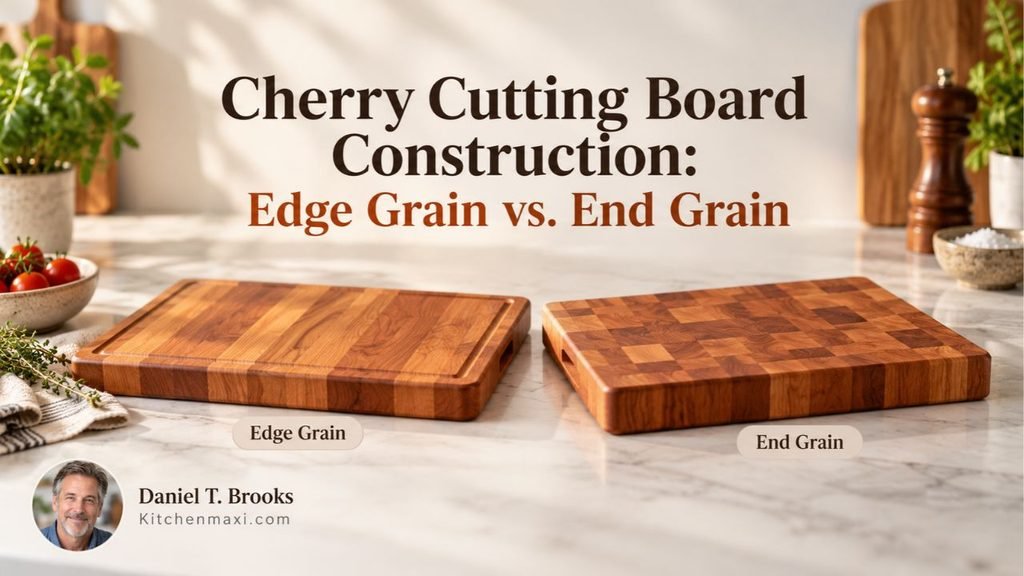
Cherry cutting boards are commonly made using edge-grain or end-grain construction. Both styles use cherry wood, but the direction of the wood fibers changes how the cutting surface looks and responds to repeated knife contact.
Edge-Grain Cherry Cutting Boards
An edge-grain board is generally made by joining strips of hardwood so their long edges form the cutting surface.
The wood fibers run along the board, often creating an attractive series of straight or gently flowing grain patterns.
Edge-grain cherry boards are often thinner and lighter than substantial end-grain butcher blocks of similar dimensions.
They are suitable for slicing vegetables, preparing sandwiches, cutting fruit, and other routine kitchen tasks.
Because the knife crosses the exposed wood fibers, visible cutting marks gradually develop.
A properly maintained edge-grain board can still provide many years of regular service.
End-Grain Cherry Cutting Boards
An end-grain board is made by arranging shorter pieces of wood with their fiber ends facing upward.
This creates a distinctive block pattern that may look like squares, rectangles, or more complicated arrangements.
The knife meets the ends of the wood fibers rather than primarily crossing their sides. This construction can be forgiving during repeated chopping.
End-grain boards generally require more cutting, arranging, gluing, and finishing during production.
For that reason, they can cost more than a simpler edge-grain board of comparable size.
Cherry end-grain boards may also require careful conditioning because exposed end grain absorbs liquids differently from the side grain.
Edge Grain vs. End Grain Comparison
| Feature | Edge Grain | End Grain |
|---|---|---|
| Grain direction | Long wood fibers face upward | Fiber ends face upward |
| Appearance | Long grain patterns | Block or checkerboard patterns |
| Cutting feel | Firm wooden surface | Often more forgiving under chopping |
| Weight | Often lighter at comparable dimensions | Often heavier because of thicker construction |
| Price | Usually less expensive | Often more expensive |
| Suitable tasks | Everyday slicing and vegetable prep | Frequent chopping and butcher-block work |
| Maintenance | Cleaning, drying, conditioning | Cleaning, drying, careful conditioning |
Neither design is automatically superior.
For a home cook who prepares vegetables daily, a well-made edge-grain cherry board is often a practical purchase.
For someone who frequently chops and prefers a thicker work surface, an end-grain cherry butcher block may be worth considering.
Key Takeaway: Edge-grain boards are practical for everyday preparation, while end-grain designs appeal to cooks who want a thicker chopping surface and a distinctive construction pattern.
How to Keep Your Hardwood Kitchen Surfaces Strong and Clean
Wooden kitchen countertops are more than just useful surfaces; they are works of art that show off durability and skill. If you take care of them, hardwood floors can turn your kitchen into a classic, elegant space that lasts for years of cooking adventures.
Hardwood kitchen surfaces are very strong and look great, especially when they are made from high-quality woods like cherry, maple, and walnut. These natural materials work better than synthetic ones and look good while doing it.
Cherry cutting boards and wooden kitchen countertops share several maintenance requirements, although countertop finishes and cleaning instructions can differ from those for food-preparation boards.
The recommendations here concern wooden kitchen work surfaces rather than hardwood flooring. A cutting board needs a finish and cleaning routine appropriate for direct food contact.
Important Ways to Take Care of Things
To keep your hardwood floors safe, you need to do regular maintenance and preventive care. Start by finding out what makes the wood type you are using unique. Different types of wood have different levels of hardness and moisture resistance, which affects how long they last and how well they work right away.
- Cutting boards are a good way to avoid touching knives directly.
- Every few months, use mineral oil that is safe for food.
- Clean up spills right away.
- Avoid cleaners with strong chemicals.
Wood countertops and wooden boards do not always use the same protective finish.
Some countertops have factory-applied coatings that should not receive mineral oil. Check the finish manufacturer’s instructions before treating a countertop.
For an unfinished or mineral-oil-conditioned cherry cutting board, regular cleaning and prompt drying help reduce moisture-related problems.
Avoid leaving wet towels beneath a cutting board because trapped moisture can affect the underside.
Things to think about when choosing wood
When picking the best hardwood, you need to think about a lot of important things. The density, grain pattern, and natural resistance to moisture of a wood are the main things that make it good for kitchens.
| Wood Type | Durability Rating | Moisture Resistance |
|---|---|---|
| Maple | High | Moderate |
| Cherry | Medium-High | Good |
| Walnut | Medium | Moderate |
These ratings are broad descriptions rather than standardized laboratory measurements.
The actual moisture behavior of a cutting board depends on its construction, finish, exposed grain, cleaning routine, and surrounding humidity.
Cherry is not inherently waterproof, and maple and walnut also require protection from prolonged wet conditions.
Methods for Protective Care
Using the right protective treatments can make your hardwood surfaces last much longer. Food-grade mineral oil stops wood fibers from absorbing too much liquid and forms an imperceptible barrier against moisture. Frequent treatment keeps the wood from warping or breaking and preserves its structural integrity.
Mineral oil reduces the rate at which moisture enters the wood. It does not permanently seal every pore or eliminate movement caused by humidity changes.
Food-safe board conditioners sometimes combine mineral oil with beeswax. The wax contributes a water-repellent surface layer.
Apply these products according to their instructions and wipe away any excess before preparing food.
Cleaning Suggestions
To clean well, you need to use gentle, targeted methods. Steer clear of steel wool and abrasive scrubbers since they can harm sensitive wood surfaces. Rather, use gentle, pH-neutral cleaners made especially for wooden surfaces and soft microfiber cloths.
A soft sponge and mild dish soap are suitable for ordinary cleaning on many wooden cutting boards.
Pay attention to juice grooves, handles, and areas around decorative details where moisture and food particles may remain.
A strong scent from garlic or onion does not automatically mean the board is unsafe, but persistent residue and odors should prompt a thorough cleaning.
Long-Term Preservation
Every few years, professional refinishing may bring back the natural shine of your wooden surfaces. This procedure revitalizes the wood’s appearance and strengthens its protective layer by meticulously sanding the surface and reapplying protective coatings.
Refinishing frequency should follow the actual condition of the surface rather than a fixed schedule.
Small, shallow knife marks may need no repair at all. Deep grooves, splinters, or damaged joints deserve closer inspection.
A heavily cracked cutting board may need replacement rather than sanding, especially if the damage creates areas that cannot be cleaned thoroughly.
Environmental Factors
Variations in temperature and humidity can have a big effect on wooden surfaces. To avoid needless expansion, contraction, or structural stress, keep indoor conditions constant. Utilize humidifiers or dehumidifiers as necessary to generate the ideal atmosphere.
Wood naturally expands as it absorbs moisture and contracts as it dries.
A cutting board exposed to repeated cycles of soaking and rapid drying may develop uneven movement.
Avoid storing cherry boards beside heating vents, radiators, or areas receiving intense direct sunlight.
Key Takeaway: Consistent cleaning, moisture control, suitable finishing products, and careful storage protect hardwood kitchen surfaces from avoidable damage.
Selecting the Best Cutting Board for Your Cooking Needs
Food safety and your cooking experience are significantly impacted by the cutting board you use for culinary preparation. Cutting boards made of cherry wood offer a unique combination of functionality and aesthetic appeal, making them an expensive option for both home and professional chefs.
A cutting board should provide enough room for the knife, food, and prepared ingredients without forcing everything toward the edges.
Consider the amount of food you usually prepare, your available counter space, and the ease of cleaning the selected board.
Cherry Wood’s Importance for Cutting Boards
Because of its wonderful qualities, cherry wood is a fantastic option for kitchen cutting surfaces. Because of its densely packed grain structure, which naturally wards off microbes, the area used for food preparation is hygienic. Because of the wood’s durability, which ensures that it will withstand years of frequent use, the cutting board is an excellent investment for serious cooks.
Cherry is a diffuse-porous hardwood with a generally fine texture. This makes it different from coarse, open-grained wood species with larger visible pores.
A smooth surface is desirable because food residue is easier to remove when deep cracks and irregular cavities are absent.
Important: Fine grain does not make a contaminated board sterile. Hygiene still depends on proper cleaning, suitable sanitizing when needed, and separating raw ingredients from ready-to-eat food.
For commercial food preparation, local health-code requirements also matter. The FDA Food Code discusses hard maple and equivalently hard, close-grained wood for certain cutting surfaces. Do not assume that every cherry board is approved for every commercial kitchen.
Cherry Wood Cutting Boards Offer Unique Features
- Nature’s antimicrobial properties
- Beautiful reddish-brown color that deepens with age; its moderate hardness protects the knife edges.
- Sustainable and renewable wood
These features make cherry appealing to cooks who want both a functional cutting surface and a piece of natural kitchen décor.
Cherry’s softer feel compared with hard maple may appeal to people who use fine-edged kitchen knives.
Still, wood hardness is only one factor in knife maintenance. Cutting technique, blade material, sharpening habits, and the presence of abrasive particles also affect edge wear.
Selecting the Right Cherry Cutting Board
When choosing a cherry cutting board, consider several crucial factors that will impact your culinary experience. The board’s longevity and performance are significantly impacted by its thickness. Expert chefs recommend that boards be 1.5 to 2 inches thick for optimal stability and longevity.
Thickness affects stability, weight, storage, and the height of the working surface.
A thick cherry board may be suitable for frequent chopping, but it is not necessary for every kitchen.
A thinner, well-constructed board can handle everyday slicing tasks and may be easier to move and wash.
Inspect the board for:
- A smooth, even cutting surface
- Secure glue joints without visible gaps
- A flat base that does not rock
- Adequate thickness for its intended purpose
- A suitable food-contact finish
- Comfortable lifting and storage dimensions
I would prioritize flatness and construction over unnecessary thickness when choosing a board for a small kitchen.
Size Considerations
Different cooking tasks require varying board sizes. Consider these recommendations:
| Cooking Style | Recommended Board Size |
|---|---|
| Home Cooking | 12″ x 18″ |
| Professional Kitchen | 20″ x 24″ |
| Small Spaces | 10″ x 14″ |
These sizes are starting points rather than mandatory dimensions.
A 12 × 18-inch cherry cutting board provides 216 square inches of surface area, which is useful for preparing vegetables and keeping chopped ingredients nearby.
A 10 × 14-inch board occupies less counter space and may be suitable for smaller meals or occasional use.
A 20 × 24-inch board provides substantially more room but also requires enough sink space and physical strength for cleaning.
Helpful Insight: Measure the inside of your sink before buying a large wooden board. A board that fits the counter but cannot be washed comfortably may become inconvenient.
Maintenance and Care
With the right maintenance, you can extend the life of your cherry cutting board. Regular use of food-grade mineral oil prevents cracking and maintains the wood’s natural beauty. Avoid wetting the board or putting it in the dishwasher as this could lead to warping and damage.
Follow the board maker’s care requirements, especially for end-grain designs, glued construction, and specialty finishes.
For most traditionally constructed cherry boards, hand washing is the safer maintenance choice.
Drying should include the underside and edges, not only the main cutting surface.
Recommended Maintenance Typical
- Apply food-grade mineral oil to the board once a month.
- Wash right away with warm water and mild soap after using.
- Use a new towel to completely dry.
- Store in a cool, dry location.
If the board begins looking dry before the monthly schedule, condition it sooner.
A board used infrequently may not need the same oiling frequency as one washed several times daily.
Avoid ordinary cooking oils such as vegetable oil or olive oil for routine conditioning because they can oxidize and develop unpleasant odors.
Environmental Aspects
Cherry wood cutting boards are a sustainable choice. These boards offer a more environmentally friendly option to synthetic products because they are sourced from sustainable forests. Because of their natural origin and biodegradability, they are an excellent option for clients who are concerned about the environment. More than just a kitchen tool, a high-quality cherry cutting board is an investment in a multifunctional, stylish, and long-lasting culinary partner that enhances cooking and adds a touch of organic elegance to your kitchen space.
A board’s actual environmental impact also depends on manufacturing, adhesives, finishes, transportation, and how long the product remains in use.
Look for responsibly sourced lumber and construction intended for repair and maintenance.
Solid wood may biodegrade under suitable conditions, but glue, coatings, and other materials can affect the end-of-life behavior of the finished product.
Key Takeaway: Choose cherry cutting board dimensions and construction that fit your cooking routine, and verify the board’s finish, flatness, and maintenance requirements before purchasing.
Cherry Cutting Board Thickness, Shape, and Everyday Uses
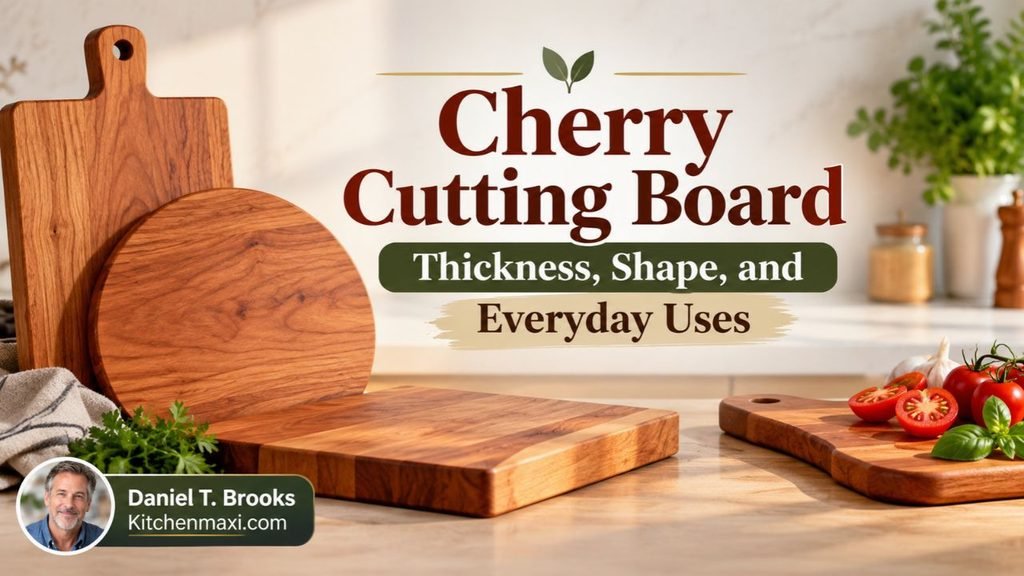
A cherry board can serve different purposes based on its size and construction.
Someone preparing one or two ingredients needs a different working surface from someone chopping vegetables for several meals.
Small Cherry Cutting Boards
Small cherry boards are suitable for slicing lemons, preparing garnishes, cutting fruit, or serving individual portions of cheese.
They occupy less storage space and are generally easier to lift.
Their main limitation is reduced working room. Chopped food may crowd the knife, especially when preparing larger meals.
Large Cherry Cutting Boards
Large boards provide extra space for ingredients and allow several preparation tasks to take place before transferring the food to bowls.
A substantial board may also remain stable because of its weight, although the base must still be flat.
The tradeoff is increased storage and cleaning difficulty.
Round Cherry Cutting Boards
Round cherry boards are appealing for pizza, cheese arrangements, bread, and kitchen display.
They fit naturally into dining presentations with curved plates and serving bowls.
For everyday chopping, remember that the usable width decreases toward the curved edges.
A rectangular board of the same maximum width and depth usually offers more uninterrupted cutting space.
Cherry Cutting Boards for Cheese and Charcuterie
Cherry’s warm reddish-brown color creates an attractive background for cheeses, crackers, sliced fruit, nuts, and prepared meats.
A flat surface is useful when arranging food directly on the board.
Personalized engravings can add decorative appeal, but the main serving area should remain smooth and easy to clean.
For gatherings, follow appropriate time limits for perishable foods. A wooden serving board does not keep cheese, meat, or other refrigerated ingredients cold.
Key Takeaway: Smaller boards suit limited preparation and serving, while larger rectangular boards provide more room for everyday knife work.
Comparison of Wood Types for Surfaces Used in Kitchen Preparation
When selecting the perfect kitchen prep surface, wood remains a timeless and useful choice for both home and professional cooks. Your kitchen space can be greatly enhanced by the unique characteristics of different wood species.
Different hardwoods offer different balances of appearance, hardness, cutting comfort, and resistance to surface wear.
Cherry, maple, and walnut are especially useful comparisons because all three are familiar North American hardwoods used in kitchen woodworking.
Understanding Wood’s Qualities for Kitchen Surfaces
Cherry wood is a unique option for cutting boards because of its exceptional durability and aesthetic appeal. Cherry’s strong grain structure is valued by skilled woodworkers because it provides exceptional resistance to moisture and bacterial growth. The natural reddish-brown color of the wood adds coziness and elegance to kitchen areas.
Cherry’s fine grain and smooth texture help explain its appeal for wooden preparation surfaces.
Unlike coarse-grained woods, it generally has a more uniform appearance that woodworkers can sand into a smooth finish.
Even so, exposed wood remains vulnerable to excess moisture. Cherry’s appearance and moderate hardness should not be confused with waterproof construction or guaranteed bacterial resistance.
Considerations for Durability When Selecting Wood
Hardwoods like maple, walnut, and cherry do better than softer woods. Cherry wood, which typically ranges from 950 to 1,450 on the Janka hardness scale, is especially strong. This figure indicates how well the wood will withstand typical kitchen wear and potential impacts from knives.
Hardness Clarification: The commonly reported Janka hardness for American black cherry is approximately 950 lbf. The figure of 1,450 lbf usually refers to hard maple rather than cherry. Janka values describe resistance to indentation, not the complete durability or hygiene of a finished cutting board.
A higher Janka number means more force is needed to create the standardized indentation.
It does not directly predict resistance to every type of knife mark, the quality of glue joints, or the lifespan of a finished board.
Cherry generally offers less resistance to indentation than hard maple, but that moderate hardness can be appealing for regular slicing.
Comparative Wood Performance
| Wood Type | Durability Rating | Moisture Resistance |
|---|---|---|
| Maple | High | Moderate |
| Cherry | Medium-High | Good |
| Walnut | Medium | Moderate |
For a more measurable comparison, consider the commonly published Janka hardness values:
| Wood Type | Janka Hardness | Common Appearance | Practical Character |
|---|---|---|---|
| American Black Cherry | 950 lbf | Pinkish-red to reddish-brown | Moderately hard and smooth |
| American Black Walnut | 1,010 lbf | Medium to dark brown | Moderately hard with rich coloring |
| Hard Maple | 1,450 lbf | Cream to pale golden | Harder and more dent-resistant |
These figures represent typical values for the named species rather than measurements of every individual board.
Cherry vs. Maple: Maple is harder and generally better suited to buyers prioritizing dent resistance. Cherry offers a warmer appearance and a somewhat softer cutting surface.
Cherry vs. Walnut: Walnut is slightly harder on the Janka scale and naturally darker. Cherry starts lighter and develops deeper reddish tones with age.
My preference would be cherry for someone who likes warm wood colors and accepts normal surface marks. Hard maple makes more sense when resistance to dents is the leading priority.
Crucial Maintenance Points to Keep in Mind
When properly cared for, wooden cutting boards last much longer. Regular mineral oil treatments prevent wood from drying out and cracking. Cherry wood requires specific maintenance techniques to preserve its structural integrity and visual appeal.
Condition all exposed surfaces when appropriate, including the sides and underside.
Uneven moisture exposure can cause one part of a board to expand or contract differently from another.
Check the glue joints during cleaning and stop using the board if cracks or separation create areas that cannot be cleaned properly.
Suggested Care Practices
- Use food-grade mineral oil once a month.
- Avoid prolonged exposure to water.
- Dry immediately after washing with a mild soap.
- Store in areas with regulated temperatures.
For a board used daily, inspect the surface more frequently.
Visible dryness, rough grain, or increased water absorption may indicate that conditioning is needed.
A board that remains oily or sticky after treatment may have received too much conditioner. Remove excess according to the product instructions.
Considerations for Choosing Wood
When choosing a cutting board, it’s crucial to consider factors like grain orientation, wood density, and moisture resistance. Maintaining the knife edge and personal style Skilled chefs suggest investing in high-quality wooden surfaces that combine functionality and style. Cherry wood cutting boards are an excellent purchase for discriminating home cooks and culinary experts.
The choice should also account for the user’s ability to lift and wash the board.
A large, thick butcher block might provide a comfortable cutting surface but be awkward for someone with limited counter space.
Check construction, weight, size, finish, and care requirements together instead of judging the wood species alone.
Sustainable and Environmental Perspectives
Sustainable wood products help address environmental issues. For surfaces used in kitchen preparation, cherry wood, which is commonly harvested from managed forests, provides a sustainable substitute. Interested readers may seek out additional information about selecting wood from trustworthy sources:
Wood Magazine Fine Woodworking Woodworkers Journal If customers are aware of the characteristics of wood, they can choose their kitchen preparation surfaces with confidence. For those seeking long-lasting functionality, durability, and aesthetic appeal, cherry wood remains a popular choice.
Local sourcing may reduce transportation distances, but the overall environmental effect depends on the complete product.
Consider the origin of the lumber, the construction method, and how long the cutting board can remain in service.
Woodworkers who provide clear sourcing and material information give buyers a better basis for evaluating environmental claims.
Key Takeaway: Cherry, maple, and walnut can all make useful cutting boards. Cherry stands out for its warm coloring and moderate hardness, while maple offers greater resistance to dents.
Maintenance and Sturdiness of Expensive Wood Cutting Boards
Wooden cutting boards are a significant investment for home and professional cooks, particularly those composed of premium cherry wood. By taking proper care of these beautiful kitchen tools, you can ensure that they will remain functional and beautiful for many years to come.
The condition of a cutting board depends heavily on how it is cleaned, dried, conditioned, and stored.
Routine inspection also matters because small cracks and damaged glue joints may worsen after repeated exposure to water.
Important Wooden Cutting Surface Maintenance Procedures
The first step to proper care is understanding the unique characteristics of cherry wood. To prevent warping, breaking, and bacterial growth, extra care must be taken with this robust, dense material. Regular conditioning with food-grade mineral oil creates a barrier that shields the wood from moisture and potential damage.
For cherry boards, a good maintenance routine focuses on reducing prolonged moisture exposure.
Check both sides of the board after washing, and do not store it while noticeably damp.
An oil finish provides some moisture resistance but does not disinfect the surface.
Methods for Cleaning
When cleaning your cherry cutting board, you must use gentle yet thorough methods: Avoid dishwashers as they can cause significant damage to wood. Wash the board immediately after use with warm water and mild soap. Avoid submerging it in water. Dry completely with a clean towel.
Washing removes visible food residue, grease, and some microorganisms.
Pay special attention to cracks, grooves, and the areas surrounding handles.
USDA guidance recommends washing cutting boards with hot, soapy water, rinsing them, and allowing them to dry.
Some solid-wood boards may be described as dishwasher compatible in general food-safety guidance, but glued cherry boards should follow their own manufacturer’s instructions. Hand washing avoids exposing them to prolonged dishwasher heat and moisture.
Methods for Treating Oil
You can prevent the wood on your cutting board from drying out and cracking by seasoning it once a month. Use pure mineral oil or specialized wood conditioning chemicals. Apply a thick layer of the protective coating, allowing the wood to absorb it completely.
Choose food-grade mineral oil or a conditioner specifically intended for wooden food-preparation surfaces.
Apply oil to a board that has been washed and thoroughly dried.
Use a clean cloth to distribute it evenly across the main surface, sides, and underside.
The amount of oil needed depends on the board’s size, construction, and current condition.
Recommended Oil Application Process
| Step | Details |
|---|---|
| 1. Clean Board | Wash and completely dry surface |
| 2. Apply Oil | Use soft cloth, spread evenly |
| 3. Rest Period | Let oil absorb for 4-6 hours |
| 4. Wipe Excess | Remove unabsorbed oil |
The recommended absorption time varies by product. Some cutting board manufacturers advise leaving mineral oil on overnight.
Follow the instructions supplied with your particular conditioner.
Avoid applying a thick coating and immediately using the board for food preparation. Remove any remaining surface oil first.
Preventing the Growth of Bacteria
While the natural antibacterial properties of cherry wood offer some protection, additional measures enhance security. Use a sanitizing solution made of white vinegar and water to clean the surface frequently without the need for harsh chemicals.
Food Safety Clarification: Vinegar mixed with water should not be considered a verified replacement for a suitable food-contact sanitizer. Its germ-killing activity varies, and it does not establish that a cutting board has been properly sanitized.
The USDA recommends cleaning a cutting board first and then using an appropriate sanitizing method when needed.
One USDA household sanitizing recommendation uses 1 tablespoon of unscented liquid chlorine bleach per gallon of water, followed by the specified contact time, rinsing, and drying. Any sanitizing method must also be compatible with the board manufacturer’s care instructions.
Never mix bleach with vinegar, ammonia, or other household cleaners.
For routine meal preparation, prevention is equally important. Keep raw meat juices away from vegetables, fruit, and foods served without further cooking.
Methods for Expert Maintenance
Sometimes advanced care involves sanding to remove minor scratches and restore smooth surfaces. Use fine-grit sandpaper that moves with the wood’s grain to maintain aesthetic integrity. After sanding, immediately re-oil the wood to seal and protect.
Sanding can remove shallow surface damage on a suitable solid-wood board.
Clean away all sanding dust before applying a finish intended for food-contact cutting surfaces.
Do not assume that sanding will repair a separating glue joint, deep split, or board that rocks badly.
For a severely damaged board, replacement may be safer than continued use.
Examining Storage Concerns
Proper storage has a big impact on cutting board longevity. Keep upright in a cool, dry location where temperature fluctuations are unlikely. If wood is kept near heat sources or in direct sunlight, it may warp.
Allow the board to dry completely before placing it in an enclosed cabinet.
If storing it vertically, use a secure rack or support so it cannot slide or fall.
Avoid leaving one side against a wet counter or another damp surface.
Cherry naturally changes color with light exposure, so areas covered for long periods may develop a different shade from exposed sections.
Key Takeaway: Hand washing, complete drying, suitable oiling, and protected storage are the foundations of long-term cherry cutting board maintenance.
Common Cherry Cutting Board Problems and How to Fix Them
Even a carefully made cherry cutting board can develop visible wear.
Some changes are normal, while others indicate moisture problems or damage that needs attention.
Cherry Cutting Board Turning Dark
Cherry naturally darkens as it ages and receives light exposure.
A reddish board may develop deeper brown or amber coloring after months or years.
This is usually an expected appearance change rather than a defect.
Uneven darkening can occur when part of the board remains covered or receives less light.
Do not use aggressive cleaning chemicals to restore the original light color.
Cherry Cutting Board Becoming Rough
A rough surface can develop when moisture raises the wood grain.
If the board remains structurally sound, appropriate light sanding may restore a smoother finish.
Clean away the sanding dust, allow the board to dry, and reapply a suitable conditioner.
For a new board, contact the seller before modifying it if the roughness appears to be a manufacturing issue.
Cherry Cutting Board Warping
Warping occurs when the wood changes shape because of uneven moisture exposure, internal stresses, or construction problems.
A board may develop a slight cup, twist, or rocking motion.
Check whether moisture is trapped underneath it and allow the board to dry evenly in a ventilated location.
Do not attempt to straighten it using uncontrolled heat or prolonged soaking.
A board that rocks during knife work is unsafe to continue using until it has been properly assessed.
Cherry Cutting Board Cracking
Cracks may occur as wood expands and contracts, especially after exposure to extreme humidity changes or prolonged water contact.
A small surface check differs from a deep split that reaches a glue joint or opens during use.
Inspect the damaged area carefully.
If the crack traps food or cannot be cleaned, replace the board or seek qualified repair advice.
Cherry Cutting Board Developing Odors
Garlic, onion, fish, and other ingredients can leave odors on a wooden surface.
Wash the board thoroughly with mild dish soap and water, then rinse and dry it.
A maker-approved cleaning treatment may be appropriate for persistent odors.
Do not cover odors with additional oil or fragrance. Determine that the board is clean before using it again.
Cherry Cutting Board Showing Knife Marks
Knife marks are normal on a working wooden board.
Cherry’s approximate 950 lbf Janka hardness means it is softer than hard maple, so heavy chopping may leave visible wear sooner.
Shallow marks are generally a cosmetic issue.
Deep, hard-to-clean grooves require more attention because food residue can remain trapped inside them.
Key Takeaway: Color changes and light knife marks are common. Cracks, severe warping, splinters, and grooves that cannot be cleaned are reasons to stop and inspect the board.
Cherry Cutting Board Buying Mistakes to Avoid
Choosing Appearance Over Construction
A beautiful grain pattern does not compensate for an uneven surface, poorly fitted joints, or an unsuitable finish.
Inspect product photographs and descriptions for construction details.
For handmade boards, ask about the wood species and finishing products.
Buying a Board That Is Too Small
A small board may look attractive on a kitchen counter but become frustrating when preparing several ingredients.
Consider the length of your usual chef’s knife and leave adequate room for food placement.
A slightly larger board may be a better everyday choice if the counter and sink can accommodate it.
Ignoring Board Weight
Thick end-grain boards can be heavy.
Consider the effort required to lift the board, wash it, and move it into storage.
For a smaller kitchen, a lighter edge-grain board may offer a better balance between convenience and stability.
Assuming Every Wood Finish Is Food Safe
A decorative wooden board may have been finished for display rather than direct food preparation.
Some coatings are suitable for food contact after curing but are not intended for repeated cutting.
Confirm that the product is specifically approved for use as a cutting board.
Paying More for Features You Will Not Use
Juice grooves, feet, handles, engraving, and decorative inlays may increase the price.
These features are useful in certain situations but unnecessary for every cook.
I recommend spending first on suitable size, smooth construction, and a reliable food-contact surface.
Key Takeaway: A well-made, appropriately sized cherry board is a better purchase than an expensive decorative design that does not fit your cooking routine.
Is a Cherry Cutting Board Worth Buying?
Cherry is worth considering if you want a natural wooden cutting surface with moderate hardness, attractive grain, and a color that develops over time.
It is well suited to vegetable preparation, fruit slicing, bread cutting, cheese serving, and general home-kitchen tasks.
Cherry may be less appealing to cooks who want the highest available resistance to dents or prefer a board that can routinely go through the dishwasher.
For heavy chopping, a thicker board or a harder species such as maple may deserve comparison.
For someone who likes natural wood and is comfortable with simple hand washing and occasional oiling, cherry offers an appealing balance of function and appearance.
The best purchase is one with enough working space, stable construction, and maintenance requirements you are willing to follow.
Conclusion:
Choosing the perfect cherry cutting board is more than just a simple kitchen accessory; it’s an investment in culinary artistry and superior home cooking. When combined with careful maintenance, cherry wood’s unique properties transform everyday kitchenware into a long-lasting food preparation partner.
Professional chefs and home cooks alike know that a good hardwood cutting board is about more than just practicality; it’s about making a beautiful, practical workspace that enhances culinary experiences. Cherry wood is unique among materials because of its exceptional durability, natural beauty, and capacity to withstand knife blades.
By understanding the subtle care requirements, such as frequent oiling, avoiding dishwashers, and using the proper drying techniques, you can extend the life of your cherry cutting board for decades. This commitment to maintenance ensures that your board will remain a reliable, beautiful, and hygienic kitchen surface.
When selecting the ideal cutting board, consider factors like thickness, wood grain, and intended use. A well-chosen cherry cutting board becomes more than just a useful tool; it’s a statement of appreciation for exquisite craftsmanship and a love of cooking.
Lastly, a good cherry cutting board is a wise purchase for anyone who takes cooking seriously. Its special blend of long-term durability, practical performance, and visual appeal makes it an essential addition to any kitchen. Whether you’re a home cook or a professional chef, a good cherry cutting board will enhance your cooking and become a treasured kitchen companion for many years to come.
The main advantage of cherry is its balance of attractive appearance, moderate hardness, and comfortable everyday cutting characteristics.
A carefully constructed cherry board can serve as a regular food-preparation surface and an attractive serving piece.
I would choose a board with appropriate dimensions, secure construction, and a clearly identified food-safe finish, then follow a consistent cleaning and conditioning routine.
With sensible maintenance and attention to food safety, a cherry cutting board can remain a useful part of the kitchen for years.
FAQs About Cherry Cutting Boards
Is Cherry Wood Good for Cutting Boards?
Yes. Cherry wood is suitable for many home cutting boards because it has a fine grain, moderate hardness, and an attractive natural appearance.
American black cherry has a Janka hardness of approximately 950 lbf, making it softer than hard maple.
It works well for vegetables, fruit, bread, and ordinary slicing tasks. The quality of the construction and maintenance routine influence its durability.
Is Cherry or Maple Better for a Cutting Board?
Hard maple is generally better for buyers who prioritize dent resistance because its Janka hardness is approximately 1,450 lbf, compared with 950 lbf for American black cherry.
Cherry offers a warmer reddish tone and a somewhat softer cutting surface.
Both can work well in home kitchens when properly constructed and maintained.
Is Cherry or Walnut Better for Cutting Boards?
Cherry and walnut are both suitable hardwood choices.
American black walnut has a Janka hardness of approximately 1,010 lbf, making it slightly harder than American black cherry.
Walnut has a darker brown appearance, while cherry usually begins lighter and develops warmer reddish-brown tones with age.
Choose according to the appearance, construction, and cutting characteristics you prefer.
Does Cherry Wood Dull Knives?
Cherry wood is generally considered a knife-friendly hardwood because it is moderately hard rather than extremely dense.
It may offer a more forgiving cutting surface than much harder materials such as glass or stone.
Knife sharpness also depends on cutting technique, edge geometry, blade steel, and sharpening habits.
A cherry cutting board will not prevent normal knife wear, but it is a sensible material for routine cutting.
How Often Should You Oil a Cherry Cutting Board?
A monthly oiling schedule is a useful starting point for many regularly used wooden boards.
If the surface becomes dry or dull sooner, it may need more frequent conditioning.
Use food-grade mineral oil or a product intended for wooden food-preparation surfaces.
Wash and dry the board before applying oil, then remove any excess according to the manufacturer’s instructions.
Can You Put a Cherry Cutting Board in the Dishwasher?
Hand washing is recommended for most traditional cherry cutting boards, especially those made from glued hardwood strips.
Dishwasher heat, prolonged moisture, and detergents may contribute to warping, cracking, or joint damage.
Wash the board with mild dish soap and warm water, rinse it, and dry it promptly.
Always follow the instructions for the exact board you own.
Can You Use a Cherry Cutting Board for Raw Meat?
A cherry cutting board can be used for raw meat in a home kitchen if it is suitable for food preparation and is cleaned and sanitized properly.
The USDA recommends keeping a separate board for raw meat, poultry, and seafood to reduce cross-contamination.
Never place ready-to-eat foods onto a board that has touched raw animal products without appropriate cleaning and sanitizing.
Why Does My Cherry Cutting Board Turn Darker?
Cherry naturally darkens as it is exposed to light.
Freshly worked American black cherry may appear pinkish or light reddish-brown before becoming deeper in color.
This change is a normal property of the wood.
The speed and degree of darkening vary with light exposure, wood characteristics, and finish.
A darker appearance alone does not mean the cutting board has been damaged.
What Is the Best Finish for a Cherry Cutting Board?
Food-grade mineral oil is a common choice for traditional wooden cutting boards.
Some board conditioners combine mineral oil with beeswax to add surface water repellency.
Choose products specifically intended for wooden surfaces that contact food.
Avoid decorative coatings unless the manufacturer confirms that the finish is appropriate for repeated cutting.
The best finish is one that is compatible with the board’s construction and intended use.
How Long Does a Cherry Cutting Board Last?
A well-constructed cherry cutting board can last for many years with proper maintenance.
Its actual lifespan depends on how frequently it is used, its construction, moisture exposure, storage conditions, and the amount of surface damage.
Regular cleaning, drying, and conditioning reduce avoidable wear.
Replace or professionally assess the board if it develops deep cracks, loose joints, severe warping, or hard-to-clean grooves.
Are Cherry Cutting Boards Expensive?
Cherry cutting board prices vary based on size, thickness, construction, craftsmanship, and added features.
A simple edge-grain board may cost less than a thick, handmade end-grain butcher block.
Engraving, handles, decorative patterns, and specialty finishes can also affect the price.
Compare the actual cutting area, construction quality, and care requirements rather than purchasing based only on appearance or price.
Can Cherry Cutting Boards Be Used for Serving Cheese?
Yes. Cherry cutting boards can make attractive serving surfaces for cheese, crackers, sliced fruit, bread, and charcuterie.
Their warm reddish-brown color provides a natural background for different foods.
Choose a board with a smooth, food-safe finish and enough room for serving utensils.
Clean the board before serving, and follow food-safety time and temperature guidance for perishable ingredients.