


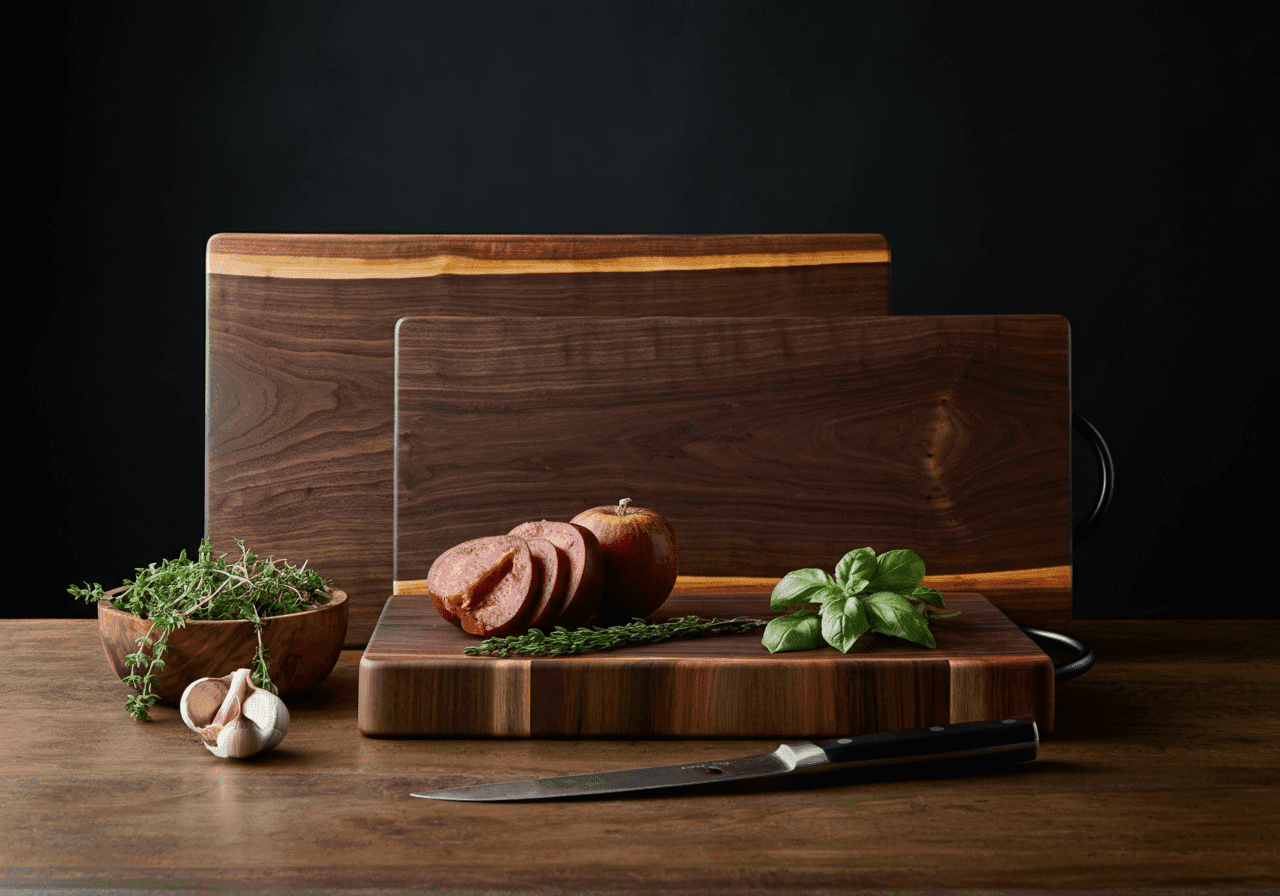

Is a black walnut cutting board right for your kitchen?
Think about your kitchen’s Black walnut cutting boards. It’s the center of your home, where you make things and feel at ease. Now, picture adding a piece that is both a reliable workhorse and a beautiful statement. A black walnut cutting board can do that. It’s not just a place to chop vegetables; it’s a piece of natural art that adds warmth and personality to your daily life.
It might seem like a small choice, but picking the right cutting board can really affect how you cook, your knives, and even how safe your food is. A good board makes getting ready fun. A bad one can dull your blades or hold bacteria.
This article will cover everything you need to know about the black walnut cutting board to decide if this stylish and popular choice is right for your kitchen.
Table of Contents
- What is a black walnut cutting board?
- Why choose black walnut for your cutting board?
- Potential downsides of a walnut board
- How to care for your black walnut cutting board
- The verdict: a worthy kitchen investment?
- Frequently Asked Questions
What is a black walnut cutting board?
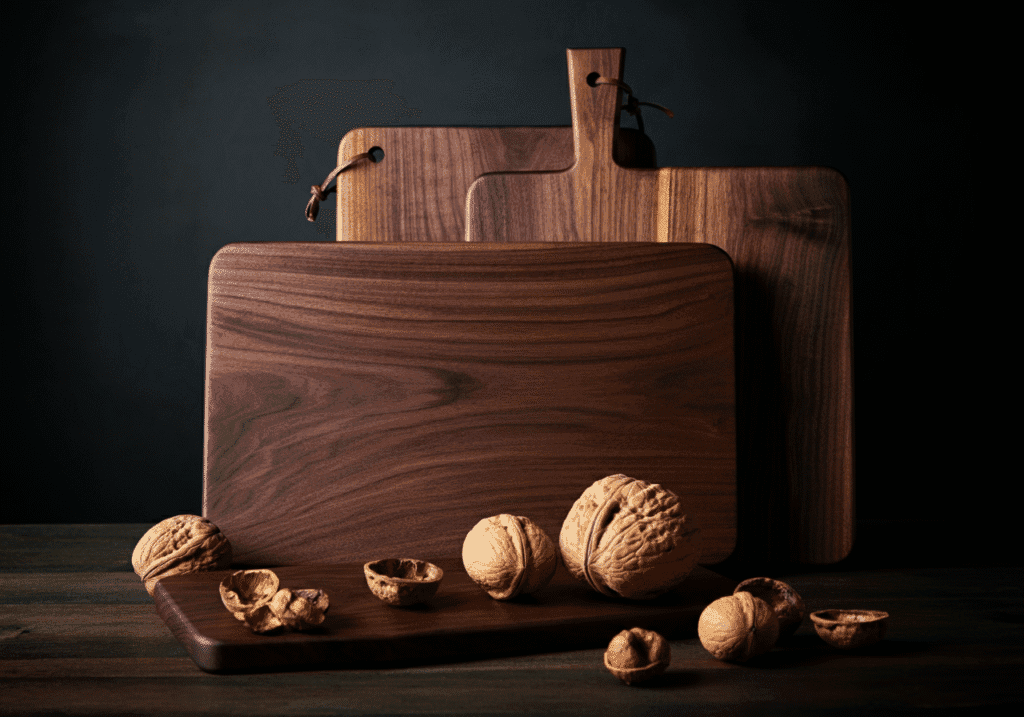
The wood of the Juglans nigra tree, which is native to North America, is used to make a black walnut cutting board. People love this wood because of its deep, rich brown colors, which can be anything from a light brown sapwood to a dark, chocolate-colored heartwood. The grain is usually straight, but sometimes it has beautiful waves or curls, which makes each board different.
People often call these boards “end grain” or “edge grain.”
- To make end-grain boards of wood are glued together to make end-grain boards with the grain going up and down. They are well-known for being easy on knives and for having a “self-healing” quality that lets knife cuts close up over time.
- Edge-grain boards are made up of parallel strips of wood. They are a more durable and less expensive option..
Both kinds show off the unique beauty of black walnut, making them a valuable and beautiful addition to any kitchen.
Why choose black walnut for your cutting board?
A black walnut cutting board is a good choice for your kitchen because it looks useful.
The benefits
- Knife-Friendly: The Janka hardness rating for walnut is about 1,010 lbf. This makes it tough enough to last, but soft enough that it won’t dull your expensive knives too soon. Using boards made of bamboo or plastic will dull your blades faster than using these.
- Black walnut is a hardwood with closed grains, which makes it naturally strong. This means that its pores are small, which makes it naturally resistant to moisture, bacteria, and stains. A walnut board can last long if you take care of it.
- Stunning Looks: Let’s be honest, a big part of why people like it is how it looks. A black walnut cutting board is a showpiece because of its deep, rich color and beautiful grain patterns. It can also be a lovely cheese, meat, or snack serving platter.
- Food Safe: Walnut wood has remarkable natural qualities that stop bacteria from growing! It makes a safe and clean place for all your cooking activities if you take care of it.
Possible problems with a walnut board
Black walnut is a great choice, but there are a few things to consider.
The challenges
- Price: You have to pay for quality. Because black walnut is a high-quality hardwood, these cutting boards are usually more expensive than those made from maple, beech, or plastic. The price is based on the wood’s quality and the craftsman’s skill.
- Like all hardwood cutting boards, a black walnut board must be taken care of regularly to keep in good form. This means that every once in a while, you should wash it by hand, dry it completely, and oil it with a food-safe mineral to protect it from drying out and cracking. You should never put anything in the dishwasher.
- Weight: Black walnut is a heavy wood; thus, a big, thick cutting board can be hefty. This makes it more solid on the counter, but it may be challenging for certain people to move and clean.
How to take care of your black walnut cutting board
It’s easy to take care of your board, and it will look wonderful and operate well in your kitchen for years.
Daily cleaning:
- Use a soft sponge, warm water, and a little mild dish soap to clean the board after you’re done.
- Make sure to rinse it well.
- Use a clean towel to dry it immediately, then let it air dry thoroughly, standing it on its edge so that air can get to all sides.
Monthly conditioning:
- Once a month, or whenever the wood looks dry, put a thick coat of food-grade mineral oil on all sides of the board.
- Allow the oil to sit for a few hours or overnight.
- Use a clean cloth to wipe off any extra oil. For even more water resistance, you can also use a board cream that has beeswax in it..
These simple steps prevent the wood from drying, splitting, or warping.
Is it worth the money to buy this for the kitchen?
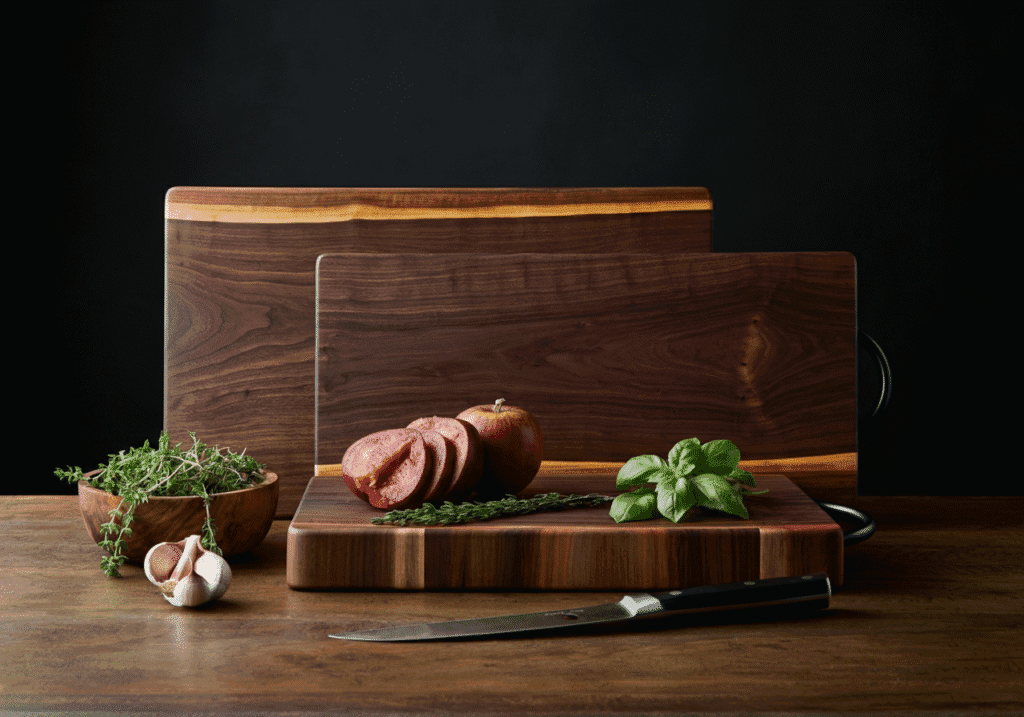
A black walnut cutting board is a good investment because it looks good, works well, and lasts long. It keeps your knives safe, gives you a secure and long-lasting surface to prepare food on, and adds a touch of natural beauty to your kitchen counter. It costs more up front and needs a little more care than other materials, but its long life and good performance make it a good choice for home cooks and professional chefs.
A black walnut cutting board is an excellent addition to your kitchen if you like fine craftsmanship and want a tool that makes cooking easier daily. It reminds me daily of the simple beauty of well-made, natural things.
Frequently Asked Questions
Is black walnut good for a cutting board?
Yes, that’s a great choice. Black walnut is the proper hardness to last long without dulling knives. It has a closed-grain structure that makes it naturally water-resistant and clean, and its beautiful look is a big plus.
What is the healthiest cutting board to use?
People often think wood cutting boards, like those made from walnut or maple, are perfect for you. Because of their naturally porous structure, bacteria can get stuck in them and die as the board dries. Researchers at the University of Wisconsin found that wood cutting boards killed bacteria better than plastic ones. Cleaning and drying it well after each use is the most important thing.
What wood should be avoided for cutting boards?
Don’t use open-grained woods like ash and oak. Their big pores can hold food and moisture, which makes them hard to clean and could be a place for bacteria to grow. You should also avoid very soft woods like pine because knives can easily damage them, and tough woods because they can quickly dull your knife blades..
Why are walnut cutting boards so expensive?
Several things affect the price. Black walnut is a high-quality hardwood from the United States prized for its color and grain. It takes a long time for the trees to grow up. Making a high-quality end-grain or edge-grain board is also a time-consuming process that requires skill and accuracy, which raises the cost even more.