


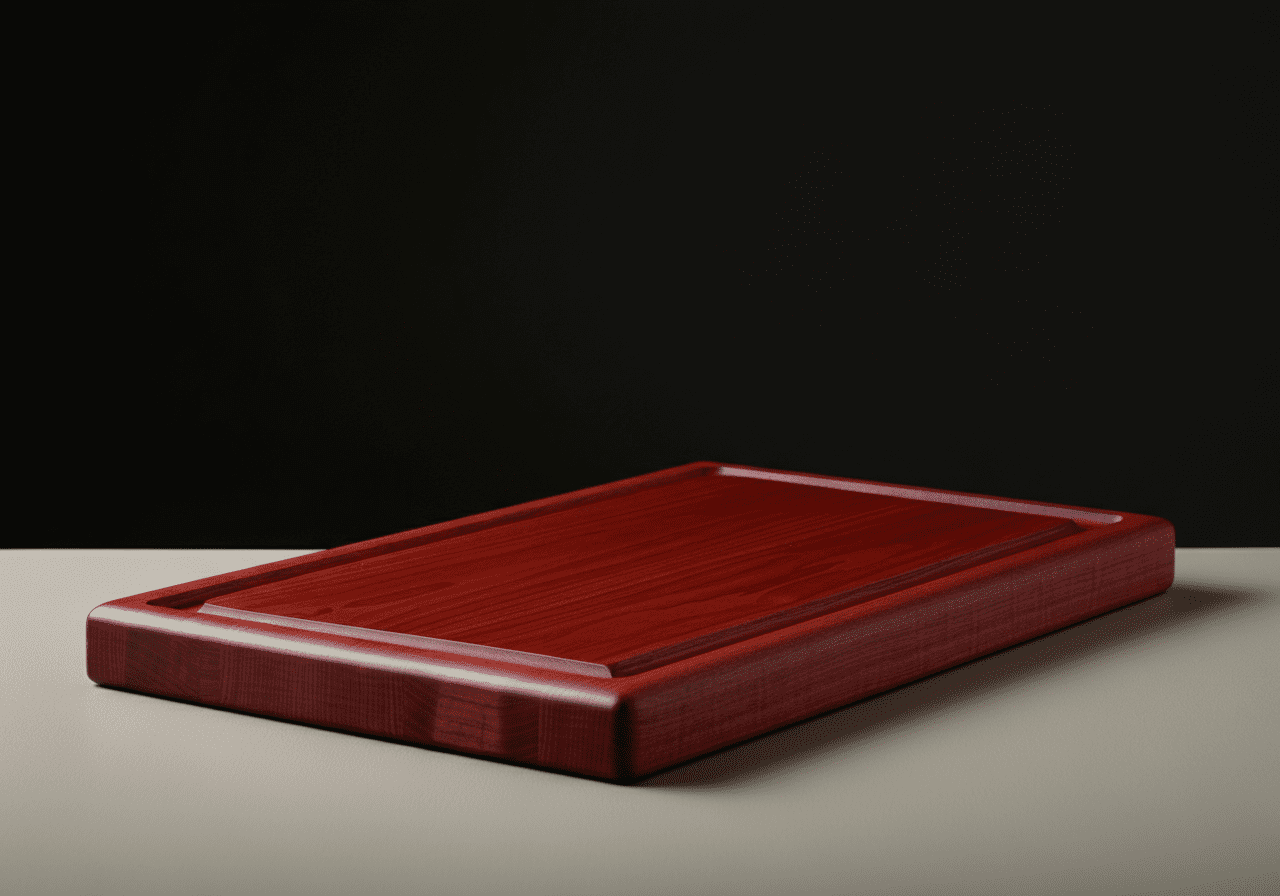

Are Cherry Wood Cutting Boards Any Good?
I can picture my grandmother’s kitchen. It was the heart of her house, and the smells of baking bread and simmering stews filled it. There was always a deep reddish-brown cutting board on her counter with the faint scars of many meals made with love. I later found out that the board was made of cherry wood. It was more than just a tool; it was part of our family’s story.
It’s hard to resist the warmth and charm of cherry wood cutting boards. They’re not just a place to chop vegetables; they’re a statement piece and a touch of natural beauty in your kitchen. But are they really useful, or do they look good?
This guide will teach you everything you need to know about cutting boards made of cherry wood. We’ll examine their pros and cons and compare them to other popular woods. You’ll know by the end if a cherry wood cutting board is a good fit for your kitchen.
Table of Contents
- What is a Cherry Wood Cutting Board?
- Why Choose a Cherry Wood Cutting Board?
- The Not-So-Sweet Side of Cherry Wood
- Cherry vs. The Competition: A Wood-Off
- Caring for Your Cherry Cutting Boards
- Final Thoughts: Is Cherry the Choice for You?
- Frequently Asked Questions
What is a Cherry Wood Cutting Board?
A cherry wood cutting board is a chopping surface made from the wood of a cherry tree, usually the American Black Cherry (Prunus serotina). Cherry wood has a beautiful, deep color that gets better with age. It’s fine, straight grain gives it a smooth, even look.
People like these boards not only because they look nice, but also because they are made of hardwood. They have many different styles, from simple, flat-grain boards to more complex end-grain or edge-grain constructions. Each one has its own level of durability and visual appeal. You’re adding classic, functional art to your kitchen by choosing a cherry wood board.

Why Choose a Cherry Wood Cutting Board?
So, what makes cherry a good choice for your countertop? There are many reasons to love this wood, it turns out.
It’s Kind to Your Knives
One of the best things about cherry wood is how hard it is. Cherry wood is comfortable at 950 lbf (pounds-force) on the Janka hardness scale, which measures how hard it is to dent. It’s a hardwood, but it’s not as hard as other popular choices like maple (1,450 lbf) or hickory (1,820 lbf).
What does this mean for you? It’s the right place. A cherry board is strong enough to handle daily chopping but soft enough to keep your kitchen knives from getting dull. If a board is too hard, it can quickly dull your blades, making your quick slicing into a frustrating sawing motion. Cherry keeps your knives sharper for longer.
Naturally Hygienic Properties
Cherry is a closed-grain wood, which is common in hardwoods. This means that its pores are , which makes it hard for stains, bacteria, and moisture to get through. A cherry wood cutting board can be an immaculate way to prepare food if you care for it properly. Research like that conducted by the University of Wisconsin’s Food Research Institute has demonstrated that wooden cutting boards possess inherent antimicrobial properties, frequently rendering them safer than plastic over time..
Stunning Good Looks
Let’s be honest: looks matter. A cutting board made of cherry wood is just beautiful. It starts as a light pinkish-brown and gets darker to a deep reddish-brown color when exposed to light. Many people love this process of getting older, which is called developing a patina. It means that the board changes over time as you use it, telling the story of how you use it. The smooth grain and warm colors make it a great serving platter for cheeses, fruits, or charcuterie. It can easily go from being a prep tool to a presentation piece.
The Not-So-Sweet Side of Cherry Wood
There is no perfect material, and cherry wood is no different. Before you go out and buy one, think about a few possible problems.
The main problem is that it is softer than other hardwoods. Cherry wood is easy to cut, which is a good thing, but it also means that it is more likely to get scratched and dented than a rigid maple board. You might notice wear and tear more quickly if you chop hard or plan to use a meat cleaver.
Another thing to think about is how to keep it up. Like all wooden cutting boards, a cherry board needs regular care to stay in good shape. You can only wash it by hand (never put it in the dishwasher!), dry it completely, and oil it occasionally with a food-safe mineral oil or board cream. The wood could dry out, warp, or even crack if you don’t care.
Cherry vs. The Competition: A Wood-Off
How does cherry stack up against other popular cutting board woods?
- Cherry vs. Maple: Maple is the wood that people use the most. It’s tougher, lasts longer, and is often less expensive. On the other hand, some people think it’s pale, and the look is a little plain compared to Cherry’s. Cherry is easier on knives, but maple is better at resisting scratches.
- Cherry vs. Walnut: Walnut is another dark, beautiful wood often used for boards. It has a Janka rating of 1,010 lbf, which means it’s a little harder than cherry. People also like that it’s easy to cut with a knife. The choice between cherry and walnut often comes down to color. Walnut has deep, chocolatey browns, while cherry has warm, reddish tones.
- Cherry vs. Teak: Teak is different. It lasts long and doesn’t get wet because it has a lot of oil and silica. The bad part? That same amount of silica can be tough on knife edges, making them dull much faster than cherry. Teak is also often more expensive, and depending on where it comes from, it raises questions about how sustainable it is..
| Wood Type | Janka Hardness (lbf) | Knife Friendliness | Maintenance | Appearance |
|---|---|---|---|---|
| Cherry | 950 | High | Moderate | Warm, reddish, darkens over time |
| Maple | 1,450 | Medium | Moderate | Light, creamy, uniform |
| Walnut | 1,010 | High | Moderate | Rich, dark brown |
| Teak | 1,070 | Low | Low | Golden brown, high oil content |
Caring for Your Cherry Cutting Board
It’s one thing to get a nice cherry wood board; it’s another to keep it nice. I learned this the hard way when my first board bent into a sad, wobbly curve. Here’s how to not make the same mistakes I did:
- Wash by Hand: After each use, wash it with warm, soapy water. Do not ever put it in the dishwasher or water.
- Dry Immediately: Wipe the board down with a towel and let it air dry by standing it on its edge so that air can get to all sides.
- Oil Regularly: Once a month, or whenever it looks dry, put on a thick layer of food-safe mineral oil or a special board cream. Let it sit for a few hours or overnight, then wipe off any extra. This keeps the wood from cracking and keeps it moist.
Final Thoughts: Is Cherry the Choice for You?
If you care about how your kitchen looks, how well it works, and how to care for your knives, a cherry wood cutting board is a great choice. Few other materials match the warmth and elegance it adds to the kitchen. It may get a few more battle scars over time than a more complicated wood like maple, but many think these marks add to its charm because they show how many great meals were shared.
A cherry wood cutting board could be the perfect new addition to your kitchen if you’re willing to give it a little love and care every month and like tools that improve with age. It might become the center of your kitchen, just like my grandmother’s.
Frequently Asked Questions
Is cherry a good wood for a cutting board?
Yes, cherry wood is an excellent choice for a cutting board. It lasts a long time, but it’s softer than some other hardwoods, which helps keep your knives sharp. Cherry wood is also known for its beautiful grain and warm, rich color that gets darker over time.
What is the healthiest wood for a cutting board?
People often think that maple, walnut, and beech are the healthiest woods for cutting boards. These woods have tight grains that make them dense and less likely to hold bacteria. They also don’t get knife scars easily.
What wood to avoid for cutting boards?
You should avoid softwoods like pine and cedar when picking out a cutting board. Knives can easily damage these woods because they are less dense, leaving grooves and cuts where bacteria can grow.
More Explore:
- Best Cheese Cutting Boards for Entertaining
- Cutting Board Feet: Enhance Stability and Style
- Why Cutting Board Feet Matter
- Black walnut cutting board: a complete guide
- Olive Wood Cutting Board – Premium Quality & Durability
References
- The Wood Database. (n.d.). Black Cherry. https://www.wood-database.com/black-cherry/
- Cliver, D. O. (1994). Plastic and Wooden Cutting Boards. Food Research Institute, University of Wisconsin-Madison.