



I remember the first time I used a real commercial induction Cooktop. I was helping a friend cater a small event, and I was really surprised at how quickly that water boiled. It wasn’t just “fast”; it was right away. I realised I had been missing out after years of dealing with gas flames that were hard to control and electric coils that were uneven in my own rental kitchen.
But it’s not always easy to bring commercial equipment into a home. Yes, it’s strong, but it can be loud, and the style is more “industrial chic” than “cosy kitchen.” But if you really care about speed and accuracy, a portable commercial unit might be the best thing you buy this year. I’ve tried a few to see if they live up to the hype, so let’s get started.
Introduction
You’re not the only one who has watched a pot of water and begged it to boil faster. Cooking should be fun, but stoves that are slow and don’t respond can make dinner prep feel like a game of waiting. This is where the commercial induction Cooktop comes in. Originally made for busy restaurant kitchens where every second counts, these strong units are now making their way into home kitchens.
But why change? Instead of heating a coil or a flame, a commercial induction Cooktop uses electromagnetic energy to heat the pan directly. This makes things very accurate and efficient. Induction gives you the control you need to sear a steak perfectly or melt chocolate without burning it.
We will go over everything you need to know about these units in this guide. We will talk about how well they work, who they are really for, and whether the money you spend on them is worth it for your daily cooking.
Product Overview: What Makes it “Commercial”?
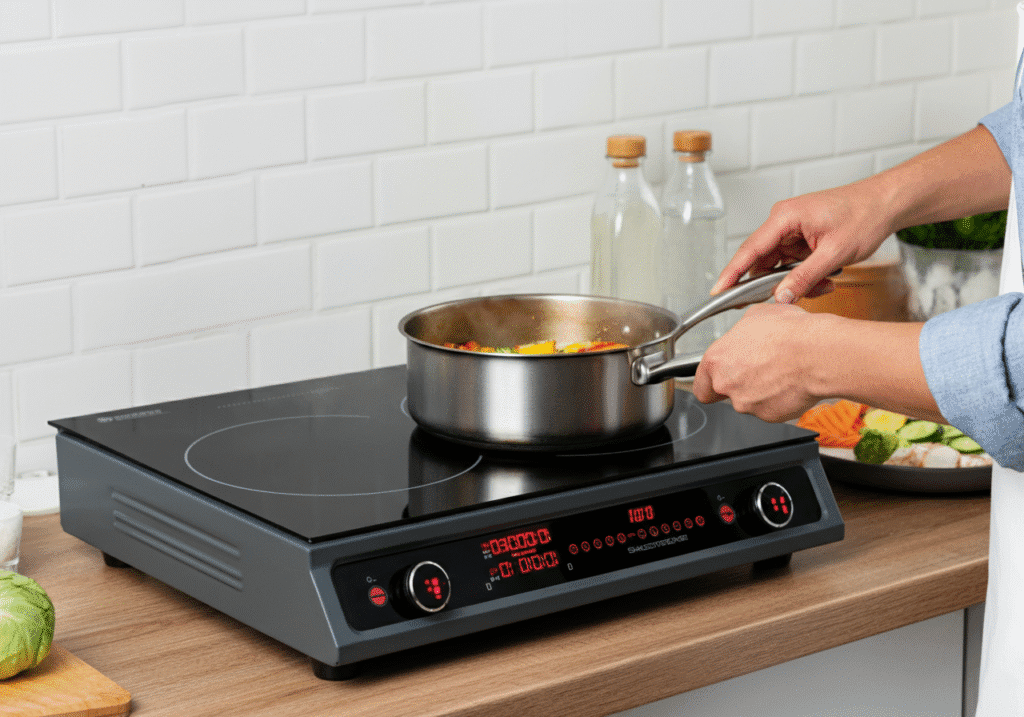
A commercial induction Cooktop is more than just a regular portable burner that you might use when camping. Commercial units are made to last through the tough use that professionals put them through. They usually have bodies made of stainless steel, glass-ceramic surfaces that can handle a lot of wear and tear, and cooling fans that can run for hours without getting too hot.
Standard home induction plates can only reach 1500 watts, but commercial units can start at 1800 watts and go up to 3500 watts (though you’ll need a special outlet for the higher wattage models). An 1800-watt commercial-grade portable unit is usually the best choice for home cooks. It plugs into a standard outlet and lasts longer, and controls temperature better than consumer models.
Key Features to Look For
Not all induction cooktops are the same. Here are the most important things to look for in a commercial-grade unit:
1. Power and Wattage
Power is the main reason people are interested. Find a unit that has at least 1800 watts. This makes sure you have enough power for quick boiling and high-heat searing.
2. Temperature Precision
The “pulse” effect is one of the most annoying things about cheap cooktops. It means that the unit blasts full heat, then turns off, then blasts again to keep the food at a simmer. High-quality commercial units let you set the temperature very precisely (usually in 5- or 10-degree steps) so that the simmer stays steady.
3. Build Materials
You need a housing made of stainless steel. Heavy cast-iron pans can crack plastic bodies, and if they get too close to other heat sources, they can warp.
4. Control Panel
In business settings, people often like physical knobs better than touchscreens because they are easier to use when your hands are wet or greasy. But a lot of modern units now have touch controls that respond to touch and are easy to clean.
Design & Build Quality
Tools for commercial kitchens put function over form, but that doesn’t mean they can’t look nice. Most commercial induction cooktops have a boxy, strong look. It feels strong on the counter. The surface of glass-ceramic is usually thicker than that of residential models. This is because it is meant to withstand the impact of a saute pan being set down too hard.
Another thing to notice about the design is the cooling fans. These units need airflow because the electronics work hard. This means that there will be vents on the sides or back. It also means they aren’t quiet, but we’ll talk about that in the performance section.
Performance: The Real-World Test
I used a 1800-watt commercial unit for two weeks to see how well it could handle my daily meal rotation. Here is the breakdown:
- Boiling Water: It boiled a big pot of pasta water in less than five minutes, which is a lot faster than my gas range.
- Searing: I seared the steaks in a cast-iron skillet. The heat recovery happened right away. The pan didn’t lose heat when I dropped the cold steak in; it kept sizzling.
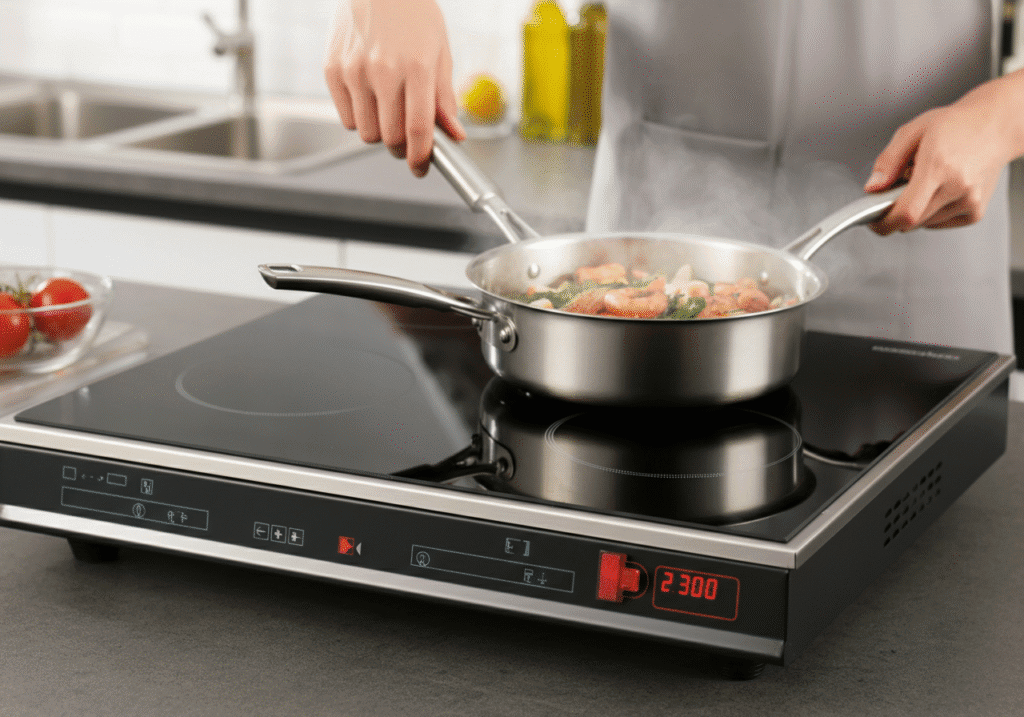
- Simmering: This was the real test. I made a light beurre blanc sauce. The commercial unit kept a steady temperature on low settings without breaking the sauce. Cheaper models often turn on and off, which can damage delicate dishes.
Ease of Use
Don’t worry if you think “commercial” means “hard.” These units are surprisingly easy to use. Most of them have a simple power button and a dial or buttons to change the temperature or power level (usually 1–10).
Cleaning might be the best part. The pan heats up, but the surface doesn’t get as hot as a gas grate or electric coil, so spills don’t bake onto the glass. A quick wipe with a wet cloth after cooking is usually all it takes to make it look new again.
Pros and Cons
To give you a clear picture, here is a quick breakdown of the advantages and disadvantages.
Pros:
- Speed: It heats up very quickly, which saves you time on weeknights.
- Efficiency: 90% of the energy goes into the food, while only about 40% goes into petrol.
- Durability: Made with strong materials that will last.
- Safety: There is no open flame, and the unit turns off if it doesn’t see a pan.
- Cleaning is easy: the flat glass surface wipes clean in seconds.
Cons:
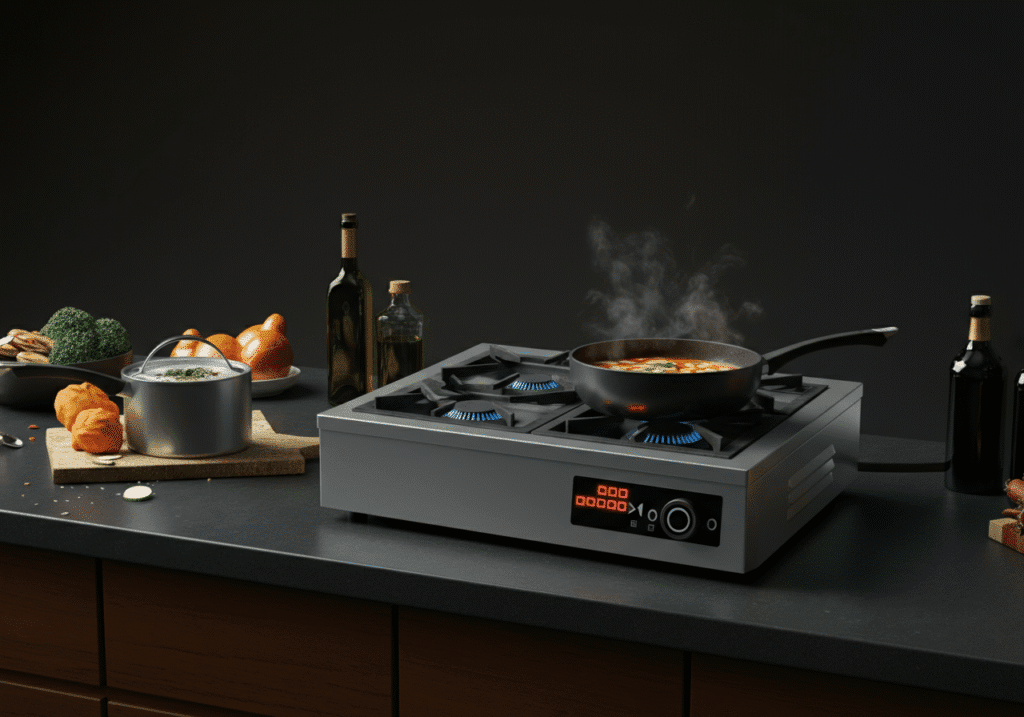
- Noise: The cooling fans can be loud, like a microwave running.
- Restrictions on cookware: You can only use magnetic cookware, like cast iron or stainless steel. Copper or aluminium won’t work.
- Size: They can be big and take up space on the counter.
Comparison with Competitors
When looking at the market, you generally have two categories: Consumer Portable vs. Commercial Portable.
- Consumer Portable (e.g., IKEA, Basic Brands): These are thinner and less expensive (usually less than £50). But they often don’t have good temperature control, and their plastic bodies can break. They work well for boiling water, but not so well for simmering.
- Commercial Portable (e.g., Volrath, Duxtop Professional): These are more expensive (over £100), but they are more durable and accurate, as we talked about above. If you cook every day, the price increase is worth it because the performance is better.
Pricing & Value for Money
You might be wondering if it’s worth it to spend the extra money. Most good commercial induction cooktops cost between £100 and £300. This is more than a regular hot plate, but think about how long it will last.
You haven’t saved money if you buy a £40 unit that breaks after a year or makes you angry by burning rice. When you buy a semi-pro unit, you get a reliable cooking station that can be used as a second burner for holidays, a main stove for renovations, or a high-power searing station for years to come. This is a great deal for people who want to save money and care about quality (our “buy it once” philosophy).
User Reviews & Ratings
People who buy commercial induction units on different retail sites usually give them a high rating (4.5 out of 5 stars).
Common Praise:
- “I can’t believe I used electric coils to cook for so long. This made a big difference in my life.
- “Just right for my small apartment kitchen, where I don’t have a full cooker.”
Common Complaints:
- “The noise from the fans takes some getting used to.”
- “I had to get new pans because the old aluminium ones didn’t work.”
Who Should Buy This Product?
Is this right for you? Let’s look at who benefits the most:
- The Renter: You can just put this on top of your rental’s bad stove and forget about it.
- The Student: Great for dorms (if allowed) or shared housing where you can’t use the stove very often.
- The Renovator: If you’re tearing down your kitchen, this will be your best friend for quick meals.
- The Precision Cook: If you love making candy or sous vide, being able to control the exact temperature is a big deal.
Tips for Best Use
To get the most out of your new cooktop, keep these tips in mind:
- Check Your Pans: Try the magnet test. A fridge magnet that sticks well to the bottom of your pan will work.
- Give it Space: Don’t put the unit right up against a wall. To keep the electronics cool, the vents need space to breathe.
- Start Low: It’s easy to burn food if you start on “High,” as you would on an electric stove, because it heats up so quickly. Start at a medium setting.
Frequently Asked Questions (FAQ)
What is the common problem in an induction stove?
Most of the time, the problem has to do with the cookware. The cooker won’t turn on if the pan isn’t magnetic or if the bottom is bent. Also, some users find the fan noise annoying, even though this is normal for how the machine works.
What are the disadvantages of an induction cooktop?
The main problem is that you need special cookware. For example, your favourite copper or aluminium pot won’t work unless it has a magnetic base. You also can’t cook if the power goes out, but you can light a gas cooker with a match. Lastly, if you slide rough cast-iron pans across the glass surface, it could scratch.
Why don’t chefs use induction cooktops?
A lot of modern chefs do use them, though! Some traditional chefs don’t like them, though, because they are used to seeing a flame to tell how hot something is. Also, rough methods like “pan tossing” can be harder on glass than on heavy iron grates. Induction is becoming very popular in professional kitchens, though, because it allows for precise work (like making sauces) and keeps the kitchen cool.
Conclusion:
A commercial induction Cooktop is a great tool that combines the power of a professional kitchen with the ease of use of a home kitchen. It cooks food faster, safer, and with less energy than other methods.
The performance boost is clear, even if you don’t like the industrial design or the fan noise. This is a smart, useful purchase for anyone who has a cooker that doesn’t work well or who wants to add a high-power hob to their collection. It will make cooking dinner faster and easier.
My Opinion: I highly recommend this for people who love to cook at home and value speed and accuracy over quiet.