
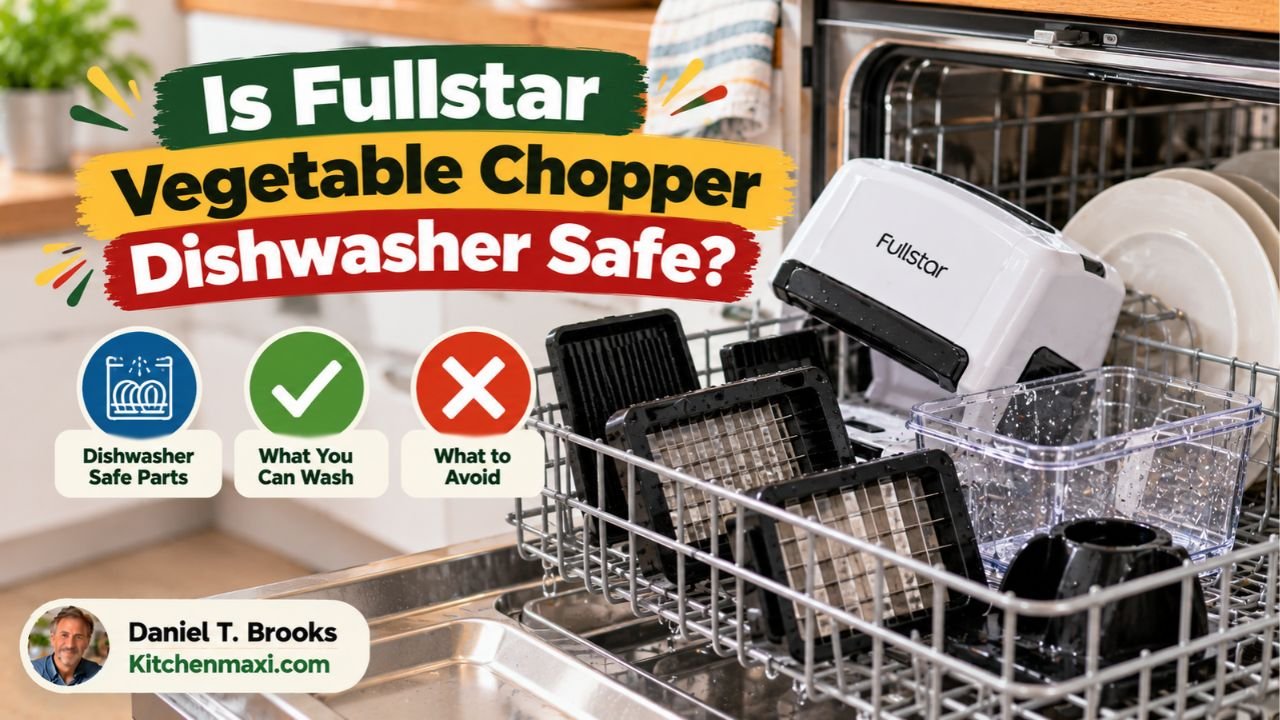
Is Fullstar Vegetable Chopper Dishwasher Safe? Cleaning Guide
Many Fullstar manual vegetable choppers are dishwasher safe, but the top rack is the safest placement for the plastic container, lid, blade inserts, and attachments when the model instructions permit dishwasher cleaning. Rinsing food from the blades before loading them also prevents dried onion, tomato, cheese, or vegetable pieces from remaining trapped in the cutting grid.
Fullstar sells several chopper designs, including 4-in-1, 6-in-1, 9-in-1, and larger multi-blade models. Care instructions can vary slightly between versions, so the exact model manual should take priority over general advice.
Fullstar documentation for several popular manual choppers lists the parts as dishwasher safe and specifies top-rack placement. The 9-in-1 manual, for example, says used parts can be cleaned under running water with mild detergent or placed on the dishwasher’s top rack.
So, is Fullstar vegetable chopper dishwasher safe? For many of the brand’s current manual choppers, yes. The important detail is to use the top rack, remove trapped food first, handle the stainless steel blades carefully, and dry the components before storing them.
The dishwasher may save cleanup time, but hand rinsing still matters. Small pieces of onion skin, carrot, tomato, cheese, or potato can wedge between the dicing blades and pusher grid where dishwasher spray may not reach easily.
A simple routine is to disassemble the chopper, rinse the blades immediately, use the included cleaning brush or scraper on trapped food, then place dishwasher-safe parts on the top rack or wash them by hand.
Which Fullstar Vegetable Chopper Parts Are Dishwasher Safe?
For several popular Fullstar models, the main components and attachments are listed as dishwasher safe.
These commonly include:
- Collection container
- Chopper lid
- Dicing inserts
- Slicing attachments
- Grating attachments
- Spiralizer parts
- Finger guard
- Other removable manual attachments
Fullstar’s 6-in-1 instruction material states that the vegetable chopper and its attachments are dishwasher safe, while the Original Pro instructions also direct users to place the parts on the top rack.
Fullstar Collection Container
The clear or tinted plastic collection tray can generally go on the top rack when the model is labeled dishwasher safe.
Remove:
- Chopped vegetables
- Juice
- Seeds
- Food scraps
before loading it.
Placing the container upside down helps water drain during the cycle.
Fullstar Chopper Lid
Many Fullstar manual chopper lids are also dishwasher safe.
Before loading the lid, inspect the pusher grid.
Food can become packed into the small squares after chopping:
- Onion
- Potato
- Bell pepper
- Cucumber
- Tomato
Use the supplied cleaning tool to loosen trapped food before putting the lid into the dishwasher.
Fullstar Blade Inserts
The removable stainless steel blade inserts are commonly listed among the dishwasher-safe components.
These are also the parts that need the most careful handling.
Never push food out of a dicing grid with your fingers.
Use the supplied:
- Brush
- Scraper
- Cleaning pick
or rinse the insert from the safe side of the blade.
Key Takeaway: Many Fullstar chopper containers, lids, blades, and attachments are dishwasher safe, but confirm the instructions for your exact model and use top-rack placement when specified.
Why Fullstar Vegetable Chopper Parts Should Go on the Top Rack

The top rack keeps plastic components farther away from the dishwasher’s strongest heating area.
This matters because a Fullstar chopper contains more plastic parts than a typical metal kitchen knife.
High heat can place unnecessary stress on:
- Collection bins
- Lids
- Blade frames
- Finger guards
- Plastic locking parts
Fullstar documentation for multiple versions specifically points to top-rack dishwasher cleaning.
Top-Rack Placement Reduces Heat Exposure
Many dishwashers have heating elements near the bottom.
The lower rack can expose plastic kitchen tools to more direct heat.
Top-rack placement keeps the chopper parts farther from that heat source.
Secure Small Fullstar Attachments
Smaller attachments should not be allowed to fall through the dishwasher rack.
Position them where they remain stable throughout the wash cycle.
A dishwasher basket may be useful for very small accessories if they fit safely.
Keep Blades From Contacting Other Items
Do not place sharp Fullstar blade inserts loose where they can:
- Strike glassware
- Scratch dishes
- Become damaged
- Create a hazard during unloading
Secure each blade insert in a stable position.
Key Takeaway: The top rack gives Fullstar plastic chopper parts more distance from strong dishwasher heat and is the placement specified for several Fullstar models.
Should You Wash Fullstar Vegetable Chopper Blades in the Dishwasher?

The blades on several Fullstar choppers are listed as dishwasher safe, but immediate rinsing is still a good habit.
The Fullstar 9-in-1 instructions specifically advise cleaning the blades under running water immediately after use and handling them with extreme care.
Rinse Fullstar Blades Before the Dishwasher
Rinsing prevents food from drying between the narrow cutting edges.
This is useful after chopping foods such as:
- Onion
- Garlic
- Potato
- Carrot
- Tomato
- Cheese
Once food dries inside a dicing grid, it becomes much harder to remove.
Use the Fullstar Cleaning Tools
Many Fullstar choppers include:
- Cleaning brush
- Cleaning scraper
- Cleaning pick
Use the tool intended for the specific section.
Do not push your fingers between the dicing blades.
Check the Blades Before Storage
After dishwasher cleaning, inspect the insert for trapped pieces.
Also make sure it is completely dry.
Moisture left around the metal blade and plastic frame is unnecessary during storage.
Key Takeaway: Fullstar blades may be dishwasher safe on approved models, but rinsing them immediately and removing trapped food before the dishwasher gives a cleaner result.
How to Clean a Fullstar Vegetable Chopper in the Dishwasher

A few preparation steps make dishwasher cleaning much easier.
Step 1: Empty the Fullstar Chopper Container
Remove all chopped food.
Pour out vegetable juice or moisture collected in the bottom.
Step 2: Remove the Blade Insert
Carefully unlock and remove the blade.
Hold it by the plastic frame rather than the cutting edges.
Step 3: Separate Removable Fullstar Chopper Parts
Take apart any removable components according to the model instructions.
This exposes areas that may otherwise trap food.
Step 4: Rinse Off Food Residue
Run water across:
- Blade grid
- Pusher grid
- Lid
- Container
- Slicer
- Grater
- Spiralizer parts
Do this soon after chopping.
Step 5: Use the Cleaning Scraper or Brush
Clear food trapped in corners and between grid openings.
Avoid using:
- Knife tips
- Forks
- Metal picks not intended for the chopper
- Fingers
Step 6: Place Fullstar Parts on the Top Rack
Position dishwasher-safe parts securely.
Keep blade inserts separated from delicate dishes and glasses.
Step 7: Run the Dishwasher
Use your normal dishwasher cycle unless the Fullstar instructions for the model state otherwise.
Extremely high-temperature specialty cycles are unnecessary for routine chopper cleaning.
Step 8: Inspect the Fullstar Chopper Parts
After the cycle, check the blade and pusher grid.
Dishwashers do not always remove vegetable fibers wedged tightly into small openings.
Step 9: Dry Before Reassembly
Let all parts dry fully before putting the chopper back together or storing blades inside the container.
Key Takeaway: Disassemble, rinse, clear the blade grid, place approved parts securely on the dishwasher’s top rack, and dry everything before reassembling the Fullstar vegetable chopper.
How to Hand Wash a Fullstar Vegetable Chopper
Hand washing is useful when you need the chopper again quickly or only a few components became dirty.
Disassemble the Fullstar Chopper
Separate the:
- Container
- Lid
- Blade
- Slicing attachment
- Grater
- Spiralizer attachment
that you used.
Rinse Immediately
Hold the blade by its plastic frame and rinse it under running water.
Direct water through the grid from both directions if food is trapped.
Wash With Warm Soapy Water
Use mild dish soap on the container and plastic parts.
A soft sponge works well for broad surfaces.
Clean Around the Blade Carefully
Use the supplied cleaning brush or scraper rather than a sponge held directly against sharp edges.
Rinse All Fullstar Parts
Remove all:
- Soap
- Vegetable fibers
- Oil
- Food particles
Dry the Chopper Completely
Dry plastic components with a clean towel or let them air-dry.
Make sure the blade insert has no water trapped around its edges.
Key Takeaway: Hand washing works well for Fullstar choppers when the parts are disassembled immediately and the sharp blade grid is cleaned with the supplied tools rather than fingers.
How to Clean Food Stuck in a Fullstar Chopper Blade
The dicing grid is one of the most common places for food to become trapped.
Soft vegetables can press into the narrow openings instead of falling completely through.
Do Not Pull Food Out With Your Fingers
The stainless steel edges are sharp from both obvious and less visible angles.
Even a blade that feels safe from one side can cut skin when pressure is applied.
Use the Fullstar Cleaning Scraper
If your model includes a scraper, use it to remove residue from the pusher or grid.
Rinse From the Opposite Side
Running water through the back of the grid can push food out in the direction it entered.
Clean Before Food Dries
Fresh onion or potato residue is much easier to remove than dried material.
A quick rinse immediately after chopping may save several minutes of later cleaning.
How to Clean the Fullstar Chopper Pusher Grid
The pusher section contains many small raised squares or blocks that press food through the dicing grid.
Small pieces can remain between them.
Remove Loose Food First
Turn the lid over and shake out loose fragments.
Use the Included Cleaning Tool
Run the scraper or brush through the grid openings.
Some Fullstar designs include a removable or self-cleaning pusher component. Follow the mechanism provided with the model.
Rinse From Several Angles
Food may hide around the edges of the grid.
Rotate the lid under running water until all visible pieces are gone.
Dishwasher-Clean After Clearing the Grid
Once large particles are removed, place the dishwasher-safe lid on the top rack.
The dishwasher can handle the remaining grease and small residue more easily.
Key Takeaway: Clear trapped vegetables from the Fullstar pusher grid before dishwasher cleaning so dried food does not remain packed between the small plastic sections.
Can the Fullstar Vegetable Chopper Container Go in the Dishwasher?
For many Fullstar models, yes.
The collection container is included among dishwasher-safe parts on popular versions.
Fullstar’s product documentation for the 4-in-1 chopper identifies the unit as dishwasher safe and instructs users to place parts on the top rack.
The container should still be:
- Emptied
- Rinsed
- Positioned securely
before washing.
Avoid placing heavy cookware on top of the plastic container in the dishwasher.
After washing, inspect the corners for trapped moisture before storage.
Can the Fullstar Vegetable Chopper Lid Go in the Dishwasher?
For many manual Fullstar models, yes, the lid can go on the top rack.
The main issue is not the dishwasher itself but food trapped in the pusher grid.
A dishwasher spray arm may not reach deeply packed onion or potato residue.
Clean the grid manually first.
Then place the lid where:
- It cannot fall through the rack
- It does not block the spray arm
- Water can reach both sides
- Water can drain afterward
If your Fullstar model uses a removable cleaning grid, take it apart according to its instructions before washing.
Can Fullstar Vegetable Chopper Blades Rust in the Dishwasher?
Fullstar uses stainless steel blades on many of its chopper models. Stainless steel resists rust better than ordinary carbon steel, but “stainless” does not mean completely immune to corrosion.
Leaving blades:
- Wet for long periods
- Covered in salty food residue
- Stored before drying
can increase the chance of spotting or corrosion over time.
The simplest routine is:
- Rinse after chopping.
- Wash.
- Dry fully.
- Store in a dry location.
If dishwasher water remains around the blade frame after a cycle, dry it before storage.
Is Hand Washing Better for Fullstar Vegetable Chopper Blades?
Even though many Fullstar blades are dishwasher safe, hand washing is a reasonable option if you want more control over blade care.
Hand washing gives you direct control over:
- Water exposure
- Drying
- Trapped food removal
- Contact with other utensils
It is also quick when the blade is rinsed immediately after chopping.
For the plastic container and lid, the dishwasher may be more convenient.
For the sharp inserts, some owners may prefer a quick hand rinse and wash.
The important point is safety: never wipe directly along a sharp blade edge with your fingers inside a sponge or cloth.
Can You Put the Entire Fullstar Vegetable Chopper in the Dishwasher Assembled?
It is better to disassemble it first.
An assembled chopper can trap:
- Food
- Water
- Detergent
between the lid, blade frame, pusher, and container.
Separated parts receive more direct spray.
Disassembly also lets you inspect the cutting grid before loading it.
Remove the interchangeable blade and any attachments according to the model instructions.
Place the individual dishwasher-safe components securely on the top rack.
What Dishwasher Cycle Should You Use for a Fullstar Vegetable Chopper?
A normal dishwasher cycle is usually enough for vegetable residue and kitchen grease.
There is little reason to use an unusually aggressive high-heat cycle solely for the chopper.
The main priorities are:
- Top-rack placement
- Proper disassembly
- Secure blade positioning
- Full drying
If your dishwasher has an extremely hot sanitizing cycle, check the Fullstar model instructions before using it on plastic chopper parts.
Dishwasher-safe does not necessarily mean every plastic part should be exposed repeatedly to the highest temperature the dishwasher can produce.
How to Prevent Fullstar Vegetable Chopper Stains
Foods with strong pigments can discolor plastic if residue remains for a long time.
Common examples include:
- Tomato
- Carrot
- Beet
- Turmeric-seasoned foods
- Red pepper
Rinse the Fullstar Container Immediately
Do not leave chopped tomato juice sitting in the collection tray for hours.
Wash Soon After Use
Fresh food pigments are easier to remove than dried stains.
Avoid Abrasive Scrubbing
A rough scouring pad can scratch clear plastic.
Scratches may make future staining more noticeable.
Do Not Use Harsh Chemicals Without Checking the Manual
Strong cleaners may damage plastic or leave unwanted residue.
Mild dish soap is sufficient for normal cleaning.
Key Takeaway: Rinsing Fullstar plastic parts immediately after strongly colored foods reduces staining without requiring harsh cleaners or abrasive scrubbers.
How to Store a Fullstar Vegetable Chopper After Dishwasher Cleaning
Do not put the chopper away while water remains inside the container or around the blades.
Dry the Fullstar Blade Inserts
Inspect both sides.
Water can remain where the stainless steel meets the plastic frame.
Dry the Collection Container
Turn it upside down until all water drains.
Keep Sharp Blades Protected
Use the supplied organizer or storage system if your model includes one.
Do not leave loose dicing inserts in a drawer where someone can reach into the sharp edges accidentally.
Reassemble Only When Dry
Trapping moisture inside the closed container is unnecessary.
Let each component finish drying before storage.
Common Fullstar Vegetable Chopper Dishwasher Mistakes
Dishwasher-safe parts can still be handled incorrectly.
Putting Fullstar Parts on the Bottom Rack
Several Fullstar instructions specify top-rack placement.
Use the recommended rack.
Leaving Food Packed in the Blade Grid
The dishwasher may not remove densely trapped vegetable pieces.
Rinse and scrape first.
Handling the Blade With Bare Fingers
Hold blade inserts by their plastic frame.
Washing the Fullstar Chopper Fully Assembled
Separated components receive better water flow.
Storing Wet Blades
Dry the cutting inserts before placing them into an enclosed container.
Assuming Every Fullstar Model Has Identical Care Instructions
Fullstar sells many chopper versions.
Always check the care directions for the model you own.
Key Takeaway: Top-rack placement, pre-rinsing, disassembly, safe blade handling, and full drying are more important than simply dropping the assembled Fullstar chopper into the dishwasher.
Conclusion
For is Fullstar vegetable chopper dishwasher safe, the answer is yes for many popular Fullstar manual chopper models. Current instructions for models such as the 4-in-1, 6-in-1, 9-in-1, and Original Pro versions describe dishwasher-safe components, with top-rack placement specified for several of them.
The best cleaning routine is to disassemble the chopper first. Rinse the blade and pusher grid immediately, clear trapped vegetable pieces with the included cleaning tool, and then load approved parts securely on the top rack.
The stainless steel blades deserve extra attention even when they are dishwasher safe. Handle them by the plastic frame, keep them away from other loose utensils, and dry them fully before storage.
Because Fullstar sells multiple versions, check the manual or care label for the exact model you own. If it specifies top-rack dishwasher cleaning, follow that instruction rather than treating every chopper configuration exactly the same.
FAQs About Fullstar Vegetable Chopper Dishwasher Cleaning
Are all Fullstar vegetable chopper parts dishwasher safe?
Many popular Fullstar manual choppers list the container, lid, blades, and attachments as dishwasher safe. Care instructions can vary between models, so check the manual for your exact version before washing every component in the dishwasher.
Can Fullstar vegetable chopper blades go in the dishwasher?
Yes, blade inserts on several Fullstar models are listed as dishwasher safe. Top-rack placement is commonly specified. Rinse food from the grid first and handle the blades by their plastic frame.
Should I put my Fullstar vegetable chopper on the top or bottom dishwasher rack?
Use the top rack when the Fullstar instructions specify dishwasher cleaning. Several model manuals and Fullstar product materials specifically identify top-rack dishwasher placement.
Do I need to rinse my Fullstar chopper before putting it in the dishwasher?
Yes. A quick rinse removes vegetable juice and prevents food from drying inside the dicing grid. Use the supplied scraper or brush for onion, potato, tomato, or other food trapped between the blades.
Can I wash the Fullstar chopper without removing the blade?
Disassembling it first is better. Removing the blade exposes hidden areas to dishwasher spray and makes it easier to clear trapped food before washing.
Can I hand wash a Fullstar vegetable chopper instead?
Yes. Wash the plastic parts with warm soapy water and use the supplied cleaning tools around the sharp blade inserts. Hand washing is also convenient when only one or two attachments were used.
Why is food still stuck in my Fullstar blade after the dishwasher?
Food can become tightly wedged inside the small dicing grid where dishwasher spray cannot reach. Clear these areas with the provided brush, scraper, or pick before loading the blade.
Should Fullstar vegetable chopper parts be dried before storage?
Yes. Dry the container, lid, and blade inserts completely before storing them. Pay special attention to moisture around the stainless steel blade edges and plastic frame.