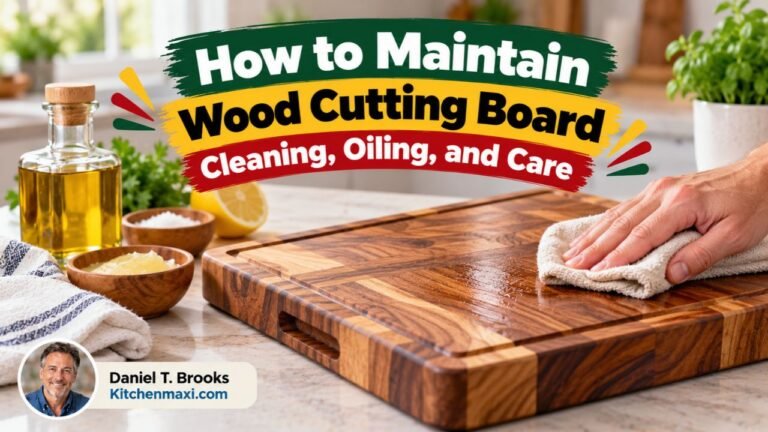
How Many Coats of Mineral Oil on Cutting Board Are Needed?
Most new or very dry wooden cutting boards need about 3–5 applications of food-grade mineral oil before the wood is well saturated. For routine maintenance, one generous coat is usually enough. End-grain boards may absorb more oil and sometimes need extra applications compared with edge-grain or face-grain boards.
The exact number changes with the wood species, grain orientation, age of the board, and how dry it is. A board that has never been conditioned can absorb oil rapidly during the first few applications, while a regularly maintained board may absorb very little.
Applying too little oil can leave the wood looking dry and more likely to absorb moisture from food and washing. Applying far more than the wood can absorb does not add much protection and may leave the surface greasy.
For how many coats of mineral oil on cutting board, a practical starting point is 3–5 coats for a new untreated board, 2–3 coats for a board that has become noticeably dry, and one coat for normal upkeep.

The important detail is that mineral oil does not harden into separate film layers like varnish. Each “coat” is really another application that gives the wood time to absorb oil deeper into the grain.
The best stopping point is reached when the board stops drinking in oil quickly, its color looks even across the surface, and a thin application remains on top instead of disappearing into dry areas within minutes.
How Many Coats of Mineral Oil on Cutting Board Should You Apply?
For most wooden cutting boards, use the following ranges as a practical guide:
| Cutting Board Condition | Mineral Oil Applications |
| Brand-new unfinished board | 3–5 coats |
| Very dry neglected board | 2–4 coats |
| End-grain board being conditioned for the first time | 4–6 coats may be needed |
| Edge-grain board being conditioned for the first time | About 3–4 coats |
| Regular maintenance | 1 coat |
| Board that feels slightly dry | 1–2 coats |
These numbers are not strict limits.
The wood itself tells you when enough oil has been applied.
A very absorbent end-grain butcher block may continue taking oil after five applications. A dense maple edge-grain board may appear fully saturated after three.
The goal is saturation rather than reaching a specific number.
Why a New Cutting Board Needs Multiple Mineral Oil Coats
A new untreated wooden board can contain many open pores that readily absorb oil.
The First Mineral Oil Coat Soaks In Fast
The first application often disappears quickly, especially on:
- End grain
- Newly sanded wood
- Dry hardwood
- Boards stored in low humidity
This first pass begins filling dry wood fibers near the surface.
The Second and Third Coats Reach Less-Saturated Areas
After the first application, some areas may remain noticeably lighter.
Additional oil can even out:
- Color
- Absorption
- Surface appearance
The board usually starts absorbing oil more slowly after several applications.
Later Coats Show When the Board Is Saturated
By the third, fourth, or fifth application, you may notice oil remaining on the surface longer.
That is a useful sign that the wood is approaching saturation.
Key Takeaway: A new board needs multiple mineral oil applications because the first coats soak deeply into dry wood, while later applications fill areas that still absorb oil quickly.
How Many Mineral Oil Coats for an End-Grain Cutting Board?
End-grain cutting boards usually absorb more mineral oil than edge-grain boards.
Why End Grain Uses More Oil
End grain exposes the ends of wood fibers.
Those fibers act somewhat like tiny straws, drawing oil into the board more readily than side grain.
A new end-grain board may need:
4–6 applications
before absorption slows noticeably.
Some especially thick or dry boards may take more.
Apply Oil to All Exposed Wood
Do not oil only the top cutting surface.
Coat:
- Top
- Bottom
- Sides
- Ends
Uneven conditioning can allow different areas of the board to react differently to moisture.
Give End Grain More Soaking Time
Leaving the oil on for several hours or overnight gives the wood time to absorb it.
Wipe away any remaining surface oil before the next use.
Key Takeaway: New end-grain cutting boards often need around 4–6 mineral oil applications because exposed wood fibers absorb oil more deeply.
How Many Mineral Oil Coats for an Edge-Grain Cutting Board?
Edge-grain boards usually need less oil during the first conditioning.
A good starting range is:
3–4 coats
Dense hardwoods may need fewer.
Very dry boards may need more.
Edge Grain Absorbs More Slowly
The long side of the wood fibers is less absorbent than end grain.
This means oil tends to remain closer to the surface and move inward more slowly.
Check for Uneven Dry Spots
After each application, look for lighter areas that become dry faster than the rest of the board.
Those spots may need another coat.
Key Takeaway: About 3–4 mineral oil applications are commonly enough for a new edge-grain cutting board, though very dry wood may need another coat.
How Much Mineral Oil to Use Per Cutting Board Coat
You do not need to measure an exact amount for most boards.
The surface should look thoroughly wet without leaving an unnecessarily deep pool of oil.
Small Cutting Boards
Start with roughly:
1–2 tablespoons
and add more if the surface absorbs it immediately.
Medium and Large Boards
A larger butcher block may need several tablespoons per application.
Spread Mineral Oil Across Every Surface
Use a clean:
- Cloth
- Paper towel
- Applicator pad
Spread a thin, even layer across the entire board.
Pay extra attention to:
- End grain
- Corners
- Edges
- Handle openings
These areas can absorb oil quickly.
Do Not Pour Excessive Oil Into One Spot
Pouring a large puddle onto the middle of the board does not condition it more evenly.
Spread the oil promptly so the whole surface receives similar coverage.
Key Takeaway: Use enough mineral oil to wet the entire wooden surface evenly, adding more only where the wood absorbs it quickly.
How Long to Wait Between Mineral Oil Coats on a Cutting Board
Give each application time to soak into the wood before deciding if another is needed.
Wait at Least a Few Hours
Several hours is usually enough to judge absorption.
For a new or very dry board, letting an application sit overnight is a simple approach.
Wipe Away Excess Oil
After soaking:
- Wipe the board with a clean cloth.
- Check for greasy areas.
- Inspect for dry patches.
- Apply another coat if the wood still absorbs oil readily.
You Do Not Need to Wait Days
Mineral oil does not cure like polyurethane or drying oils.
You are waiting for absorption rather than a chemical hardening process.
Key Takeaway: Let each mineral oil application absorb for several hours or overnight, then wipe the surface and apply another coat only if the wood still looks or feels dry.
How to Apply Multiple Mineral Oil Coats to a Cutting Board
Applying several thin, well-absorbed coats is better than flooding the board once.
Step 1: Clean the Cutting Board
Wash away:
- Food residue
- Grease
- Dust
Use the cleaning method recommended for the board.
Do not soak a wooden cutting board in water.
Step 2: Let the Board Dry Completely
Oil should go onto dry wood.
Moisture trapped in the grain can interfere with absorption.
A recently washed board may need to dry overnight.
Step 3: Apply Food-Grade Mineral Oil
Pour a small amount onto the board.
Spread it across:
- Cutting surface
- Bottom
- Sides
- Ends
Step 4: Let the Mineral Oil Soak In
Leave the board flat for several hours or overnight.
If one face is heavily oiled, turn the board later so both sides receive similar treatment.
Step 5: Wipe Off Excess Mineral Oil
Use a clean dry cloth.
The board should feel conditioned rather than oily.
Step 6: Repeat the Mineral Oil Application
Apply another coat if:
- Dry areas remain
- Oil disappeared very quickly
- Color still looks uneven
- End grain keeps absorbing oil
Step 7: Stop When Absorption Slows
Once a light coat stays near the surface instead of vanishing quickly, the board is likely well conditioned.
Key Takeaway: Apply mineral oil to clean, fully dry wood, let each coat soak in, wipe the excess, and repeat until absorption slows across the entire board.
How to Know When a Cutting Board Has Enough Mineral Oil
You do not need to guess based only on coat count.
Several visual and tactile signs are more useful.
The Board Has an Even Color
Dry wood often looks:
- Pale
- Chalky
- Patchy
Conditioned wood generally develops a richer, more uniform tone.
Oil Stops Disappearing Quickly
Early applications may vanish almost immediately.
Once saturated, the board takes much longer to absorb another thin layer.
The Surface Feels Smooth Rather Than Dry
A properly conditioned board should feel smooth and natural.
It should not feel:
- Chalky
- Rough from dryness
- Sticky
- Greasy
End Grain No Longer Looks Much Drier
End grain often dries first.
Once the ends remain similar in appearance to the rest of the board, conditioning is likely adequate.
Key Takeaway: Stop adding mineral oil when the board looks evenly conditioned, no longer absorbs oil rapidly, and feels smooth without a greasy surface.
Can You Put Too Many Coats of Mineral Oil on a Cutting Board?
You can apply more oil than the wood can absorb.
This usually does not improve the board further.
Excess Mineral Oil Stays on the Surface
Once the pores are saturated, additional oil may leave the board:
- Greasy
- Slippery
- Oily to the touch
Too Much Oil Can Transfer to Food
Fresh excess oil can move onto:
- Bread
- Vegetables
- Countertops
This is mainly a sign that the board needs to be wiped more thoroughly.
Extra Coats Do Not Create a Harder Finish
Mineral oil is non-drying.
It does not form a hardened protective film by adding coat after coat.
Once the wood is saturated, stop.
How to Fix an Over-Oiled Cutting Board
If the board feels oily, the solution is usually simple.
Wipe It Thoroughly
Use a clean lint-free cloth to remove excess oil.
Let It Rest
Leave the board uncovered for several hours.
Then wipe it again.
Repeat if Needed
A heavily over-oiled board may release additional oil from the surface over time.
Continue wiping until it feels dry to the touch.
Do Not Wash It Repeatedly to Remove Oil
Aggressive washing can remove surface oil while exposing the board to more moisture.
A clean cloth and time are usually sufficient.
How Often to Reapply Mineral Oil After the First Coats
Once a cutting board has been properly conditioned, it usually does not need several coats every time.
For routine care, one coat is normally enough.
Reapply When the Wood Looks Dry
Useful signs include:
- Pale color
- Dry-looking end grain
- Rougher feel
- Water absorbing quickly
- Lighter patches after washing
Maintenance Frequency Varies
A board used every day may need oil more frequently than a board used once a week.
Factors include:
- Washing frequency
- Wood species
- Climate
- Board thickness
- Grain orientation
A common maintenance interval is roughly once a month for frequently used boards, but the board’s appearance is a better signal than the calendar.
Should You Oil a Cutting Board Every Day at First?
Some board-care routines recommend very frequent oiling during the first few days.
That is not necessary for every board.
If a new board absorbs mineral oil immediately, several applications over a day or two make sense.
If the surface already remains oily after the third coat, adding another coat the next day provides little benefit.
Use absorption as the guide.
The board does not need oil simply because a certain number of days have passed.
Does Cutting Board Wood Type Change the Number of Mineral Oil Coats?
Yes.
Different woods absorb mineral oil at different rates.
Maple Cutting Boards
Hard maple is dense and commonly used for boards.
A new maple edge-grain board may need around:
3–4 coats
End-grain maple may need more.
Walnut Cutting Boards
Walnut often absorbs mineral oil readily and darkens noticeably after application.
Around:
3–5 initial coats
is a reasonable starting point.
Cherry Cutting Boards
Cherry usually develops a richer color when oiled.
A new cherry board may need:
3–5 applications
depending on grain and dryness.
Acacia Cutting Boards
Acacia density varies greatly.
Some boards absorb oil slowly, while others have very thirsty end-grain sections.
Use the wood’s absorption rather than a fixed count.
Key Takeaway: Wood species changes absorption rate, but grain orientation and dryness usually affect the number of mineral oil coats more than the wood name alone.
Should You Oil Both Sides of a Cutting Board?
Yes.
Condition:
- Top
- Bottom
- All edges
- End grain
Oiling only the cutting face can create uneven moisture behavior.
Wood naturally expands and contracts as moisture changes.
Keeping both faces similarly conditioned reduces extreme differences between surfaces.
You do not need to use identical measured amounts on every side. Apply enough for each area to absorb what it needs.
Should You Oil the Edges of a Cutting Board?
Yes.
Edges can be especially absorbent when end grain is exposed.
Ignoring the edges may leave them looking noticeably drier than the faces.
Pay extra attention to:
- Corners
- Finger grooves
- Juice grooves
- Handle holes
Oil can collect in grooves, so wipe them thoroughly afterward.
Should You Use Food-Grade Mineral Oil on a Cutting Board?
Yes.
Use food-grade mineral oil intended for food-contact wood surfaces.
Do not assume every mineral oil sold for industrial, automotive, or household purposes is appropriate for a cutting board.
Look for a product specifically labeled for:
- Cutting boards
- Butcher blocks
- Food-contact wooden utensils
Mineral oil is popular because it is:
- Colorless
- Odorless
- Resistant to rancidity
It also does not harden into a brittle surface coating.
What Oils Should You Avoid on a Cutting Board?
Not every kitchen oil is a good cutting-board conditioner.
Vegetable Oil
Cooking oils such as common vegetable oil can oxidize and become rancid.
Olive Oil
Olive oil can also develop unpleasant odors over time.
Canola Oil
Like other food oils, it is not the preferred choice for long-term board conditioning.
Industrial Mineral Oil
Use only mineral oil that is appropriate for food-contact surfaces.
Drying Oils
Some specialty wood finishes can be suitable for food-contact wood after proper curing, but they behave differently from mineral oil.
Do not substitute another finish without checking its intended use and curing requirements.
Mineral Oil vs Cutting Board Wax After Oiling
Mineral oil and board wax serve different purposes.
Mineral Oil Soaks Into the Wood
It conditions the wood fibers and reduces how readily dry wood absorbs moisture.
Board Wax Stays Closer to the Surface
Many cutting-board conditioners combine:
- Food-grade mineral oil
- Beeswax
Wax creates a more water-resistant feel at the surface.
Apply Oil Before Wax
For a new dry board:
- Saturate the wood with mineral oil.
- Wipe off excess.
- Apply a thin board wax if desired.
- Buff the surface.
Wax should not replace the first deep mineral-oil conditioning of very dry wood.
Key Takeaway: Mineral oil conditions the wood internally, while cutting-board wax adds a more water-resistant surface layer after the board has absorbed enough oil.
Common Mineral Oil Coating Mistakes on Cutting Boards
A few mistakes can make board conditioning messy or uneven.
Applying Oil to Wet Wood
Let the board dry completely first.
Using Only One Coat on a Very Dry New Board
One application may disappear quickly and leave parts of the board under-conditioned.
Applying Five Coats Automatically
Stop when the board is saturated.
Do not continue merely because a fixed number was suggested.
Forgetting the Bottom and Edges
Condition the entire board, not only the cutting face.
Leaving Puddles of Oil Overnight
A thin, even application is better than pouring a large pool onto one area.
Using Cooking Oil
Food oils can eventually develop off odors.
Using the Board While It Is Still Greasy
Wipe away all unabsorbed mineral oil before food preparation.
Key Takeaway: Condition dry wood evenly, use food-grade mineral oil, oil all sides, and stop once the board no longer absorbs additional oil readily.
Conclusion
For how many coats of mineral oil on cutting board, most new wooden boards need about 3–5 applications, while very absorbent end-grain boards may need around 4–6. Regularly maintained boards normally need only one coat at a time.
The number is less important than the way the wood responds. Apply another coat if the board quickly absorbs the previous one, still has pale dry areas, or shows noticeably dry end grain. Stop once the surface looks evenly conditioned and oil remains on top instead of disappearing rapidly.
Use only food-grade mineral oil, treat the top, bottom, sides, and ends, and wipe away any excess before using the board. For ongoing maintenance, reapply a single coat whenever the wood begins to look dry rather than automatically repeating the entire first-time conditioning process.
FAQs About Mineral Oil Coats on Cutting Boards
Are 3 coats of mineral oil enough for a cutting board?
Three coats are often enough for an edge-grain board that was not extremely dry. If the third application still disappears quickly or dry patches remain, add another coat.
Can I put 5 coats of mineral oil on a cutting board?
Yes. Five applications are reasonable for a new, dry, or highly absorbent board. Stop earlier if the wood becomes saturated and additional oil remains greasy on the surface.
How many coats of mineral oil does an end-grain cutting board need?
A new end-grain board may need about 4–6 applications because exposed wood fibers absorb more oil. Very dry or thick boards may take additional oil.
How long should mineral oil sit on a cutting board?
Let it soak for several hours. Leaving it overnight is common for the first conditioning. Wipe off any oil that remains on the surface before using the board.
Should I oil my cutting board twice in one day?
You can if the first application has been absorbed and the board still looks dry. New boards may take several applications within the first day or two.
How do I know if my cutting board needs more mineral oil?
Look for pale wood, dry end grain, a rougher feel, or oil disappearing almost immediately after application. Those signs suggest the wood can absorb more.
Can you over-oil a wooden cutting board?
Yes. Once the wood is saturated, extra mineral oil stays on the surface and makes the board greasy. Wipe away the excess rather than continuing to add more.
Do I need to apply mineral oil every month?
Not necessarily. Monthly oiling is a useful routine for heavily used boards, but appearance is the better guide. Apply a coat when the wood begins looking dry or absorbing water readily.