Is a Food Chopper the Same as a Food Processor? Key Differences
No. A food chopper and a food processor overlap on basic tasks such as chopping, mincing, mixing, and puréeing, but they are built for different amounts of food and different jobs. A chopper is smaller and simpler, while a food processor usually has a larger bowl, feed tube, and extra blades or discs.
The confusion comes from their similar bowls and S-shaped blades. Some manufacturers even use names such as “mini food processor,” “food chopper,” or “processor/chopper” for appliances that sit between the two categories.
A food chopper works well for garlic, onions, herbs, nuts, small batches of salsa, dips, dressings, and other quick prep. A food processor makes more sense when you want to slice vegetables, shred cheese, process larger batches, or use specialty attachments.
KitchenAid describes a typical electric chopper as a smaller appliance with one multipurpose blade, while a food processor usually adds a feed tube, larger bowl, and several blades or discs. Consumer Reports makes a similar distinction and notes that food choppers are generally intended for smaller jobs.
So, is a food chopper the same as a food processor? Not in the usual kitchen-appliance sense. They share some functions, but capacity and attachments create a clear difference once you move beyond basic chopping.

The comparison below covers bowl size, blades, slicing and shredding, small-batch work, dough, cheese, cleanup, storage, and the situations where one appliance can stand in for the other.
Food Chopper vs. Food Processor: Quick Comparison
| Feature | Food Chopper | Food Processor |
| Main purpose | Small-batch chopping and mixing | Larger prep and multiple cutting tasks |
| Typical bowl | Small | Medium to large |
| Chopping | Yes | Yes |
| Mincing | Yes | Yes |
| Puréeing | Usually | Usually |
| Mixing | Usually | Yes |
| Slicing | Usually no | Common |
| Shredding | Usually no | Common |
| Feed tube | Usually no | Usually yes |
| Dough work | Rare | Available on many models |
| Number of attachments | Few | Often several |
| Storage space | Less | More |
| Cleanup | Usually simpler | More parts on many models |
| Best fit | Garlic, herbs, onions, nuts, small dips | Vegetables, cheese, larger recipes, slicing, shredding |
These are category-level differences rather than fixed rules. Hamilton Beach, for example, sells products labeled as both food processors and choppers that include slicing and shredding discs. The exact model specifications matter more than the product name printed on the box.
What Is a Food Chopper and What Does It Do?
A food chopper is a compact manual or electric tool made mainly for cutting ingredients into smaller pieces.
Electric versions usually have a small work bowl with a rotating blade near the bottom.
Electric Food Choppers
An electric chopper usually handles tasks such as:
- Chopping onions
- Mincing garlic
- Chopping herbs
- Cutting nuts
- Mixing small sauces
- Puréeing cooked ingredients
- Making small batches of pesto or salsa
KitchenAid describes its electric food chopper category as small-batch equipment that commonly chops, mixes, and purées with a multipurpose blade. Its current comparison also notes that some models include a whisk attachment.
Consumer Reports currently describes food choppers as smaller appliances, generally around 2 to 4 cups in the models it discusses, and points to herbs, nuts, and small quantities of vegetables as typical jobs.
Manual Food Choppers
A manual chopper uses hand power instead of an electric motor.
Depending on the design, you may:
- Pull a cord
- Press a plunger
- Push vegetables through a cutting grid
- Rotate a handle
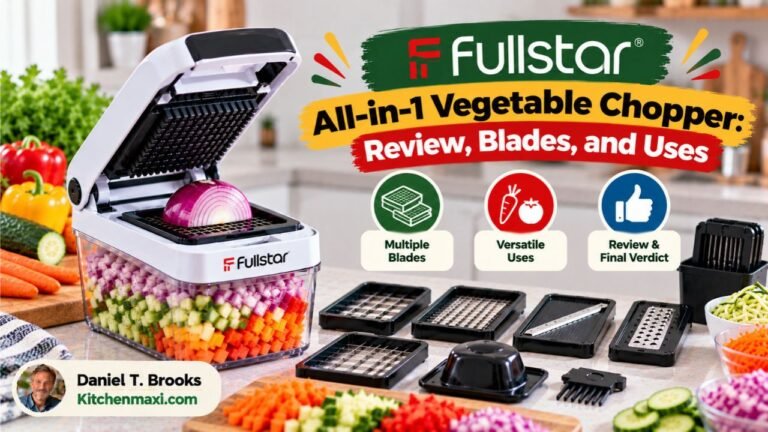
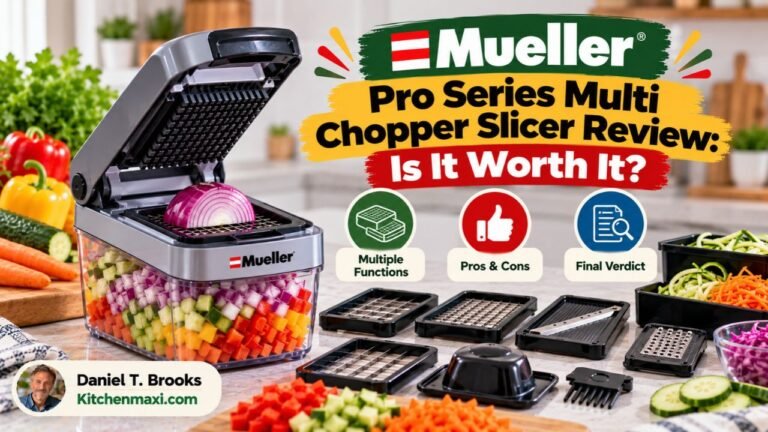
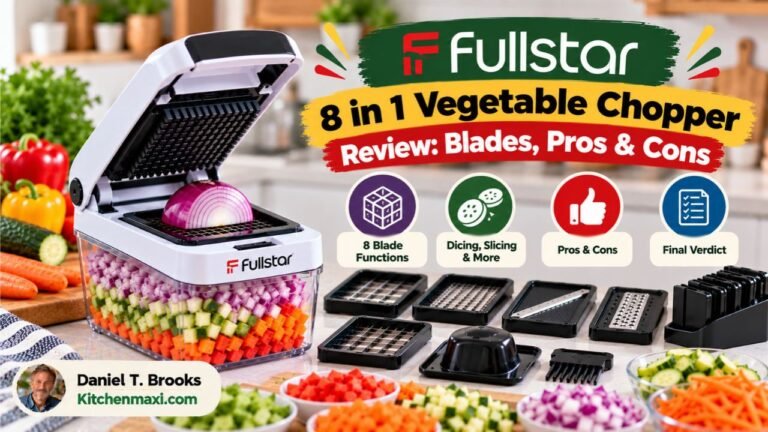
Manual vegetable dicers and pull-cord choppers fall into this broader category, but they behave differently from an electric blade-style chopper.
Key Takeaway: A food chopper is mainly a small-batch prep tool. Electric versions usually use one multipurpose blade, while manual versions rely on hand-operated cutting mechanisms.
What Is a Food Processor and What Does It Do?
A food processor is a countertop appliance built to perform several preparation jobs with interchangeable blades or discs.
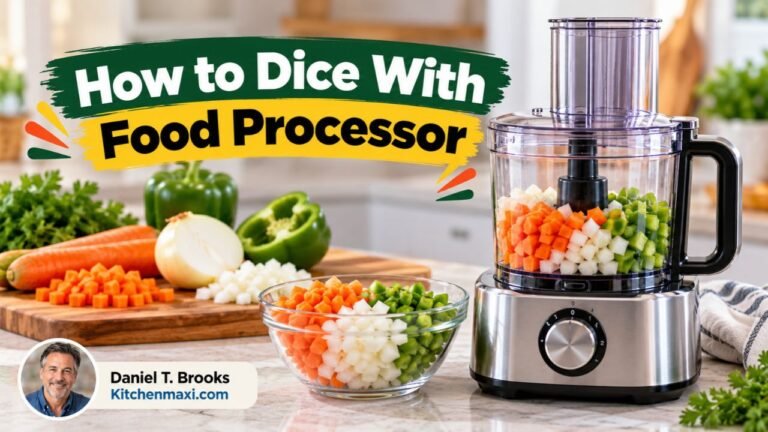
Most full-size models have a work bowl, removable S-blade, lid, feed tube, food pusher, and one or more processing discs.
S-Blade for Chopping and Puréeing
The standard S-shaped blade sits inside the bowl.
It can handle tasks such as:
- Chopping onions
- Mincing herbs
- Puréeing dips
- Mixing sauces
- Cutting nuts
- Combining some doughs
This is the function that overlaps most closely with an electric food chopper.
Slicing and Shredding Discs
A processor can move beyond chopping because many models accept discs near the top of the bowl.
Ingredients pass through the feed tube and contact the spinning disc.
Common jobs include:
- Slicing potatoes
- Slicing cucumbers
- Shredding carrots
- Shredding cabbage
- Grating firm cheese
For example, Hamilton Beach’s current 8-cup processor uses an S-blade for chopping and puréeing plus a reversible disc for slicing and shredding.
Dough and Specialty Attachments
Some food processors include or accept:
- Dough blades
- Dicing kits
- Adjustable slicing discs
- Julienne cutters
- Spiralizing attachments
KitchenAid and Consumer Reports both identify dough work and multiple cutting styles as areas where full food processors go beyond typical choppers.
Key Takeaway: A food processor can perform the same basic chopping jobs as many electric choppers, then adds larger capacity and attachments for tasks such as slicing, shredding, and dough preparation.
Main Differences Between a Food Chopper and Food Processor
The biggest differences appear in capacity, blade system, food loading, batch size, and setup.
Bowl Capacity
Food choppers are usually compact.
Consumer Reports currently places many choppers in roughly the 2- to 4-cup range, while KitchenAid describes electric choppers more broadly as small-batch appliances and lists models around 3.5 and 5 cups.
Full food processors often start much larger. KitchenAid’s comparison notes residential processor capacities ranging from roughly 6 to 16 cups across the category.
A small bowl is an advantage when you need to mince two garlic cloves or a handful of herbs. Those ingredients can spread around the bottom of a large processor bowl without contacting the blade as consistently.
Blades and Attachments
A basic food chopper usually has one main cutting blade.
A food processor often has:
- Chopping blade
- Slicing disc
- Shredding disc
- Optional dough blade
- Other model-specific cutters
This attachment system is the main reason a processor handles more preparation styles.
Feed Tube
Food processors normally have a feed tube in the lid.
Instead of placing every ingredient into the bowl before starting, you can feed vegetables, cheese, or fruit toward a slicing or shredding disc.
Typical choppers do not need a feed tube because the food stays inside the bowl with the multipurpose blade.
Batch Size
A chopper is usually the faster choice for small quantities.
For example, chopping half an onion in a 3-cup bowl is simple because the ingredient remains close to the blade.
A large processor becomes more practical when preparing:
- Several onions
- A large salad
- A batch of shredded cabbage
- Multiple cups of grated cheese
- A larger quantity of hummus
Storage and Cleanup
A small chopper normally has fewer removable components and takes less cabinet or counter space.
A processor may require storage for several discs, blades, a larger bowl, lid, and food pusher.
Consumer Reports points to easier setup and cleanup as part of the appeal of small choppers.
Key Takeaway: Choppers favor small quantities and simple setup; processors trade extra size and parts for more capacity and several cutting methods.
Can a Food Chopper Replace a Food Processor?
A food chopper can replace a processor for basic small-batch blade work, but it cannot replace every processor function.
You can often use a chopper instead of a processor for:
- Chopped onion
- Minced garlic
- Chopped herbs
- Nuts
- Small salsa batches
- Pesto
- Simple dips
- Small purées
It becomes a poor substitute once the recipe requires slicing or shredding.
A normal chopper blade cuts food repeatedly as it moves around the bowl. It cannot produce the same continuous slices that come from pushing a potato or cucumber through a processor’s slicing disc.
The same limitation applies to shredded cabbage and cheese. Unless the chopper specifically includes a shredding attachment, it will chop those foods rather than create long, grated pieces.
Capacity also matters. A recipe that comfortably fits an 8- or 12-cup processor may require several rounds in a 3-cup chopper.
Can a Food Processor Replace a Food Chopper?
In many cases, yes.
A processor’s S-blade can perform many of the same tasks as an electric chopper.
The drawback is small quantity handling.
Imagine trying to mince one garlic clove in a large 12-cup bowl. The pieces may scatter around the bowl instead of staying near the blade. A compact chopper is better matched to that quantity.
Cleanup can also be disproportionate. Pulling out a full food processor, washing a large bowl and lid, and storing several pieces may feel excessive for two tablespoons of chopped parsley.
I would use the processor when the batch is large enough to take advantage of its capacity. For one onion, a few cloves of garlic, or a handful of nuts, the chopper is often the simpler tool.
Which Appliance Is Better for Common Kitchen Tasks?
Looking at real food-prep jobs makes the distinction much clearer.
Onions, Garlic, and Herbs
Food chopper: Better for a small amount.
A compact bowl keeps small ingredients close to the blade. Short pulses also give good control over how coarse or fine the pieces become.
Food processor: Better when preparing several onions or a larger quantity of herbs.
Salsa, Pesto, and Dips
Either appliance can work.
Choose the chopper for a small serving. Choose the processor for a larger recipe.
KitchenAid lists small batches of pesto, dressings, hummus, and purées among normal chopper applications.
Slicing Vegetables
Food processor: Clear winner.
A slicing disc can create repeated slices of:
- Cucumber
- Potato
- Carrot
- Zucchini
A standard chopper does not produce that style of cut.
Shredding Cheese and Vegetables
Food processor: Better.
The shredding disc passes food through cutting holes instead of repeatedly chopping it inside a bowl.
This works for tasks such as shredded cheddar, carrots, potatoes, and cabbage.
Dough
Food processor: Better if the exact model is rated for dough.
Consumer Reports notes that full-size processors may handle dough, while typical small choppers are not built around this task.
Check the manual because bowl size, motor load, dough quantity, and available blade vary by model.
Nuts and Small Dry Ingredients
Food chopper: Excellent for small quantities.
A handful of nuts can be awkward in a large processor bowl but sits close to the blade in a compact chopper.
For nut butter or a large volume of nuts, use equipment specifically approved for that workload.
Key Takeaway: Pick the chopper for small chopping jobs and small sauces; pick the processor for slicing, shredding, bigger batches, and tasks that use specialty discs or blades.
Food Chopper vs. Mini Food Processor: Why the Names Overlap
There is no perfectly rigid naming line between a food chopper and a mini food processor.
Some compact appliances are called choppers even though they perform several processor-like jobs.
Other manufacturers use “mini food processor” for a small appliance with a chopping blade.
Cuisinart has even sold a compact 3-cup unit under the food processor label with a feed attachment plus chopping, slicing, and shredding accessories. That design had more processor functions than many similarly sized choppers.
Hamilton Beach also sells models described as both a food processor and vegetable chopper, with an S-blade and slicing/shredding disc.
This naming overlap means product labels should be treated as a starting point.
Before buying, check:
- Bowl capacity
- Included blades
- Included discs
- Feed tube
- Pulse control
- Approved food types
- Dough capability
- Cleaning instructions
Those details tell you far more about what the machine can do than “chopper” or “processor” by itself.
Should You Buy a Food Chopper or Food Processor?
Pick the appliance that matches the jobs you perform most often.
Choose a Food Chopper If You Mainly Prep Small Amounts
A chopper makes sense for someone who regularly prepares:
- One onion
- A few garlic cloves
- Fresh herbs
- A handful of nuts
- Small salsa portions
- Small dips or dressings
It is also attractive if cabinet space is limited.
Setup tends to be quick because there are fewer parts.
Choose a Food Processor If You Want More Cutting Options
A processor makes more sense if you regularly:
- Slice vegetables
- Shred carrots or cabbage
- Grate cheese
- Prepare family-size batches
- Make dough with an approved model
- Process larger amounts of food
A 7- to 10-cup processor is a common middle ground for everyday household prep, while larger bowls suit batch cooking. Consumer Reports currently notes that about 7 cups can suit many routine processor tasks, with 11- to 16-cup sizes aimed more toward large batches.
Owning Both Can Make Sense
These appliances are not complete duplicates.
A full-size processor handles the heavy prep, while a small chopper avoids pulling out the larger machine for a tablespoon of herbs or half an onion.
If storage space or budget only permits one appliance, I would choose based on slicing and shredding. If those tasks matter, buy the processor. If nearly all your prep involves small chopping jobs, the chopper is enough.
Key Takeaway: Choose a chopper for small, quick blade work; choose a processor if slicing, shredding, larger batches, or specialty attachments are part of your normal cooking.
Food Chopper and Food Processor Safety and Cleaning
Both machines use very sharp blades and should be handled carefully.
Keep Hands Away From the Blade
Do not reach into the bowl while the blade is attached to a powered appliance.
Use a spatula only after the machine has stopped and the appliance is disconnected as directed by its manual.
KitchenAid’s food chopper safety instructions specifically warn against contacting moving parts and direct users to keep hands and utensils away from the blade during operation.
Unplug Before Removing Parts
For a corded model, disconnect power before removing:
- Bowl
- Lid
- Blade
- Accessories
KitchenAid also specifies unplugging its corded food chopper before installing or removing parts and before cleaning.
For cordless models, follow the manufacturer’s shutdown and battery instructions.
Check Dishwasher Instructions
Do not assume every removable component is dishwasher-safe.
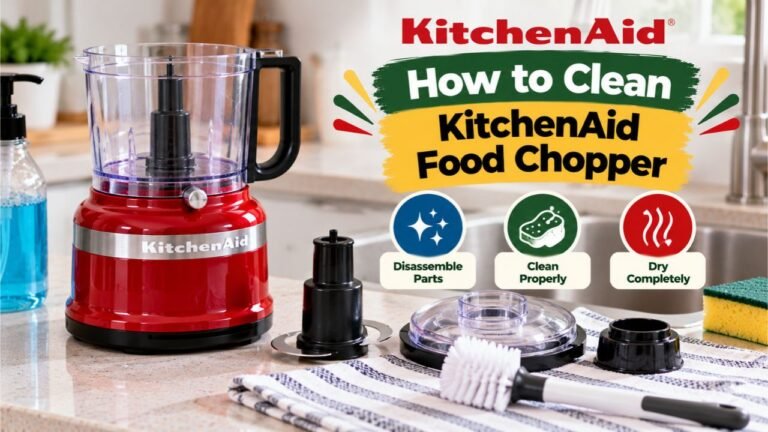
KitchenAid permits the bowl, lid, and blade of specified food chopper models on the top rack, while the motor base should be wiped with a damp cloth and not immersed in water.
The same principle applies to food processors: check the manual for the exact model before putting blades, discs, lids, or bowls in a dishwasher.
Key Takeaway: Disconnect the appliance before handling the blade, keep fingers away from cutting edges, and follow the exact model’s cleaning instructions rather than assuming every part can go in the dishwasher.
Conclusion
For is a food chopper the same as a food processor, the answer is no. A typical food chopper is a compact tool for chopping, mincing, mixing, and puréeing small quantities, while a food processor adds more bowl capacity and commonly includes a feed tube plus slicing and shredding discs.
The biggest practical dividing line is not motor size or appearance. It is what happens beyond the S-blade. If you need evenly sliced vegetables, shredded cheese, shredded cabbage, larger batches, or model-approved dough work, a food processor is usually the better fit. For garlic, herbs, nuts, onions, and small sauces, a chopper is often faster to set up and wash.
Product naming does overlap, so check the included parts before buying. A compact machine with slicing and shredding discs may act more like a mini processor even if “chopper” appears in its name.
If you only need one appliance, list the foods you prepare most often. Frequent slicing and shredding point toward a processor; quick small-batch chopping points toward a chopper.
FAQs About Food Choppers and Food Processors
Can I Use a Food Chopper Instead of a Food Processor?
Yes for many small chopping, mincing, mixing, and puréeing jobs.
A basic food chopper usually cannot replace the processor for slicing or shredding because it lacks the required discs and feed tube. Large recipes may also need several batches in the smaller bowl.
Is a Mini Food Processor Just a Food Chopper?
Sometimes, but not always.
The categories overlap. Many mini processors use the same small bowl and S-blade layout as electric choppers, while some compact processors include feed chutes or extra discs. Compare the actual attachments and capacity rather than relying only on the name.
Can a Food Chopper Slice Vegetables?
A standard electric chopper usually chops vegetables instead of producing uniform slices.
Some specialty choppers use cutting grids or interchangeable attachments that can slice or dice. A full food processor with a slicing disc is the more typical choice for repeated, even slices.
Can a Food Chopper Shred Cheese?
A basic blade-style chopper generally chops cheese into small pieces rather than creating traditional shredded strands.
A food processor with a shredding disc is better suited to shredding firm cheese. Chill the cheese first if the appliance manufacturer recommends it.
Is a Food Chopper Good for Onions?
Yes. Onions are one of the strongest uses for an electric food chopper.
Cut the onion into manageable pieces, avoid packing the bowl too tightly, and pulse instead of running continuously if you want distinct chopped pieces rather than a wet onion purée.
Which Is Easier to Clean, a Food Chopper or Food Processor?
A food chopper is usually simpler because it has a smaller bowl and fewer accessories.
A processor may have a bowl, lid, pusher, S-blade, and several discs to wash. Dishwasher compatibility varies, so use the cleaning directions supplied with the exact appliance.
Do I Need Both a Food Chopper and a Food Processor?
No. Many households can use one or the other.
Owning both makes sense if you regularly prepare large batches but also want a small appliance for garlic, herbs, nuts, or one onion. The chopper handles tiny jobs without requiring the larger processor bowl and attachments.