


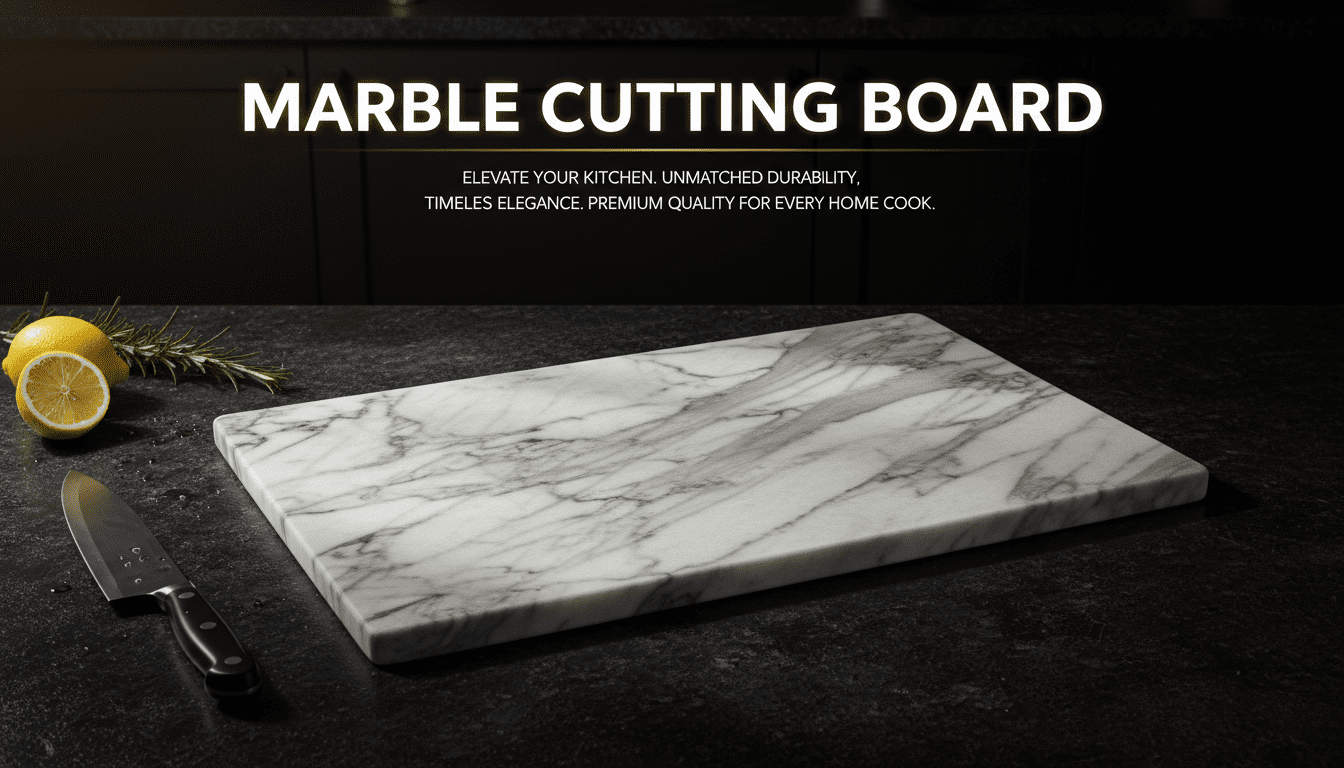

Five years ago, if you had walked into my kitchen, you would have seen a stack of warped plastic boards and a big butcher block. I thought marble was only for show, like in fancy magazines, not for making pasta on a messy Tuesday night. But after fighting with sticky pastry dough too many times, I finally gave in and bought a marble cutting board. I wanted to find out if the cold surface hype was real or if I was just buying a heavy paperweight.
To be honest, it wasn’t love at first slice. What was my first mistake? Trying to cut an onion on it. The noise was jarring, and I quickly thought about the edge of my knife. But everything changed when I stopped treating it like a piece of wood and started using it for what it’s really good for. It became my place to put dough, chocolate, and cheese to serve. If you’re thinking about adding a marble cutting board to your kitchen, you should know about some major pros and cons before you carry that heavy slab to the counter.
Table of Contents
What Actually Is a Marble Board?
Marble is a type of metamorphic rock. This means that it started out as limestone and was compressed for thousands of years under heat and pressure. That process makes those beautiful, one-of-a-kind veins that give each board a different look.
Long before plastic was even invented, marble was a common material in European kitchens, like French patisseries and Italian pasta stations. It feels cool to the touch (stays below room temperature), is very smooth, and is very heavy.
In a modern kitchen, a marble board is usually a polished slab with rubber feet on the bottom to keep it from sliding. Trust me, a sliding slab of rock is scary. It’s not just a place to chop things; it’s often sold as a “pastry board” or serving platter, which gives you a hint about what it’s really for.
Is Marble Actually Good for Cutting?
This is the most common question I get, and the answer is a little complicated. It depends entirely on what you are cutting.
The Good Bits
The surface doesn’t absorb smells because it isn’t porous like wood. You know how hard it is to cut garlic on wood and then cut an apple that tasted like garlic. Marble is easy to clean. It also has a flat, strong surface that doesn’t bend or groove easily like plastic does.
The Not-So-Good Bits
Marble is tougher than the steel in your knife. If you are chopping vegetables or taking the bones out of a chicken very hard, the marble will win against your knife. Marble will dull your knives much faster than wood or soft plastic will.
Benefits I’ve Noticed in My Kitchen
After using my board for several months, here is where it truly shines:
It’s a Pastry Game-Changer
This is the best reason to have one. Marble stays cool, which keeps the butter in your dough from melting. My big marble cutting board keeps the dough workable for a lot longer when I roll out pie crusts or biscuits. My dough gets sticky and warm on wood, but it stays cold and snappy on marble.
It’s Incredibly Hygienic
It’s easy to clean up after working with sticky fondant or tempering chocolate. It looks brand new after a quick wipe down with warm, soapy water and a soft cloth. It doesn’t keep colored icing stains or oils like my plastic boards do.
It Doubles as Decor
Let’s be honest: it looks great. I leave mine out on the counter even when I’m not using it. It makes my rental kitchen look a little more grown-up right away. It’s also great for serving. I used it as a cheese board for guests, and the cheese doesn’t get sweaty as quickly as it does on wood because it stays cool.
The Drawbacks (The Stuff No One Tells You)
It wouldn’t be an honest review if I didn’t talk about the frustrations.
The “Clack” Factor
When you chop on marble, it makes a lot of noise. The knife hitting the stone makes a loud “clack-clack-clack” sound that can be heard all over the kitchen. This might bother you if you are sensitive to noise.To be honest, it looks great. I leave mine out on the counter even when I’m not using it. It makes my rental kitchen look a little more grown-up right away. It’s also great for serving. I used it as a cheese board for guests, and the cheese doesn’t get sweaty as quickly as it does on wood because it stays cool.
It’s Heavy
This isn’t a board you can easily grab with one hand to scrape vegetables into a pot. My board is about 5 kg heavy. It stays where you put it. You have to be careful not to chip the sink or the board while you wash it in the sink. It can be a little hard work.
Acid Anxiety
Acid can hurt marble chemically. The acid in a slice of lemon or a splash of vinegar reacts with the calcium carbonate in the stone. This makes “etching,” which are dull, rough spots on the polished surface. I found this out the hard way when I left a cut tomato on mine for an hour. The stain came out, but the shine in that spot is gone for good.
Types of Boards You’ll See
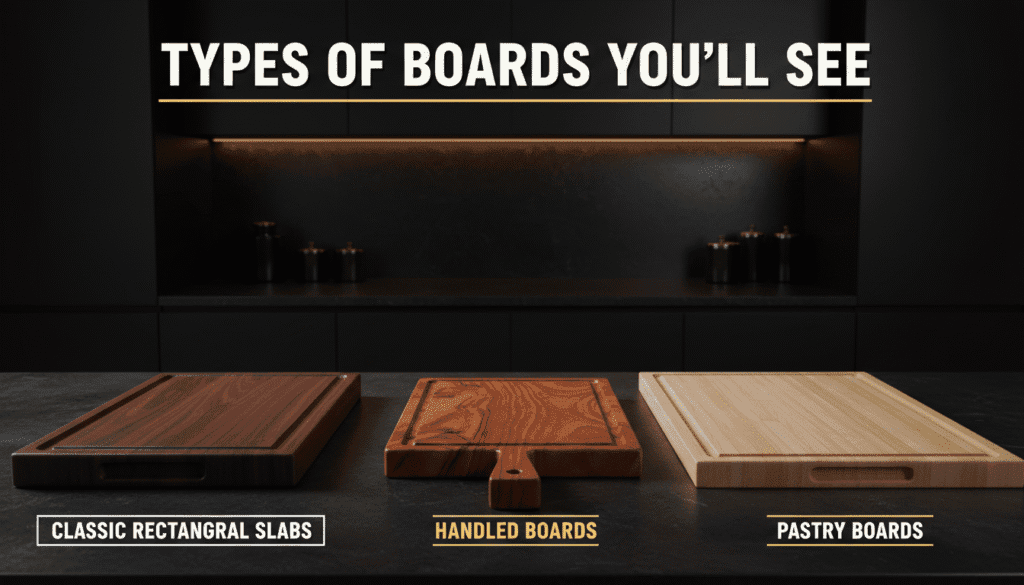
When you start shopping, you’ll see a few variations:
- Classic Rectangular Slabs: These are the most versatile. Look for ones with non-slip feet.
- handled Boards: Most of the time, these look like regular paddles. They are great for serving charcuterie, but if your cupboards are shallow, they can be hard to store.
- Pastry Boards: These are essentially a large marble cutting board, often 16×20 inches or bigger. They give you ample room to roll out a 12-inch pizza.
How to Choose the Right One
Don’t just buy the first one you see. Here is my checklist for picking a winner:
1. Check the Thickness
You need a board that is at least 3/4 of an inch thick. Thinner boards can break easily, so if you drop a heavy pot on them, they might break.
2. Look for Feet
This is not up for discussion. The marble sits flat against your counter without rubber feet. It makes it impossible to lift the board if water gets underneath it. The feet also keep your countertop from getting scratched.
3. Size Matters
Take measurements of your counter space. A big board is great for pastry, but if it’s the only place you can prep, you’ll hate it. For my small kitchen, a medium size (about 12×16 inches) was just right.
Caring for Your Marble Board
Maintenance is actually easier than wood, provided you follow one golden rule: No Acid.
- Cleaning: I wash mine with warm water and a small amount of mild dish soap. I stay away from abrasive scourers because they can damage the polish.
- Sealing: Marble, like granite, can benefit from being sealed. I put a stone sealer on my food-safe items about twice a year. It only takes five minutes and helps keep stains from forming.
- Storage: Don’t put it on a high shelf where it could fall because it’s heavy. I keep mine flat on the counter or standing up in a strong lower cabinet rack.
My Personal Experience: The “Croissant Moment”
After the first week, I was ready to give my board back. The noise was annoying, and I missed how soft wood felt. But then I changed my mind and decided to make croissants from scratch.
When I fold the dough, the butter layers usually melt into it, making brioche instead of flaky pastry. Before I started, I put my marble cutting board in the fridge for 20 minutes. It was like night and day. The dough slid over the cold surface. The butter stayed separate. The croissants that came out were the best I’d ever made.
That’s when it all made sense. It wasn’t a cutting board; it was a baking board. I now use a cheap plastic mat on top of the marble when I need to chop something quickly, but I always keep the marble out for baking.
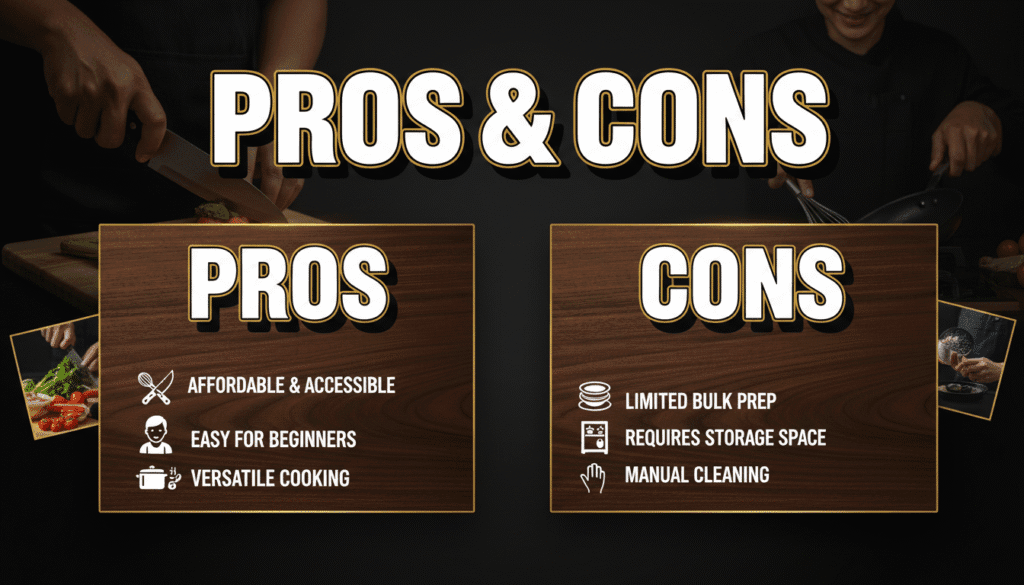
Pros & Cons at a Glance
| Pros | Cons |
|---|---|
| Keeps Dough Cold: Essential for pastry, pie crusts, and chocolate work. | Dulls Knives: The hard surface will ruin a sharp edge quickly. |
| Easy to Clean: Non-porous surface wipes down in seconds. | Heavy: Difficult to move around the kitchen or wash in the sink. |
| Beautiful: Doubles as a stunning serving platter for cheese. | Sensitive to Acid: Lemon, tomato, and vinegar can etch the polish. |
| No Odours: Won’t smell like yesterday’s onions. | Noisy: Chopping creates a loud, hard sound. |
| Durable: Won’t warp, peel, or groove like plastic. | Slippery: Can be dangerous for cutting slippery foods like raw meat. |
Rating: 4/5 ⭐⭐⭐⭐
I’m giving the marble board a solid 4 out of 5.
Why? It loses a point because it isn’t a true “all-rounder.” You can’t just throw away your other boards and use this one instead. But for what it does—handling dough and serving—it can’t be beat. The build quality feels like it will last forever, and it works better than any other material I’ve tried for dealing with warm dough.
Comparative Analysis: Marble vs. The Rest
Marble vs. Wood:
Plastic is cheap, light, and dishwasher safe. It’s great for raw chicken. Marble is heavy, hand-wash only, and luxurious. They are polar opposites
Marble vs. Plastic:
Plastic is cheap, light, and safe to put in the dishwasher. It works well with raw chicken. Marble is heavy, needs to be washed by hand, and is very nice. They are completely different..
Marble vs. Glass:
Glass boards are the worst of both worlds because they dull knives like marble but don’t have the thermal mass to keep pastry cool. Choose marble every time if you can’t decide between glass and marble.
Reader Engagement
Have you ever broken a knife on a stone board? Or do you swear by the cold surface as a baker? I’d love to know how you clean these boards in a small sink without getting too tired. Leave a comment below.
Comparison Table: What Board Should You Use?
| Task | Wood | Plastic | Marble |
|---|---|---|---|
| Chopping Veggies | ✅ Best | ✅ Good | ❌ No |
| Raw Meat | ⚠️ Okay | ✅ Best | ❌ No |
| Rolling Dough | ❌ Too Warm | ❌ Sticky | ✅ Best |
| Serving Cheese | ✅ Good | ❌ No | ✅ Best |
| Knife Safety | ✅ Best | ✅ Good | ❌ Poor |
FAQ:
Is marble a good cutting board?
For cutting things up in general? No. It hurts knives. For baking, rolling out dough, and serving? Yes, it is very good. You should think of it as a specialized tool instead of a general-purpose chopper.
Is a marble cutting board healthy?
Yes, it is very clean. Scratched plastic or wood grain can trap food particles that are full of bacteria, but its smooth surface doesn’t. You still need to clean it well to make sure it’s safe.
What are the healthiest cutting boards to use?
Plastic (which can be bleached) or composite boards are often recommended for raw meat. Wood has natural antibacterial properties for everything else. Marble is healthy because it’s easy to clean, but you shouldn’t use it to prepare raw meat that is heavy because deep scratches could let bugs in.
Can I cut meat on a marble cutting board?
Yes, technically, but I wouldn’t recommend it. Cleaning up raw meat is hard work, and moving a heavy marble slab around in the sink to clean it is slippery and risky. Also, the slippery surface can make your knife slip on raw meat, which is dangerous.
Conclusion
A marble cutting board is a special tool, not a replacement for your wooden block. If you love to bake, love chocolate, or love to host parties with beautiful serving platters, this is a great investment. It makes working with pastry a lot easier and gives the kitchen a touch of class.
If all you need is something to chop carrots on for a stew, though, stick to wood and save your money and knives. Even though they are heavy and need a lot of care, I think flaky pie crusts are worth it.