What Is a Brown Cutting Board Used For? Food-Safety Color Guide
A brown cutting board is commonly assigned to root vegetables or unwashed vegetables in many color-coded kitchen systems. In some U.S. commercial kitchens, brown or tan may instead be assigned to cooked meat. The color itself is not universal, so the kitchen’s posted color chart or food-safety plan should always decide what the board is used for.
Color-coded cutting boards are meant to keep food groups separate during prep. That separation lowers the chance that raw animal juices, soil, or other contaminants move from one food to another through the cutting surface.
For a home cook, the exact color matters less than using the same board for the same food category every time. For a restaurant or institutional kitchen, staff need one clearly posted system so every person reaches for the same board for the same task.
The phrase what is a brown cutting board used for most often leads to one of two answers: root or unwashed vegetables in the common six-color catering system, or cooked meats in some U.S. commercial color schemes.
That difference is why a brown board should never be identified by color alone if you are working in an unfamiliar kitchen. Check the board chart, prep-station label, written food-safety procedure, or manager instructions before using it.
The sections below explain both common meanings, which foods belong on a brown board, how brown differs from green and other colors, how to use color coding at home, and how to clean and replace a brown cutting board safely.
What a Brown Cutting Board Is Commonly Used For
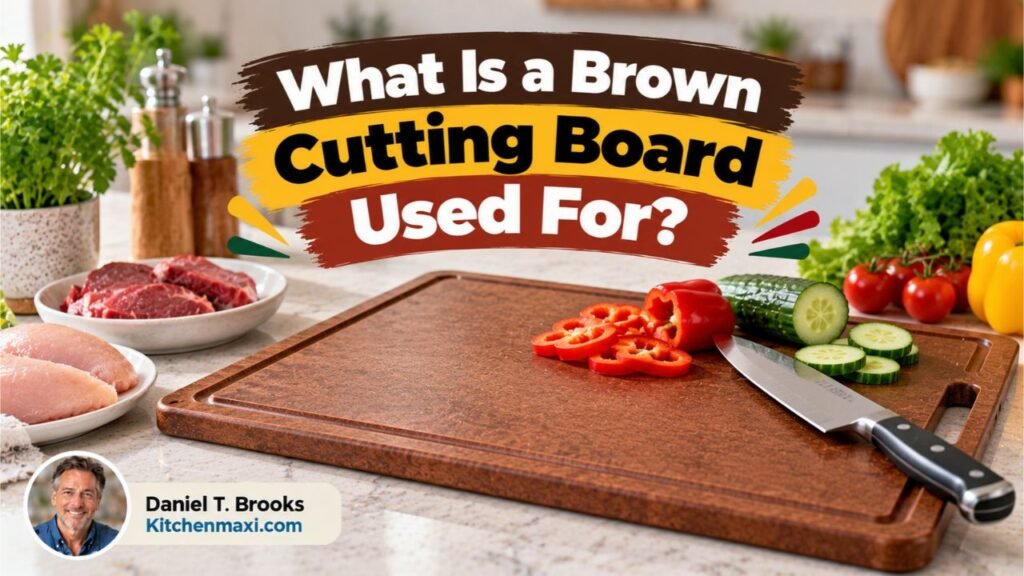
A brown board is usually part of a color-coded cutting-board system used to separate food groups.
Brown for Root and Unwashed Vegetables
In the widely used six-color catering system found in the United Kingdom and in many training materials, brown is assigned to root vegetables and other unwashed vegetables.
Typical foods include:
- Potatoes
- Carrots
- Parsnips
- Beets
- Turnips
- Onions
- Leeks
- Rutabagas
- Sweet potatoes
- Other vegetables that may still carry soil
The purpose is to keep soil and field contamination away from boards used for ready-to-eat foods.
A muddy potato and a washed salad cucumber are both vegetables, but they do not start at the same cleanliness level. Giving unwashed produce its own board creates a simple visual separation during prep.
Brown or Tan for Cooked Meat in Some U.S. Kitchens
Some U.S. commercial cutting-board charts use brown or tan for cooked meat instead.
That may include:
- Cooked beef
- Cooked pork
- Ham
- Roast meat
- Cooked burger patties
- Sliced cooked meat for service
In this system, green is usually used for fruits and vegetables, while red, yellow, or another color is assigned to raw meat or poultry.
The FDA Food Code recognizes color-coded cutting boards as one possible method for separating raw animal foods from ready-to-eat foods, but it does not set one nationwide mandatory color assignment for every food category.
Why the Brown Board Meaning Can Change
Color coding is a kitchen-management system, not a natural property of the board.
One restaurant may use brown for root vegetables. Another may use tan or brown for cooked meat. A third may not use brown at all.
What matters is that the food categories stay separated and that every worker follows the same system.
Key Takeaway: Brown often means root or unwashed vegetables, but some U.S. kitchens use brown or tan for cooked meat. Follow the color chart used in that kitchen rather than assuming the color has one universal meaning.
Brown Cutting Board for Root Vegetables and Unwashed Produce
When brown is assigned to vegetables, it is usually meant for produce that may still carry soil, dirt, or debris.
Root Vegetables That Fit the Brown Board
Root vegetables spend much of their growth in direct contact with soil.
Examples include:
- Carrots
- Potatoes
- Beets
- Parsnips
- Turnips
- Radishes
- Sweet potatoes
These foods may carry visible dirt even after loose soil has been brushed away.
Using one designated board keeps that mess away from a board used for bread, washed fruit, salad greens, or cooked foods.
Onions, Garlic, and Leeks
Many kitchens also place onions, garlic, and leeks in the brown-board category when the system is based on unwashed or soil-contact vegetables.
Their outer layers can hold dirt or field residue.
Once the vegetables have been washed, peeled, and moved into a clean prep stage, a kitchen may switch to its produce or ready-to-eat board if that is part of its written system.
Vegetables for Soups, Stews, and Cooked Dishes
Brown boards are often used for vegetables that will later be cooked, such as ingredients for:
- Soup
- Stew
- Stock
- Roasted vegetables
- Sauces
- Casseroles
Cooking later does not mean the prep surface can be ignored. The board still needs proper washing and sanitizing because hands, knives, counters, and nearby foods may be exposed before cooking begins.
Key Takeaway: In a vegetable-based color system, use the brown board for root crops and other unwashed produce, especially foods that may carry soil before washing or peeling.
Brown Cutting Board vs Green Cutting Board
Brown and green are easy to confuse because both may be associated with produce.
Brown Board for Unwashed or Soil-Contact Vegetables
In the common six-color system, brown is used for root vegetables and other produce that may be dirty before prep.
Think of brown as the board for the dirtier first stage of vegetable preparation.
Green Board for Washed Produce and Salad
Green is commonly used for:
- Salad greens
- Fresh fruit
- Washed vegetables
- Herbs
- Produce that may be eaten without further cooking
This distinction keeps soil and debris from unwashed vegetables away from ready-to-eat produce.
U.S. Kitchens May Use Green for All Produce
Many U.S. kitchens use green for fruits and vegetables without splitting root vegetables into a separate brown category.
In those kitchens, brown or tan may be reserved for cooked meat.
That is another reason the posted kitchen chart should take priority.
Key Takeaway: In a root-vegetable system, brown handles unwashed or soil-contact produce while green handles washed produce and salad. In some U.S. systems, green covers all produce and brown or tan is assigned to cooked meat.
Brown Cutting Board vs Other Cutting Board Colors
A color chart makes the purpose of each board easier to remember, but the exact assignments can vary.
A common six-color catering system looks like this:
| Cutting Board Color | Common Use |
| Red | Raw meat |
| Blue | Raw fish and seafood |
| Yellow | Cooked meat |
| Green | Salad, fruit, and washed produce |
| Brown | Root or unwashed vegetables |
| White | Bakery and dairy foods |
Some U.S. commercial systems use a different setup:
| Cutting Board Color | Possible U.S. Commercial Use |
| Red | Raw meat |
| Yellow | Raw poultry or another raw-protein category |
| Blue | Raw fish and seafood |
| Green | Fruits and vegetables |
| Brown or tan | Cooked meat |
| White | Bakery, dairy, or general dry prep |
| Purple | Allergen-controlled prep |
These tables are examples, not nationwide legal assignments.
If a kitchen has its own approved chart, use that chart consistently.
Is a Brown Cutting Board Required in a U.S. Kitchen?
No federal rule requires every U.S. home or food-service kitchen to own a brown cutting board.
The main food-safety goal is separation.
USDA guidance for home kitchens recommends using one cutting board for fresh produce and bread and another for raw meat, poultry, and seafood. Different colors can make that separation easier to remember.
Commercial food businesses may build more detailed color systems into their food-safety procedures. Local health-code rules and company procedures can add requirements beyond general federal guidance.
A kitchen can use labels, dedicated prep zones, or another clear system if it keeps raw and ready-to-eat foods properly separated.
Should You Use a Brown Cutting Board at Home?
A brown board is optional for most home kitchens.
If you already use several color-coded boards, assigning brown to root vegetables can make prep more organized.
A Simple Home Cutting Board System
Many homes do well with only two or three dedicated boards:
- One for raw meat, poultry, and seafood
- One for produce, bread, and ready-to-eat foods
- An optional third board for dirty root vegetables or strong-smelling foods
If you choose brown for root vegetables, use it consistently.
Do not use the same brown board for raw chicken one day and potatoes the next simply because it has been washed.
When a Separate Brown Board Makes Sense
A dedicated vegetable board is useful if you often prepare:
- Garden vegetables
- Muddy potatoes
- Beets
- Carrots
- Onions
- Large amounts of produce for meal prep
It also gives you a visual cue that the board may need washing and sanitizing before it returns to storage.
When You Probably Do Not Need One
If you cook in a small kitchen and already keep raw meat on a separate board, adding six color-coded boards may be unnecessary.
A smaller system works as long as food categories stay clearly separated.
Key Takeaway: Home cooks do not need a brown board specifically, but assigning one to root vegetables can make separation easier if you already use a color-coded setup.
How to Use a Brown Cutting Board Safely
The board color does not replace normal food-safety habits.
Wash Produce Before the Clean Prep Stage
For vegetables that carry visible soil, remove loose dirt and wash the produce according to safe produce-handling practices.
Do not use soap or household detergent on fruits and vegetables.
After the dirty prep stage, clean the knife, board, hands, and nearby surface before moving to ready-to-eat foods.
Keep Raw Meat Off a Vegetable Board
If your brown board is assigned to vegetables, do not use it for:
- Raw beef
- Raw pork
- Raw poultry
- Raw seafood
Raw animal foods should stay on their own board.
This separation limits the chance that juices containing harmful bacteria reach produce that may be eaten raw.
Keep Cooked Meat Off the Brown Board if Your System Uses Brown for Vegetables
The same principle works in reverse.
If brown means root vegetables in your kitchen, cooked meat should go on the color assigned to cooked food.
A cooked roast placed on a board that just held dirty potatoes defeats the purpose of color coding.
Use the Same Color Rule Every Time
Color coding only works when the assignment stays predictable.
Post a small chart near the prep area if several people use the kitchen.
Key Takeaway: Assign the brown board one food category, keep that assignment consistent, and still wash hands, knives, boards, and counters between prep tasks.
How to Clean a Brown Cutting Board
Cleaning should happen after every use, no matter which food category the board represents.
Wash After Each Use
USDA recommends washing cutting boards with hot, soapy water after use, then rinsing and drying them.
For a plastic brown board, follow the manufacturer’s dishwasher instructions if it is dishwasher-safe.
Solid wood and laminated boards may have different care limits.
Sanitize When Needed
A commercial kitchen should follow its approved sanitizer concentration, contact time, and local food-code procedure.
At home, USDA provides sanitizing guidance for cutting boards using an appropriately diluted unscented chlorine-bleach solution.
Never mix bleach with ammonia, vinegar, acids, or other cleaning chemicals.
Let the Board Dry
Allow the board to air-dry or dry it with clean paper towels.
Storing a board while wet can trap moisture and odors, especially in deep knife marks.
Vertical storage can improve airflow.
Clean the Rack or Storage Slot Too
A clean board placed into a dirty, wet rack can pick up residue again.
Wash the storage area periodically, especially if boards are stored upright while still finishing their air-drying stage.
Key Takeaway: Wash a brown board after every use, sanitize according to the kitchen’s food-safety procedure, dry it fully, and keep its storage area clean.
When to Replace a Brown Cutting Board
Color does not change the normal replacement signs.
Replace the board when it becomes difficult to clean properly.
Watch for:
- Deep knife grooves
- Cracks
- Warping
- Chipped edges
- Rough cuts that trap food
- Permanent damage around the surface
- Strong odors that remain after proper cleaning
USDA advises discarding cutting boards that become excessively worn or develop hard-to-clean grooves.
A board used for dirty root vegetables may collect staining over time. Staining alone does not always mean the board is unsafe, but deep scoring combined with trapped residue is a stronger reason for replacement.
Common Mistakes With Brown Cutting Boards
Assuming Brown Always Means the Same Food
This is the biggest source of confusion.
Brown commonly means root vegetables in one system and cooked meat in another.
Check the kitchen’s own chart first.
Using Brown for Raw Meat Without a Defined System
Do not assign foods randomly based on the color that happens to be available.
If several people share the kitchen, an undocumented color change can cause cross-contamination.
Treating Color Coding as a Substitute for Cleaning
A dedicated board still becomes dirty.
Wash and sanitize it according to the food and kitchen procedure.
Mixing Brown and Green Prep Without Cleaning
If brown handles dirty vegetables and green handles ready-to-eat produce, clean hands and utensils before moving from brown-board prep to green-board prep.
Keeping a Deeply Scored Board Too Long
Knife grooves can hold residue and become hard to clean.
Replace the board once the surface is badly damaged.
Conclusion
For what is a brown cutting board used for, the most common answer is root vegetables or unwashed vegetables in the traditional six-color catering system. Foods such as potatoes, carrots, beets, onions, parsnips, and other soil-contact produce often go on the brown board.
Some U.S. commercial kitchens use brown or tan for cooked meat instead, while green handles fruits and vegetables. There is no single national U.S. rule that assigns brown to one food category in every kitchen.
The safest approach is simple: follow the color chart used in your kitchen and never switch assignments casually. At home, color coding is optional, but keeping raw meat separate from produce and ready-to-eat foods is a sound food-safety habit.
Clean the board after each use, dry it fully, and replace it when deep grooves or damage make proper cleaning difficult.
FAQs About Brown Cutting Board Uses
Is a Brown Cutting Board for Vegetables?
Often, yes.
In the common six-color catering system, brown is used for root vegetables and other unwashed vegetables, while green is used for salad, fruit, and washed produce. Some U.S. kitchens use a different color chart, so check the local system before using the board.
Is a Brown Cutting Board Used for Cooked Meat?
It can be.
Some U.S. commercial color systems assign brown or tan to cooked meat. Other systems assign yellow to cooked meat and brown to root vegetables. The kitchen’s posted chart should decide which meaning applies.
What Vegetables Go on a Brown Cutting Board?
In a root-vegetable color system, common examples include potatoes, carrots, parsnips, beets, onions, turnips, leeks, and sweet potatoes.
The category often extends to other unwashed produce that may still carry soil or field debris.
What Is the Difference Between a Brown and Green Cutting Board?
In the common root-vegetable system, brown is for root or unwashed vegetables, while green is for salad, fruit, herbs, and washed produce.
In some U.S. systems, green is used for all fruits and vegetables and brown or tan is used for cooked meat.
Is Cutting Board Color Coding Required by Law?
There is no single federal U.S. rule that requires every cutting board to follow a fixed color assignment.
Food-service businesses still need to prevent cross-contamination and follow applicable state, local, and company food-safety procedures. Color coding is one practical way to organize that separation.
Can I Use a Brown Cutting Board for Raw Meat?
Only if your kitchen has specifically assigned brown to raw meat, which is not a common assignment in the major color systems.
If brown is designated for vegetables or cooked meat, using it for raw meat breaks the separation system.
Do I Need a Brown Cutting Board at Home?
No.
A home kitchen can use a simpler setup. USDA recommends keeping a cutting board for fresh produce and bread separate from the one used for raw meat, poultry, and seafood. A brown board can be added if you want a dedicated surface for root vegetables.
When Should I Replace a Brown Cutting Board?
Replace it when deep cuts, cracks, warping, or other surface damage make thorough cleaning difficult.
Color does not change the replacement rule. A heavily scored brown board should be discarded just like any other worn cutting board.