


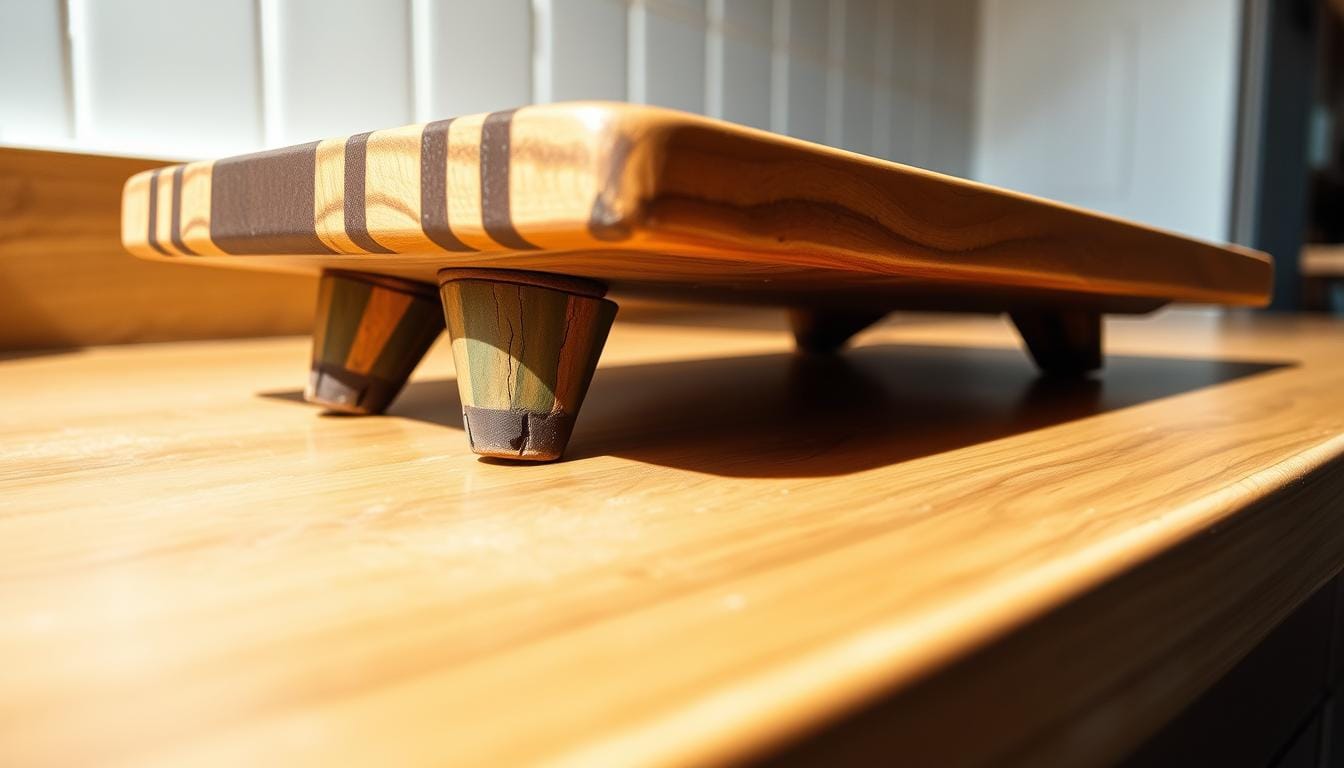

I always think about safety in the kitchen when preparing to cook. A stable cutting surface is a big part of that. That’s where the feet of the cutting board come in. They’re easy to use but help keep the kitchen safe and improve my cooking.

Cutting board feet lift the cutting surface, making it safer. They also keep the countertop dry and germ-free. This makes my kitchen cleaner and healthier.
Key Takeaways
- Better stability made the kitchen safer
- Keeping moisture and bacteria out
- Designs that look good and match the style of your kitchen
- Simple to set up and change
- There are many different sizes and types of materials available.
The Important Role of Cutting Board Feet
Cutting board feet are very important for keeping your kitchen safe. They keep your cutting board steady, which is very important for safe food prep.
What Exactly Are Cutting Board Feet?
Cutting board feet are the legs or attachments on the bottom of a cutting board. They are made of rubber, silicone, wood, or metal, among other things. Their job is to keep your countertops safe and make the cutting board more stable by making the surface non-slip.
How They Transform Kitchen Safety
These feet raise the cutting board, which makes it more stable. This makes it less likely that you’ll hurt yourself while cooking. Some of the benefits are:
- Better grip on counters
- Less slipping and sliding
- Keeping countertops safe from damage
Types of Cutting Board Feet for Every Need
What kind of feet you put on your cutting board matters a lot. You have a lot of choices when it comes to materials. You can find the right feet for your cutting board’s size, style, and material.
Rubber and Silicone Options
Rubber and silicone feet are excellent because they are non-slip and gentle on countertops. They are compatible with both plastic and wood cutting boards.
Wooden Feet Varieties
Wooden feet make things look old-fashioned or rustic. You can paint or stain them to match your kitchen and cutting board.
Metal and Specialty Materials
Metal feet, like stainless steel and decorative ones, are strong and look nice.
Stainless Steel Choices
The feet made of stainless steel won’t rust and are easy to clean. They are great for kitchens that are always busy.
Decorative Metal Options
Metal feet that look nice add style to your cutting board. They make it look classy.
Consider the cutting board feet’ style, size, and material when choosing them. Check to see if they go with your kitchen and cutting board.
Key Benefits of Installing Cutting Board Feet
When it comes to making kitchens safer, people often focus on many things, but not enough on how stable cutting boards are. This can be changed by adding feet to the cutting board. They help keep your cutting board from moving, which makes your kitchen safer and more efficient.
More stability when cooking food
Cutting board feet make it easier and safer to prepare food. They stop you from slipping, which is very important when using sharp knives or heavy things.
Keeping Moisture and Bacteria Away
When you raise your cutting board, air can flow better around it. This means that there will be less moisture and bacteria. Your kitchen is cleaner and healthier.
| Benefit | Description |
|---|---|
| Enhanced Stability | Prevents slipping during food preparation |
| Moisture Protection | Reduces the risk of bacterial growth |
| Extended Lifespan | Increases the durability of the cutting board |
| Aesthetic Improvements | Enhances kitchen decor with various designs |
Longer life for cutting boards
The feet on the cutting board keep it from touching the counter. This could help your cutting board last longer.
Ways to make your kitchen look better
There are many different styles of cutting board feet. They can improve the look of your kitchen and make it easier to use.
Choosing the Best Feet for Your Cutting Board
Picking the right feet for your cutting board is essential for both safety and style in the kitchen. The right feet will make your cutting board work better and look good in your kitchen.
Putting the Right Feet on Your Board Material
When choosing feet, think about what your cutting board is made of. Wooden boards look good with feet made of wood or rubber. They look and feel good together.
Things to think about when it comes to size and height
The size and height of the feet are essential for stability. Make sure they fit onto the cutting board well so it doesn’t tip over.
Factors of Style and Design
When choosing cutting board feet, style is essential. Choose between a modern or traditional look.
Traditional vs. Modern Looks
- Traditional: Use brass or wooden feet for a classic look.
- Modern: Metal or silicone feet that are smooth and sleek for a contemporary look.
Advice on Color Coordination
For a more cohesive look, make sure the color of the feet matches the color of the cutting board or countertops. Dark wooden boards, for instance, look best with dark wooden feet.
How to Install Cutting Board Feet Yourself
You can install cutting board feet yourself if you have the right tools and are patient. This project for do-it-yourselfers makes your cutting board more useful and stylish.
Important Tools and Materials
First, gather everything you need, like tools and materials. You’ll need the cutting board feet, screws, and a drill. Check that the feet fit the material of your cutting board.
- A drill or a screwdriver
- Screws (usually come with the feet)
- Cutting board feet made of rubber, silicone, or other materials
- Tape measure
How to Install in Steps
Here’s how to install them correctly:
- Find out where the feet will go on the cutting board and mark it.
- Make holes for the screws.
- Use the screws to attach the feet.
- Check that the screws are tight.
Installing by a professional vs. doing it yourself
Installing it yourself is cheaper and easier. But if you need a complicated or fancy cutting board, it might be best to hire a pro.
Things to avoid when installing
Watch out for these common errors:
| Mistake | Consequence | Prevention |
|---|---|---|
| Incorrect measurement | Uneven cutting board | Double-check measurements |
| Overtightening screws | Damage to the cutting board | Tighten screws just enough |
| Using the wrong screw type | Feet come loose over time | Use screws provided with the feet |
If you follow this guide, you can install cutting board feet. This will make your kitchen look better and work better.
Problems that often happen with cutting board feet
Cutting board feet can have many issues, even though they are helpful. These problems can be anything from minor annoyances to significant safety concerns.
How to Deal with Uneven Feet
If your feet aren’t even, your cutting board can wobble, which can cause accidents. To fix this, level the board by adjusting the feet or using shims to keep it stable.
Taking care of loose feet
You can keep the feet from coming loose by tightening the screws or using a stronger glue. This problem can be avoided with regular checks.

| Issue | Solution |
|---|---|
| Uneven Feet | Adjust or shim |
| Loose Feet | Tighten screws or reattach |
Keeping Countertops Safe
Make sure the feet are clean and dry to avoid damage. You can also protect your countertops with felt pads.
How to Fix Worn or Damaged Feet
Change out worn or broken feet immediately to keep the cutting board stable and safe. Check your feet often for signs of wear.
Taking Care of and Maintaining Cutting Board Feet
Taking care of the feet on your cutting board is essential for both looks and function. You have to clean it often.
How to Clean Things Right
Use a wet cloth to wipe the feet. Do not use strong chemicals that could damage the material. A gentle soap mix works well on tough stains.
When and How to Change Feet
Look at your feet often to see if they are wearing out. Get new ones if they are badly damaged or don’t support well anymore.
Giving Your Feet a Longer Life
You can make the feet on your cutting board last longer by checking them often and replacing them when needed. Caring for them well will keep them looking and working great in your kitchen.
Conclusion
Cutting board feet are essential for both safety and style in the kitchen. They keep your cutting board from moving and keep it safe from bacteria and moisture. This helps your kitchen work better.
It’s easy to add feet to a cutting board and it makes a big difference. You can choose various styles and materials to match your cutting board and kitchen.
You can make your kitchen safer and more stylish by following the advice in this article. If you take good care of your cutting board’s feet, they will last longer. This means your kitchen will look great and be safe for a long time.
FAQ:
What are cutting board feet, and why do you need them?
Cutting board feet are things that you can attach to a cutting board to raise it off the counter. They keep the board stable and protect it from moisture and germs. This is important for maintaining the kitchen clean.
What types of materials are used for cutting board feet?
Many different materials can be used to make cutting board feet. These include rubber, silicone, wood, metal, and fancy materials like stainless steel.
How do I choose the right cutting board feet for my cutting board?
Please choose the right feet for your cutting board based on size and material. Also, think about what style will look good in your kitchen.
Can I install cutting board feet, or do I need professional help?
A DIY guide will show you how to put them up yourself. But if you’re unsure, it’s best to ask for help. This keeps mistakes from happening.
How do I maintain and care for my cutting board’s feet?
Check your feet for wear and clean them often. When necessary, replace them. This helps them stay healthy.
What common problems are associated with cutting board feet, and how can I resolve them?
Things like uneven feet or broken countertops can happen. You can fix these by changing or adjusting the feet. Ensure they’re installed correctly with felt pads to keep them from slipping.
Are there any specific cleaning techniques for cutting board feet?
Yes, wash them with mild soap and water. Make sure they are scorched to keep moisture out. Don’t use cleaners that are too harsh or abrasive.
How can I prevent damage to my countertops from cutting board feet?
Make sure the feet are put on the right way. For cushioning, use silicone buffers or felt pads. Check the feet for wear often.