Why Is It Important to Have a Specific Cutting Board?
Having a dedicated cutting board for specific food groups is important because it reduces cross-contamination, helps prevent foodborne illness, and keeps raw animal products away from ready-to-eat ingredients. Most home kitchens should have at least two boards: one for raw meat, poultry, and seafood and another for fruits, vegetables, bread, and cooked foods.
Using the same unwashed cutting surface for raw chicken and salad vegetables can transfer harmful bacteria to food that will not be cooked. Even when a board looks clean, microorganisms may remain on its surface or inside deep knife grooves.
Assigning cutting boards to particular foods creates a clear separation during meal preparation. It also reduces unnecessary washing between tasks, makes food handling more organized, and helps everyone in the household follow consistent kitchen safety habits.
A 2022 North Carolina State University study involving 300 home cooks found that more than one-quarter of participants transferred a harmless bacterial marker associated with raw chicken to prepared salad. Although the research examined kitchen contamination rather than cutting boards alone, it demonstrated how easily microorganisms can spread during ordinary food preparation.
The question why is it important to have a specific cutting board has a practical answer beyond simply keeping the kitchen organized. Dedicated boards reduce opportunities for raw-food bacteria, food residue, and allergens to reach ingredients that should remain separate.
In my research, the strongest recommendation came from the USDA and CDC: keep raw meat, poultry, and seafood on one cutting board and use a different board for produce, bread, and other foods that will not be cooked. A complicated system is not necessary for most households.
Understanding which foods need separate boards, how color coding works, what materials are suitable, and how to clean each surface will make it easier to build a safe cutting board routine without buying unnecessary kitchen equipment.
Why Is It Important to Have a Specific Cutting Board for Food Safety?
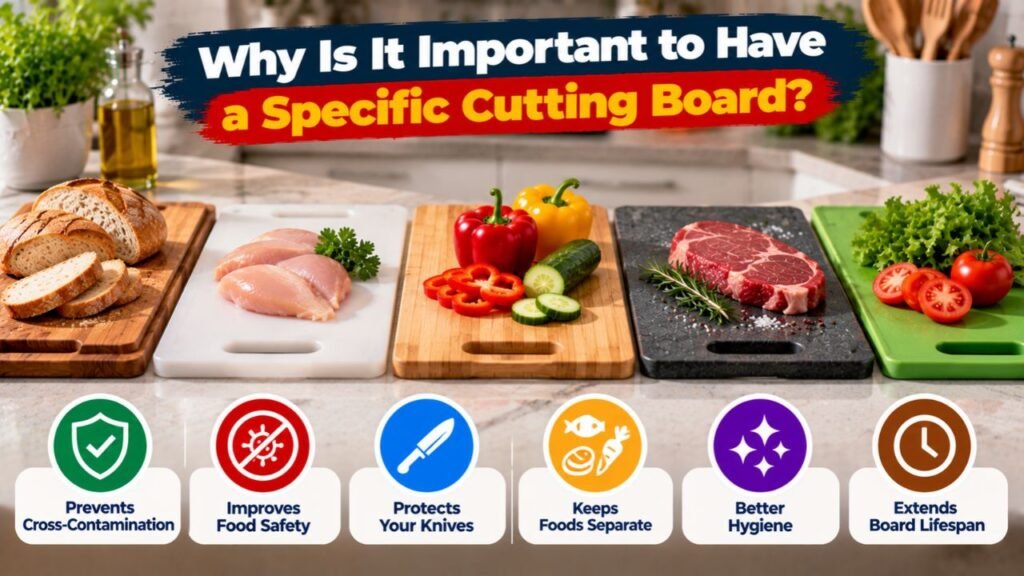
The primary reason for assigning cutting boards to particular foods is to prevent harmful microorganisms from spreading during food preparation.
Raw animal products, fresh produce, and cooked foods have different handling requirements. Keeping them on designated surfaces reduces accidental contact between food groups.
Preventing Cross-Contamination Between Foods
Cross-contamination occurs when harmful microorganisms move from one food, utensil, or preparation surface to another.
Raw chicken may contain bacteria such as Salmonella and Campylobacter. Raw ground beef may contain harmful strains of Escherichia coli.
These microorganisms are not always visible, and contaminated food may look and smell normal.
Consider preparing chicken tacos.
You trim raw chicken on a cutting board and then use the same unwashed surface to slice lettuce and tomatoes.
Bacteria from the raw chicken juices may transfer to the vegetables.
The chicken will be cooked, but the lettuce and tomatoes may be served without additional heating.
Using a dedicated raw-poultry board separates these preparation tasks and reduces the opportunity for contamination.
Protecting Ready-to-Eat Foods
Ready-to-eat foods are foods that can be eaten without another cooking step.
Examples include fresh salad ingredients, bread, cheese, cooked chicken, sliced fruit, and prepared sandwiches.
These foods need protection from raw meat juices because they may not receive additional heat treatment before serving.
The CDC recommends separate cutting boards or plates for raw meat, poultry, and seafood and for produce, bread, and other foods that will not be cooked.
This distinction is more meaningful than separating every individual vegetable or assigning a different board to every recipe.
A dedicated produce board can be used for washed carrots, cucumbers, tomatoes, and lettuce, provided it is properly cleaned between preparation tasks as needed.
Reducing Foodborne Illness Risks
Foodborne illness can develop when harmful bacteria, viruses, or other pathogens enter food and are consumed.
Raw meat, poultry, and seafood may carry microorganisms that proper cooking can destroy.
But cooking one ingredient does not remove contamination that has already reached another food.
For example, cooking chicken to its recommended internal temperature does not make a salad safe if raw chicken juices previously contaminated the lettuce.
This is why separating preparation surfaces matters even when every meat dish is cooked thoroughly.
A dedicated cutting board provides a physical separation that reduces opportunities for foodborne pathogens to reach uncooked ingredients.
Preventing Food Allergen Cross-Contact
Dedicated cutting boards also matter when someone has a food allergy.
Allergen cross-contact occurs when an allergenic food protein unintentionally transfers to another food.
Common examples include transferring peanut residue, milk proteins, wheat particles, or shellfish proteins through shared cutting surfaces.
Food Allergy Research & Education recommends thoroughly cleaning cutting boards and utensils and using dedicated equipment when preparing food for people with allergies.
For example, a board used to cut bread containing wheat should not be used unwashed to prepare a meal for someone with a wheat allergy.
A separate, clearly labeled board may be useful when allergy restrictions are part of daily cooking.
Key Takeaway: Dedicated cutting boards reduce the transfer of harmful microorganisms and allergens between foods, protecting ingredients that may be eaten without further cooking.
Which Foods Should Have Their Own Cutting Boards?
The most practical system separates raw animal products from ready-to-eat foods.
Additional boards can be assigned to poultry, seafood, cooked meat, and allergy-controlled preparation when the household’s cooking habits justify them.
A Dedicated Board for Raw Meat, Poultry, and Seafood
One board should be reserved for raw animal products such as beef, pork, chicken, turkey, fish, and shellfish.
These foods can carry bacteria that may contaminate other ingredients.
A food-grade plastic cutting board is a convenient choice because many models are dishwasher-safe and relatively easy to sanitize.
A shallow juice groove may also help contain liquids while trimming meat.
The same raw-food board can be used for different types of meat if it is thoroughly cleaned and sanitized between tasks.
For example, after trimming chicken, wash and sanitize the board before preparing raw fish.
Separate boards for poultry and seafood are convenient but not strictly necessary for most home kitchens.
A Separate Board for Fruits, Vegetables, and Bread
Fresh produce, bread, cheese, and other ready-to-eat foods should have a cutting surface protected from raw animal juices.
A properly maintained wooden or plastic cutting board works well for these ingredients.
This board can be used for tasks such as chopping onions, slicing tomatoes, cutting apples, and preparing sandwiches.
Wash fruits and vegetables appropriately before cutting them.
The FDA recommends washing produce under running water, including fruits with peels or rinds that will not be eaten.
For example, wash the outside of a melon before cutting it. Otherwise, the knife may carry microorganisms from the rind into the edible flesh.
A dedicated produce board does not replace proper produce washing.
Separate Boards for Cooked Meat and Allergy-Controlled Foods
Cooked meat should not be placed on a board contaminated by raw meat juices.
A clean ready-to-eat board can be used for carving cooked chicken, roast beef, or pork.
For frequent meat carving, a separate board with a juice groove may be convenient.
Households preparing food for someone with a diagnosed allergy may need an additional dedicated board.
That board should be clearly identified, thoroughly cleaned, and stored away from equipment used with the allergen.
A dedicated allergy-safe board should never be treated as automatically clean simply because it is reserved for a certain purpose.
Key Takeaway: Keep raw animal products separate from ready-to-eat foods. Add boards for cooked meats or allergy-controlled meals when those extra distinctions support safer preparation.
How Many Specific Cutting Boards Do You Need?
Most home kitchens need at least two cutting boards for a practical food separation system.
The number can increase according to the foods prepared, available space, and allergy restrictions.
Two Cutting Boards for Most Households
A two-board system is a simple starting point.
Use one board for raw meat, poultry, and seafood and another for produce, bread, cheese, and cooked foods.
For example:
- Board 1: Dishwasher-safe plastic for raw animal products.
- Board 2: Hardwood or food-grade plastic for ready-to-eat foods.
This arrangement follows the basic separation principle recommended by the USDA and FDA.
My preference is to choose boards with different colors or clearly different appearances so they cannot be confused during cooking.
The system works best when everyone using the kitchen understands which board belongs to which food group.
Three or More Boards for Frequent Cooking
Additional boards can reduce the amount of cleaning required between different food preparation tasks.
A household that regularly prepares poultry, seafood, and vegetables may prefer three or four boards.
One possible arrangement includes separate boards for raw poultry, raw seafood and red meat, fresh produce, and cooked foods.
For larger households or kitchens handling food allergies, another clearly labeled board may be useful.
Owning extra boards is optional. The benefit comes from maintaining clear assignments and cleaning each surface correctly.
What If You Have Only One Cutting Board?
One cutting board can be used for different foods if it is cleaned properly between tasks.
When only one board is available, prepare ready-to-eat ingredients first.
For example, wash and slice the tomatoes, lettuce, and onions before placing raw chicken on the board.
Move the prepared vegetables into clean containers.
Then use the cutting board for raw chicken.
Wash the board thoroughly afterward and sanitize it as appropriate.
If the preparation order must be reversed, wash and sanitize the board before returning to ready-to-eat foods.
Using both sides of an unwashed board is not a reliable substitute because raw juices can reach its edges or underside.
Key Takeaway: Two dedicated boards are a practical minimum for routine home cooking. More boards are useful for frequent food preparation or allergy restrictions, but proper washing remains necessary.
What Do Different Cutting Board Colors Mean?
Color-coded cutting boards make it easier to identify the intended food group at a glance.
This system is common in restaurants and commercial food preparation environments.
A widely used arrangement includes the following colors:
| Cutting Board Color | Assigned Food Group | Examples |
| Red | Raw red meat | Beef, pork, lamb |
| Yellow | Raw poultry | Chicken, turkey, duck |
| Blue | Raw seafood | Fish, shrimp, shellfish |
| Green | Fruits and vegetables | Tomatoes, carrots, apples, lettuce |
| White | Bakery and dairy | Bread, cheese, pastries |
| Brown | Cooked meat | Cooked chicken, roast beef, ham |
| Purple | Allergy-controlled preparation | Foods prepared without a specified allergen |
These assignments are common conventions, not a universal legal color requirement for U.S. home kitchens.
Food businesses may use different systems according to their operating procedures and applicable local requirements.
The colors themselves do not prevent contamination.
A red cutting board can still transfer bacteria if used without cleaning, and a green board can become contaminated by dirty knives or hands.
For a home kitchen, two different colors may be sufficient.
For example, assign red to raw animal products and green to produce and other ready-to-eat foods.
A label or engraved food symbol can also identify a board’s intended purpose.
Does Cutting Board Material Matter for Food Separation?
Board material influences cleaning convenience, surface wear, knife compatibility, and maintenance.
Both wood and plastic can be used safely when they are appropriate for food contact and properly maintained.
Plastic Cutting Boards for Raw Animal Products
Plastic is a practical material for boards dedicated to raw meat, poultry, and seafood.
Many food-grade plastic cutting boards have nonporous surfaces that are relatively easy to wash.
Some models can also be cleaned in the dishwasher.
This is convenient after handling raw chicken or other ingredients that may carry harmful bacteria.
Still, plastic develops knife marks with repeated use.
Deep scratches and grooves can retain food residue and interfere with cleaning.
Choose a durable board with a stable surface and replace it when excessive wear makes thorough washing difficult.
Wooden Cutting Boards for Produce and Bread
Wooden cutting boards are useful for preparing vegetables, fruit, bread, and other ready-to-eat ingredients.
Maple, walnut, cherry, and other suitable hardwoods provide durable cutting surfaces when properly maintained.
Wood is not automatically unsafe for raw meat. USDA guidance permits appropriately maintained wooden cutting boards for raw meat and poultry.
Yet many wooden boards require hand washing and careful drying, making plastic a convenient alternative for raw animal foods.
For a household using both materials, I would reserve the wooden board for everyday produce preparation and use a separate plastic board for raw proteins.
This creates a straightforward cleaning routine.
Bamboo and Composite Cutting Boards
Bamboo cutting boards are another option for preparing fruits, vegetables, and bread.
They are generally firm and can provide durable cutting surfaces.
Most bamboo boards need careful washing and drying to prevent moisture-related damage.
Composite boards are manufactured from combinations of materials, including compressed wood fibers and resins.
Some composite cutting boards are dishwasher-safe, while others require specific cleaning methods.
Their suitability depends on the finished product and manufacturer instructions.
Regardless of material, choose a smooth surface that remains stable during knife use.
Avoid relying on antibacterial advertising claims as a replacement for cleaning.
Key Takeaway: Plastic offers convenient cleaning for raw animal products, while wood and bamboo are practical for ready-to-eat foods. The board’s condition and cleaning routine matter more than its material alone.
How to Use Dedicated Cutting Boards Safely
A designated board system works best when preparation follows a consistent sequence.
The following routine is suitable for everyday home cooking.
Step 1: Assign Each Board to a Food Group
Choose one board for raw animal products and another for ready-to-eat foods.
Use labels, colors, or noticeably different materials to identify them.
Make the assignments clear to everyone preparing food.
Step 2: Prepare Ready-to-Eat Ingredients First
Start with washed produce, bread, or ingredients that will not receive further cooking.
For example, when preparing chicken sandwiches, slice the bread, lettuce, and tomatoes before handling raw chicken.
Transfer the prepared ingredients into clean containers.
This reduces the chance of raw poultry juices reaching ready-to-eat food.
Step 3: Use the Raw-Food Board for Meat Preparation
Move the raw meat, poultry, or seafood to its designated board.
Use a clean knife and appropriate utensils.
Keep raw juices away from nearby ingredients, serving plates, and clean kitchen equipment.
Avoid washing raw poultry, as the CDC warns that washing can spread germs around the sink and surrounding surfaces.
Step 4: Wash Hands and Utensils When Switching Tasks
Changing boards is not enough if the same dirty knife or hands touch the next ingredient.
Wash your hands with soap and water for at least 20 seconds after handling raw animal products.
Wash knives, tongs, and other utensils before using them with ready-to-eat foods.
A clean cutting board can become contaminated immediately through contact with unwashed equipment.
Step 5: Use a Clean Surface for Cooked Food
After cooking meat, transfer it to a clean plate or cutting board.
Do not return cooked chicken to the unwashed surface used during raw preparation.
Cooking destroys many harmful microorganisms in the food, but transferring the cooked meat onto a contaminated surface can introduce germs again.
Step 6: Wash, Dry, and Store Boards Separately
Clean each board after food preparation.
Sanitize after raw animal products as appropriate.
Dry the boards thoroughly before storage, following their material-specific instructions.
Store them where they remain clean and protected from food residue.
A stable rack that permits air circulation works well for wooden and plastic boards.
How to Clean and Sanitize Specific Cutting Boards
Dedicated cutting boards still need regular cleaning.
Using one surface exclusively for raw chicken does not mean bacteria disappear between preparation sessions.
Wash Cutting Boards After Every Use
The USDA recommends washing cutting boards with hot, soapy water after use.
Remove food scraps, scrub the cutting surface, and pay attention to corners and grooves.
Rinse thoroughly with clean water.
Use clean paper towels or allow the board to air-dry.
The same cleaning principle applies to cutting boards used for produce, bread, cheese, and cooked meat.
Wiping a board with a damp cloth does not replace thorough washing.
Sanitize After Preparing Raw Animal Products
Sanitizing reduces microorganisms remaining after the board has been washed.
The USDA provides a household sanitizing method using 1 tablespoon of unscented liquid chlorine bleach mixed with 1 gallon of water.
Apply the solution to the clean cutting surface and allow it to remain for several minutes.
Then rinse with clean water and allow the board to air-dry or dry it with clean paper towels.
Use a bleach product and concentration suitable for this purpose, and follow label instructions.
Never mix bleach with vinegar, ammonia, or other cleaning chemicals.
For boards with special coatings or unusual materials, follow manufacturer-approved sanitizing instructions.
Dry Wooden and Plastic Boards Correctly
Moisture management matters for both board types.
Wooden cutting boards can swell, warp, or crack after prolonged exposure to water.
Most glued wooden boards should be hand-washed unless the manufacturer permits dishwasher cleaning.
Plastic boards may tolerate dishwasher cycles, but compatibility varies by product.
After washing, allow the boards to dry completely before placing them in storage.
Avoid stacking damp boards tightly together.
Key Takeaway: Wash every cutting board after use, sanitize raw-food boards when appropriate, and dry all surfaces before storage. Food separation cannot replace proper cleaning.
Common Mistakes That Defeat Cutting Board Separation
Even a well-organized kitchen can experience cross-contamination if cutting boards are handled incorrectly.
Several mistakes are worth avoiding.
Using the correct board with a dirty knife: A knife that has touched raw chicken can transfer bacteria to vegetables even when the vegetable board is clean.
Assuming color coding sanitizes surfaces: Colored boards still require washing, rinsing, and appropriate sanitizing after food preparation.
Placing cooked food on a raw-meat board: Fully cooked meat may become contaminated when it contacts a board containing raw meat residue.
Using opposite sides without cleaning: Food juices can spread around the edges, making a simple flip insufficient.
Ignoring food allergies: A clean-looking board may contain allergen residue that requires thorough washing to remove.
Keeping deeply scratched boards: Knife grooves may collect food residue and become difficult to wash thoroughly.
Storing boards while damp: Trapped moisture can damage wooden boards and create poor storage conditions.
Handling raw meat and produce without washing hands: Dirty hands can transfer microorganisms between correctly assigned boards.
I would prioritize clean knives, proper handwashing, and separating raw foods before investing in a large collection of color-coded cutting boards.
Those basic habits support the purpose of the entire system.
When Should You Replace a Dedicated Cutting Board?
Cutting boards gradually wear down through chopping, slicing, washing, and drying.
Shallow knife marks are normal.
But deep cuts, cracks, splinters, and damaged seams can create areas that are difficult to clean.
The USDA advises replacing boards that become excessively worn or develop hard-to-clean grooves.
Plastic boards may need replacement when repeated knife contact leaves deep scars.
Wooden boards should be inspected for cracks, separated glue joints, and rough areas that trap food residue.
A board with major damage should not simply be reassigned from raw meat preparation to vegetables.
Changing its purpose does not correct its damaged surface.
The safest approach is to replace a board when it can no longer be cleaned thoroughly or used securely.
Conclusion
The answer to why is it important to have a specific cutting board is mainly food safety. Dedicated boards reduce opportunities for bacteria and allergens to move between raw animal products and foods that may be served without cooking.
For most home kitchens, two cutting boards provide a practical arrangement. Reserve one for raw meat, poultry, and seafood and another for fresh produce, bread, cheese, and cooked foods. Color coding and suitable materials can make the system easier to follow.
My recommendation is to start with two clearly identified, easy-to-clean boards rather than purchasing a large set immediately. Add specialized boards only when cooking habits or allergy restrictions justify them.
Remember that separation is only one part of safe food preparation. Wash knives and hands, clean and sanitize surfaces as appropriate, dry boards correctly, and replace damaged equipment before it becomes difficult to maintain.
FAQs About Dedicated Cutting Boards
Why Should Raw Meat Have a Separate Cutting Board?
Raw meat, poultry, and seafood may contain harmful microorganisms that can transfer to other foods.
A dedicated raw-food board reduces the chance of meat juices reaching fresh vegetables, bread, or cooked ingredients.
The USDA and FDA recommend separate boards for raw animal products and produce.
The raw-meat board still needs thorough washing and appropriate sanitizing after preparation.
Do You Really Need Two Cutting Boards?
Two cutting boards are strongly recommended for home kitchens that regularly prepare raw animal products and ready-to-eat foods.
One board can be dedicated to raw meat, poultry, and seafood, while another is used for vegetables, fruit, bread, and cooked foods.
A single board can be used for different food groups if it is properly cleaned and sanitized between tasks, but two boards provide a simpler separation system.
Can You Use the Same Cutting Board for Chicken and Beef?
Yes, a cutting board can be used for both raw chicken and raw beef if it is thoroughly cleaned and sanitized between preparation tasks.
A separate poultry board is convenient for frequent cooking but is not necessary for every household.
Never use a board contaminated with raw animal juices for ready-to-eat ingredients without washing and sanitizing it first.
Why Are Cutting Boards Different Colors?
Different colors identify which food group belongs on each board.
For example, red commonly represents raw meat, yellow represents raw poultry, blue represents seafood, and green represents fruits and vegetables.
Color coding reduces confusion, especially when several people prepare food in the same kitchen.
These colors are common conventions rather than mandatory assignments for U.S. home kitchens.
Is It Safe to Use One Wooden Cutting Board for Everything?
A wooden cutting board can be used for different foods when it is properly cleaned, sanitized when appropriate, and maintained in good condition.
Yet using one board for raw animal products and ready-to-eat ingredients creates more opportunities for accidental cross-contamination.
A separate raw-meat board is a practical precaution, especially when preparing salads, sandwiches, and other foods that will not receive additional cooking.
Why Should You Not Cut Vegetables on a Meat Cutting Board?
Vegetables intended to be eaten raw can become contaminated by bacteria remaining from raw meat, poultry, or seafood.
For example, cutting salad tomatoes on a board that previously held raw chicken may transfer harmful microorganisms to the tomatoes.
A meat cutting board can be used for vegetables only after thorough cleaning and appropriate sanitizing.
Using a separate vegetable board avoids that repeated changeover.
Do Cutting Boards Need to Be Sanitized After Every Use?
Cutting boards should be washed after every use.
Sanitizing is an additional precaution for surfaces that have contacted raw meat, poultry, or seafood, and it may be required in other situations.
The USDA recommends washing boards with hot, soapy water, rinsing, and drying them. It also provides a diluted chlorine bleach method for sanitizing.
Always follow the board manufacturer’s material-specific care instructions.
Can a Dedicated Cutting Board Still Cause Food Poisoning?
Yes. Dedicated cutting boards reduce cross-contamination risks but do not eliminate them.
A raw-meat board can still contain harmful microorganisms if it is not washed properly. Dirty knives, unwashed hands, and contaminated utensils may also transfer bacteria to ready-to-eat foods.
The safest routine combines separate food preparation surfaces with proper handwashing, cleaning, sanitizing, cooking, and food storage.