Different Types of Wood Cutting Boards: 8 Woods Compared
Wood cutting boards come in several hardwood varieties, including maple, walnut, cherry, beech, birch, teak, acacia, and rubberwood. Each offers a different balance of durability, knife friendliness, moisture resistance, and appearance. Wooden boards also come in end-grain, edge-grain, and face-grain designs, which affect how the cutting surface handles daily chopping.
Choosing the wrong wood can leave you with a board that develops deep knife marks, absorbs moisture, warps, or wears down your knife edges faster than expected. Two boards that look almost identical may behave differently during food preparation.
A suitable hardwood provides a stable cutting surface, withstands repeated slicing, and remains manageable to clean. Matching the wood species and construction to your cooking habits also reduces unnecessary maintenance and replacement costs.
The U.S. Food and Drug Administration’s 2026 Food Code, Section 4-101.17, identifies hard maple and equivalently hard, close-grained woods as acceptable cutting-board materials in its model food-service standards. This highlights the importance of wood density and grain structure.
When comparing different types of wood cutting boards, I found that the biggest source of confusion is the distinction between wood species and grain construction. Maple and walnut describe materials, while end grain and edge grain describe how those materials are arranged.
Some hardwoods are better suited to frequent chopping, while others appeal to people who prioritize appearance, lighter cutting tasks, or moisture resistance. Understanding these differences makes choosing a board much simpler.
The comparisons below explain eight common hardwood options, three construction styles, their advantages and limitations, and the cleaning requirements that matter most. You’ll also see which woods deserve extra caution and which choices make sense for everyday kitchen tasks.
Different Types of Wood Cutting Boards by Wood Species

The most common wooden cutting boards are made from hardwoods that balance surface durability with reasonable knife friendliness.
Hardness, grain structure, and moisture response vary by species. Even boards made from the same hardwood may perform differently because of construction quality, thickness, and finishing.
The Janka hardness scale measures a wood’s resistance to indentation. Higher numbers indicate greater resistance to denting, but they do not directly measure how quickly a cutting board dulls knives.
Here is a comparison of eight hardwood options.
| Wood Type | Janka Hardness | Main Advantage | Main Limitation |
| Hard maple | 1,450 lbf | Durable, fine-grained surface | Light color shows stains |
| Black walnut | 1,010 lbf | Dark appearance, knife-friendly feel | Marks more easily than maple |
| Black cherry | 950 lbf | Smooth texture, warm color | Less resistant to heavy chopping |
| American beech | 1,300 lbf | Hard, uniform cutting surface | Sensitive to moisture changes |
| Yellow birch | 1,260 lbf | Good hardness and fine texture | Less common in finished boards |
| Teak | 1,070 lbf | Natural moisture resistance | Silica can increase knife wear |
| Acacia | Varies by species | Attractive grain, often dense | Hardness and texture vary widely |
| Rubberwood | 960 lbf | Affordable, moderate hardness | Can develop visible knife marks |
Janka values are representative side-grain measurements for the named species. Acacia is not assigned one number because the commercial name covers different species.
1. Hard Maple Cutting Boards
Hard maple is one of the strongest all-around choices for everyday wooden cutting boards. It provides a hard, fine-textured cutting surface without the extreme density found in some tropical hardwoods.
Hard maple, also called sugar maple or rock maple, has a Janka hardness of approximately 1,450 pounds-force (lbf). Its small, closely spaced pores make the surface relatively easy to clean.
Maple cutting boards generally have a creamy white to pale golden color with subtle grain patterns. Their simple appearance works well in kitchens where a light-colored preparation surface is preferred.
The main advantages include good resistance to dents, consistent cutting characteristics, and suitability for both edge-grain and end-grain construction.
Maple is not immune to water damage. Repeated soaking or uneven drying can still cause swelling, cupping, or cracking.
Also, hard maple and soft maple are not identical materials. Soft maple includes several species with lower average hardness, so checking the product description matters.
For a dependable board used to chop vegetables, slice cooked meats, and prepare meals daily, hard maple is my first recommendation.
2. Black Walnut Cutting Boards
Black walnut cutting boards are recognized for their dark chocolate-brown color and attractive natural grain.
American black walnut has a Janka hardness of approximately 1,010 lbf, making it noticeably softer than hard maple.
That lower hardness means walnut generally develops knife marks more readily, but it also provides a forgiving cutting surface for regular slicing.
Walnut is popular for both food preparation and serving because its dark appearance pairs well with cheese, bread, and other foods.
Its main characteristics include:
- Rich brown coloring with natural variations
- Moderate hardness suitable for everyday slicing
- Attractive end-grain and edge-grain patterns
- Greater susceptibility to dents than maple
Walnut’s grain is not as uniformly tight as hard maple, so surface condition and cleaning remain important.
Dark walnut may visually conceal some food stains, although scratches and finish wear can still become noticeable.
I would favor walnut for someone who wants a functional preparation board that also looks attractive on the dining table.
3. Cherry Wood Cutting Boards
Cherry cutting boards offer a warm reddish-brown appearance and a smooth cutting surface.
American black cherry has a Janka hardness of approximately 950 lbf, making it one of the softer hardwood choices in this comparison.
Its fine, relatively uniform grain feels suitable for controlled slicing and routine food preparation.
Cherry also changes appearance over time. Exposure to light and normal aging gradually deepens its color from lighter pinkish-brown tones toward a richer reddish-brown.
This makes cherry appealing for kitchens with warm wood cabinets, butcher-block countertops, or traditional furnishings.
The trade-off is reduced resistance to knife marks. Repeated heavy chopping may leave more visible surface damage than it would on maple or beech.
Cherry works well for vegetables, fruit, bread, cheese, and other lighter preparation tasks.
For someone who appreciates a softer cutting surface and natural color development, cherry is worth considering.
4. Beech Wood Cutting Boards
Beech is a practical hardwood for cutting boards because it combines relatively high hardness with a fine, uniform texture.
American beech has a Janka hardness of approximately 1,300 lbf, placing it close to hard maple in resistance to indentation.
Beech typically appears pale cream with subtle pink or brown undertones.
Its fairly consistent grain gives the board a smooth appearance without dramatic dark streaks.
Beech cutting boards can withstand repeated vegetable chopping and general kitchen preparation. They are also found in butcher-block-style construction.
The main concern is dimensional movement, meaning the wood can expand or contract as surrounding moisture changes.
Poor drying practices may increase the risk of warping or separation at glue joints.
Beech is a sensible alternative to maple when a well-made board is available at a favorable price.
I would give extra attention to drying and storage rather than leaving a beech board flat on a damp counter.
5. Birch Wood Cutting Boards
Birch is another hardwood option with characteristics suited to kitchen cutting surfaces.
Yellow birch has a Janka hardness of approximately 1,260 lbf, giving it a useful balance between resistance to dents and cutting comfort.
Its grain is generally fine and uniform, with coloring that ranges from pale cream to light reddish-brown.
Birch may not be advertised as frequently as maple or walnut, but it has sufficient hardness for ordinary slicing and chopping.
A well-constructed birch board can work for vegetables, fruit, herbs, and general meal preparation.
Like other wooden boards, birch needs protection from extended moisture exposure. Uneven drying may contribute to movement or distortion.
There are also multiple birch species with different properties, so a label that simply says “birch” may not identify the exact material.
Yellow birch is an option worth comparing with beech and maple when construction quality is similar.
6. Teak Wood Cutting Boards
Teak cutting boards are often selected for their golden-brown appearance and natural resistance to moisture.
Genuine teak, or Tectona grandis, has a Janka hardness of approximately 1,070 lbf.
Its natural oils contribute to durability in damp environments, while its grain patterns create a distinctive kitchen accessory.
Teak does have an important limitation.
The wood naturally contains silica, a mineral component that can cause increased wear on cutting edges. This means its moderate Janka rating does not tell the full story about knife friendliness.
Teak also has a coarser pore structure than hard maple.
Its advantages are most relevant to people who prioritize appearance and moisture resistance. Proper cleaning and drying are still required, even though the wood naturally resists moisture-related deterioration.
For frequent chopping with expensive kitchen knives, I prefer maple or walnut over teak because of the silica issue.
A teak board may be more appealing for serving, slicing bread, and general food preparation that involves less repetitive knife contact.
7. Acacia Wood Cutting Boards
Acacia cutting boards are popular for their varied brown coloring, contrasting grain patterns, and generally dense construction.
One detail deserves attention: acacia is a broad commercial name rather than a single wood with one fixed hardness rating.
Different acacia species have different densities, textures, and grain arrangements. Some are moderately hard, while others are considerably harder than common North American cutting-board woods.
This variation explains why two acacia cutting boards may behave differently despite sharing the same product label.
Acacia boards frequently feature dark streaks, lighter sections, and decorative patterns that make them attractive for serving food.
Some dense acacia boards resist dents well but may feel less forgiving under a knife.
Other products use smaller glued wood sections, so joint quality and manufacturing standards matter.
Before choosing acacia, I recommend checking the species information, food-contact suitability, surface smoothness, and manufacturer care instructions.
A well-made acacia board can be a practical choice, but the name alone does not guarantee identical cutting characteristics.
8. Rubberwood Cutting Boards
Rubberwood is a relatively affordable hardwood commonly used in kitchen accessories, furniture, and household products.
It comes from the rubber tree, Hevea brasiliensis, which is cultivated primarily for natural latex production.
Rubberwood has a Janka hardness of approximately 960 lbf, making it softer than hard maple and American beech.
Its color is usually pale blonde to medium tan, sometimes with slightly darker grain patterns.
Rubberwood cutting boards are often made by joining smaller pieces of timber into a larger panel.
This construction can provide a usable cutting surface at an accessible price.
The lower hardness means the surface may develop visible knife marks more quickly under heavy chopping.
Some products are marketed as parawood or Malaysian oak, although rubberwood is not a true oak species.
Because commercial rubberwood may undergo different processing and preservation treatments, confirm that the finished board is specifically intended for direct food contact.
For occasional meal preparation or a secondary cutting board, a properly manufactured rubberwood model can be reasonable.
Key Takeaway: Hard maple is a strong all-purpose option, while walnut and cherry offer softer cutting surfaces. Beech and birch provide good alternatives, and teak, acacia, and rubberwood come with specific trade-offs worth checking before purchase.
Types of Wood Cutting Boards by Grain Construction
Wood species determine much of a board’s natural character, but grain orientation affects how the cutting surface responds to repeated knife contact.
Three primary construction styles are used in wooden cutting boards.
End-Grain Wood Cutting Boards
End-grain boards are constructed from wood blocks arranged with their cut ends facing upward.
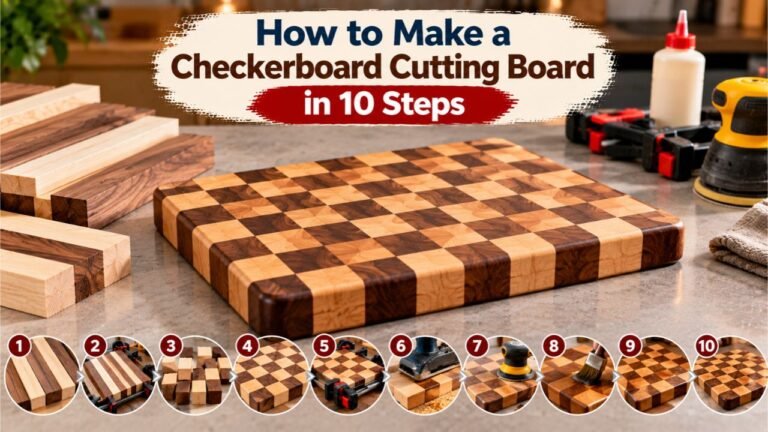
The visible surface often resembles a checkerboard or a pattern of small rectangles.
During chopping, the blade contacts the ends of wood fibers rather than cutting across their long sides.
This arrangement generally produces a forgiving cutting surface and reduces the appearance of some shallow knife marks.
End-grain boards are commonly associated with thick butcher blocks and heavy-duty food preparation.
Their disadvantages include greater manufacturing complexity, higher prices, and additional glue joints.
The exposed fiber ends also absorb oil readily, so conditioning may be needed more frequently.
An end-grain board can be an excellent choice for frequent chopping, provided it is well constructed and dried correctly after washing.
Edge-Grain Wood Cutting Boards
Edge-grain boards are made by joining long wooden strips with their narrow edges facing upward.
Their cutting surfaces typically show long, parallel grain lines.
This construction is common because it provides a durable work surface without the labor involved in assembling numerous end-grain blocks.
Edge-grain boards generally cost less than comparable end-grain models and are available in many sizes.
They also offer good stability when the wood is properly dried and assembled.
Knife marks may remain more visible because the blade cuts across the exposed long fibers.
For everyday kitchen use, I consider a hard maple edge-grain board one of the most practical combinations of durability, maintenance, and price.
Face-Grain Wood Cutting Boards
Face-grain boards expose the broad, flat surfaces of wooden planks.
This construction displays the wood’s natural grain figure more clearly than most edge-grain designs.
Face-grain boards are frequently chosen for serving cheese, bread, fruit, and other foods because of their decorative appearance.
They can also serve as cutting surfaces, but repeated chopping generally creates more visible marks.
Large, thin face-grain boards may also be more prone to cupping if moisture affects one side more than the other.
For serving and occasional slicing, face grain is a reasonable choice.
For repeated knife work, edge grain or end grain is usually more suitable.
| Feature | End Grain | Edge Grain | Face Grain |
| Surface appearance | Block or checkerboard pattern | Long parallel strips | Broad natural grain |
| Knife friendliness | Generally highest | Good | Good for lighter cutting |
| Visible knife marks | Often less noticeable | Moderate | Often more noticeable |
| Typical cost | Higher | Moderate | Often lower |
| Common use | Heavy chopping | Everyday preparation | Serving and light slicing |
Key Takeaway: End grain is attractive for frequent chopping, edge grain provides strong everyday value, and face grain is well suited to serving and lighter preparation tasks.
What Makes Certain Woods Better for Cutting Boards?
The quality of a cutting-board wood cannot be determined by appearance alone.
Hardness, pore structure, and construction quality affect its suitability for repeated food preparation.
Wood Hardness and Knife Friendliness
A good cutting board needs enough hardness to resist deep damage without creating excessive wear on knife edges.
Very soft woods develop dents and cuts quickly, while unusually hard or abrasive woods may increase sharpening needs.
Janka hardness is useful for comparing dent resistance, but it is not a direct measurement of knife wear.
Mineral content, grain orientation, knife steel, and chopping technique also influence how the surface interacts with a blade.
That is why a teak board can be harder on knives than its moderate hardness rating suggests.
Open-Grain vs. Close-Grained Wood
Close-grained wood has a relatively fine, compact pore structure that produces a smooth cutting surface.
Hard maple is a familiar example.
Open-grained woods have larger, more visible pores. Those openings can retain moisture or food residue and may make cleaning more difficult.
Oak and ash are common examples of ring-porous hardwoods with pronounced grain openings.
Pore structure alone does not determine if a cutting board is sanitary. Washing, drying, surface condition, and avoiding cross-contamination are also necessary.
The FDA’s preference for hard, close-grained wood in food-service cutting boards reflects these material considerations.
Construction Quality and Surface Finish
Even a suitable hardwood can make a poor cutting board if manufacturing quality is weak.
Uneven surfaces, gaps between wood strips, rough edges, and separating glue joints create problems during cleaning and use.
A board intended for chopping should have a smooth food-contact surface, secure construction, and a finish suitable for cutting-board use.
Some boards are made from a single piece of wood, while others are assembled from several glued strips or blocks.
Neither method is automatically superior. Good joinery, appropriate adhesives, wood preparation, and moisture management matter more than the number of pieces.
Key Takeaway: Favor a moderately hard, fine-grained hardwood with sound construction rather than choosing a board solely because it is heavy, expensive, or visually attractive.
Types of Wood to Avoid for Everyday Cutting Boards
Not every hardwood or attractive timber makes a good food-preparation surface.
Some species have large pores, low hardness, strong odors, or properties that make them less suitable for repeated knife contact.
Red Oak and Other Coarse, Open-Grained Woods
Red oak and ash have prominent pores that can make thorough cleaning more challenging.
Food particles and moisture may collect in the grain openings, mainly when the surface develops wear.
White oak has different moisture-related properties from red oak and is used in some kitchen products. Still, its ring-porous structure means it is not my preferred wood for a heavily used cutting board.
For regular chopping and frequent washing, hard maple offers a more predictable fine-grained surface.
Pine, Cedar, and Other Softwoods
Most common softwoods are less suitable for heavily used kitchen cutting boards.
Pine often dents and develops knife marks quickly because of its relatively low hardness.
Some softwoods also contain aromatic resins that may leave unwanted smells or affect the food-contact experience.
Cedar can be useful in specific culinary applications, such as cooking planks intended for that purpose, but that does not make every cedar board suitable for repeated chopping.
A dense, properly finished hardwood is usually a better choice for an everyday cutting surface.
Unknown Exotic, Reclaimed, or Decorative Wood
Decorative wood is not automatically suitable for cutting food.
Some exotic species contain compounds associated with irritation or sensitivity. Reclaimed wood may also have unknown finishes, adhesives, preservatives, or previous chemical exposure.
Avoid cutting directly on boards made with unidentified wood, decorative paint, non-food-contact coatings, or questionable reclaimed materials.
Spalted or decayed wood also deserves caution because decorative fungal discoloration does not establish food-contact suitability.
If the seller cannot identify the wood or confirm that the finished product is intended for food preparation, I would choose a clearly labeled kitchen cutting board instead.
Key Takeaway: Avoid unknown or heavily treated woods, resinous softwoods, and coarse open-grained surfaces when selecting a board for frequent food preparation.
Which Type of Wood Cutting Board Should You Choose?
The most suitable board is one that matches the frequency and style of your food preparation.
A surface used for heavy daily chopping has different demands from one used mainly for serving bread and cheese.
Best Choice for Everyday Kitchen Preparation
For ordinary cooking, hard maple edge grain is my preferred starting point.
Maple provides good dent resistance, relatively fine pores, and consistent cutting characteristics.
Edge-grain construction keeps the board practical without requiring the higher expense and upkeep often associated with thick end-grain butcher blocks.
A board with enough working space for vegetables, fruit, and cooked foods is more convenient than an undersized decorative model.
Best Choice for Frequent Chopping and Fine Knives
For repeated chopping with well-maintained kitchen knives, consider an end-grain board made from maple, walnut, or another suitable hardwood.
End-grain construction generally creates a more forgiving surface under repeated cutting.
Walnut is a good alternative if a softer feel and dark appearance are priorities.
The condition of the board matters as much as the species. Deep grooves, raised fibers, and rough patches should be addressed before they damage the cutting experience.
Best Choice for Serving and Decorative Use
Walnut and cherry are attractive choices for boards used to serve bread, cheese, fruit, and appetizers.
Walnut provides darker coloring, while cherry develops warm reddish tones over time.
A face-grain or edge-grain design can display the natural wood figure without the bulk of a thick butcher block.
Acacia is another decorative option, especially for contrasting grain patterns.
For serving, check that any finish or decorative coating is suitable for food contact. A serving-safe coating is not necessarily intended for repeated knife cuts.
Best Choice for a Limited Budget
Beech, rubberwood, and some maple or acacia boards may offer affordable options.
The actual price varies with board size, thickness, wood supply, and manufacturing quality.
A simple edge-grain board made from a suitable hardwood may offer better everyday function than a large decorative board made from unidentified wood.
My preference is to prioritize a smooth surface, sound construction, and clear care instructions before paying extra for unusual wood patterns.
Key Takeaway: Choose maple edge grain for everyday use, a well-made end-grain hardwood for frequent chopping, and walnut or cherry when serving appearance matters alongside cutting function.
Are Bamboo and Wood-Fiber Boards Types of Wood Cutting Boards?
Bamboo and wood-fiber boards are often displayed alongside hardwood cutting boards, but they are different materials.
Bamboo is botanically a grass, not a wood. Bamboo cutting boards are commonly manufactured by joining processed bamboo strips into a solid panel.
They can provide hard, durable surfaces, but hardness varies according to the bamboo material and manufacturing method.
Some bamboo surfaces are also more abrasive to knife edges than traditional maple or walnut.
Wood-fiber composite boards are made by combining processed wood fibers or paper with resins under pressure and heat.
These products may offer a thinner profile and easier cleaning than solid hardwood. Some are dishwasher-safe when the manufacturer explicitly permits it.
Neither material should be judged using the characteristics of solid maple, cherry, or walnut alone.
For someone specifically seeking a traditional wooden cutting surface, solid hardwood remains the more direct comparison.
How to Care for Different Types of Wood Cutting Boards
Wood species vary in density and moisture response, but the basic care principles are similar.
Proper washing, drying, conditioning, and inspection protect the board from avoidable damage.
Cleaning Wooden Cutting Boards After Use
The USDA recommends washing cutting boards with hot, soapy water after use, rinsing with clean water, and allowing them to air-dry or drying them with clean paper towels.
For most household wooden boards, hand washing is the safer maintenance choice.
Use a clean sponge or dishcloth and wash both sides, including the edges.
Do not leave the board soaking in a sink. Extended water exposure may cause swelling, distortion, or glue-joint damage.
After rinsing, dry the surface and position the board so air can reach both sides.
Although USDA guidance permits dishwasher cleaning for some solid-wood boards, many wooden boards contain glued joints or finishes that manufacturers advise against putting in a dishwasher. Follow the instructions for your specific board.
Oiling and Conditioning Different Hardwoods
Food-grade mineral oil is commonly used to condition wooden cutting boards.
It penetrates the wood surface and helps reduce moisture absorption and excessive drying.
Apply a small amount to the clean, fully dry board, spread it across the cutting surface, edges, and underside, and wipe away the excess after absorption.
A conditioning product made with mineral oil and beeswax may provide some added surface water resistance.
End-grain boards often absorb more oil because the fiber ends are exposed. Beech and other woods sensitive to changing moisture conditions also benefit from consistent care.
There is no single oiling schedule suitable for every board.
A dry, pale-looking surface that absorbs oil quickly is a practical sign that conditioning may be needed.
Avoid ordinary cooking oils such as olive oil or vegetable oil for routine conditioning because they can become rancid and produce unpleasant odors.
Sanitizing, Repairing, and Replacing Wood Boards
Cleaning becomes even more important after a cutting board contacts raw meat, poultry, or seafood.
USDA food-safety guidance recommends using separate boards for raw animal foods and ready-to-eat foods to reduce cross-contamination.
It also describes a sanitizing solution made from 1 tablespoon of unscented liquid chlorine bleach per gallon of water. The solution is applied to a cleaned cutting surface, left for several minutes, then rinsed away with clean water before drying.
Use bleach products according to their labels, never mix bleach with other cleaners, and check your board manufacturer’s care instructions.
A board with minor, shallow knife marks may sometimes be restored by appropriate sanding and refinishing.
Replace a wooden board if it develops severe splitting, separating glue joints, loose splinters, or deep grooves that cannot be cleaned thoroughly.
Key Takeaway: Hand wash wooden boards, dry them promptly, condition them when the surface becomes dry, and replace any board that develops damage that prevents thorough cleaning.
Conclusion
Comparing different types of wood cutting boards shows that hard maple, walnut, cherry, beech, birch, teak, acacia, and rubberwood each have distinct advantages. Maple provides a dependable everyday cutting surface, while walnut and cherry are attractive alternatives for cooks who prefer a softer feel and warmer appearance.
Wood species is only part of the decision. End-grain boards are well suited to repeated chopping, edge-grain boards provide practical everyday use, and face-grain boards are often preferred for serving and occasional slicing. Grain structure, manufacturing quality, and moisture care matter as much as the wood’s color.
I recommend starting with a well-made hard maple edge-grain board unless another material offers a clear advantage for your cooking habits. Whatever hardwood you choose, proper cleaning, drying, and conditioning will matter more to its useful lifespan than an attractive grain pattern alone.
FAQs About Different Wooden Cutting Board Types
Which type of wood is best for an everyday cutting board?
Hard maple is one of the best options for everyday cutting boards because of its relatively high hardness, fine grain, and resistance to dents.
An edge-grain hard maple board provides a durable surface for routine vegetable chopping, fruit slicing, and general food preparation. Walnut, beech, and birch are also reasonable alternatives when properly manufactured and maintained.
Is walnut or maple better for a cutting board?
Maple is generally better for resisting dents and handling frequent chopping, while walnut offers a darker appearance and a somewhat softer cutting surface.
Hard maple has a Janka hardness of approximately 1,450 lbf, compared with 1,010 lbf for American black walnut.
Both can make good cutting boards. Maple is my preference for a daily work surface, while walnut is appealing when appearance and knife friendliness receive greater priority.
Are wooden cutting boards safe for cutting raw meat?
Yes. The USDA states that wooden cutting boards may be used for raw meat and poultry when cleaned properly.
Use a separate board for raw meat, poultry, and seafood to reduce cross-contamination with foods that will be eaten without further cooking.
Wash the board with hot, soapy water after use, sanitize when appropriate, rinse, and dry thoroughly. Replace boards with hard-to-clean cracks or deep grooves.
Is acacia wood good for a cutting board?
Acacia can be suitable for cutting boards, but the quality and cutting characteristics depend on the exact species and construction.
Some acacia woods are quite dense and resist dents well. Others differ in hardness, texture, and grain structure.
Check the product’s species identification, food-contact suitability, finish, and manufacturer instructions before purchasing. Avoid assuming that every product labeled acacia will feel the same under a knife.
Do end-grain cutting boards last longer than edge-grain boards?
A properly constructed end-grain cutting board may show less visible damage from repeated chopping because its wood fibers are arranged with their ends facing the cutting surface.
Edge-grain boards are also durable and can remain useful for many years.
The lifespan of either style depends on manufacturing quality, use, cleaning, drying, and maintenance. End grain is not automatically superior if the board has poor glue joints or receives inadequate care.
Is bamboo considered a type of wooden cutting board?
Bamboo cutting boards are usually grouped with wooden boards in stores, but bamboo is technically a grass rather than hardwood.
Bamboo panels are commonly made from strips bonded together. They can be durable and relatively hard, although some may cause greater knife-edge wear than traditional hardwood surfaces.
For a natural hardwood cutting board, consider maple, walnut, cherry, beech, or another clearly identified wood species.
How long do different wooden cutting boards last?
There is no fixed lifespan for a wooden cutting board. A well-made hardwood board can remain usable for many years when cleaned, dried, and maintained correctly.
Hard maple and other dense hardwoods generally resist surface dents better than softer species, but construction quality and moisture exposure also affect durability.
Inspect the board regularly. Deep grooves, major cracks, splinters, persistent contamination, and separating joints are more useful replacement indicators than age alone.