Carbonized Bamboo vs Bamboo Cutting Board: Which Is Better?
Natural bamboo cutting boards are generally a practical choice for everyday food preparation because they retain bamboo’s original hardness and light color. Carbonized bamboo cutting boards undergo controlled heat treatment that creates a darker brown appearance and may improve dimensional stability. Both can be durable, food-safe cutting surfaces, but carbonization does not automatically make bamboo stronger, safer, or better for knives.
Choosing between these boards involves more than appearance. Heat treatment changes certain physical properties of bamboo, and excessive treatment can reduce mechanical strength. A board selected only for its dark color may not provide the durability or cutting performance you expect.
A good bamboo cutting board should remain stable, resist unnecessary moisture damage, provide a suitable surface for kitchen knives, and be easy to clean. Understanding the treatment process helps you avoid paying extra for benefits that a manufacturer has not demonstrated.
The U.S. Department of Agriculture states that bamboo cutting boards absorb relatively little moisture and recommends cleaning them with hot, soapy water. Its guidance also explains that bamboo boards can be conditioned with mineral oil and should be replaced when excessive wear or deep grooves prevent proper cleaning.
What stood out to me during research into carbonized bamboo vs bamboo cutting board materials was a 2022 study published in Forests. Researchers found that controlled hydrothermal treatment darkened bamboo and reduced swelling, but more intense treatment also reduced some mechanical properties. This suggests that darker bamboo is not automatically more durable.
Another detail deserves attention: natural bamboo is not completely unprocessed, and carbonized bamboo is not necessarily dyed or chemically coated. Most commercial boards are assembled from bamboo strips, so adhesive quality, board thickness, and surface finishing matter alongside the treatment method.
Comparing the carbonization process, hardness, knife friendliness, moisture resistance, food safety, appearance, maintenance, and long-term value reveals where each type performs well and which makes more sense for different kitchen tasks.
Carbonized Bamboo vs Natural Bamboo Cutting Board: Quick Comparison

Both types usually begin with the same bamboo material. The primary distinction is the processing used to create the finished board.
| Feature | Natural Bamboo Cutting Board | Carbonized Bamboo Cutting Board |
| Original material | Bamboo, commonly Moso bamboo | Bamboo, commonly Moso bamboo |
| Processing | Dried and manufactured without intentional darkening | Heat-treated to darken and modify the material |
| Natural color | Pale yellow, cream, or golden | Caramel, amber, or medium brown |
| Hardness | Generally retains more original material properties | May become softer after stronger heat treatment |
| Knife friendliness | Firm cutting surface | Firm surface; treatment may change cutting feel |
| Dimensional stability | Depends on drying, construction, and finish | May improve with controlled heat treatment |
| Moisture absorption | Relatively low | May decrease under some treatment conditions |
| Scratch resistance | Good, but knife marks develop | Good, but knife marks develop |
| Stain visibility | Dark food stains are often more noticeable | Dark color may conceal some stains |
| Food safety | Suitable when properly manufactured | Suitable when properly manufactured |
| Cleaning | Usually hand-washing | Usually hand-washing |
| Maintenance | Periodic conditioning when recommended | Periodic conditioning when recommended |
| Appearance | Light, natural grain | Darker, warmer grain |
| Typical price | Often budget-friendly | May carry a premium for appearance or processing |
| Best use | Everyday chopping and food preparation | Everyday preparation and decorative serving |
Neither material has a guaranteed lifespan or a universal hardness rating that applies to every finished board.
My recommendation: If two boards have similar construction and quality, natural bamboo is a sensible choice for everyday chopping. Carbonized bamboo becomes more attractive when you prefer its darker appearance or the manufacturer provides credible information about its treatment and stability.
What Is the Difference Between Carbonized and Natural Bamboo?
Carbonized bamboo and natural bamboo are not different plant species.
The main difference is how the bamboo is processed before the board is assembled.
What Is a Natural Bamboo Cutting Board?
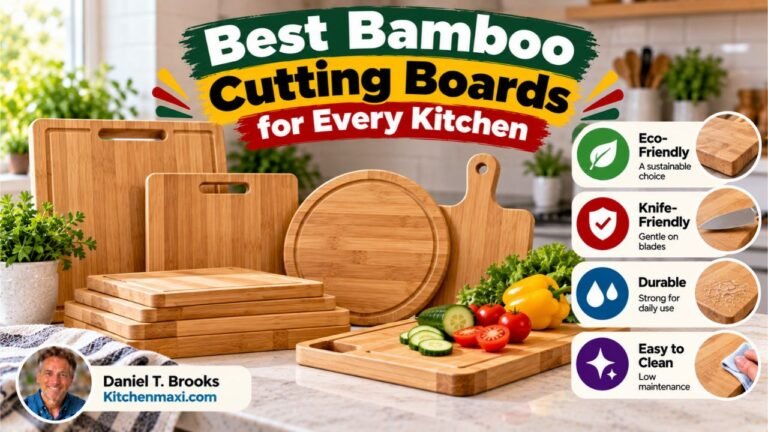
A natural bamboo cutting board is a food-preparation surface made from bamboo that retains its characteristic light yellow or golden color.
Bamboo is technically a grass rather than a hardwood tree.
Many commercial boards are made from Moso bamboo (Phyllostachys edulis), a species commonly used in engineered bamboo products.
Manufacturers usually cut bamboo into strips, dry the material, process it into suitable shapes, and join the pieces into panels.
The finished surface is then sanded and may receive a food-contact-safe oil or other suitable finish.
Natural bamboo still undergoes manufacturing and drying processes.
The term natural does not mean that every board is free from adhesives, finishes, or other manufacturing materials.
Its defining feature in this comparison is that the bamboo has not undergone the additional heat treatment used to create the darker carbonized appearance.
What Is a Carbonized Bamboo Cutting Board?
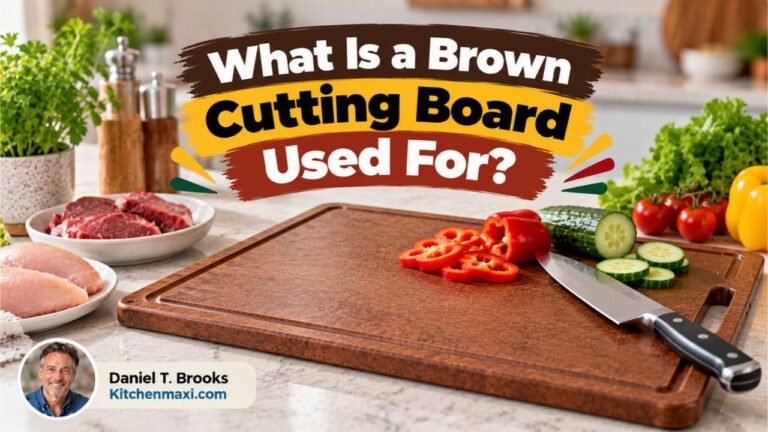
A carbonized bamboo cutting board is made from bamboo that has undergone controlled heat treatment to create a darker color.
The process commonly involves elevated temperatures, sometimes with steam or controlled moisture.
Heat changes components within the bamboo, including hemicellulose and lignin, which contribute to its structure and appearance.
These chemical changes produce warmer brown tones throughout the treated material.
Manufacturers sometimes describe the process as caramelizing the bamboo’s natural sugars.
That explanation captures part of the color change, but the process involves more than ordinary sugar caramelization.
Heat treatment can also change the material’s moisture response and mechanical properties.
The word carbonized does not mean that the board has been burned into charcoal.
It remains a solid bamboo product suitable for manufacturing into cutting boards.
Does Carbonizing Require Chemical Dyes?
Carbonization generally creates the darker appearance through heat-induced changes rather than the addition of a brown dye.
A carbonized bamboo board does not automatically need artificial coloring.
Still, manufacturers may use different processing methods, adhesives, and surface finishes.
Some bamboo products sold in dark colors may be stained rather than carbonized.
Check the manufacturer’s description if you specifically want heat-darkened bamboo.
The appearance alone cannot prove how the color was produced.
Key Takeaway: Natural bamboo retains its light appearance, while carbonized bamboo is darkened through controlled heat treatment. Both are processed materials, and construction quality remains important.
Hardness and Durability: Is Carbonized Bamboo Stronger?
Carbonized bamboo is not automatically harder or stronger than natural bamboo. More intense thermal treatment can reduce certain mechanical properties while improving resistance to moisture-related swelling.
This distinction is important because many product descriptions describe carbonized bamboo as stronger without identifying supporting test results.
Natural Bamboo Retains Its Original Strength Characteristics
Untreated bamboo has a dense, fibrous structure that makes it suitable for cutting boards and other manufactured products.
Its mechanical properties depend on the bamboo species, maturity, position within the culm, moisture content, and manufacturing process.
A quality natural bamboo board can resist ordinary chopping pressure and repeated slicing.
It may still develop scratches or shallow grooves through normal use.
Hardness should not be confused with resistance to cracking or warping.
A hard cutting surface can still fail if the laminated strips separate or the board experiences uneven moisture exposure.
Heat Treatment Can Reduce Mechanical Strength
Controlled heating changes bamboo’s chemical structure.
In a 2022 study published in Forests, researchers examined Moso bamboo treated at temperatures ranging from 120°C to 160°C (248°F to 320°F) for different periods.
At the most intense condition studied, 160°C for 120 minutes, the researchers reported a 47.11% reduction in bending strength and a 16.14% reduction in bending stiffness compared with untreated samples.
These results apply to the tested bamboo specimens and treatment conditions.
They do not mean commercial carbonized cutting boards are 47% weaker than natural boards.
Manufacturers use different treatment processes, and finished boards have additional structural support from their laminated construction.
The findings demonstrate that greater heat exposure can reduce certain mechanical properties rather than automatically improving strength.
Which Board Resists Knife Marks Better?
Both natural and carbonized bamboo boards develop marks from repeated knife contact.
Some heat treatments soften the bamboo or change its surface hardness.
Natural bamboo may retain greater hardness under comparable conditions, but the difference cannot be accurately expressed as one universal percentage.
The board’s surface finish, grain orientation, bamboo density, and treatment intensity also influence wear.
Carbonized bamboo may show light-colored scratches more clearly against its darker surface.
Natural bamboo can show dark stains or compressed fibers more noticeably.
Key Takeaway: Natural bamboo generally retains more of its original mechanical properties. Carbonization can improve some physical characteristics, but excessive heating may reduce strength.
Which Bamboo Cutting Board Is Better for Kitchen Knives?
Both natural and carbonized bamboo are relatively firm cutting surfaces.
They can be used with common kitchen knives, but neither is automatically the best option for delicate knife edges.
Natural Bamboo and Knife Wear
Natural bamboo contains densely packed fibers that provide resistance to repeated cutting.
Its firm surface works for slicing vegetables, fruit, bread, and other ingredients.
The same firmness can make it less forgiving than certain softer hardwood or rubber cutting boards.
Some bamboo species also contain silica within their tissues, which can contribute to the material’s abrasive characteristics.
Knife wear depends on the specific bamboo product rather than the word natural alone.
A smooth, well-finished bamboo surface is preferable to one that feels rough or has raised fibers.
Carbonized Bamboo and Knife Wear
Carbonization may change the hardness and stiffness of bamboo.
A less rigid surface could feel somewhat more forgiving beneath a knife.
That does not establish that carbonized bamboo consistently protects knife edges better than natural bamboo.
Direct comparative knife-retention studies of finished natural and carbonized bamboo cutting boards are limited.
Differences in adhesives, surface coatings, grain orientation, and manufacturing quality can influence cutting performance.
I would avoid paying extra for a carbonized board solely because the seller describes it as knife-friendly.
Both types should be judged by the finished cutting surface.
Surface Finish Matters More Than Color
A smooth surface provides more predictable contact with the knife.
Inspect bamboo boards for:
- Raised fibers or splinters
- Uneven joints between strips
- Hard decorative coatings
- Rough patches around juice grooves
- Surface cracks or loose pieces
Avoid boards with thick decorative finishes that are not intended for direct cutting.
For someone using thin, high-hardness kitchen knives, a more forgiving cutting-board material may be preferable for frequent chopping.
Key Takeaway: Neither bamboo type is a clear winner for protecting knife edges. Surface smoothness, construction, and treatment intensity matter more than the board’s color.
Water Resistance and Warping: Which Performs Better?
Moisture is a major consideration for bamboo cutting boards because many are assembled from narrow strips joined with adhesive.
Heat treatment can change bamboo’s response to water, but it cannot make a laminated board waterproof.
Carbonized Bamboo May Absorb Less Moisture
High-temperature hydrothermal treatment can reduce bamboo’s tendency to absorb moisture and swell.
The 2022 Forests study found that treated bamboo became more dimensionally stable under the tested conditions.
At 160°C for 120 minutes, the researchers measured reductions of approximately 53% in swelling along two measured directions compared with untreated bamboo.
These figures describe experimental samples, not guaranteed performance improvements for finished kitchen boards.
A commercial carbonized board may receive milder treatment or use a different manufacturing method.
Reduced swelling can be useful because bamboo expands and contracts as its moisture content changes.
Still, heat treatment does not completely prevent moisture absorption.
Natural Bamboo Can Also Resist Moisture Well
Natural bamboo is often suitable for cutting boards because it absorbs relatively little moisture compared with many other plant-based materials.
A properly dried, manufactured, and maintained natural bamboo board can withstand routine washing.
Problems develop when water remains trapped around edges, joints, or damaged areas.
Leaving a board submerged can cause the bamboo strips to expand unevenly.
Repeated wetting and drying may stress adhesive joints.
These problems affect both natural and carbonized products.
Does Carbonized Bamboo Warp Less?
Carbonized bamboo may have an advantage in dimensional stability when the treatment reduces moisture-related swelling.
That does not guarantee that every carbonized board will remain flatter than every natural board.
Warping also depends on:
- Board thickness and dimensions
- Quality of the glued joints
- Initial moisture content
- Distribution of bamboo strips
- Drying conditions after washing
- Exposure to uneven heat or water
A thick, properly constructed natural bamboo board may remain flatter than a thin carbonized board.
Do not judge water resistance entirely by the treatment label.
Key Takeaway: Carbonization can reduce moisture-related swelling, but neither board is waterproof. Board construction and proper drying remain central to preventing warping.
Are Carbonized Bamboo and Natural Bamboo Cutting Boards Food Safe?
Both natural and carbonized bamboo cutting boards can be suitable for food preparation when manufactured with appropriate food-contact materials and properly maintained.
The darker appearance of carbonized bamboo does not automatically make it safer or more hygienic.
Is the Carbonization Process Safe?
Carbonization generally uses controlled heat to alter bamboo’s color and certain physical properties.
It does not inherently require adding a dark chemical stain.
The finished board’s suitability for food contact also depends on its adhesives, surface finish, and manufacturing quality.
Heat treatment should not be confused with sterilization that permanently protects a board from contamination.
Once food contacts the surface, microorganisms can still be transferred.
Claims that carbonized bamboo is permanently antibacterial or eliminates the need for washing are not supported by enough product-specific evidence.
Adhesives and Food-Contact Materials
Most bamboo cutting boards are constructed from multiple strips.
These pieces are joined using adhesives during manufacturing.
Both natural and carbonized boards may contain glued joints.
Look for manufacturers that clearly state the board is intended for direct food contact and identify suitable finishes and adhesive systems.
A claim that a board is made from natural bamboo does not prove that the finished product contains no glue.
Similarly, heat treatment does not automatically remove substances contained in adhesives applied during later manufacturing steps.
Avoid cutting boards with strong unexplained chemical odors, damaged coatings, or separating seams.
Bacterial Contamination and Cleaning
Both bamboo types can become contaminated during food preparation.
The USDA states that bamboo cutting boards absorb relatively little moisture and provides cleaning recommendations for their use.
That does not establish a reliable bacterial-safety advantage for carbonized bamboo over natural bamboo.
Food residue can remain in knife grooves, cracks, and damaged adhesive joints.
Regular washing is necessary for both materials.
For raw meat, poultry, and seafood, the USDA recommends using a separate board from the one used for fresh produce and ready-to-eat foods.
A dishwasher-safe plastic board is often a convenient separate surface for raw animal products.
Key Takeaway: Both bamboo types can be food-safe. Verify manufacturing quality, use suitable cleaning methods, and avoid claims that carbonization alone prevents bacterial contamination.
Appearance, Color Changes, and Stain Resistance
Appearance is the most obvious difference between these cutting boards.
It can also influence how stains and surface marks look after repeated use.
Natural Bamboo Has a Light Golden Appearance
Natural bamboo usually ranges from pale cream to warm golden yellow.
Its relatively light surface makes the bamboo grain visible.
This appearance works well with white countertops, light cabinets, and simple kitchen designs.
Natural bamboo can develop a warmer tone with age, exposure to light, and routine conditioning.
Food stains may also become more visible.
Beet juice, turmeric, berries, and other strongly colored ingredients can leave marks on light bamboo.
Prompt cleaning reduces the chance of lasting discoloration.
Carbonized Bamboo Has a Darker Brown Appearance
Carbonized bamboo usually ranges from caramel brown to deeper amber or medium brown.
The exact shade depends on the heating process and original bamboo material.
Its darker appearance can resemble certain hardwood cutting boards.
This makes carbonized bamboo attractive for kitchens with dark cabinets, warm wood finishes, or contrasting light countertops.
The darker color may conceal certain food stains.
It can also make pale scratches, flour residue, or damaged fibers more noticeable.
Carbonization does not make the board stain-proof.
Does Carbonized Bamboo Fade Over Time?
Carbonized bamboo can change appearance through normal use, cleaning, light exposure, and surface wear.
Conditioning oil may temporarily make the brown color appear richer.
Repeated knife contact can create lighter-looking marks.
The color produced through genuine heat treatment is generally a change within the treated bamboo rather than a simple painted surface.
Still, finishes and stains may influence the appearance of individual products.
Follow the manufacturer’s refinishing instructions before sanding a dark bamboo board.
Key Takeaway: Natural bamboo offers a bright golden appearance, while carbonized bamboo provides darker brown tones. Both can develop stains and cutting marks over time.
Which Bamboo Cutting Board Is Better for Everyday Kitchen Tasks?
Natural and carbonized bamboo can serve many of the same kitchen purposes.
Their differences become more meaningful when appearance, cutting frequency, and board design are considered together.
Daily Vegetable and Fruit Preparation
Natural bamboo is a sensible option for frequent slicing and chopping.
It offers a firm surface for cutting onions, cucumbers, carrots, potatoes, apples, and similar ingredients.
Carbonized bamboo performs these tasks too.
Neither material provides an automatic advantage in cutting speed or accuracy.
For daily preparation, I would prioritize a large, flat surface with secure footing and no raised joints.
A 12 × 18-inch board provides a useful preparation area for many households, although available counter and sink space should determine the final dimensions.
Bread, Cheese, and Serving Food
Carbonized bamboo can be attractive for serving bread, cheese, fruit, and appetizers.
Its darker color creates contrast with pale cheeses and sliced bread.
Natural bamboo provides a lighter presentation that works well with simple table settings.
Both can function as serving boards when the manufacturer approves direct food contact.
A serving board may also be used for slicing if its finish is intended for knife contact.
For a primarily decorative board, color may reasonably become the deciding factor.
Meat Preparation and Carving
Both bamboo types can be used for cutting cooked meat when their surfaces are appropriate and properly cleaned.
A juice groove can be useful for collecting some liquid from roasted meat.
For raw meat and poultry, a separate board reduces cross-contamination risks.
A bamboo board with damaged seams or deep grooves is not suitable for food preparation simply because it looks clean.
A dedicated, dishwasher-safe plastic board is often easier to manage for raw animal products.
Key Takeaway: Both types handle ordinary food preparation. Natural bamboo is a practical everyday choice, while carbonized bamboo offers a darker appearance that may be attractive for serving.
Price and Long-Term Value
Natural bamboo cutting boards are often available at affordable prices because they are widely manufactured.
Carbonized boards may cost more due to additional processing, design, branding, or decorative features.
That price difference is not universal.
A thick natural bamboo board with quality construction can cost more than a thin carbonized model.
When comparing prices, look at the actual dimensions, thickness, features, and manufacturer.
For durability, no reliable universal lifespan proves that carbonized bamboo always outlasts natural bamboo.
Both materials may remain useful for years with appropriate care.
A board’s service life depends on moisture exposure, cutting habits, glue-joint quality, and physical wear.
Carbonization can improve some moisture-related properties while reducing certain mechanical properties under stronger treatment conditions.
That tradeoff makes it difficult to declare one material the long-term winner based only on processing.
My preference: If performance and price matter more than appearance, I would choose the better-built board rather than automatically paying a premium for carbonization.
How to Clean and Maintain Both Bamboo Cutting Boards
Natural and carbonized bamboo boards require similar care.
The main objective is to remove food residue without allowing moisture to remain trapped inside the bamboo or its joints.
Wash and Dry After Every Use
Follow this process for ordinary food preparation:
- Remove loose food scraps with a suitable scraper or cloth.
- Wash the board with warm water and mild dish soap.
- Clean around handles, juice grooves, and edges.
- Rinse thoroughly without leaving the board submerged.
- Wipe both surfaces with a clean towel.
- Stand the board upright or position it so air can circulate around both faces.
- Allow it to dry completely before storage.
Avoid soaking either type in the sink.
Most laminated bamboo boards should also be kept out of the dishwasher unless the manufacturer explicitly permits machine cleaning.
Dishwasher heat and prolonged water exposure can damage glued joints.
Apply Food-Grade Mineral Oil When Needed
Some bamboo board manufacturers recommend periodic conditioning with food-grade mineral oil.
Conditioning can reduce rapid moisture changes and help maintain the finished surface.
Apply a thin, even layer to a clean, completely dry board.
Treat the edges and underside if recommended.
Allow the oil to absorb according to the conditioner instructions, then remove any excess.
A food-safe cutting board conditioner containing mineral oil and beeswax may offer additional surface moisture resistance.
Avoid using ordinary olive oil or vegetable cooking oil for long-term conditioning because these oils may oxidize and develop unpleasant odors.
Neither bamboo type requires oiling on an identical fixed schedule.
Inspect the surface and follow the manufacturer’s care instructions.
Sanitizing and Recognizing Damage
For suitable cutting boards, USDA guidance describes a sanitizing solution made from 1 tablespoon of unscented liquid chlorine bleach per gallon of water.
Apply only a sanitizer compatible with the board’s material, adhesives, and finish.
Follow the manufacturer’s restrictions and the sanitizer instructions for contact time and rinsing.
Inspect both natural and carbonized bamboo for splitting, separating glue joints, deep grooves, and raised fibers.
Minor surface marks may be cosmetic.
Cracks and grooves that cannot be thoroughly cleaned are more serious.
Replace a board when damage prevents proper cleaning or creates an unstable cutting surface.
Key Takeaway: Hand-washing, thorough drying, appropriate conditioning, and regular inspection are the main care requirements for both bamboo types.
What to Check Before Buying Natural or Carbonized Bamboo
The best bamboo board is not necessarily the darkest, thickest, or most expensive.
A few construction details deserve attention before purchase.
Confirm the Bamboo and Treatment Information
Look for a clear material description.
Moso bamboo is commonly used, but not every board identifies the species.
For carbonized products, check if the manufacturer explains that the darker appearance comes from heat treatment.
Terms such as deep carbonized, premium carbonized, and extra hardened are not universal technical grades.
Do not assume deeper color proves better moisture resistance or greater strength.
Check for clear statements about food-contact suitability, adhesives, finishes, and cleaning instructions.
Inspect Thickness, Joints, and Surface Quality
Board thickness influences stability and handling.
For many household kitchens, a thickness around 0.75–1 inch offers a practical starting point, though thinner or thicker designs may be appropriate.
A thicker board often resists bending better, but proper drying and construction still matter.
Check that the bamboo strips fit tightly without visible gaps.
The surface should be smooth and free from splinters.
Look for flat construction, rounded edges, and a secure base.
Rubber feet can reduce movement, while a reversible board may provide additional cutting area.
Choose Features That Match Your Kitchen
A large board is useful for preparing several ingredients together.
A smaller model may be easier to clean in a compact sink.
Juice grooves are useful for meat carving or foods that release liquid, but they reduce the available flat cutting area.
Handles make carrying easier but may reduce usable space.
For daily chopping, a smooth rectangular board without unnecessary features is often sufficient.
For serving, a carbonized board with an attractive grain pattern may be worth the additional cost.
Key Takeaway: Verify material claims, inspect glued joints and surface finish, and choose practical dimensions. Construction quality matters more than the word carbonized on the packaging.
Common Mistakes When Comparing Carbonized and Natural Bamboo
Several assumptions can lead to unnecessary spending or disappointing performance.
Assuming carbonized bamboo is always harder: Heat treatment can reduce certain mechanical properties. Darker color is not proof of increased hardness.
Believing carbonized bamboo is waterproof: Controlled heating may improve dimensional stability, but soaking and poor drying can still damage the board.
Treating natural bamboo as completely chemical-free: Most commercial bamboo boards undergo drying, processing, gluing, and finishing.
Assuming darker bamboo is more hygienic: Food safety depends on suitable construction, cleaning, sanitation, and surface condition.
Ignoring knife marks: Both types develop cutting marks. Deep grooves and separating joints deserve attention regardless of color.
Putting every bamboo board in the dishwasher: Many laminated bamboo boards are vulnerable to prolonged heat and moisture.
Choosing appearance over construction: A poorly made dark board may provide less value than a properly manufactured natural bamboo board.
The most useful buying approach is to separate confirmed material properties from advertising claims.
Conclusion
The carbonized bamboo vs bamboo cutting board comparison shows that both materials can provide suitable surfaces for everyday food preparation. Natural bamboo retains its lighter appearance and more of its original physical properties, while carbonized bamboo offers a darker color and may gain improved dimensional stability through controlled heating.
The carbonization process does not guarantee greater strength, better knife protection, or superior food safety. Board thickness, adhesive quality, surface finish, cleaning habits, and moisture exposure have a major influence on actual performance.
For someone seeking a straightforward board for daily chopping, I would generally choose a well-made natural bamboo model. Carbonized bamboo is a reasonable alternative when its warm brown appearance is appealing and the product’s construction meets the same quality standards.
Whichever option you select, wash it promptly, dry it thoroughly, and replace it when cracks or deep grooves prevent proper cleaning. A carefully manufactured and maintained bamboo board matters more than the color produced during processing.
FAQs About Carbonized and Natural Bamboo Cutting Boards
Is Carbonized Bamboo Better Than Regular Bamboo for Cutting Boards?
Carbonized bamboo is not universally better than natural bamboo.
Heat treatment creates a darker appearance and may reduce moisture-related swelling, but more intense treatment can also reduce mechanical strength.
Natural bamboo retains its lighter color and generally preserves more of its original physical properties.
Both are suitable for ordinary kitchen cutting tasks when properly manufactured. Construction quality, food-contact finishes, and maintenance are more useful buying criteria than color alone.
Is Carbonized Bamboo Stronger Than Natural Bamboo?
Not necessarily. Scientific research on thermally treated bamboo shows that some heating processes improve dimensional stability while reducing bending strength or stiffness.
The outcome depends on treatment temperature, duration, bamboo species, and manufacturing conditions.
A carbonized cutting board may still be durable enough for household use, but it should not automatically be described as stronger than an otherwise comparable natural bamboo board.
Are Carbonized Bamboo Cutting Boards Safe for Food?
Yes, carbonized bamboo cutting boards can be suitable for food preparation when the finished product uses appropriate food-contact adhesives and finishes.
The heat-darkening process does not inherently make the board unsafe.
Food safety also depends on cleaning, surface condition, and preventing cross-contamination.
Choose products intended for food preparation and avoid boards with damaged coatings, separating joints, or deep grooves that cannot be cleaned thoroughly.
Does Carbonized Bamboo Contain Harmful Chemicals?
Carbonization itself generally uses controlled heat rather than requiring a brown chemical dye.
That does not establish that every carbonized bamboo board is free from adhesives, coatings, or other manufacturing substances.
Most laminated bamboo boards contain adhesive between strips.
Look for clear manufacturer information about food-contact suitability and finishing materials. Claims such as natural, chemical-free, or non-toxic should not replace actual product specifications.
Does Carbonized Bamboo Dull Knives Faster Than Natural Bamboo?
There is not enough direct comparative research to establish that carbonized bamboo consistently dulls knives faster or slower than natural bamboo.
Heat treatment can change material hardness, but finished-board performance also depends on grain orientation, surface finish, adhesives, and knife technique.
Both bamboo types are relatively firm cutting surfaces.
For delicate knife edges, prioritize a smooth, stable surface and avoid boards with abrasive coatings or damaged fibers.
Is Carbonized Bamboo More Water-Resistant?
Some controlled heat treatments reduce bamboo’s moisture absorption and swelling, which can improve dimensional stability.
This gives carbonized bamboo a potential advantage under certain manufacturing conditions.
It does not make the board waterproof.
Both natural and carbonized bamboo can crack, warp, or develop joint problems after prolonged soaking or improper drying.
Hand-washing and thorough drying remain necessary for most laminated bamboo cutting boards.
Can You Put Carbonized Bamboo Cutting Boards in the Dishwasher?
Most laminated bamboo cutting boards should be hand-washed unless the manufacturer explicitly approves dishwasher use.
High temperatures, moisture, and heated drying can place stress on glued joints and bamboo strips.
Carbonization does not automatically make a board dishwasher-safe.
Wash with mild dish soap and warm water, rinse thoroughly, towel-dry, and allow air to circulate around both surfaces before storage.
Does Carbonized Bamboo Last Longer Than Natural Bamboo?
There is no reliable universal lifespan showing that carbonized bamboo always lasts longer than natural bamboo.
Controlled heat treatment may reduce moisture-related movement, while excessive treatment may weaken some mechanical properties.
Actual lifespan depends on construction quality, thickness, washing habits, cutting frequency, and storage conditions.
A well-made natural bamboo board can outlast a poorly constructed carbonized board, and the reverse is also possible.
Replace either type when serious cracks, separating joints, or hard-to-clean grooves develop.