Serving Board vs Cutting Board: Differences and Best Uses
A serving board is designed mainly for presenting and carrying food, while a cutting board is built to handle chopping, slicing, and repeated knife contact. A sturdy, food-safe cutting board can usually double as a serving board after cleaning. A decorative serving board should only be used for cutting if its material, finish, and construction are suitable for knife use.
Confusing these two kitchen boards can lead to damaged finishes, unnecessary knife wear, and poor food preparation habits. A beautiful cheese platter may look sturdy enough for chopping, but decorative coatings, thin construction, and hard surfaces can make it unsuitable for regular knife work.
Choosing the correct board protects your knives, preserves the appearance of serving pieces, and keeps food preparation organized. It also saves money by helping you avoid buying separate products when a properly designed board can handle both tasks.
The U.S. Department of Agriculture (USDA) recommends that perishable foods should not remain at room temperature for more than 2 hours, or 1 hour when temperatures exceed 90°F. This applies to refrigerated meats, cheeses, and other perishable ingredients displayed on serving boards during gatherings.
In researching the serving board vs cutting board comparison, I found that product names alone do not reliably identify how a board should be used. Two wooden boards may look nearly identical, yet their thickness, protective finishes, and intended purposes can be quite different.
The most useful detail is the board’s actual construction. Solid hardwood with a suitable cutting-safe finish can perform both roles, while a decorative resin-coated or stone serving board may be suitable for presentation but unsuitable for chopping.
The differences in design, materials, knife compatibility, food safety, cleaning, durability, and everyday uses explain how to choose a board for meal preparation, entertaining guests, or doing both with one product.
Serving Board vs Cutting Board: Quick Comparison

The primary difference is purpose: serving boards focus on food presentation, while cutting boards provide a durable working surface for knives.
| Feature | Serving Board | Cutting Board |
| Main purpose | Food presentation and serving | Chopping, slicing, and preparation |
| Common foods | Cheese, crackers, fruit, appetizers, cured meats | Vegetables, meat, fruit, bread, herbs |
| Construction | Often decorative and lightweight | Designed for repeated knife use |
| Thickness | Often thinner, but varies | Often thicker for stability |
| Materials | Wood, bamboo, marble, slate, glass, ceramic | Wood, bamboo, plastic, rubber, composite |
| Knife compatibility | Depends on material and finish | Intended for knife contact |
| Surface finish | May have decorative coatings | Usually designed to tolerate cutting |
| Appearance | Presentation-focused | Function-focused |
| Handles | Common for carrying | Optional |
| Juice grooves | Less common | Common on carving boards |
| Cleaning | Depends on material and decoration | Depends on material |
| Durability | Designed for handling and serving food | Designed to resist repeated cutting |
| Best setting | Dining table, buffet, party | Kitchen countertop |
| Dual-purpose use | Only suitable designs | Often works for serving |
A quality hardwood cutting board may serve as a cheese platter, bread board, or charcuterie board.
The reverse is less certain. Before cutting on a serving board, its surface must be suitable for knives rather than simply attractive and food-safe.
What Is a Serving Board and What Is a Cutting Board?
Both products provide surfaces for handling food, but their intended functions influence how manufacturers design them.
What Is a Serving Board?
A serving board is a flat or shaped surface used to arrange, display, carry, and present prepared food.
Serving boards are commonly used for cheese platters, charcuterie arrangements, appetizers, bread, desserts, and other ready-to-eat foods.
They may include decorative features such as handles, rounded edges, engravings, compartments, or mixed materials.
Popular designs include wooden paddle boards, bamboo serving trays, marble cheese boards, and slate presentation boards.
The primary goal is to make food accessible and visually appealing during meals or gatherings.
Because regular chopping is not their main purpose, some serving boards have finishes or surfaces that cannot tolerate repeated knife contact.
What Is a Cutting Board?
A cutting board is a food preparation surface designed to support ingredients during chopping, slicing, dicing, mincing, and carving.
It needs to remain stable while a knife moves across the surface.
Most cutting boards are made from hardwood, bamboo, plastic, rubber, or composite materials.
Their surfaces are chosen to withstand repeated knife contact while providing reasonable control and protecting the underlying countertop.
A proper cutting board should also be easy to clean and durable enough for its intended workload.
Unlike many decorative serving boards, knife marks are expected during normal cutting-board use.
Why Their Designs Sometimes Overlap
A simple wooden serving board and a traditional cutting board may have nearly identical construction.
Both may use maple, walnut, cherry, acacia, or bamboo.
The difference becomes less clear when manufacturers design products for both chopping and serving.
A substantial wooden board with a smooth, food-safe cutting surface can often perform both functions.
A thin decorative board with engravings or a delicate surface finish may be suitable only for presentation.
Key Takeaway: Serving boards prioritize presentation, while cutting boards prioritize knife work. A board can perform both roles when its construction and food-contact finish support both uses.
Can You Use a Cutting Board as a Serving Board?
Yes. A clean cutting board can usually be used for serving food, provided its material and surface condition are appropriate.
This is one of the easiest ways to reduce the number of kitchen accessories needed.
Best Cutting Boards for Serving Food
Wooden cutting boards are often attractive enough to use directly on the dining table.
Hardwood boards made from maple, walnut, cherry, or acacia can provide natural color and grain patterns that complement cheese, bread, and appetizers.
Bamboo boards also offer a clean appearance and are commonly used for both preparation and serving.
A reversible board can be useful because one side may be reserved for cutting and the other for presenting food.
The serving side must still be cleaned before use, since handling and storage can contaminate either surface.
I would favor a smooth hardwood board without deep grooves or an overly bulky design if the goal is to use one board for both purposes.
Foods You Can Serve on a Cutting Board
A suitable cutting board can hold many ready-to-eat foods, including:
- Cheese and crackers
- Bread and rolls
- Sliced fruit
- Cured meats
- Sandwiches
- Pastries
- Nuts and dried fruit
- Appetizers and finger foods
Serving dips or oily ingredients in small bowls can reduce staining and simplify cleanup.
Avoid placing cooked food directly on a cutting board that previously held raw meat unless it has been thoroughly cleaned and sanitized.
How to Prepare a Cutting Board for Serving
Start with a clean, undamaged board.
Wash it according to its material-care instructions, rinse thoroughly, and allow it to dry before arranging food.
Inspect the surface for deep knife grooves, splinters, cracks, or stains that may affect presentation and cleanability.
For wooden boards, proper conditioning can maintain the appearance of the grain.
Do not apply oil immediately before placing food on the board if excess oil remains on the surface.
Key Takeaway: A clean, food-safe cutting board can double as a serving board. Smooth hardwood and bamboo boards are appealing options for combining meal preparation with food presentation.
Can You Use a Serving Board as a Cutting Board?
Sometimes, but not every serving board is suitable for chopping.
The deciding factors are material, finish, thickness, stability, and manufacturer instructions.
When a Serving Board Is Safe for Cutting
A serving board may support light or regular cutting when it is constructed from suitable hardwood or bamboo and has a finish intended for knife contact.
The board should remain flat and stable under normal cutting pressure.
Its surface should also be smooth, free from fragile decoration, and easy to clean after food preparation.
For example, a solid walnut serving board finished with food-grade mineral oil may also function as a cutting board if the manufacturer approves that use.
A wooden paddle board may work for slicing a few pieces of cheese or bread.
Repeated heavy chopping may still be unsuitable for a thin board with limited stability.
When You Should Avoid Cutting on a Serving Board
Some serving boards are designed mainly for appearance.
Avoid routine knife use on boards with:
- Decorative resin surfaces not rated for cutting
- Painted or engraved areas that may be damaged
- Glossy finishes that can chip under knife contact
- Marble, slate, ceramic, or glass cutting areas
- Thin or unstable construction
- Raised decorations or uneven surfaces
A material may be suitable for direct food contact without being suitable for repeated knife impacts.
This distinction matters for resin artwork, decorative coatings, and presentation pieces.
What Happens If You Cut on a Decorative Board?
Repeated knife contact can leave scratches, dents, and permanent marks.
On a painted or coated board, the blade may damage the finish.
Hard serving materials such as marble and glass may also accelerate knife-edge wear.
A thin wooden serving board can develop deep cuts, making it harder to maintain a smooth appearance.
If the surface becomes chipped, peeling, or difficult to clean, it may no longer be suitable for serving food directly.
Key Takeaway: Use a serving board for cutting only when its material and finish are intended for knife contact. Decorative and hard-surface serving boards are better reserved for presenting food.
Materials: Which Boards Work Best for Serving and Cutting?
Material selection strongly influences how a board performs.
Some materials are suitable for both jobs, while others are better for presentation.
Wooden Serving Boards vs Wooden Cutting Boards
Wood is one of the most versatile materials for both food preparation and presentation.
Maple, walnut, and cherry are commonly used in cutting boards because they provide durable cutting surfaces.
Decorative serving boards may also use olive wood, acacia, mango wood, or other attractive species.
For cutting, the surface should be smooth, stable, and suitable for repeated knife contact.
For serving, appearance, weight, and ease of carrying may receive more attention.
A thick end-grain wooden board can handle extensive chopping, while a thinner wooden paddle board may be more comfortable for carrying appetizers.
The wood species alone does not determine the board’s purpose.
Bamboo Serving Boards vs Bamboo Cutting Boards
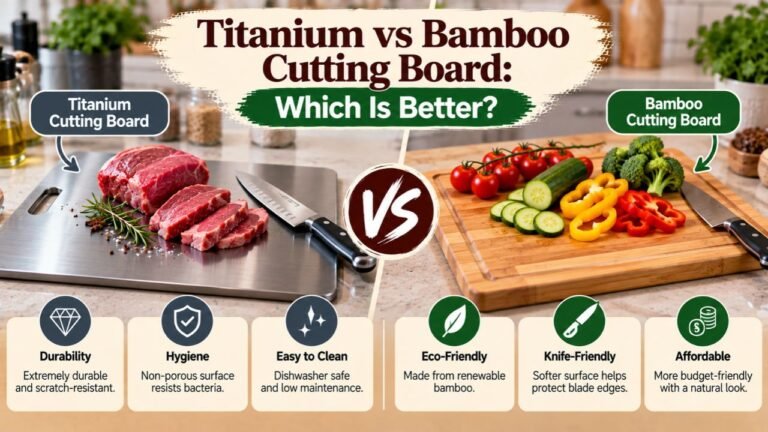
Bamboo is popular because it offers a natural appearance, relatively low moisture absorption, and a firm surface.
Bamboo serving boards are often lightweight and available in decorative shapes.
Bamboo cutting boards generally use laminated construction to provide a flat working area.
Both can be suitable for food contact when properly manufactured.
Still, bamboo is relatively hard compared with some hardwood cutting surfaces, so it may wear knife edges faster than softer wood.
Bamboo boards also need careful drying to prevent moisture-related damage.
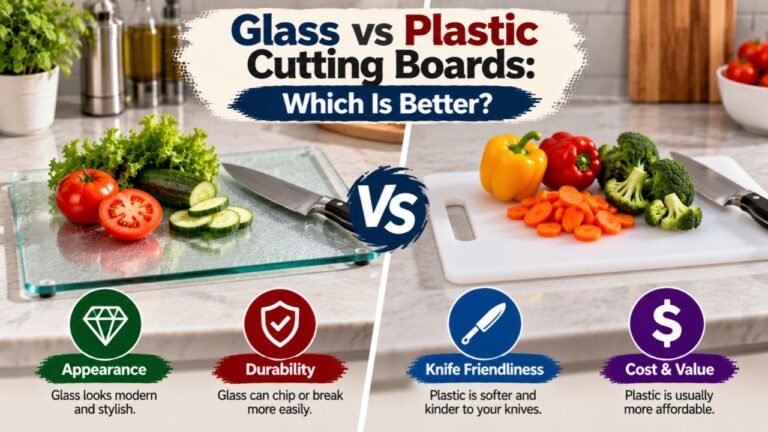
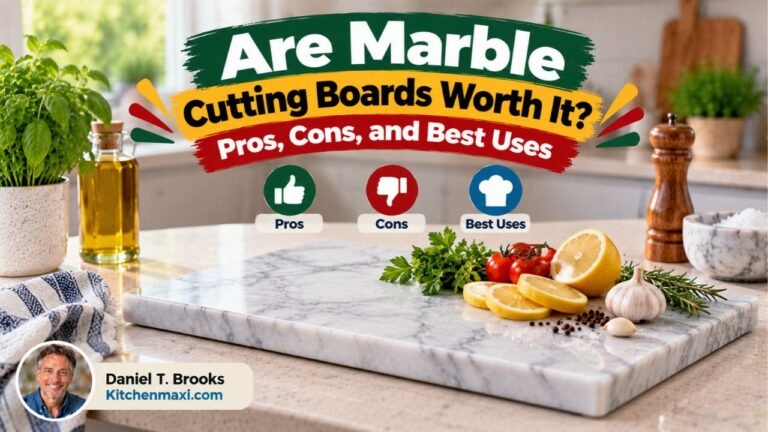
Marble, Slate, and Glass Serving Boards
Marble, slate, and glass are commonly used for serving cheese, appetizers, and desserts.
Their smooth or textured appearances can create attractive food presentations.
These materials resist many ordinary food stains, although their cleaning requirements vary.
Their main limitation is knife compatibility.
Stone and glass surfaces are extremely hard compared with suitable wooden cutting surfaces. Repeated chopping against them can quickly reduce knife sharpness.
Slate can chip, marble may be affected by acidic ingredients, and glass can break if damaged.
I recommend reserving these materials primarily for serving rather than routine food preparation.
Plastic, Rubber, and Composite Cutting Boards
Plastic and rubber boards are common in kitchens because they provide practical cutting surfaces.
Some are also suitable for casual serving.
A clean plastic cutting board can hold sandwiches, fruit, or appetizers without difficulty.
Still, ordinary plastic boards may offer less visual appeal than decorative wooden serving boards.
Composite boards provide another option, with construction and care requirements varying between products.
For formal food presentation, wood, marble, or an appropriately manufactured serving surface may offer a more attractive appearance.
Key Takeaway: Wood and bamboo offer the greatest overlap between cutting and serving. Marble, slate, and glass are mainly presentation materials, while plastic and rubber are often more practical for food preparation.
Design, Thickness, Size, and Stability Differences
A board’s physical design affects both how it handles food and how comfortable it is to use.
Thickness and size are useful clues, but they do not establish a board’s purpose by themselves.
Thickness and Weight
Cutting boards are often thicker than decorative serving boards because they need stability during repeated knife movements.
A substantial board is less likely to shift while chopping dense vegetables or cutting large ingredients.
Serving boards may use thinner construction to reduce weight and make carrying easier.
Still, large presentation boards can be heavy, especially when made from marble or thick hardwood.
There is no universal thickness that separates serving boards from cutting boards.
The appropriate thickness depends on the material, dimensions, design, and intended use.
Shape and Working Area
Cutting boards commonly have rectangular shapes because they provide a practical surface for knife movement.
Serving boards allow more design freedom.
Round, oval, paddle-shaped, and irregular boards are popular for cheese and appetizer arrangements.
A serving board may include a narrow handle or decorative edges that reduce usable cutting space.
For frequent chopping, a broad, flat working area is more useful than an unusual shape.
For entertaining, a shaped board may improve presentation and make it easier to arrange different foods.
Handles, Grooves, and Other Features
Serving boards often feature handles for carrying food to the table.
Some include raised edges, bowls, compartments, or sections for cheese and crackers.
Cutting boards may have juice grooves to catch liquid from fruit or cooked meat.
Rubber feet can improve stability during chopping.
A board with raised feet may look attractive for serving but cannot necessarily be reversed for cutting.
Decorative engravings can also collect food residue and are best kept away from heavy knife contact.
Key Takeaway: Cutting boards prioritize a stable working area, while serving boards often feature handles, decorative shapes, and convenient carrying designs.
Food Safety: Is a Serving Board as Hygienic as a Cutting Board?
Both can be hygienic when made from suitable food-contact materials and cleaned properly.
The important distinction is how each board is used and the types of food placed on it.
Food-Contact Safety vs Knife Safety
A board can be safe for holding food without being suitable for chopping.
For example, a food-contact-approved decorative finish may tolerate cheese, crackers, and other prepared foods but become damaged by repeated knife contact.
Likewise, a marble serving board may be suitable for displaying food while remaining a poor surface for maintaining knife sharpness.
Before purchasing a decorative serving board, check that the manufacturer identifies its surface as suitable for direct food contact.
Avoid assuming that every ornamental wooden slab, painted tray, or resin artwork is food-safe.
Food-contact approval and cutting suitability are separate considerations.
Preventing Cross-Contamination
The USDA recommends using separate cutting boards for raw meat, poultry, and seafood and for ready-to-eat foods.
A serving board used for cheese or sliced fruit should not be exposed to raw animal juices.
If a board has been used to prepare raw meat, wash and sanitize it appropriately before using it for serving.
The USDA also recommends washing cutting boards with hot, soapy water after use and replacing boards that develop grooves that are difficult to clean.
For entertaining, I prefer keeping a dedicated serving board separate from any cutting surface used for raw poultry.
That arrangement reduces the chance of accidentally transferring contamination to prepared foods.
Keeping Food Safe During Serving
A clean board does not prevent food from becoming unsafe after sitting at room temperature too long.
Perishable foods such as refrigerated cheese, deli meat, and cut fruit require attention during parties.
The USDA advises limiting unrefrigerated exposure to 2 hours, or 1 hour when temperatures are above 90°F.
For longer gatherings, offer smaller portions and refill them with food kept properly refrigerated.
Keep cold perishable foods at 40°F or below when they are being held for extended service.
Small bowls can also prevent dips, sauces, and food juices from spreading across the serving surface.
Key Takeaway: Both boards can safely hold food when properly manufactured and cleaned. Keep raw foods separate from ready-to-eat foods, and follow safe temperature and time limits during serving.
Cleaning and Maintenance: Which Board Is Easier to Care For?
Cleaning requirements depend on the material and finish rather than the product name.
Wooden serving and cutting boards often need similar care, while stone, glass, and plastic products may have different requirements.
How to Clean a Wooden Serving Board
A wooden serving board should be cleaned after food contact, especially when used for cheese, meats, or oily ingredients.
Follow these steps:
- Remove remaining food and crumbs.
- Wash the surface with warm, soapy water and a soft sponge.
- Clean around handles, grooves, and decorative details.
- Rinse briefly without soaking the wood.
- Dry both sides with a clean towel.
- Allow the board to air-dry completely before storage.
Avoid soaking wooden serving boards or placing laminated wooden products in the dishwasher unless the manufacturer specifically permits it.
If the board has a decorative coating, follow its cleaning instructions to avoid damaging the finish.
How to Clean a Cutting Board
Cutting boards should be washed after preparing each food category.
For ordinary cleaning, use hot, soapy water, rinse thoroughly, and allow the board to dry.
Wood and bamboo generally require hand-washing and careful drying.
Many plastic cutting boards can be cleaned in a dishwasher when labeled dishwasher-safe.
For suitable wooden and plastic cutting boards, the USDA provides a sanitizing solution containing 1 tablespoon of unscented liquid chlorine bleach per gallon of water.
After cleaning, apply the solution, allow it to stand for several minutes, rinse thoroughly, and dry.
Always follow the manufacturer’s instructions, especially for boards with special coatings or decorative materials.
Oiling and Protecting Wooden Boards
Unfinished or oil-finished wooden boards may benefit from periodic conditioning with food-grade mineral oil.
This helps reduce excessive drying and maintains the appearance of the wood.
Apply a small amount according to the manufacturer’s directions, spread it evenly, and remove excess oil before use.
Some boards also use food-safe board wax.
Do not apply mineral oil over a sealed decorative finish unless the manufacturer recommends it.
For both serving and cutting boards, avoid leaving wood submerged in water or stored against a damp countertop.
Key Takeaway: Wooden boards generally need hand-washing and thorough drying. Cutting boards require extra attention to knife grooves, while decorative serving boards may have special finish-care instructions.
Which Board Is Better for Everyday Kitchen Use?
For most households, a quality cutting board offers greater everyday versatility.
It can handle routine food preparation and, when suitable and clean, serve prepared food at the table.
Best Choice for Daily Meal Preparation
A proper cutting board is the better option for slicing vegetables, chopping herbs, preparing meat, and cutting bread.
It offers a stable working surface and is designed to tolerate repeated knife contact.
A medium or large hardwood, plastic, or suitable rubber cutting board can cover most everyday food preparation tasks.
If one board must serve multiple purposes, I would choose a smooth wooden cutting board that also looks attractive enough for casual dining.
Best Choice for Parties and Entertaining
A dedicated serving board becomes more useful when appearance and food arrangement matter.
Wooden paddle boards, marble cheese boards, and attractive charcuterie boards provide space for presenting appetizers.
Handles may make transferring food from the kitchen to the dining table more convenient.
A decorative serving surface also avoids the knife marks and stains that may appear on a frequently used cutting board.
For frequent entertaining, keeping a separate serving board can preserve its appearance and simplify food presentation.
Best Choice for a Small Kitchen
Limited storage makes dual-purpose products attractive.
A reversible wooden cutting board with a smooth, food-safe surface may replace the need for a separate serving board.
Use one side for suitable food preparation and reserve the other for serving when the design permits.
Both faces still require cleaning.
If you frequently prepare raw meat, keep a separate cutting surface for those ingredients.
This is a practical setup without collecting several large boards that perform nearly identical jobs.
Key Takeaway: A quality cutting board offers greater everyday utility. A separate serving board makes sense for frequent entertaining, decorative presentation, or specialized serving materials.
Common Mistakes to Avoid When Choosing a Board
Confusing product labels with actual construction is one of the easiest mistakes to make.
Cutting directly on decorative resin: A resin surface may be suitable for presenting food but unsuitable for knife contact. Cutting can scratch, chip, or damage the finish.
Assuming every serving board is food-safe: Some decorative pieces are intended only for display. Confirm that the material and finish are suitable for direct food contact.
Using marble or glass for heavy chopping: These hard materials can damage knife edges faster than suitable wood, rubber, or plastic surfaces.
Serving ready-to-eat food on an unwashed board: A cutting board used for raw meat must be thoroughly cleaned and sanitized before serving cooked or ready-to-eat foods.
Ignoring board stability: A thin serving board with raised feet, a narrow shape, or an uneven underside may be unsuitable for cutting.
Buying based only on appearance: An attractive board may lack enough usable surface area for chopping or arranging food.
Leaving perishable foods out too long: A decorative charcuterie board cannot keep refrigerated ingredients at safe temperatures by itself.
The simplest approach is to check the manufacturer’s intended use, material construction, care instructions, and cutting-surface suitability before purchasing.
Conclusion
The serving board vs cutting board comparison comes down to intended use. Serving boards focus on displaying and carrying food, while cutting boards provide durable surfaces for chopping and slicing. A properly maintained cutting board can often serve both purposes, but a decorative serving board may not tolerate knife contact.
Material and construction are more meaningful than the product label. Smooth hardwood and bamboo boards can serve food and support cutting when designed for both tasks. Marble, slate, glass, and decorative resin boards are generally better reserved for presentation.
My recommendation is to purchase a quality cutting board first if everyday cooking is the priority. Add a dedicated serving board when attractive presentation, frequent entertaining, or special serving features justify a second board. In either case, choose food-safe materials and maintain clean surfaces.
FAQs About Serving Boards and Cutting Boards
Can I Use a Serving Board as a Cutting Board?
Yes, some serving boards can function as cutting boards.
A solid hardwood or bamboo serving board may support cutting when it has a suitable surface, stable construction, and a finish designed for knife contact.
Avoid cutting on decorative coatings, resin artwork, marble, slate, or glass.
Check the manufacturer’s instructions before using a serving board for regular chopping.
Can I Use a Cutting Board as a Charcuterie Board?
Yes, a clean, food-safe cutting board can be used as a charcuterie board.
Wooden boards are popular because their natural appearance complements cheese, crackers, cured meats, fruit, and other appetizers.
Wash the board thoroughly before arranging ready-to-eat food.
If it has deep grooves, cracks, or damage that prevents proper cleaning, choose another surface.
A smooth reversible hardwood board is a practical option for both preparation and serving.
Is a Cheese Board the Same as a Cutting Board?
Not necessarily.
A cheese board is generally intended for presenting and serving cheese, while a cutting board is designed for regular knife work.
Some wooden cheese boards are suitable for light slicing, but others use stone, glass, or decorative finishes that are not suited to repeated cutting.
The actual material and construction determine how the board should be used.
Are Serving Boards Food-Safe?
Serving boards can be food-safe when manufactured with materials and finishes approved or intended for direct food contact.
Wood, bamboo, glass, ceramic, and stone are commonly used in serving products, but not every decorative version is suitable for direct food contact.
Check the manufacturer’s description before placing food directly on the surface.
Avoid using boards with peeling coatings, loose decoration, cracks, or unknown finishes.
What Is the Best Wood for a Serving Board?
Walnut, maple, cherry, olive wood, and acacia are popular serving-board materials.
Walnut offers rich color, maple has a lighter appearance, and olive wood often features distinctive grain patterns.
Acacia is commonly used for affordable decorative boards.
For a dual-purpose serving and cutting board, a suitably manufactured maple, walnut, or cherry board is a sensible choice.
Choose wood with a smooth surface, appropriate food-contact finish, and construction suitable for its intended use.
Should a Serving Board Be Thicker Than a Cutting Board?
Not usually.
Cutting boards are often thicker because they need to provide stability during repeated chopping.
Serving boards can be thinner and lighter to make carrying and passing food easier.
There is no fixed thickness rule separating the two categories.
A large wooden serving board may still be thick, while a rigid plastic cutting board can be relatively thin.
Material strength, size, and intended use matter more than thickness alone.
Can You Cut Cheese on a Wooden Serving Board?
Yes, cheese can be cut on a wooden serving board if the surface is suitable for knife contact.
A solid, stable wooden board with an appropriate finish can handle light cheese slicing.
Use gentle pressure and avoid damaging decorative carvings or coatings.
For hard cheese requiring substantial force, a sturdy cutting board is preferable.
Wash the serving board after use, especially when it has held soft or oily cheese.
Is It Better to Have Separate Cutting and Serving Boards?
Separate boards can be convenient, especially for households that cook frequently and entertain guests.
A dedicated cutting board can handle repeated knife work without affecting the appearance of a decorative serving board.
Keeping a serving board separate from surfaces used for raw meat also reduces the chance of cross-contamination.
Still, a smooth, food-safe hardwood cutting board may perform both roles for a smaller kitchen.
Choose a separate serving board when presentation, convenience, or specialty materials provide a practical reason for owning one.